
The Evolution of Mount Ijen Over Thousands of Years
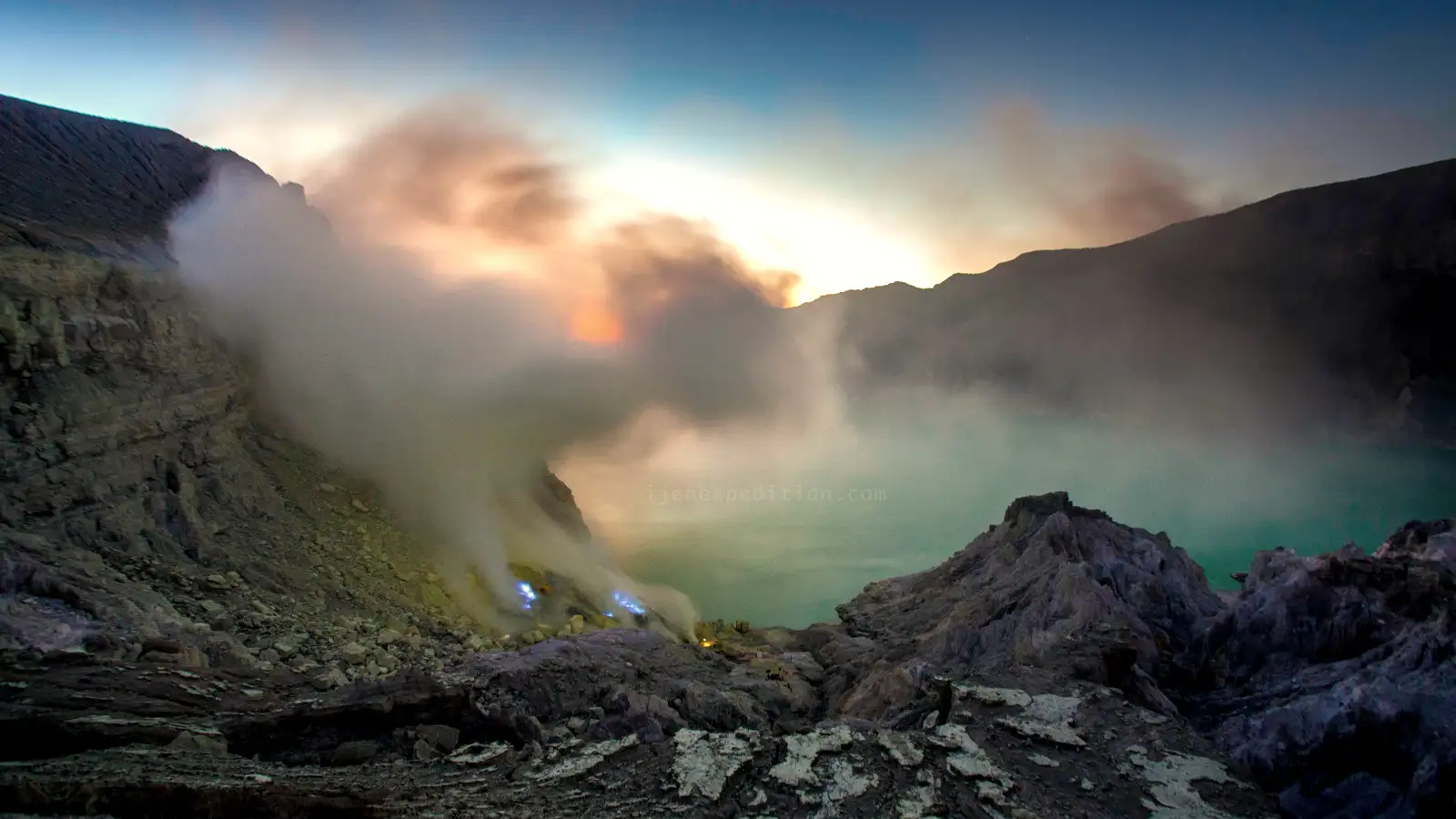
Standing on the rim of Kawah Ijen at 3:00 AM feels like visiting another planet. Your lungs burn from the sulfur, your toes go numb in the East Java chill, and the darkness is broken only by the erratic bobbing of headlamps. Most travelers come here for a quick selfie with the blue flames, but there is a much deeper story etched into these jagged cliffs. Booking a professional tour is the best way to see it, but understanding the history makes the experience truly profound.
This landscape wasn’t built overnight. It is the result of thousands of years of violent tectonic shifts, massive collapses, and chemical reactions that defy logic. To truly appreciate the climb, you need to look past the “Instagrammable” moments and see the scars of a volcanic history that dates back to the Pleistocene. Before you lace up your boots, let’s peel back the layers of time to see how this East Javanese titan evolved from a single mountain into the complex caldera we see today.
Table of Contents
Why Trust This Geological Guide?
We are not just writers; we are local operators who live and breathe the dust of these trails every single day. Our team coordinates with the Indonesian Center for Volcanology and Geological Hazard Mitigation (PVMBG) to ensure every local guide we employ understands the shifting safety zones. We’ve watched the lake level rise and fall, seen the sulfur vents move, and felt the ground tremble during minor seismic adjustments.
Experience on the ground matters more than any textbook. We have seen how the “blue fire” changes based on the wind and how the extreme temperatures at the rim can plummet in minutes. Our insights come from years of leading travelers from Bali, Surabaya, and beyond into the heart of this volcanic complex. When we talk about the evolution of Mount Ijen, we’re talking about a mountain we consider our home. Explore our Master Pillar Guide for more detailed planning tips.
Ancient Mount Ijen: The Old Giant
Thousands of years ago, the horizon of East Java looked completely different. There was no single “Ijen Crater” as we know it today. Instead, a massive stratovolcano known as “Old Ijen” dominated the landscape. This prehistoric peak reached heights that likely dwarfed the current surrounding summits. It was part of the East Java volcanic arc, fueled by the subduction of the Indo-Australian plate beneath the Eurasian plate.
The Rise of the Stratovolcano
Imagine a mountain pulsing with magma, growing taller with every eruption. For millennia, Old Ijen built itself up through alternating layers of lava flows and ash. This type of growth is classic for a stratovolcano. It created a steep, imposing cone that would have been visible from hundreds of miles away. During this phase, the internal pressure was slowly building, setting the stage for a catastrophic transformation.
Magma Chamber Dynamics
Deep beneath the surface, a massive magma chamber was fueling the beast. As the composition of the magma changed over centuries, becoming more silica-rich and viscous, it trapped more gas. This increased the potential for an explosive climax. Geologists believe the plumbing system of the Ijen volcanic complex was far more expansive then than what we see now. The mountain was essentially a ticking time bomb of geological proportions.
The Great Collapse: Creating the Ijen Caldera
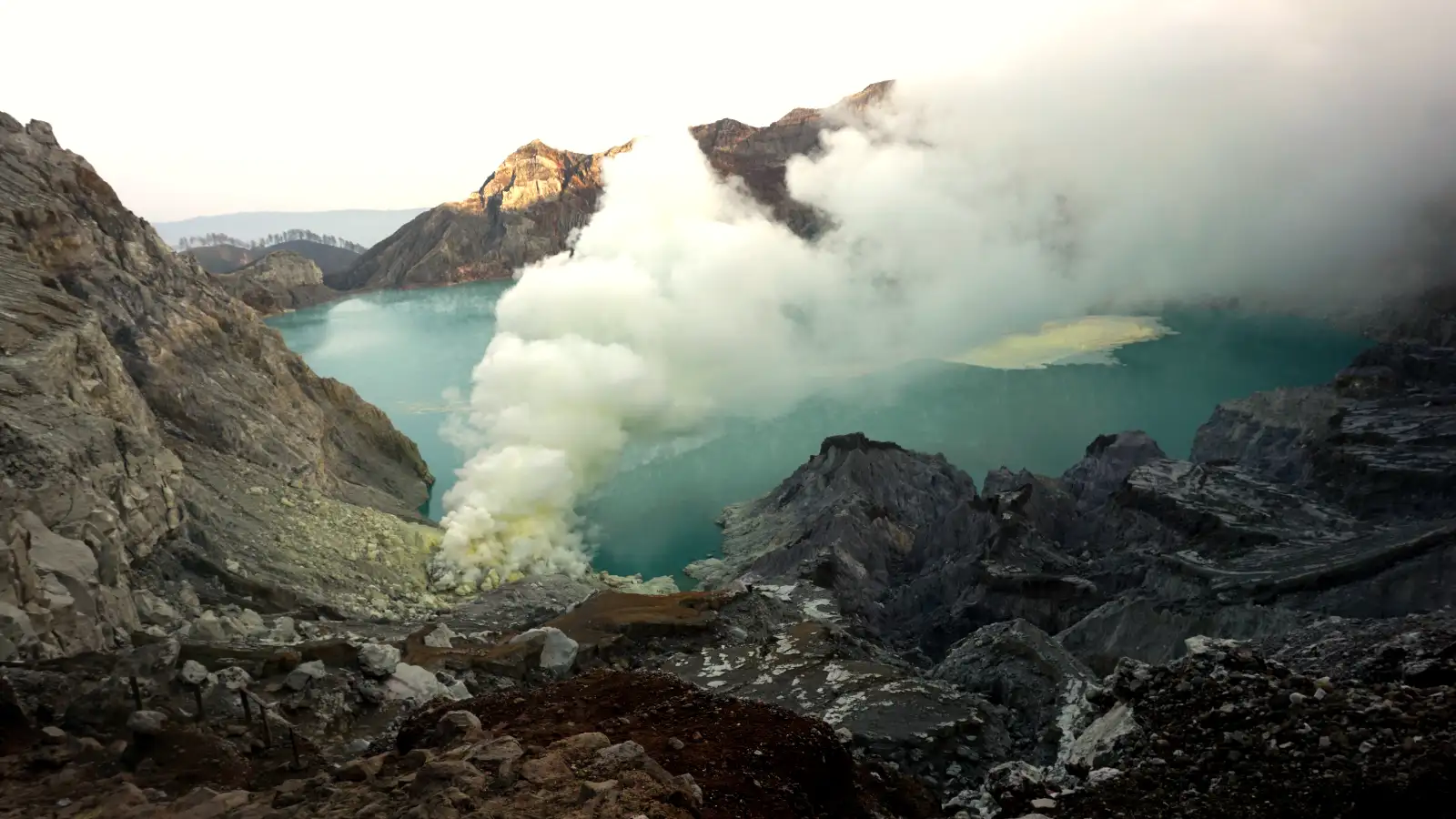
The turning point in the evolution of Mount Ijen was a cataclysmic eruption that occurred roughly 50,000 years ago. This wasn’t just a standard eruption; it was a “caldera-forming” event. The top of the mountain didn’t just blow off—the entire magma chamber beneath it emptied so quickly that the mountain literally fell into itself. This left behind a massive, 20-kilometer-wide depression known as the Ijen Caldera.
A Landscape Redefined
When the dust settled, the towering cone of Old Ijen was gone. What remained was a vast, circular basin. Over the following centuries, smaller volcanic cones began to sprout within and on the rim of this caldera. These include Mount Merapi (not to be confused with the one in Central Java), Mount Raung, and of course, Kawah Ijen. This cluster is why scientists refer to it as the Ijen volcanic complex rather than a single mountain.
Tectonic Activity in Java
The Indonesia Ring of Fire is a restless place. The formation of the caldera was just one chapter in a much larger story of tectonic shifts. The weight of the new cones and the shifting plates continued to warp the landscape. Rainwater began to fill parts of the caldera, creating fertile soil that now supports the lush coffee plantations you drive through on your way to the Paltuding basecamp.
Modern Volcanic Activity and the Acid Lake
The Kawah Ijen we visit today is relatively young in geological terms. It formed on the eastern edge of the old caldera wall. What makes it famous isn’t just the height, but the highly acidic lake that sits in its belly. This lake is a modern marvel of geothermal evolution, acting as a giant chemical vat that captures volcanic gases from deep within the earth.
The World’s Most Acidic Body of Water
With a pH level near zero, the lake is essentially filled with diluted sulfuric and hydrochloric acid. The vibrant turquoise color, while beautiful, is a warning sign of high concentrations of dissolved metals. This lake didn’t always look like this. Its chemistry has evolved over hundreds of years as volcanic vents beneath the water line continuously leak gases. Walking near the shore requires a high-quality gas mask, as the fumes can be instantly suffocating.
Phreatic Eruptions and Shifts
Ijen doesn’t always erupt with lava. More often, it experiences “phreatic” eruptions, where water from the lake or groundwater comes into contact with hot magma, causing a sudden steam explosion. These events have reshaped the crater floor and the surrounding trails multiple times. If you notice a “Dead Tree Viewpoint,” you are seeing the literal skeleton of a forest destroyed by these acidic clouds and heat. It’s a stark reminder that the mountain is still very much alive.
The Science of Sulfur and Blue Fire
One of the most misunderstood parts of the Ijen blue fire is its origin. It isn’t lava. Blue lava doesn’t exist. Instead, what you are seeing is the combustion of sulfuric gases as they emerge from high-pressure vents at temperatures exceeding 600°C. When these gases hit the oxygen-rich air, they ignite, creating the ethereal blue glow that has become a global phenomenon.
The Growth of Sulfur Deposits
Over thousands of years, these gases have cooled and solidified into massive yellow rock formations. This is the sulfur deposits that local miners harvest. The miners themselves are a part of the modern evolution of the mountain, carving paths into the crater that travelers now use. They carry up to 90kg of these rocks on their shoulders, navigating the same steep, slippery trails that tourists struggle to climb with just a small backpack.
A Dynamic System
The location and intensity of the blue fire shift constantly. Some years, the vents are roaring and the flames are five meters high. Other years, the gas is suppressed, and the fire is barely a flicker. This unpredictability is a hallmark of a volcanic system that is constantly breathing and changing. It’s why we always recommend checking the latest reports before you start your midnight trek.
The Future of Ijen’s Landscape
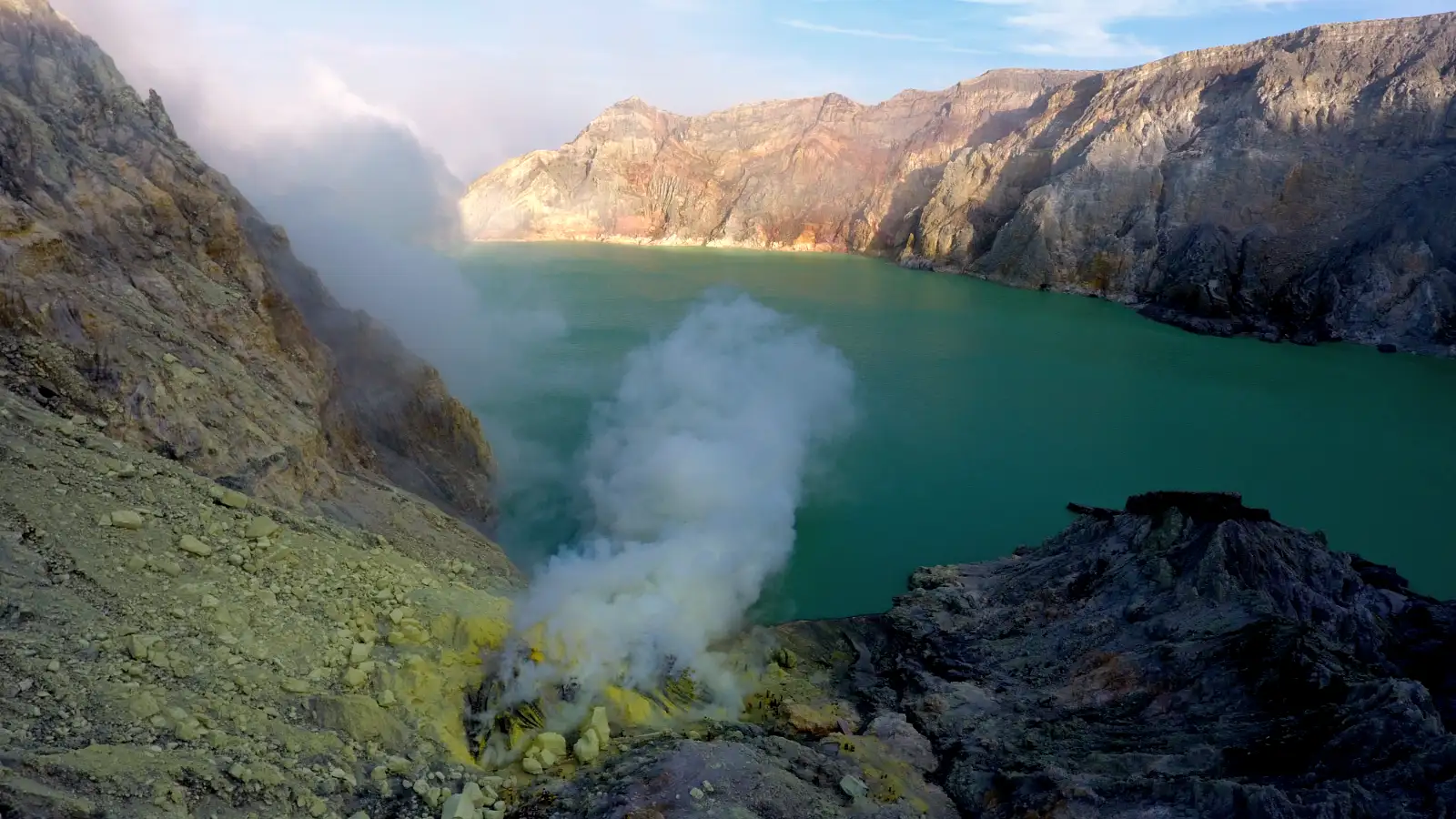
Geology never sleeps. Even now, Mount Ijen is evolving. The crater rim is slowly eroding due to wind and acidic rain. The lake bottom is filling with sediment. Deep underground, the magma continues to shift. While we see it as a static destination, the safety and stability of the crater are monitored 24/7 by seismic stations around the rim.
For the traveler, this means that every visit is unique. The trail you walk today might be slightly different in a decade. The sulfur vents you see now might be closed by then. This sense of impermanence is what makes the Ijen crater photography so valuable—you are capturing a moment in a geological timeline that spans hundreds of thousands of years. It’s a raw, honest look at the earth’s power.
Popular Related Tour Packages
Ready to witness this geological masterpiece for yourself? Here are our most requested tour packages, designed to help you avoid the crowds and see the best of Ijen and Bromo.
- 🌟 Standard Ijen Crater Tour – The classic adventure from Banyuwangi.
- 🌟 Ijen Crater Tour from Banyuwangi (1-Day) – Perfect for those on a tight schedule.
- 🌟 2-Day Ijen Exploration – A slower pace to appreciate the local culture.
- 🌟 Ijen Crater Tour from Surabaya (2D1N) – Seamless transport from the airport.
- 🌟 Ijen Crater Tour from Bali – The most popular choice for backpackers in Bali.
- 🌟 Mount Bromo & Ijen Tour Package – See both of Java’s giants in one epic trip.
Ready for Your Ultimate Mount Bromo & Ijen Adventure?
Don’t leave your trip to chance. Join thousands of happy travelers and experience East Java with our top-rated local tour operators.
Frequently Asked Questions
Q: How long did it take for Mount Ijen to form?
A: The current Ijen volcanic complex began forming about 50,000 years ago after the massive collapse of the Old Ijen stratovolcano. However, the active crater we visit today is much younger, evolving through smaller eruptions over the last several thousand years.
Q: Is Mount Ijen still an active volcano?
A: Yes, it is very active. It is monitored constantly for seismic activity, gas levels, and changes in lake temperature. Phreatic eruptions can occur without much warning, which is why following local guide instructions is critical.
Q: What created the blue fire phenomenon?
A: It is caused by high-pressure sulfuric gases escaping through cracks in the volcano. When these gases reach the surface and contact the air at temperatures above 600°C, they ignite into blue flames. It is a chemical combustion, not glowing lava.
Q: Why is the Ijen crater lake so acidic?
A: The lake acts as a giant condenser for volcanic gases like sulfur dioxide and hydrogen chloride. When these gases dissolve in the water, they create sulfuric and hydrochloric acid, making it the largest highly acidic lake in the world.
Q: Can the landscape of Mount Ijen change during my visit?
A: While major shifts take centuries, small changes happen daily. Heavy rain can cause landslides inside the crater, and volcanic activity can shift the location of sulfur vents. The “Dead Tree” forest is a perfect example of how quickly the landscape can be altered by volcanic gas.
Conclusion
Understanding the geological history of Mount Ijen changes the way you look at its jagged peaks. You aren’t just climbing a hill; you are walking through the wreckage of an ancient giant. From the massive caldera collapse 50,000 years ago to the modern-day chemical factory at the bottom of the crater, Ijen is a masterpiece of natural evolution.
The cold wind and the stinging sulfur are small prices to pay to witness a landscape so raw and powerful. Whether you are coming from Bali to East Java or starting your journey in Banyuwangi, respect the mountain’s history. It has outlasted civilizations and will continue to evolve long after we are gone. Pack your gear, rent your mask, and get ready to step into the heart of Java’s most fascinating volcanic story.
Planning to visit Ijen or Mount Bromo?
Explore available tour options and ask our local team about your itinerary.
Explore Tour Packages →