Ijen Blue Fire Explained: What It Is & How to See It
By: Local Banyuwangi Operational Team | Updated: Verified Field Logistics
Planning a trip to Kawah Ijen and dreaming of witnessing that iconic “blue fire”? You’ve seen the incredible photos, the ethereal glow against the dark crater. But what *exactly* is it, and what’s the real story for visitors today?
Here’s the deal: While Kawah Ijen is indeed home to a unique natural phenomenon of burning sulfur gases, the famous “blue fire” you see now is largely a visual replica orchestrated for visitors, rather than the raw, expansive natural spectacle of years past. This doesn’t detract from the experience of seeing it, but it’s crucial to set honest expectations.
In this guide, our Banyuwangi operations team will cut through the noise. We’ll explain the science behind Ijen’s blue flames, clarify what you can expect to see currently, and provide precise, actionable details for planning your safe and impactful journey to the crater. You’ll get expert insights, practical tips, and a realistic picture of one of East Java’s most unique destinations.
- Ijen Blue Fire Explained: It’s the combustion of sulfurous gases, visible as blue flames. Historically, this occurred naturally in larger areas within the crater.
- Current Reality: Today, due to safety and access restrictions, visitors primarily experience a controlled, visual replica of the blue fire, often fed by sulfur pipes, rather than the vast natural phenomenon.
- Seeing It: To see the “blue fire” (replica), you must start trekking from Paltuding basecamp between 1:00 AM and 2:00 AM.
- Safety First: Mandatory gas masks, local guides, and awareness of active volcanic gases are critical for the descent into the crater.
- Beyond Blue Fire: The sunrise over the turquoise acid lake and the sulfur mining operations are equally compelling aspects of the Ijen visit.
What Exactly Is Ijen’s “Blue Fire”?
When you hear about Ijen’s “blue fire,” it immediately conjures images of otherworldly landscapes. Truth is, the phenomenon itself is fascinating, but what tourists experience has evolved significantly.
The Natural Phenomenon: A Dance of Sulfur Gas
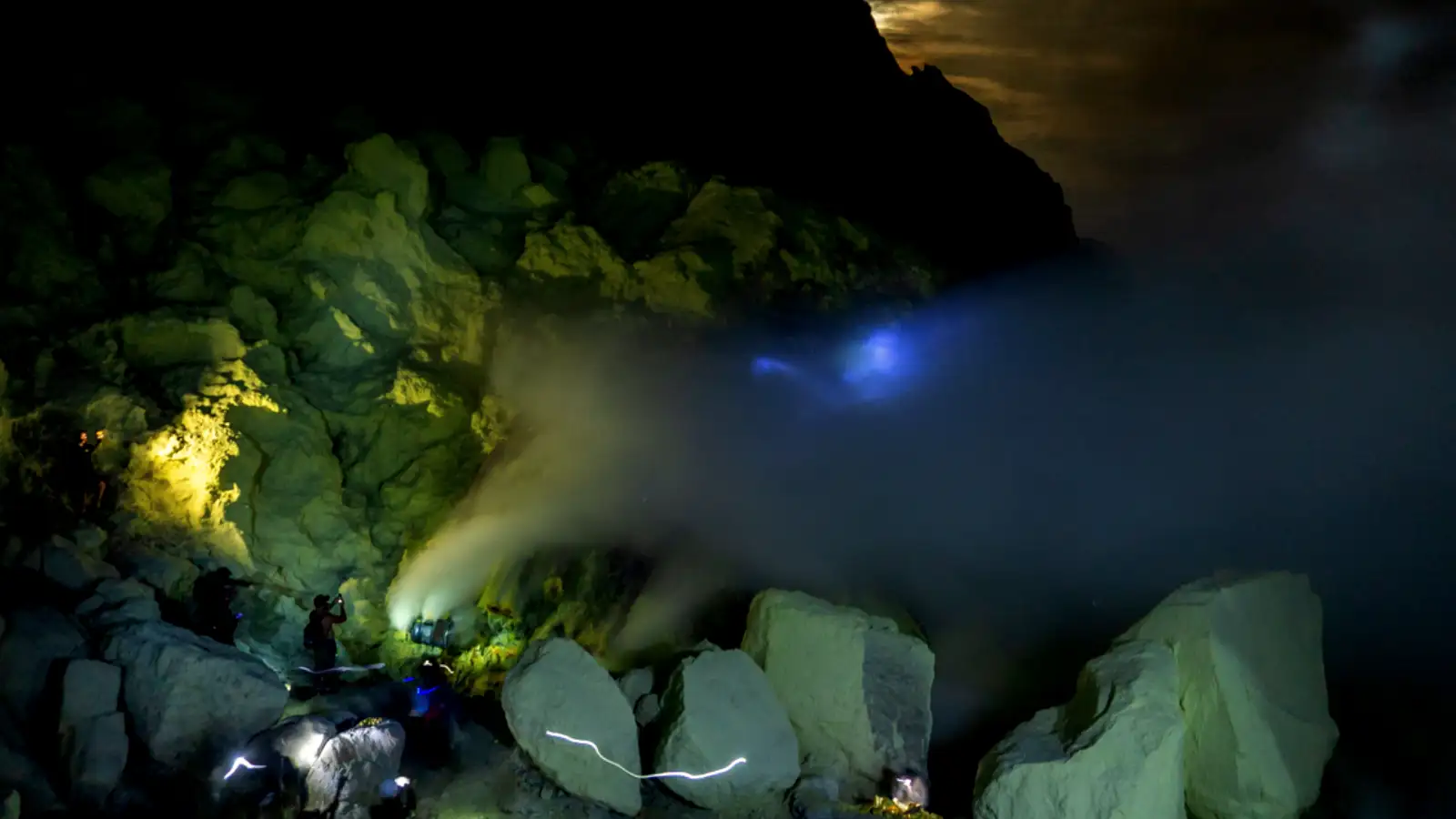
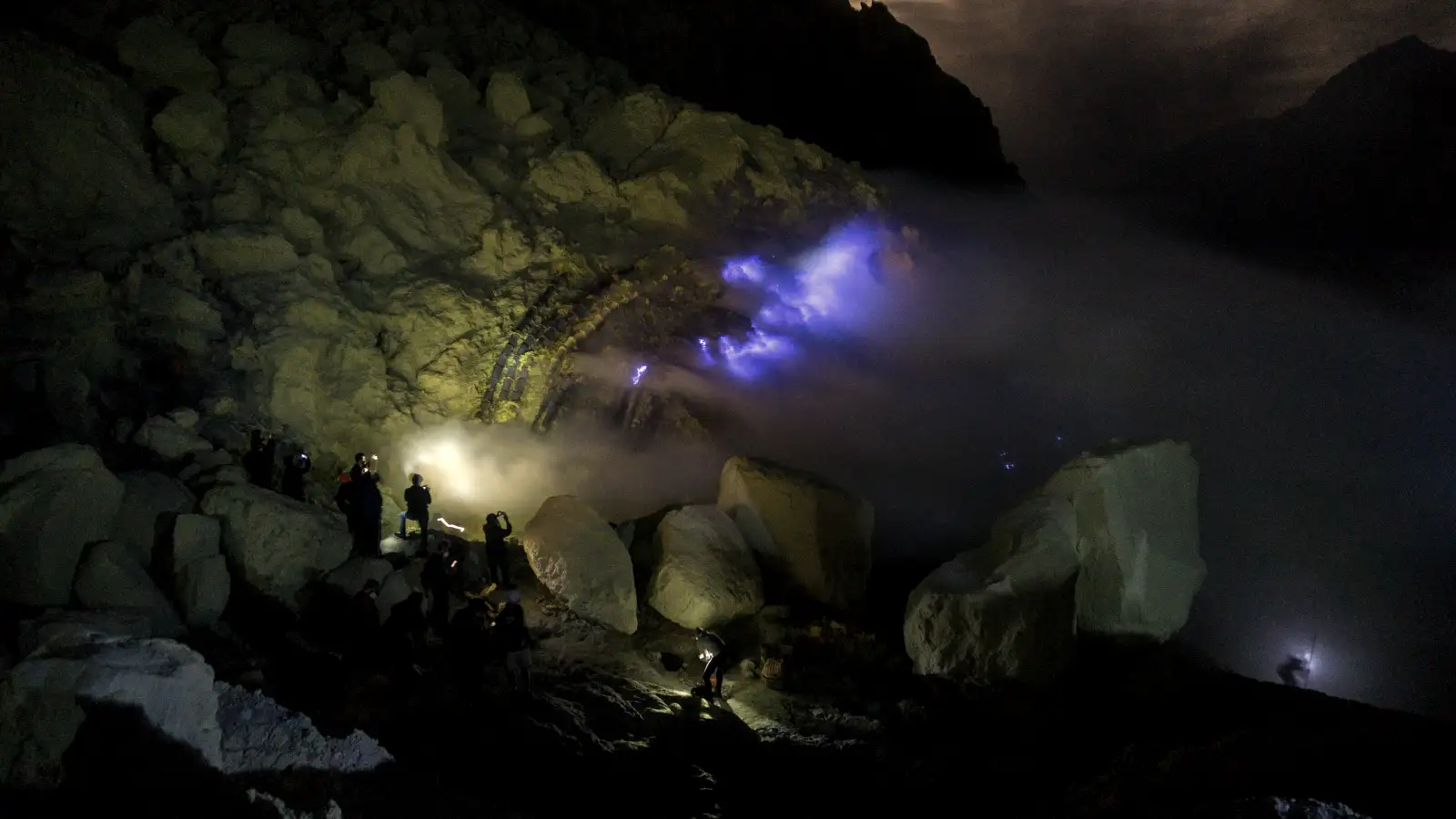
Scientifically speaking, Ijen’s blue fire is not lava but rather the combustion of sulfuric gases that emerge from cracks in the volcano at high pressures and temperatures up to 600°C (1,112°F). When these gases ignite upon contact with air, they produce an electric blue flame. It’s most dramatic and visible in complete darkness, which is why early morning treks are necessary.
For many years, this natural display was a raw, often widespread occurrence within the crater, a truly wild spectacle. It was a draw that defined Ijen for many adventurers.
The Current Reality: A Visual Replica for Visitors
Honestly, this is the part where we need to be clear. As of now, the extensive natural blue fire phenomenon that covered large sections of the crater floor is rarely seen by visitors in its original, sprawling form. Due to safety concerns, access restrictions to certain active vents, and natural shifts in volcanic activity, the “blue fire” that tourists typically witness is a controlled, visual replica.
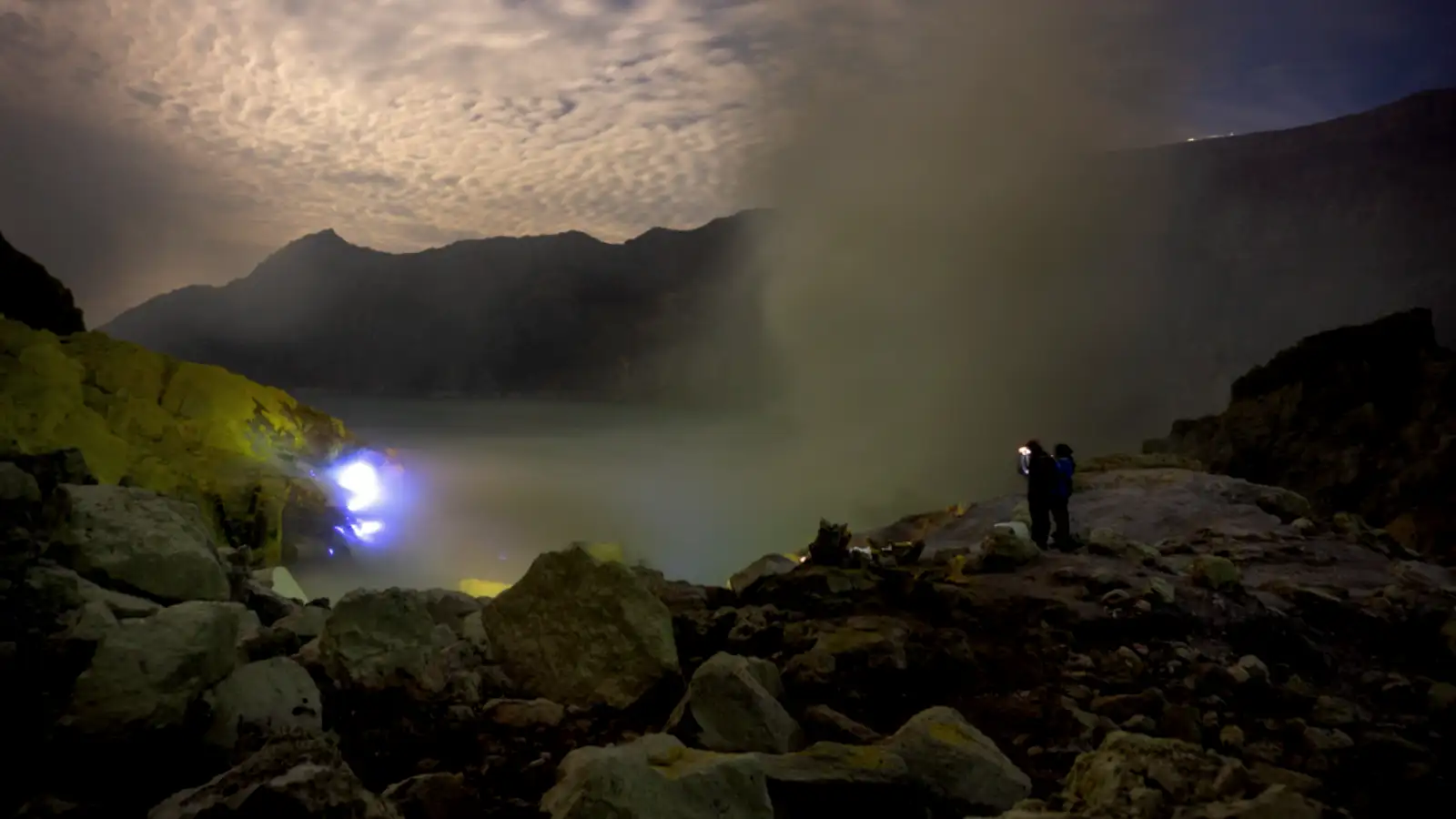
What does this mean? You’ll still see blue flames. Often, these flames are visible around active sulfur pipes where the gases are deliberately channeled and ignited for demonstration purposes. It’s a staged representation, designed to allow visitors to still experience the visual impact while prioritizing safety. Does it look authentic? Absolutely, especially in the dark. But it’s important to understand it’s not the same expansive, unpredictable natural event captured in older photographs.
Planning Your Journey to Ijen Crater
Getting to Ijen involves careful planning, especially since the “blue fire” viewing requires an early start. Our base of operations in Banyuwangi makes it the most logical and convenient starting point.
Best Time to Visit
The dry season, from April to October, is generally preferred. This period offers clearer skies and less chance of rain interrupting your trek or obscuring the views. Weekdays are always less crowded than weekends. To catch the “blue fire,” you must visit before sunrise, meaning a departure from your hotel around midnight to 1:00 AM.
Getting There from Banyuwangi
Banyuwangi is the gateway city. You’ll drive approximately 1.5 to 2 hours from Banyuwangi city to Paltuding, the starting point for the Ijen trek. Local tours almost always include hotel pickup and transportation. If you’re coming from Bali, the Gilimanuk to Ketapang ferry transit takes about 45-60 minutes, then it’s a short drive to Banyuwangi.
Essential Gear for the Hike
- Headlamp or Flashlight: The trail is completely dark. This is non-negotiable.
- Gas Mask: Absolutely mandatory for descending into the crater and for general safety near gas vents. Your guide or tour operator should provide a proper one.
- Warm Layers: Temperatures at Paltuding (1,850m elevation) can drop to 3°C (37°F). It warms up slightly during the hike but stays chilly at the rim.
- Comfortable Hiking Shoes: The path is gravelly, uneven, and can be slippery, especially on the descent into the crater.
- Water & Snacks: Stay hydrated and keep your energy up.
- Personal First-Aid: Small cuts, blisters, or headaches can happen.
- Rain Jacket: Even in the dry season, mountain weather can shift quickly.
The Ijen Blue Fire Experience: What to Expect
Alright, let’s talk about the actual experience on the ground. This isn’t a gentle stroll; it’s an active volcanic trek that promises stunning views and a profound insight into local life.
The Ascent to Paltuding & Early Hours
You’ll arrive at Paltuding, the park entrance, well before 2:00 AM. Even though it’s still the middle of the night, the parking lot often buzzes with activity. You might even find a warung serving hot kopi tubruk, a strong local coffee, which is a lifesaver in the chilly mountain air. After checking your permits (Surat Keterangan Sehat is sometimes required, verify current rules with your tour), you’ll start the uphill hike.
Trekking to the Crater Rim
The trail to the crater rim is about 3 kilometers and takes roughly 1.5 to 2 hours, depending on your fitness. It’s a consistent uphill climb on a wide, well-maintained but gravelly path. You’ll be using your headlamp the entire way. Look, it’s not technically difficult, but the incline and altitude (Paltuding is 1,850m, crater rim 2,386m) make it a workout.
Descending to the Crater Floor (Safety & Gas)
From the rim, it’s another 30-45 minute descent down a steep, rocky, and often slippery path to the crater floor. This is where your gas mask becomes truly critical. Sulfur gases can be dense and biting, making your throat scratchy and your eyes water without proper protection. Our local guides know the safest routes and how to assess gas conditions. Listen to them intently.
Witnessing the “Blue Fire” (The Replica)
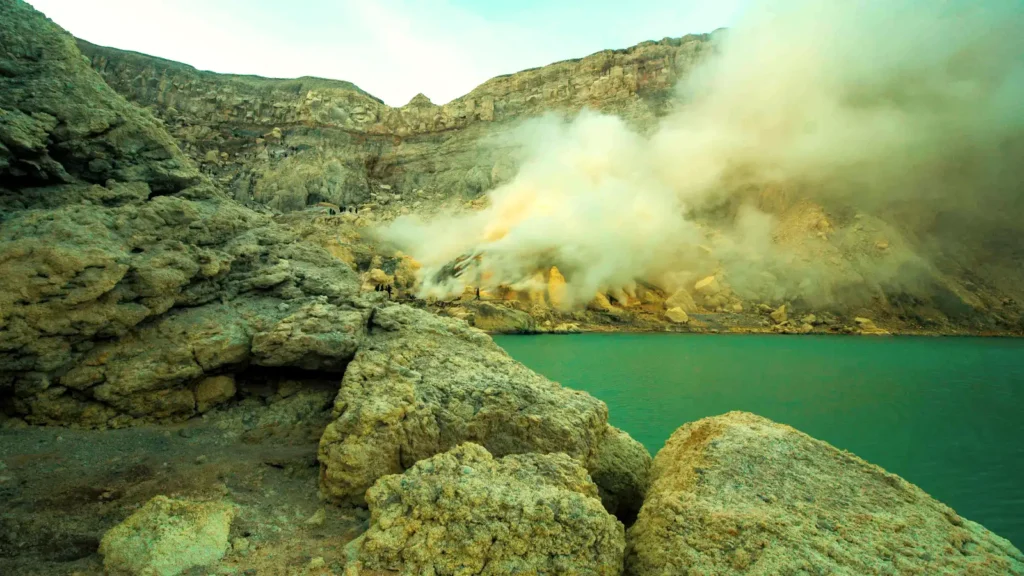
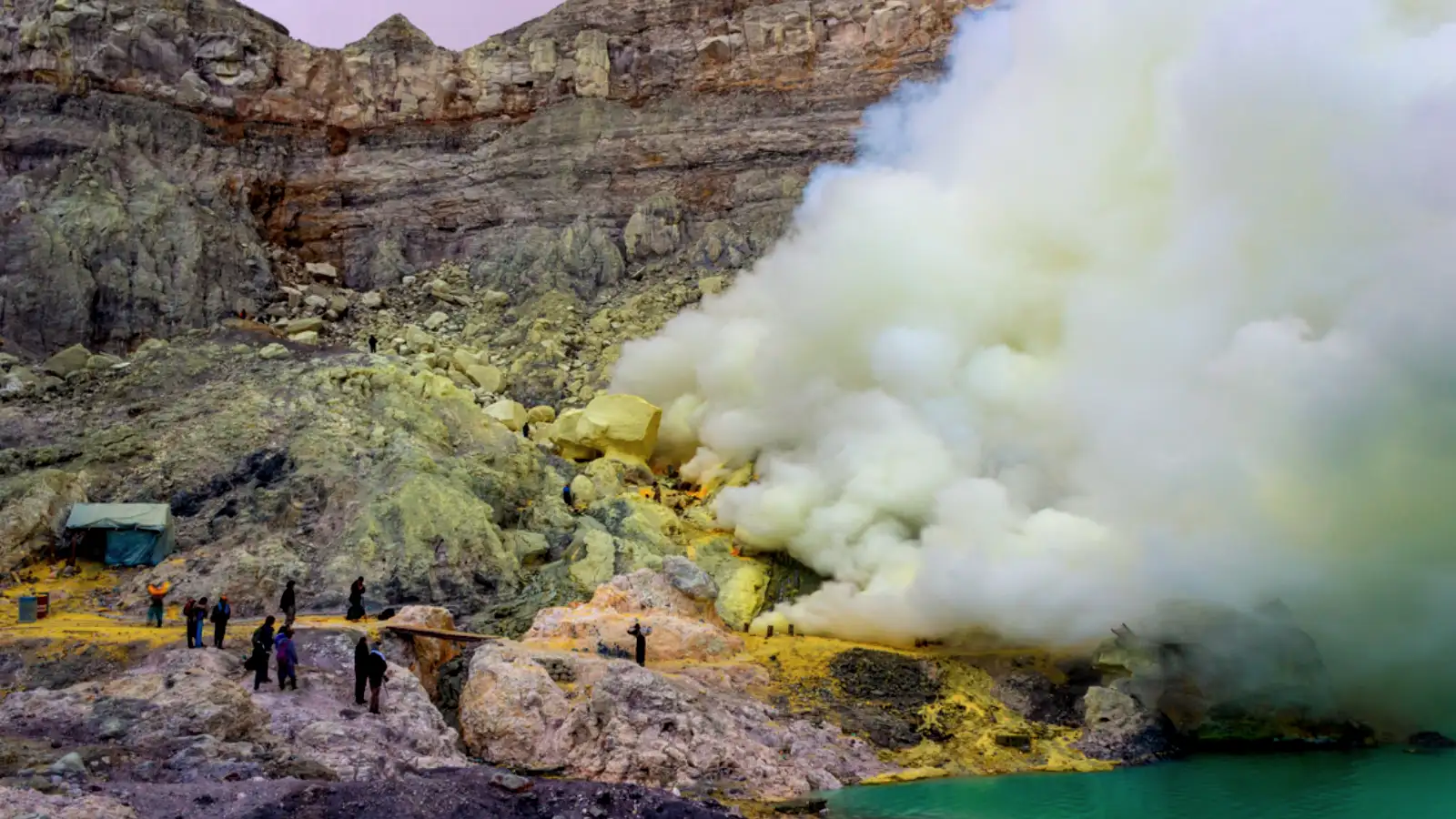
Once on the crater floor, you’ll be guided to the area where the blue flames are visible. As discussed, this will likely be a concentrated area around sulfur vents, showcasing the phenomenon as a controlled replica. It’s still incredibly atmospheric and visually striking against the dark volcanic landscape. You’ll see local miners at work, collecting solidified sulfur, a poignant insight into their incredibly hard labor in harsh conditions. Keep a respectful distance and do not obstruct their paths.
Sunrise at the Crater Lake
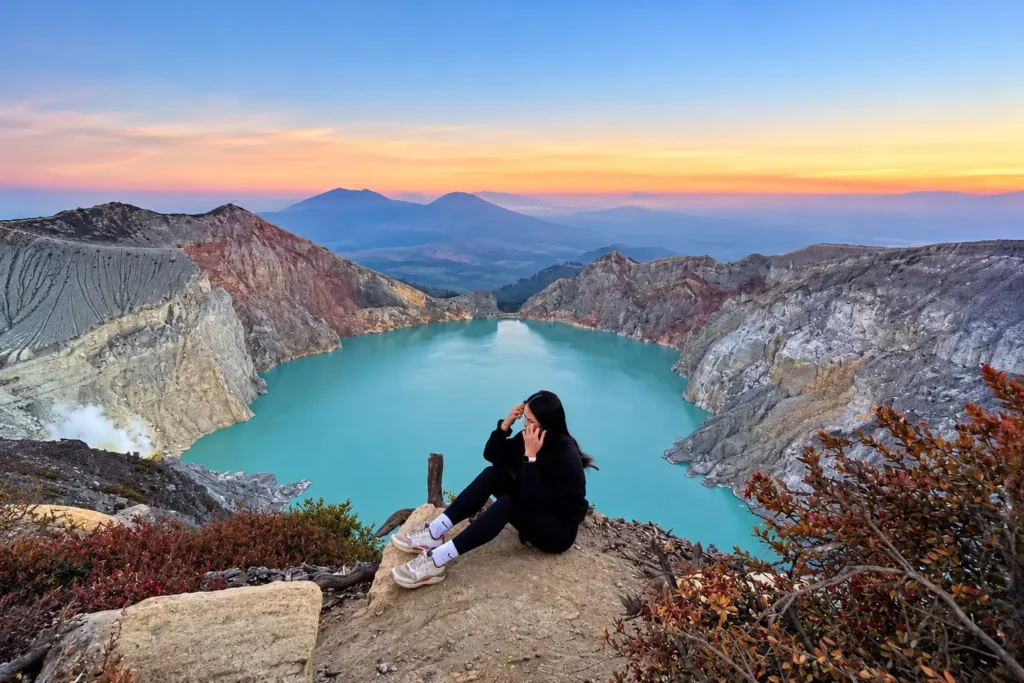
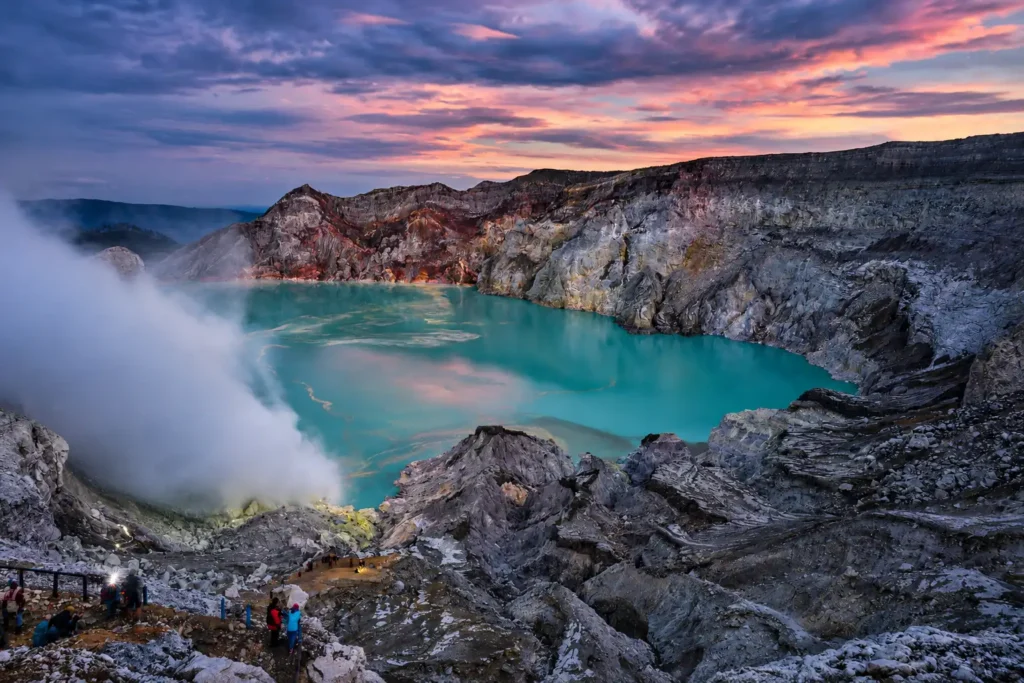
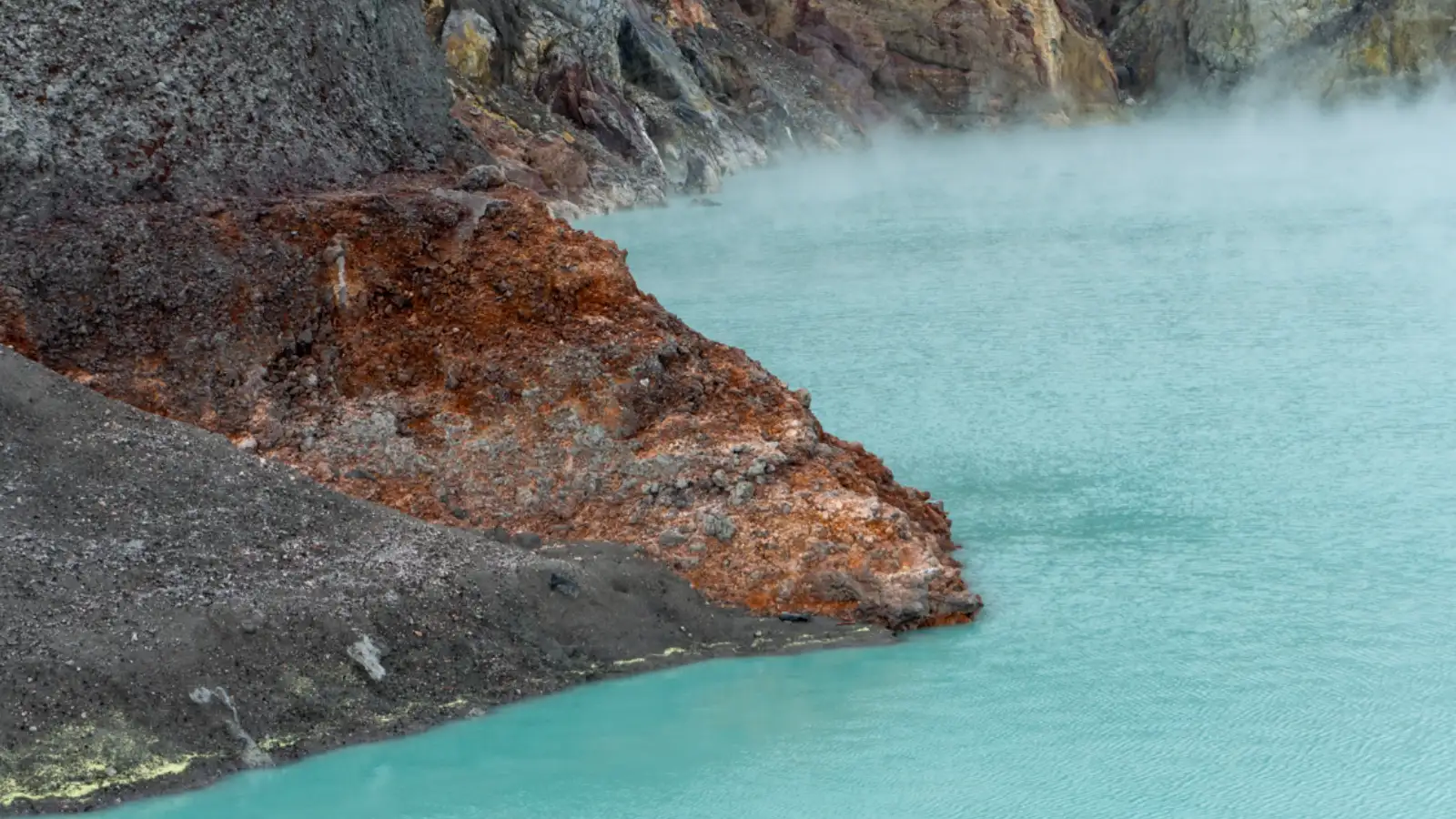
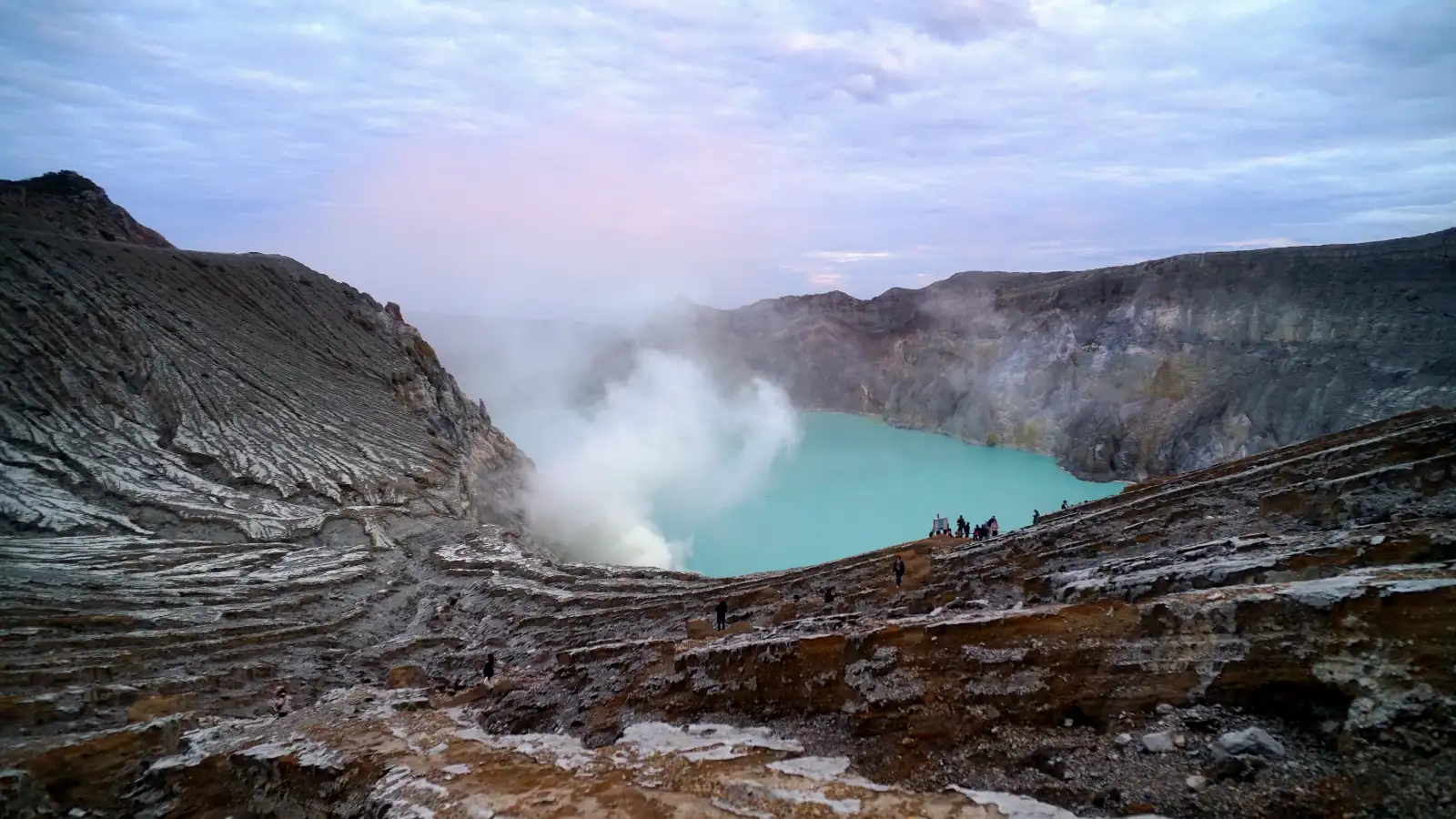
As dawn approaches, the blue flames fade, and a new spectacle begins: the sun rises over the turquoise Kawah Ijen lake. This acidic crater lake is one of the most vividly colored natural bodies of water on Earth. The views from the crater rim, or even from the ascent back up, are simply stunning as the landscape reveals itself in the morning light. It’s a perfect contrast to the darkness and intensity of the blue fire viewing.
First-Hand Experience: Insights from Our Local Team
From the ground here in Banyuwangi, we’ve guided countless travelers to Ijen. Our teams are up there almost daily. What we often tell folks is to prepare for the elements. That 3°C wind at Paltuding basecamp isn’t a joke, it bites right through light clothing. You’ll appreciate that hot kopi tubruk from the warung before you even hit the trail.
When you descend into the crater, even with a gas mask, you’ll sometimes feel the sulfur biting at the back of your throat. It’s a stark reminder that this is an active volcano. We’ve seen people rush, slip on dry volcanic gravel near the crater rim, and even worse, get overwhelmed by gases because they didn’t properly use their mask or listen to their guide. Honestly, follow the guide’s instructions. They know the wind shifts and the gas concentrations better than anyone.
And yes, while the blue fire you see today is a controlled replica, it’s still a truly unique visual. But don’t let that distract you from the immense effort of the sulfur miners. They carry those heavy loads up and down that difficult terrain multiple times a day. Their resilience is arguably the most impactful part of the experience. It grounds you. Remember, it’s not just about the fire; it’s about the entire volcanic environment and the human stories within it.
Practical Guide: Essential Information for Your Visit
Preparation Checklist: Don’t Forget These!
- Book a reputable tour: Essential for logistics, safety, and guide expertise.
- Acquire a Surat Keterangan Sehat (Health Certificate): Some regulations require this, especially post-pandemic. Check current requirements before you go.
- Train for altitude and incline: While not extreme, good fitness helps.
- Inform your guide of any health conditions: Respiratory issues are particularly important.
- Charge all electronics: No power outlets on the mountain.
Common Mistakes to Avoid
- Underestimating the cold: Bring layers, even a light hat and gloves.
- Skipping the gas mask: Even if you feel fine initially, gas conditions can change rapidly.
- Rushing the descent: The path into the crater is treacherous in the dark. Go slow.
- Ignoring your guide: Their knowledge of the mountain, gas conditions, and miner interactions is invaluable.
- Forgetting local etiquette: Be respectful of the miners and their workspace. No flash photography directly at them without permission.
Tour Options: Guided vs. Independent Travel
Deciding how to approach your Ijen visit can depend on your experience level and budget. Here’s a quick comparison:
| Option | Best For | Key Features | Pros | Cons |
|---|---|---|---|---|
| Guided Tour (Recommended) | First-timers, safety-conscious travelers, those wanting hassle-free logistics. | Includes transportation, permits, local guide, gas mask, expert safety briefing. | Maximum safety, local insights, smooth experience, no hidden costs. | Less flexibility in schedule, potentially higher cost than DIY. |
| Independent Travel | Experienced hikers, budget travelers, those seeking full autonomy. | Arrange your own transport, purchase permits, rent gear (gas mask) at Paltuding. | Full flexibility, potentially lower direct cost. | Higher risk without local guide, can be complex to arrange, potential for getting lost or encountering issues. |
Important Information & Warnings
Your safety is paramount at Kawah Ijen. This is an active volcano, and conditions can change rapidly.
- Volcanic Gas: Sulfur dioxide (SO2) is a serious health hazard. Always wear your gas mask when near the crater floor or if instructed by your guide. If you feel dizzy or experience severe irritation, retreat immediately.
- Weather Shifts: Mountain weather is unpredictable. Fog can roll in quickly, reducing visibility to zero, and sudden rain can make paths incredibly slick.
- BBKSDA Regulations: The BKSDA (Natural Resources Conservation Agency) manages Ijen. They enforce rules for visitor safety and environmental protection. This includes opening/closing times (currently, blue fire descent access is limited or sometimes closed entirely for safety), and permit requirements. Always respect their decisions.
- No Touching: Do not touch the crater lake water or any sulfur deposits with bare hands. The lake is highly acidic (pH < 0.5), and sulfur can cause skin irritation.
- Physical Demands: The trek requires moderate fitness. If you have heart conditions, severe asthma, or are pregnant, consult a doctor before attempting.
- Blue Fire Access: Access to the crater floor for blue fire viewing can be restricted by BBKSDA at any time if gas levels are too high or conditions are unsafe. This is for your protection.
Frequently Asked Questions
Is the Ijen Blue Fire still natural?
No. While the natural phenomenon of burning sulfur gases still occurs, the “blue fire” visible to tourists now is typically a controlled, visual replica orchestrated around sulfur pipes for safety and access reasons.
How difficult is the Ijen Crater trek?
It’s a moderate-difficulty trek. The main trail is a steady uphill climb for 1.5-2 hours. The descent into the crater is steep, rocky, and requires careful footing, especially in the dark.
Do I really need a gas mask for Ijen?
Absolutely. Sulfur gas levels on the crater floor can be dangerously high. A proper gas mask is essential to protect your respiratory system and eyes. Your tour operator should provide one.
Can I visit Ijen without a guide?
While technically possible to enter the park, we strongly advise against descending into the crater without a local guide. Their knowledge of gas conditions and safe routes is critical for your safety.
What is the best time to see the blue fire?
You must start hiking between 1:00 AM and 2:00 AM to reach the crater floor and witness the blue flames (replica) in total darkness before dawn breaks.
Is it safe to go to Ijen Crater?
Yes, with proper precautions. This means hiring a reputable guide, wearing appropriate gear (especially a gas mask), following all instructions, and respecting BBKSDA regulations. Conditions are monitored.
What else can I see at Ijen besides the blue fire?
The stunning turquoise acid lake, the incredible sunrise over the caldera, and the unique, arduous work of the sulfur miners are equally impactful and memorable parts of the Ijen experience.
Final Recommendation
Look, Kawah Ijen remains one of East Java’s most iconic and impactful destinations. While the “blue fire” experience today is largely a carefully managed visual replica, it absolutely doesn’t diminish the overall journey. You’re still witnessing a unique natural phenomenon, experiencing the challenging environment alongside incredible local miners, and greeting a spectacular sunrise over a truly surreal landscape.
To make the most of your trip, prioritize safety and clear expectations. Book with a trusted local operator who understands the dynamics of the mountain, provides proper gear, and prioritizes your well-being. This isn’t just a hike; it’s an immersion into a powerful, working volcano and a dynamic local culture.
Ready to experience Ijen for yourself? Our Banyuwangi team is here to help you plan a safe, smooth, and truly memorable trip. Book your Ijen Crater tour today and let us guide you through this incredible East Java wonder.