The Daily Life of Mount Ijen Sulfur Miners: The Brutal Truth
Imagine waking up at midnight while the rest of the world sleeps. Your office is the rim of an active volcano in East Java. Instead of fresh air, you breathe thick, toxic clouds of hydrogen sulfide gas that sting your eyes and burn your throat.
This is the reality for the men working at Kawah Ijen. For many travelers, this hike is a bucket-list adventure to see the famous blue fire. However, for the local community, it is a desperate and physically grueling way to earn a living.
Planning your journey to witness this firsthand requires respect and local knowledge. You can secure your spot and support local guides by booking your professional tour here today. Understanding the complete Ijen Crater guide is the first step toward a responsible visit.
What You Need to Know
The lives of the Ijen sulfur miners are defined by extreme physical endurance and constant exposure to volcanic hazards. They carry loads weighing up to 90 kilograms on their shoulders. Most miners make this journey twice a day, navigating steep, slippery terrain in total darkness.
Their health is often compromised by the lack of protective gear. While tourists wear high-end respirators, many miners use only wet cloths between their teeth. This work is one of the most dangerous manual labor jobs on the planet.
Why Trust This Guide
We are not just writers; we are local operators based in East Java. Our team spends every week at the Paltuding basecamp and the crater rim. We know the miners by name and understand the shifting rhythms of the volcano.
Experience on the ground has taught us that the situation at Ijen changes hourly. Volcanic gas directions shift without warning, and what you see on Instagram is often far from the gritty reality. We provide raw, honest insights to help you navigate this complex landscape safely.
Our commitment to the local community ensures that the information we provide supports ethical tourism. We prioritize safety and respect for the people who call this volcano their workplace. Trust us to give you the real story behind the “yellow gold.”
The Midnight Ascent: A Race Against the Sun
For a miner, the day doesn’t start with coffee and a sunrise. It begins at 1 AM in the pitch-black shadows of the Paltuding basecamp. The air is often freezing, with temperatures dropping below 5 degrees Celsius.
They begin the three-kilometer climb up the steep volcanic slopes. Many carry empty bamboo baskets across their calloused shoulders. The sound of their rhythmic footsteps on the loose volcanic rock is the only thing breaking the silence.
While travelers struggle with modern hiking boots and headlamps, many miners wear simple rubber boots. They move with an agility that comes from years of repetition. Their goal is to reach the crater floor before the sun makes the heat unbearable.
The Steep Path to the Rim
The first section of the trail is incredibly steep. It challenges even the fittest backpackers. For the miners, this is just the warm-up before the real work begins at the summit.
They navigate narrow paths where a single slip could be disastrous. The trail is shared with tourists, leading to a strange juxtaposition of worlds. One person is there for a photo; the other is there for survival.
The Descent Into the Abyss
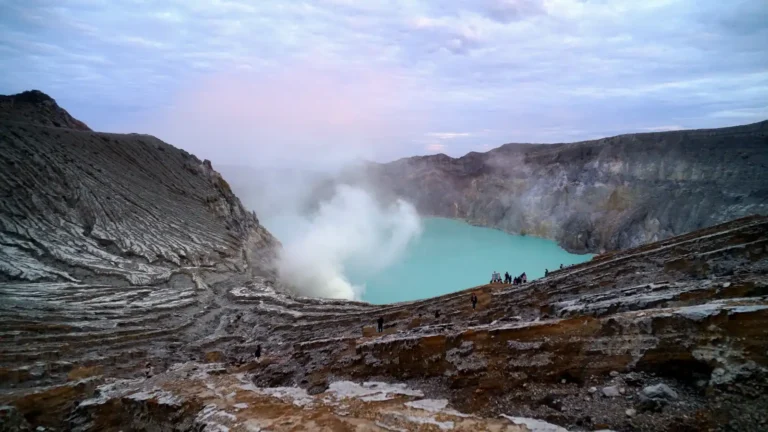
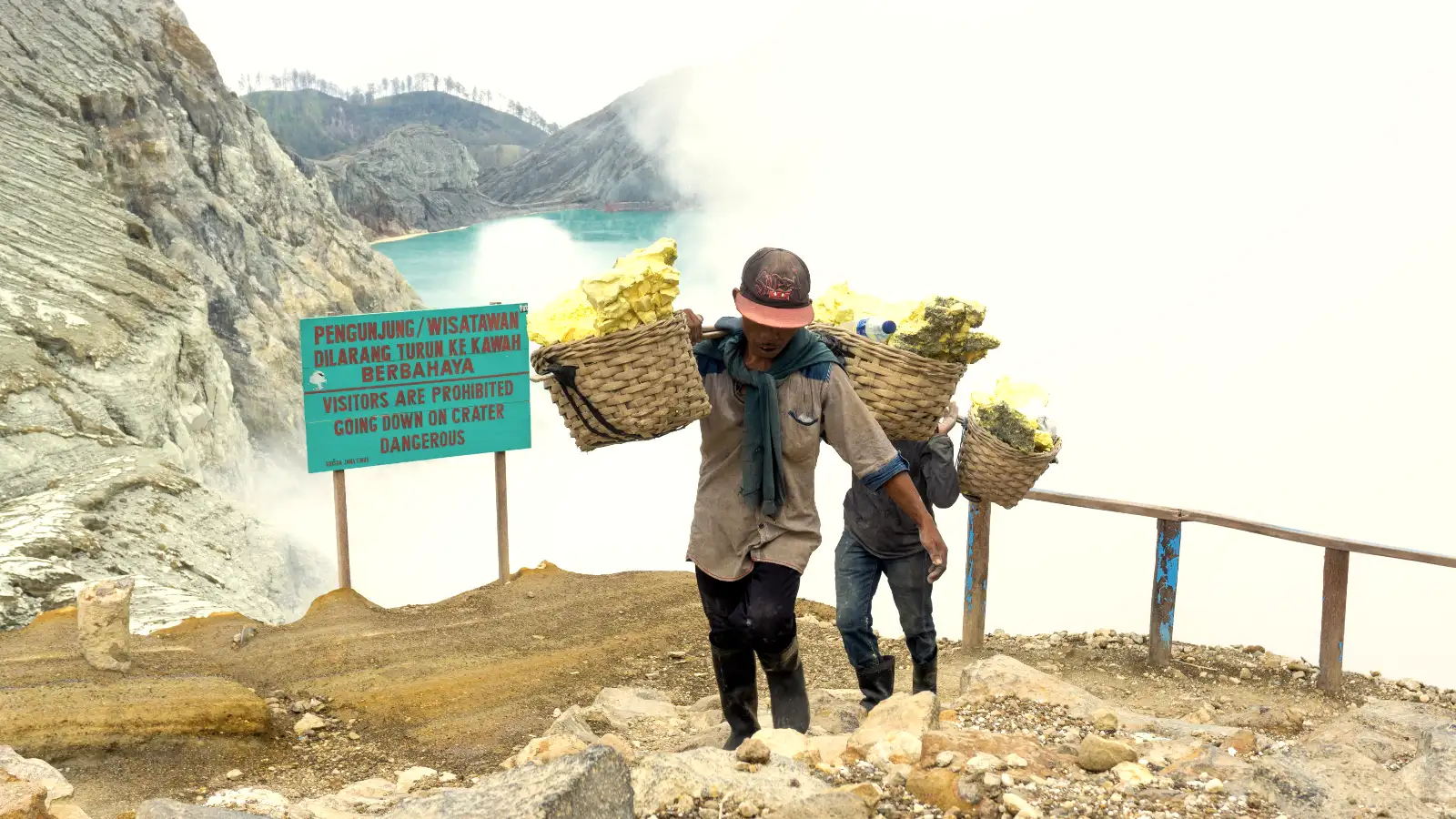
Once at the rim, the miners must climb down 300 meters into the crater itself. This is where the danger intensifies. The path is a jagged staircase of loose stones and sharp volcanic rock.
Toxic fumes rise from the vents below, often obscuring the path. The miners know every rock and every turn. They move downward as the acidic lake glows a ghostly teal in the darkness.
The Chemistry of the Crater: How Sulfur is Formed
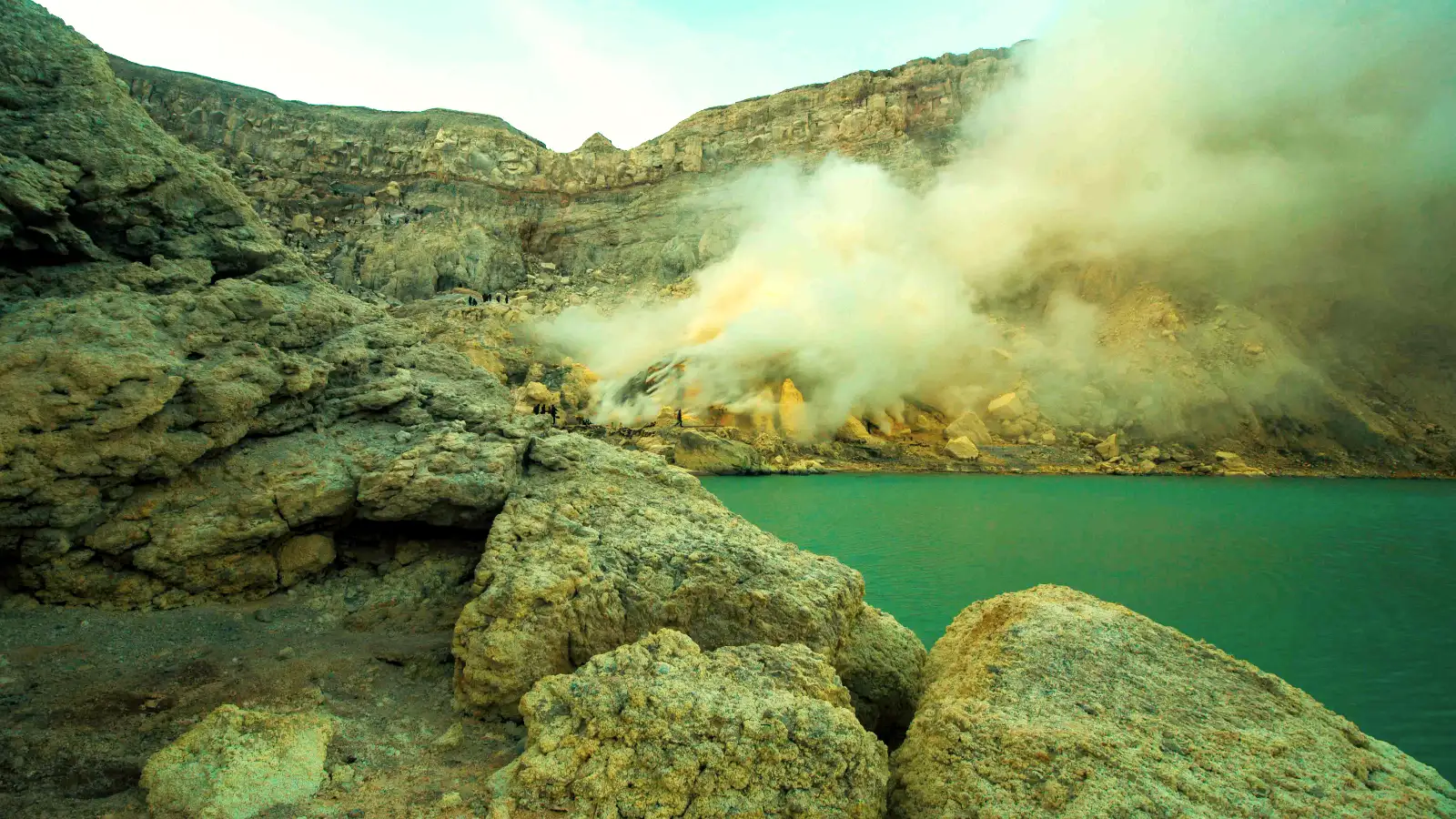
The science behind this hellish landscape is fascinating. Deep within the volcano, magmatic gases rise toward the surface. These gases are rich in sulfur dioxide and hydrogen sulfide.
Mining companies have installed ceramic pipes over these active vents. The pipes channel the hot gases, which then cool and condense into liquid sulfur. This liquid flows out of the pipes like molten red lava.
As it cools further, it turns into the bright yellow solid that the miners seek. This process is continuous, creating a never-ending supply of “yellow gold.” The environment is so acidic that it can dissolve metal tools over time.
Harvesting the Molten Ore
Miners use iron bars to break the solidified sulfur into large chunks. This is a delicate task. They must stand close to the vents where the gas is most concentrated.
When the wind shifts, they are suddenly engulfed in white, suffocating clouds. Most have no gas masks. They simply hold their breath or bite down on a damp cloth to filter the worst of the toxins.
If you are planning to witness this incredible human endurance, we recommend checking out our specialized Ijen Crater tour. For those wanting a broader East Javanese experience, our Mount Bromo tour and the combined Bromo Ijen tour offer the perfect balance of adventure and logistics. Discover the wonders of the East Java tour region with our local experts.
The Acid Lake Hazard
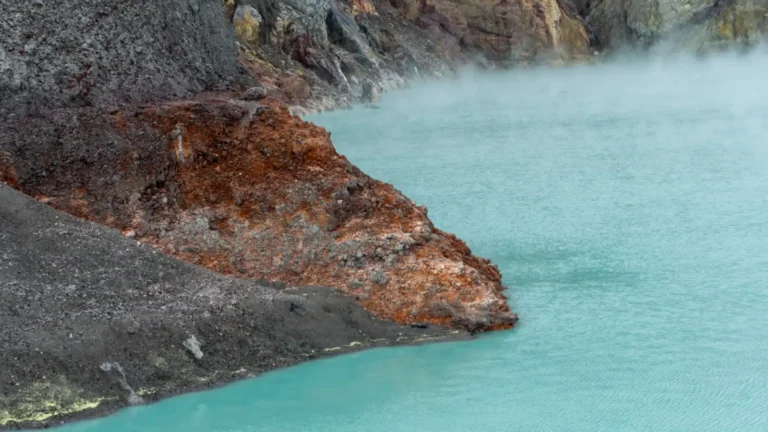
The miners work just meters away from a lake that is essentially a giant vat of sulfuric acid. With a pH of nearly 0.5, it is the most acidic crater lake in the world.
One wrong step during a gas cloud event could lead to a fall into the burning liquid. The miners treat the lake with a mixture of fear and respect. They know it is the source of their income, but also a potential grave.
The Burden of Yellow Gold: Carrying 90kg Loads
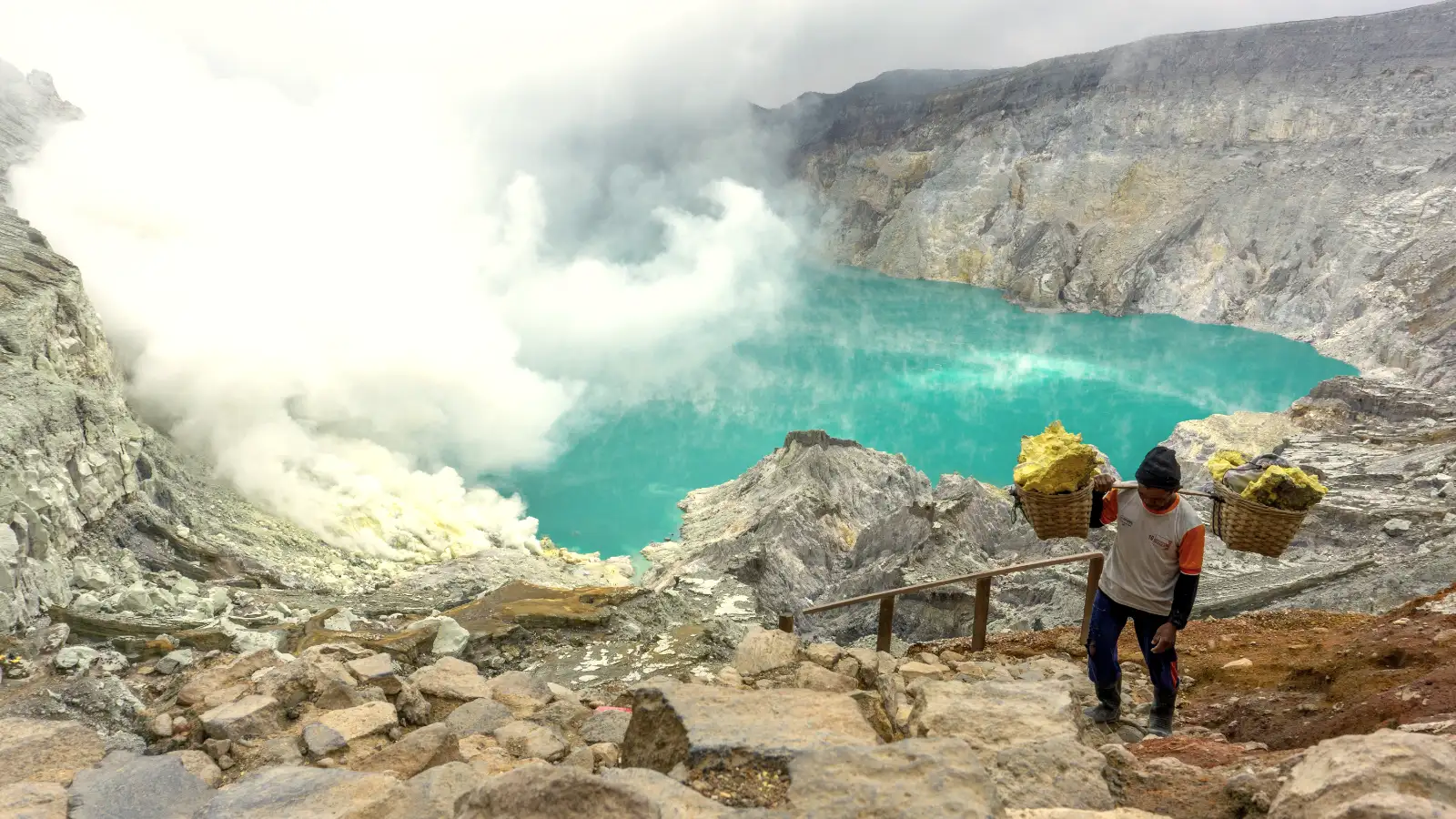
Once the baskets are full, the true test of human strength begins. A typical load for a miner ranges from 70 to 90 kilograms. This is often more than the miner’s own body weight.
They must carry these baskets back up the 300-meter vertical incline of the crater. The weight causes the bamboo pole to flex and bounce with every step. This “bounce” is actually a technique used to maintain momentum and reduce the impact on their joints.
Watching them climb is a sobering experience for any tourist. You can hear their heavy breathing and the creak of the bamboo. They rarely stop, as stopping makes it harder to start again.
The Art of the Balanced Load
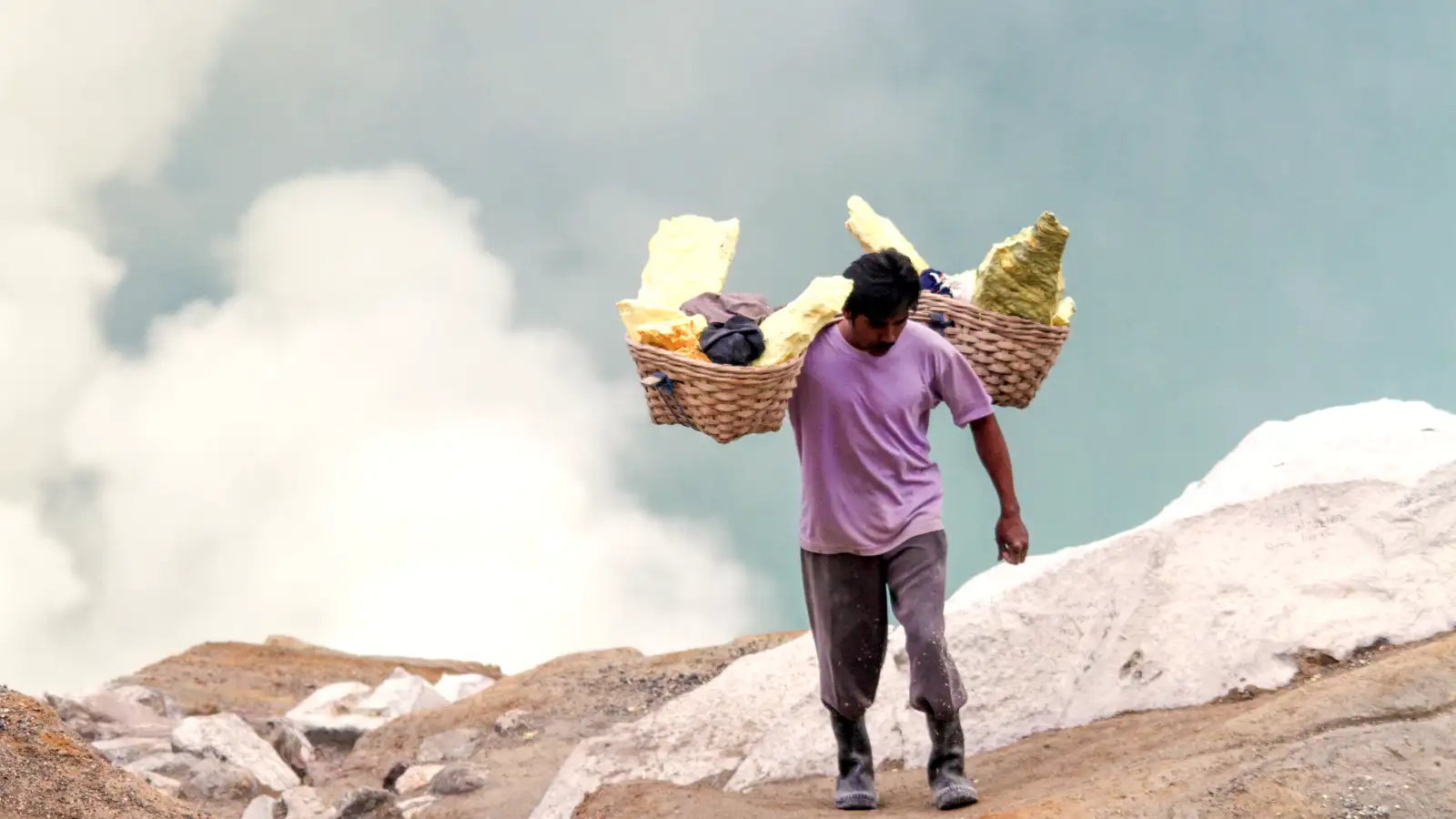
Balance is everything when you are carrying 80kg on your shoulder. The miners carefully arrange the sulfur blocks in the baskets to ensure they don’t tip. They use a specific shuffling gait to minimize the shock to their spine.
If you look at the shoulders of an experienced miner, you will see thick, permanent calluses. These are scars earned from decades of carrying the baskets. Their physical resilience is almost superhuman.
The “Trolley” Innovation
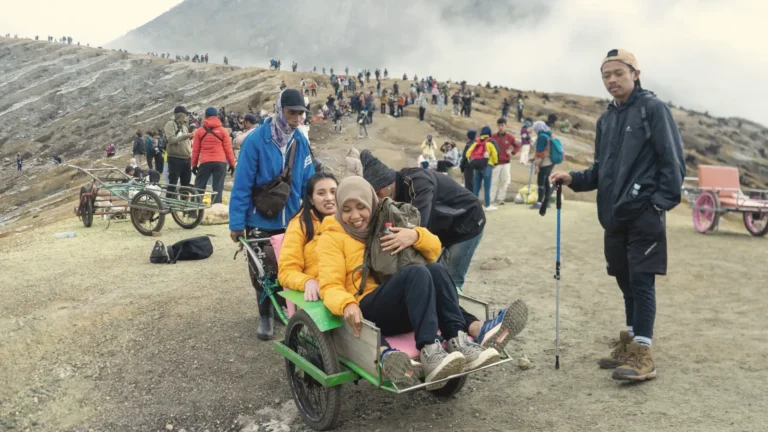
In recent years, many miners have started using modified steel trolleys for the descent from the rim. While they still carry the baskets up from the crater floor, the trolleys make the 3km trip down to Paltuding much easier.
These trolleys are also used to transport tourists who cannot make the hike. This has created a secondary income for the miners. However, the work remains incredibly taxing on their legs and brakes.
The Invisible Toll: Health and Longevity
The most tragic part of the miner’s daily life is the long-term impact on their health. Chronic exposure to high levels of sulfur dioxide leads to severe respiratory issues.
Many miners suffer from permanent lung damage and shortened life expectancies. The gas also dissolves the enamel on their teeth over time. Despite these risks, the economic necessity keeps them returning to the crater.
They earn about 1,200 to 1,500 Indonesian Rupiah per kilogram of sulfur. This means a single trip might earn them less than 10 USD. In this region, however, that is considered a high-paying job.
The Psychology of the Mine
Why do they do it? For many, it is about providing a better future for their children. They want their sons and daughters to go to university so they never have to carry a sulfur basket.
There is a strong sense of brotherhood among the miners. They share cigarettes, jokes, and coffee during their breaks. This camaraderie is what helps them endure the brutal conditions day after day.
Tourism and Ethics: How to Be a Better Traveler
As a traveler, your presence at Ijen has a direct impact. It is crucial to remember that you are a guest in someone else’s workplace. Seeing a Blue Fire Ijen phenomenon is a privilege, not a right.
Always give way to the miners on the trail. They are carrying heavy loads and cannot easily stop. Step to the side of the path and let them pass before you continue your hike.
If you want to take a photo of a miner, ask for permission first. Most are happy to oblige, but it is respectful to offer a small tip or buy a sulfur carving from them. These small gestures go a long way in supporting the local economy.
The “Taxi” Trolley Controversy
Using the trolley service is a personal choice. Some see it as exploitative, while others see it as a vital source of income for miners who can no longer carry heavy loads.
If you choose to use a trolley, pay the full price without aggressive haggling. The physical effort required to push a person up and down a volcano is immense. Treat the men with the dignity they deserve.
Supporting the Community Directly
Consider hiring a local guide who was formerly a miner. They have the best stories and the deepest knowledge of the volcano. Your money goes directly to someone who has truly earned it in the crater.
Donations of high-quality respirators or warm clothing are also greatly appreciated. Many miners lack the resources to buy proper safety gear. These items can literally save lives in the toxic environment of the crater floor.
Continue Your Adventure
Witnessing the strength of the Ijen miners is a life-changing experience that pair perfectly with a Mount Bromo sunrise tour. Many travelers choose to explore the entire region by booking a comprehensive East Java package. For a seamless journey, our Bromo Ijen combo tour ensures you see the best of both worlds with professional local guides. Let us handle the logistics so you can focus on the incredible East Java highlights.
Ready to Witness This Human Story?
Join us for a journey that goes beyond the typical tourist path. We offer ethical, safe, and deeply insightful tours led by the locals who know these mountains best.
Frequently Asked Questions (FAQ)
Q: How much do the sulfur miners earn per day?
A: Most miners earn between $10 and $15 USD per day, depending on how many loads they can carry. This is significantly higher than the local average wage for farm labor, which is why they continue this dangerous work.
Q: Can I help the miners by giving them gear?
A: Yes, giving high-quality N95 or gas mask filters, warm socks, or gloves is a wonderful way to help. Many miners will be very grateful for gear that protects them from the harsh volcanic environment.
Q: Is it safe to talk to the miners?
A: Generally, yes! Many miners are very friendly and may even know a bit of English. Just be mindful not to distract them when they are carrying a heavy load or navigating steep sections of the trail.
Q: Why don’t they use machines to mine the sulfur?
A: The terrain is too steep and unstable for heavy machinery. Additionally, the acidic gas environment would corrode mechanical parts very quickly. Manual labor remains the most “cost-effective” method for the mining company.
Q: How bad is the gas for a tourist compared to a miner?
A: As a tourist, you are only exposed for 30 to 60 minutes with a professional respirator. Miners are exposed for hours every single day, often without protection. The difference in long-term health impact is massive.