
The Definitive 2026 Guide
The Ultimate Guide to Ijen Crater Tour from Bali 2026
Embark on a journey to East Java to witness the world’s largest acidic lake and the legendary electric blue fire. This comprehensive guide covers everything from Bali logistics to photography secrets for your epic volcanic expedition.
The Ijen Crater tour from Bali typically requires a 24-hour round trip or a multi-day excursion involving a ferry crossing to Java. The best time to visit is during the dry season (April to October) for clear views of the blue fire and the turquoise lake. Expect a moderately challenging 2-hour uphill hike starting at midnight to catch the nocturnal phenomena.
- Geological & Historical Significance
- Logistics: Traveling from Bali to Java
- The Best Time to Visit & Weather
- Top Highlights: Blue Fire & Sunrise Viewpoints
- Photography Tips for Professionals
- Essential Packing List & Safety
1. Comprehensive Overview of Ijen Crater
Located on the eastern edge of Java, the Ijen volcano complex is a geological marvel that has captivated scientists and travelers for decades. Known officially as Kawah Ijen, it is part of the Ijen volcano group, a collection of stratovolcanoes situated within a massive 20-kilometer-wide caldera. What makes this destination globally unique is its one-kilometer-wide turquoise-colored acidic crater lake, which holds the title of the world’s largest highly acidic lake.
The history of Ijen is deeply intertwined with the local culture and the grueling labor of sulfur mining. For generations, miners have ascended the crater rim and descended into the depths of the volcano to harvest solid sulfur. Understanding the essential Ijen Crater facts provides a deeper appreciation for the landscape you are about to traverse. The volcano remains active, with the volcanic activity constantly monitored by the Indonesian Center for Volcanology and Geological Hazard Mitigation to ensure traveler safety.
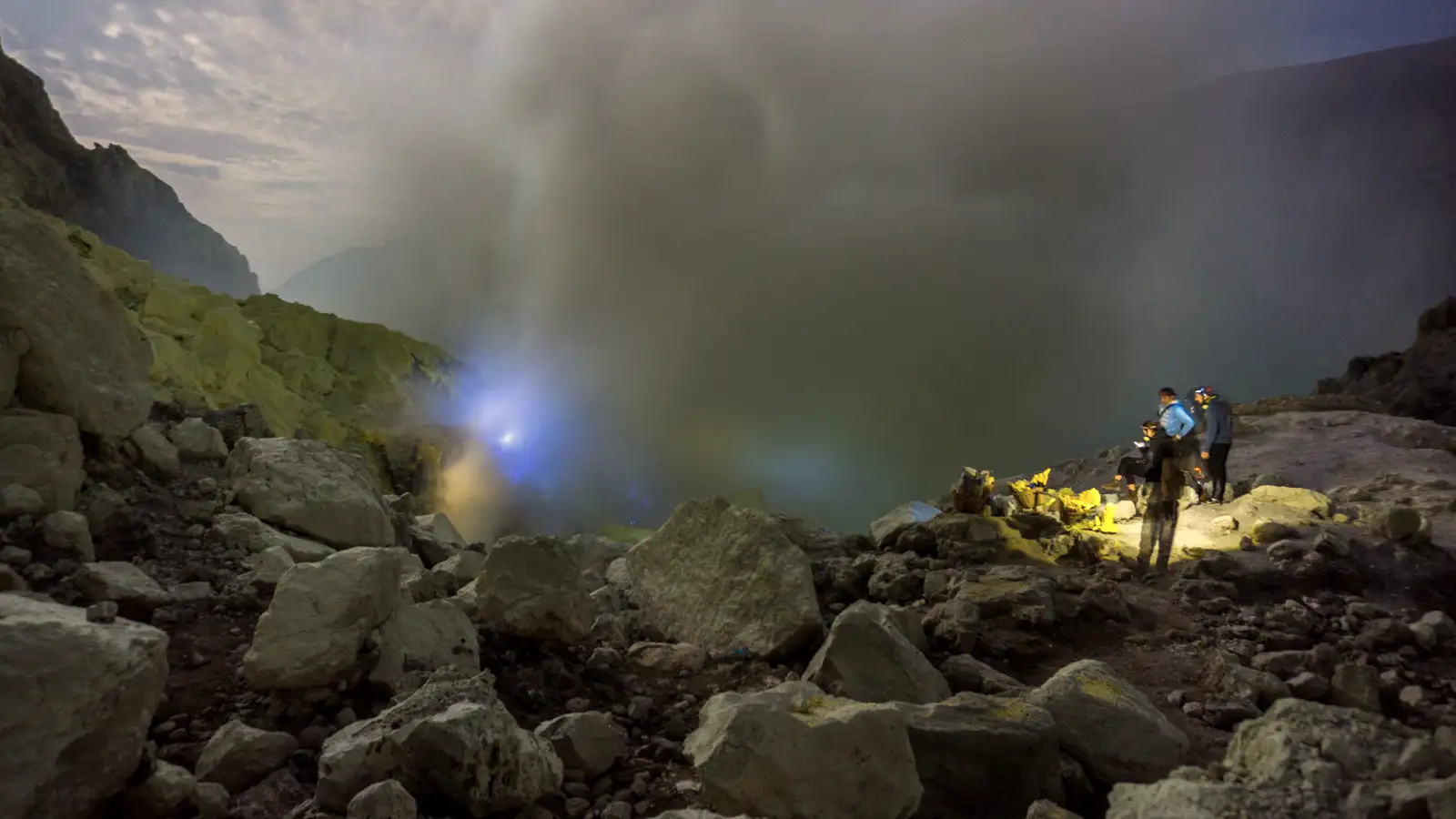
Many travelers assume the “Blue Fire” is lava, but as local experts, we clarify that it is actually a chemical reaction. When high-pressure sulfuric gases (reaching temperatures up to 600°C) emerge from volcanic vents and meet the oxygen-rich air, they ignite into brilliant blue flames. This phenomenon is only visible in the dark, which is why our tours depart Bali before midnight to ensure you reach the crater floor before dawn.
2. How to Get There: The Bali to Java Transit
Reaching Ijen from Bali is a logistical feat that requires careful planning. Most travelers begin their journey in popular hubs like Ubud, Canggu, or Seminyak. The route involves a long drive to Gilimanuk Harbor on Bali’s western tip, followed by a 45-to-60-minute ferry crossing to Ketapang in Banyuwangi, Java. For those seeking a seamless experience, learning how to travel from Bali to Ijen safely is paramount, as the roads in West Bali can be winding and dark at night.
Once you arrive in Banyuwangi, it is another 1.5-hour drive by 4WD vehicle to reach Paltuding, the base camp and entrance to the Ijen National Park. For those who prefer a more relaxed pace, we recommend staying overnight in Java. You can find detailed recommendations on where to stay near Mount Ijen to ensure you are well-rested before the midnight hike. Official travel information can also be found at Indonesia Travel.
3. The Best Time to Visit
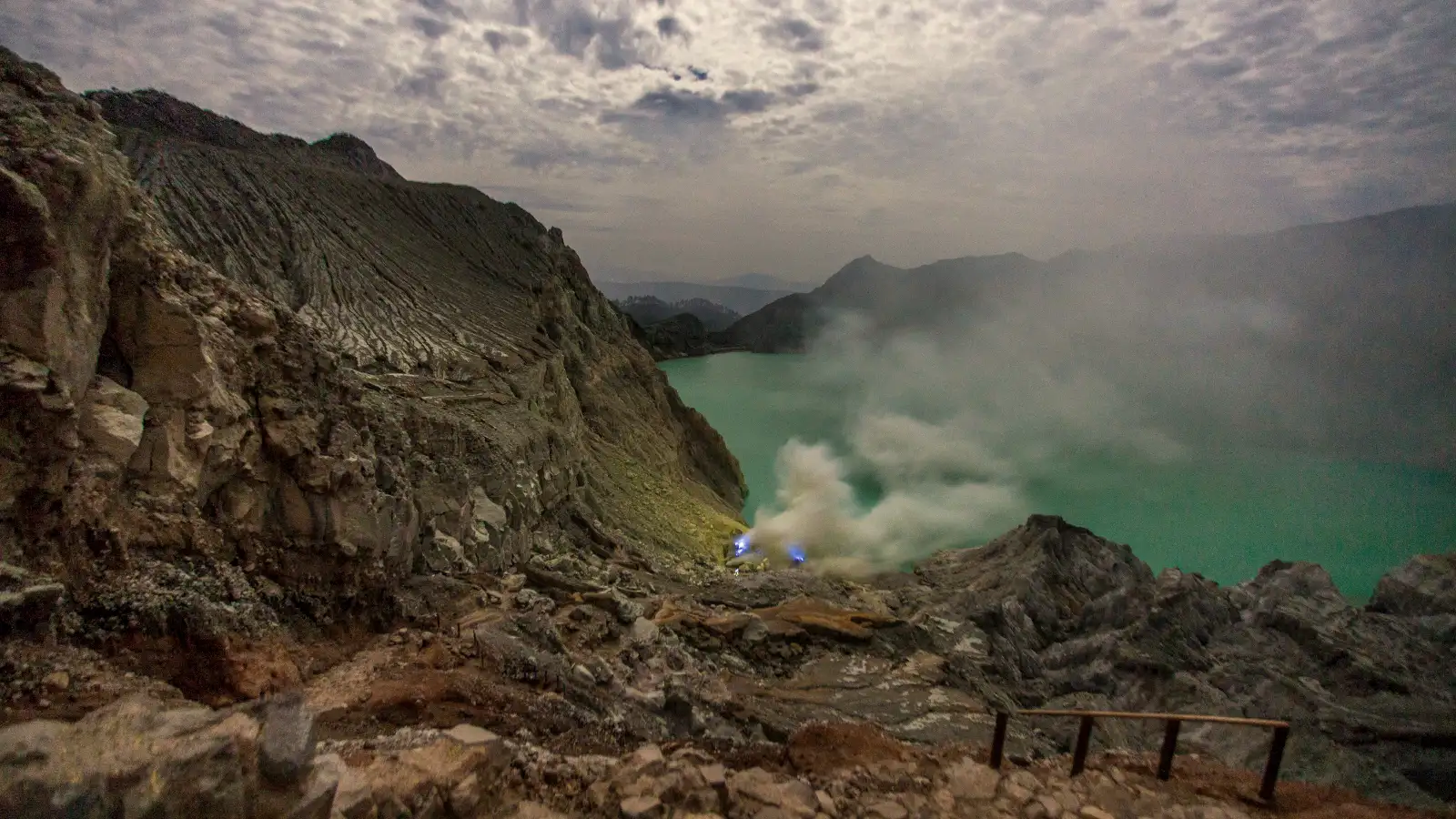
Timing is everything when planning an Ijen Crater tour from Bali. The Indonesian archipelago experiences two primary seasons: wet and dry. To maximize your chances of seeing the blue fire and the Milky Way, you should aim for the dry season. For a deeper dive into monthly weather patterns, consult our best time to visit Ijen guide.
- Dry Season (April – October): This is the peak window. The skies are clear, the trails are less slippery, and the visibility of the acidic lake is at its highest.
- Milky Way Season (June – August): For photographers, this is the prime time for astrophotography. The lack of cloud cover allows for stunning shots of the galaxy over the volcanic rim.
- Wet Season (November – March): While tours still operate, heavy rain can lead to trail closures and thick fog that obscures the blue fire and the lake views.
Temperature is another critical factor. While Bali remains tropical, the summit of Ijen can drop to 5°C or lower before sunrise. Check our Ijen temperature guide to prepare for the significant micro-climate shift between the beach and the volcano.
Explore Specific Ijen Crater Tour Packages
Ready to plan your trip? Explore our curated packages departing from various cities to find the perfect fit for your itinerary. These tours are designed to handle all logistics, including ferries, gas masks, and local guides.
Ijen Tour from Denpasar
Ijen Tour from Ubud
Ijen Tour from Seminyak
Ijen Tour from Canggu
4. Top Highlights & Viewpoints
The Ijen experience is more than just a hike; it is a multi-sensory adventure. From the moment you begin the ascent under a blanket of stars to the final descent into the caldera, several key highlights define the journey.
- The Electric Blue Fire: This rare phenomenon is the primary reason travelers make the midnight trek. We provide a detailed explanation of the blue fire to help you understand the chemistry behind the glow.
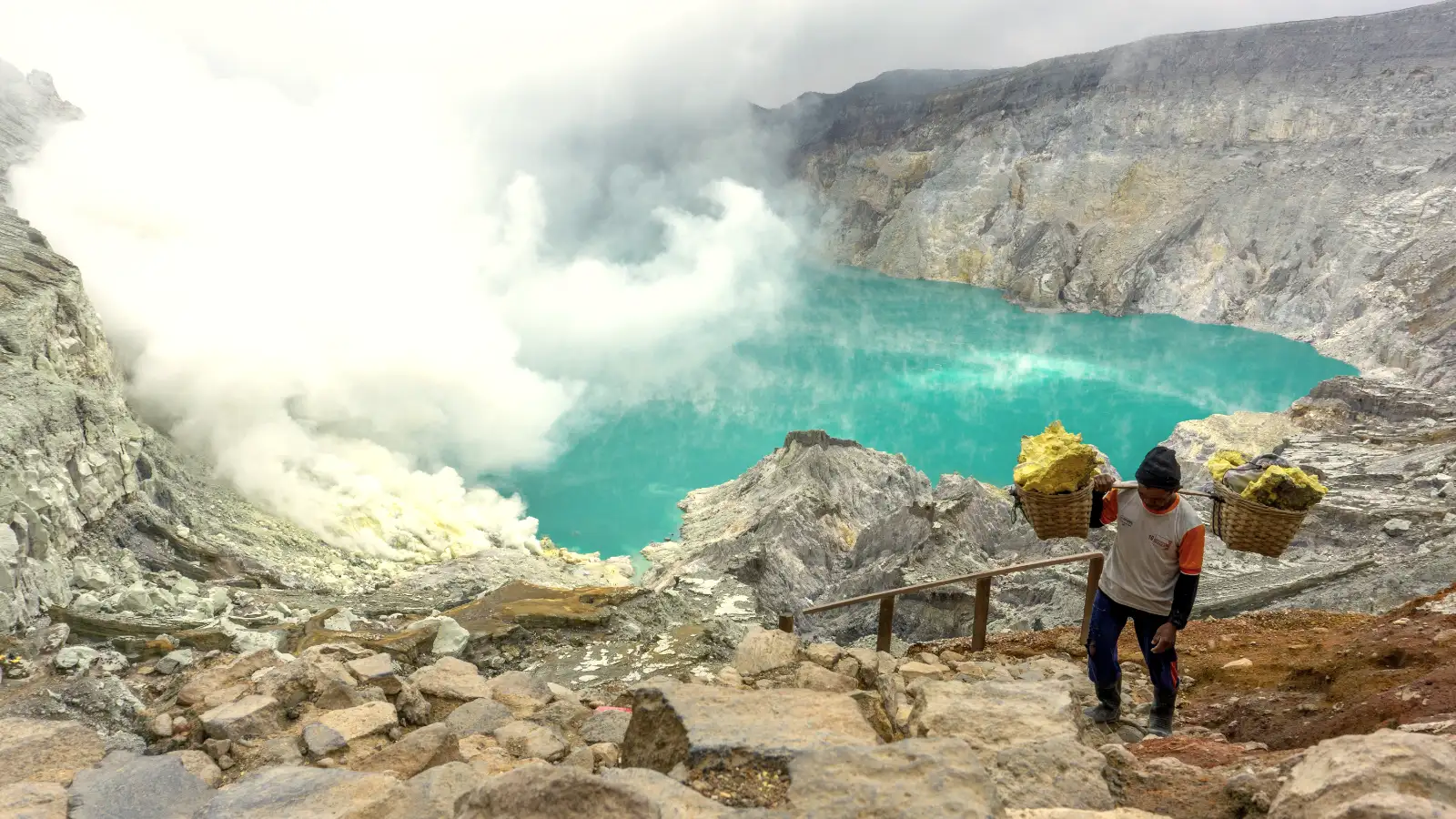
- The Acidic Turquoise Lake: As the sun rises, the dark abyss transforms into a vibrant, milky-turquoise lake. With a pH of nearly 0, it is incredibly beautiful yet dangerous.
- The Sulfur Miners: Witnessing the strength of the Ijen sulfur miners is a humbling experience. These men carry up to 90kg of sulfur in bamboo baskets up steep crater walls.
- The Dead Tree Viewpoint: A favorite for Instagrammers and professional photographers, this spot features skeletal trees against the backdrop of the turquoise lake. Learn how to navigate to Ijen’s best photo spots here.
5. Photography Tips for Ijen Crater
Capturing the beauty of Ijen requires specific gear and techniques, especially for the low-light blue fire. Independent photographers should bring a tripod and a fast lens (f/2.8 or wider). For comprehensive settings, see our guide on Ijen Crater photography. If you are aiming for the stars, our astrophotography guide covers the exact timing for the Milky Way.
For those using mobile devices, modern sensors can capture the blue fire, but stability is key. Check our smartphone photography tips for the best results. Additionally, if you plan to fly a drone, be aware of the Ijen drone regulations to avoid fines or equipment damage from sulfuric gases.
6. Expert Tips & Preparation
Preparation is the difference between an enjoyable trek and a grueling ordeal. The hike is 3 kilometers long with a 450-meter elevation gain. While most fit travelers can manage, those with physical limitations can utilize the Ijen trolley taxi service, where local miners assist you up the mountain in a modified cart.
Essential Packing List
- Gas Mask: Mandatory for descending to the blue fire due to toxic sulfur fumes.
- Headlamp: Essential for the midnight ascent; keep your hands free for climbing.
- Layered Clothing: A windbreaker and fleece are necessary for the cold summit.
- Hiking Boots: The trail is dusty and can be slippery; sneakers are not recommended.
Need Help Planning Your Trip?
Our local travel experts are ready to customize the perfect itinerary for your adventure.
Frequently Asked Questions
1. How long does the Ijen Crater tour from Bali take?
A standard day tour from Bali takes approximately 24 hours. You typically depart Bali around 7:00 PM, arrive at the crater for the midnight hike, and return to Bali by the following evening. Multi-day tours are recommended for a more relaxed pace.
2. Is the Ijen Crater hike difficult?
The hike is considered moderately challenging. The first 2 kilometers are a steep uphill climb on a dirt path, followed by a flatter section. The descent into the crater to see the blue fire is rocky and requires good balance and a gas mask.
3. Can I see the Blue Fire every night?
The blue fire is a natural phenomenon and depends on volcanic activity and weather conditions. It is most visible in complete darkness (before 5:00 AM) and during the dry season when there is no rain to suppress the gas ignition.
4. Do I really need a gas mask for Ijen?
Yes, a professional gas mask with a chemical filter is essential if you plan to descend into the crater or if the wind shifts sulfur clouds toward the rim. Standard surgical masks offer no protection against sulfuric acid gas.
5. Is Ijen Crater safe for children?
We generally recommend Ijen for children aged 10 and older who are accustomed to hiking. The steep terrain and potential exposure to sulfur fumes require caution. The “trolley taxi” service is an option for younger children or seniors.