
East Java’s volcanic landscape offers more than just the iconic Mount Bromo. Surrounded by a magnificent caldera, several other significant peaks create a stunning panorama and present unique trekking opportunities. This guide explores the prominent mountains around Mount Bromo, providing essential facts, logistical insights, and local tips for an unforgettable adventure through these powerful natural wonders. Prepare to witness some of Indonesia’s most dramatic scenery.
Quick Facts About the Tengger Mountains & Bromo Region
| Feature | Details |
|---|---|
| Location | East Java, Indonesia (Tengger Mountains volcanic complex) |
| Key Peaks | Mount Bromo (2,329m), Mount Batok (2,440m), Mount Semeru (3,676m), Mount Kursi (2,581m), Mount Widodaren (2,614m), Mount Ijen (2,386m) |
| Best Time to Visit | Dry season (May to October) for clearer views and safer trekking conditions. |
| Primary Access | Surabaya (SUB), Malang (MLG), or Banyuwangi (BWX) airports. Ferry from Gilimanuk (Bali) to Ketapang (Java). |
| Mandatory Transport (Bromo) | 4WD Jeep required to cross the ‘Sea of Sand’ to sunrise viewpoints and the Bromo crater base. |
| Ijen Specifics | Paltuding (1,850m) is the starting point. Official trail opens 02:00 AM WIB. Mandatory Health Certificate (Surat Keterangan Sehat) required for entry. Lake pH < 0.5. |
| Elevation Gain (Bromo Crater Hike) | Approximately 250 steps from the base of the Bromo crater. |
| Average Pre-dawn Temp. | 3°C to 10°C, especially at higher viewpoints like Penanjakan 1 (2,770m). |
| Time Zone | Western Indonesian Time (WIB), UTC+7 (Java is one hour behind Bali’s UTC+8). |
The Majestic Tengger Caldera: Peaks and Panoramas
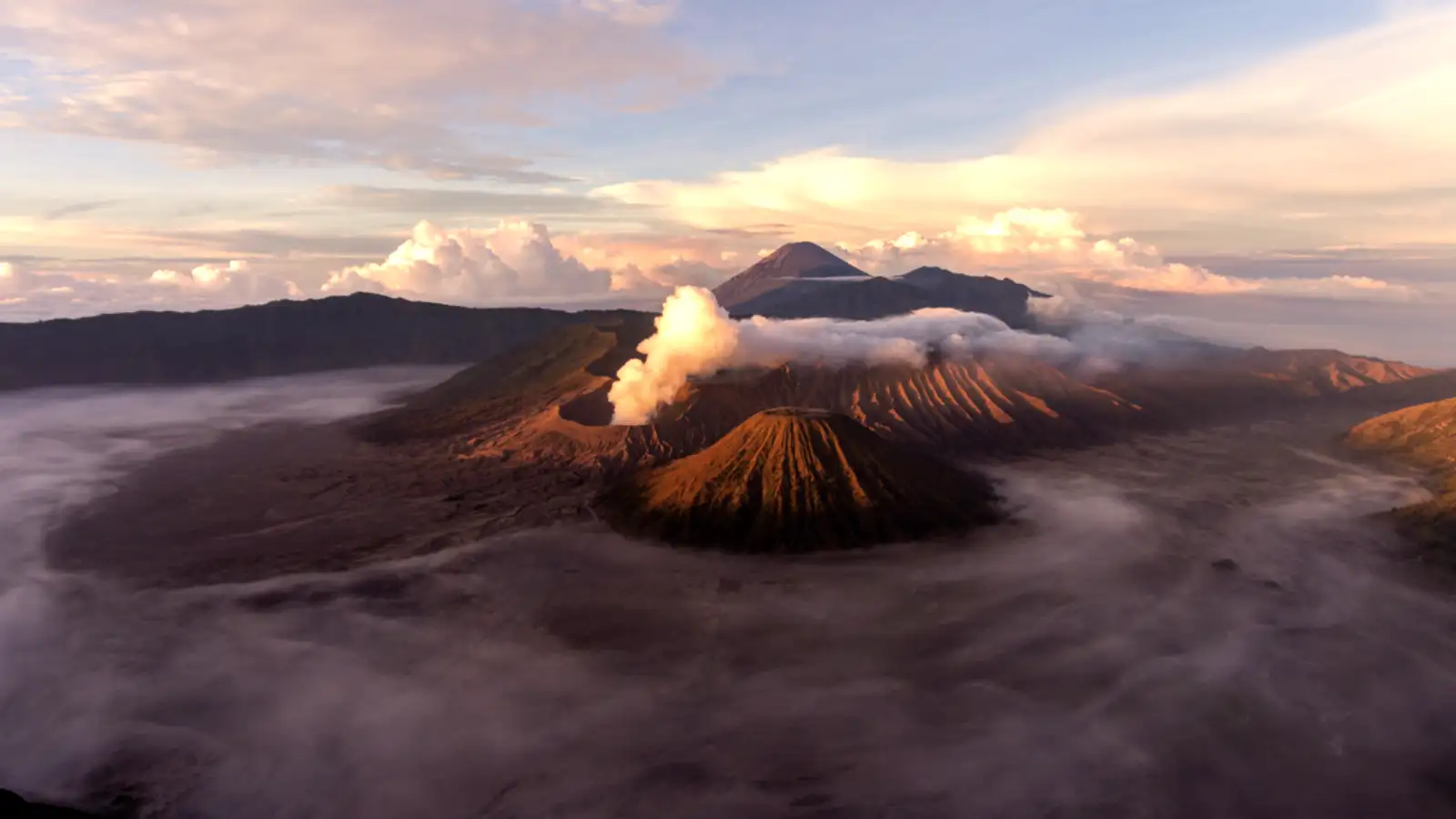
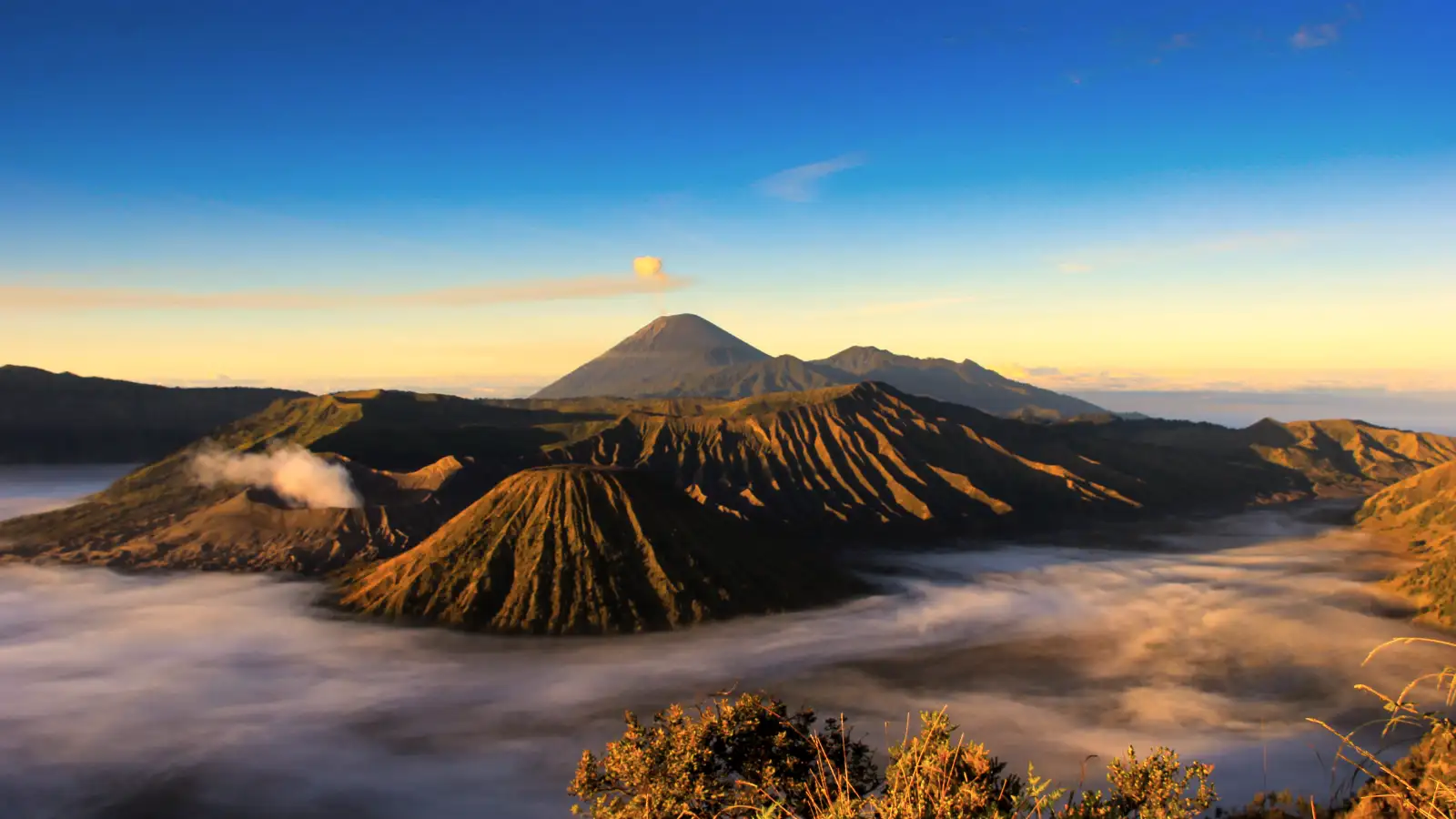
The Mount Bromo area is at the heart of the ancient Tengger Caldera, a vast volcanic depression formed by a colossal eruption thousands of years ago. Within this stunning geological feature, several mountains rise dramatically from the ‘Sea of Sand’ (Lautan Pasir), each contributing to one of the most iconic sunrise panoramas in the world.
Mount Bromo: The Enduring Icon (2,329m)
Mount Bromo, though not the highest peak in the region, is undoubtedly the most famous. Its active crater continually emits white sulfurous smoke, offering a powerful reminder of nature’s raw energy. Reaching the crater rim typically involves an early morning 4WD jeep ride across the vast ‘Sea of Sand’, followed by a short hike and a climb up approximately 250 concrete steps. The ultimate Bromo experience involves witnessing the sunrise from one of the many viewpoints overlooking the caldera, such as Penanjakan 1 (2,770m) or King Kong Hill (2,680m). From these vantage points, the scale of the Tengger massif unfolds before you, with Bromo taking center stage.
Mount Batok: The Sculpted Twin (2,440m)
Immediately adjacent to Bromo, Mount Batok stands out with its distinctively deeply eroded, tree-covered slopes. This extinct volcano contrasts sharply with Bromo’s barren, ash-grey cone, creating a visually striking pair. Batok holds spiritual significance for the local Tenggerese people, who consider it a sacred site. It is almost always captured alongside Bromo and Semeru in the classic sunrise photographs, its verdant slopes a striking counterpoint to the volcanic desolation.
Mount Semeru: The Mighty Mahameru (3,676m)
Dominating the southern horizon from the Tengger caldera is Mount Semeru, Java’s highest volcano and one of Indonesia’s most active. Its majestic, often smoke-plumed peak, known locally as Mahameru, erupts regularly every 20-30 minutes, producing plumes of ash and steam that are often visible from the Bromo viewpoints. Trekking Semeru is a challenging multi-day endeavor, reserved for experienced mountaineers with proper permits and guides. For most visitors to Bromo, Semeru serves as a powerful, ever-present backdrop, a symbol of Java’s formidable volcanic power.
Mount Kursi (2,581m) and Mount Widodaren (2,614m)
Within the expansive Tengger caldera, other notable peaks like Mount Kursi and Mount Widodaren further contribute to the dramatic landscape. These mountains are generally less frequented by tourists aiming for the summit but are integral to the caldera’s geological formation. Mount Widodaren is particularly significant to the Tenggerese community, being home to a sacred cave, adding a cultural layer to the natural beauty of the area. While not typically part of the standard Bromo trek, their presence defines the vastness and complexity of the volcanic complex.
Beyond the Caldera: Exploring East Java’s Volcanic Wonders
While the Tengger complex offers an array of breathtaking mountains, East Java is home to other spectacular volcanoes that are frequently combined into multi-day itineraries with a Bromo trip, most notably Mount Ijen.
Mount Ijen: The Blue Fire Crater (2,386m)
Located further east, Mount Ijen presents an entirely different, yet equally mesmerizing, volcanic experience: the world-famous electric blue flames that emerge from burning sulfuric gas at night. The ascent begins from Paltuding (1,850m). The official trail opens at 02:00 AM WIB to allow visitors to witness this natural phenomenon before dawn. The acidic crater lake, known as Kawah Ijen, is the largest of its kind globally, with a pH typically below 0.5. A mandatory Health Certificate (Surat Keterangan Sehat) is required for entry to Ijen. The trek to the crater rim is moderately challenging, followed by an optional, steep descent into the crater itself for a closer view of the blue fire, contingent on current safety conditions. Visitors must be prepared for strong sulfur fumes, often requiring a proper gas mask, but the experience is truly unforgettable.
Planning Your Volcanic Adventure: Logistics and Itineraries
Careful planning is key to maximizing your experience amidst East Java’s mountains. Understanding the logistics, transportation, and essential preparations will ensure a smooth and enjoyable journey.
Getting There: Access Points and Transport
Most travelers approach the Bromo region from major East Java cities like Surabaya (via Juanda International Airport, SUB) or Malang (via Abdul Rachman Saleh Airport, MLG), or from Banyuwangi (via Blimbingsari Airport, BWX) if combining with Ijen. For those traveling from Bali, the journey typically involves a scenic ferry crossing from Gilimanuk to Ketapang, which takes approximately 45-60 minutes. It’s crucial to remember the time difference: Java operates on Western Indonesian Time (WIB), UTC+7, while Bali is on Central Indonesian Time (WITA), UTC+8. Private transfers or organized tours are the most common and convenient ways to reach the Tengger region. Once at Bromo, navigating the vast ‘Sea of Sand’ to reach the sunrise viewpoints and the Bromo crater base is only possible with a mandatory 4WD Jeep rental due to the challenging sandy and uneven terrain.
Essential Gear and Preparation
The high altitudes and early morning starts mean that temperatures can drop significantly, especially before sunrise. Expect temperatures as low as 3°C to 10°C on exposed viewpoints. Packing warm layers, including a thermal base layer, a fleece jacket, a windproof outer jacket, a hat, and gloves, is crucial. Sturdy, comfortable walking shoes or hiking boots are highly recommended for navigating volcanic trails, which can be sandy, rocky, or uneven. Other essential items include a headlamp or flashlight for pre-dawn treks, a face mask or bandana to protect against dust and sulfur fumes (especially at Bromo crater and Ijen), and sufficient water. For Mount Ijen, remember that a mandatory Health Certificate (Surat Keterangan Sehat) is required for entry, and bringing a personal gas mask is advisable if you plan to descend into the crater for the blue fire.
For a seamless adventure combining these majestic peaks, consider a professionally guided tour. You can learn more and book your trip now to East Java’s stunning volcanoes.
Local Knowledge and Ground Evidence
Experiencing East Java’s volcanoes is a sensory journey that engages all your senses. Imagine the biting 3°C pre-dawn wind at Penanjakan, slowly giving way to the warmth of the rising sun painting the peaks in fiery hues of orange and gold. The distinct, sometimes pungent, scent of sulfur hangs in the air near Bromo’s crater, a constant reminder of its activity, and is significantly stronger and more pervasive at Ijen’s crater. Along the gravel trails and sandy plains, you’ll encounter local vendors offering hot warung coffee, simple snacks like instant noodles, and rental scarves, providing a welcome comfort in the cool morning air. Observe the distinct agricultural terraces carved into the outer slopes of the Tengger mountains, a testament to the fertile volcanic soil supporting the local communities. The rhythmic chugging of the jeep engines as they navigate the ‘Sea of Sand’ adds to the unique adventure, a stark contrast to the almost silent, arduous climb up Ijen’s rocky path where strong porters carry heavy loads of sulfur, a powerful display of human resilience against a formidable natural backdrop. Engaging with these small details provides a deeper connection to the place and its people.
Bromo vs. Ijen: A Quick Comparison for Your Trip
| Feature | Mount Bromo | Mount Ijen |
|---|---|---|
| Main Attraction | Iconic sunrise panorama with multiple peaks (Batok, Semeru), active crater hike via steps. | Rare blue fire phenomenon (night/pre-dawn), world’s largest acidic crater lake, sulfur mining activity. |
| Altitude (Crater/Summit) | 2,329m (crater rim) | 2,386m (crater rim) |
| Starting Point | Sunrise viewpoints (e.g., Penanjakan 1 at 2,770m) reached by jeep, then walk to crater. | Paltuding (1,850m) to start the hike. |
| Mandatory Transport | 4WD Jeep for crossing the ‘Sea of Sand’ to crater base and viewpoints. | None for the hike itself, usually walking from Paltuding. |
| Difficulty | Easy to Moderate (Jeep ride, relatively short hike, paved stairs). | Moderate to Challenging (Steep uphill hike, uneven volcanic terrain, strong sulfur fumes). |
| Special Requirements | Warm clothing, sturdy shoes, mask for dust/fumes. | Health Certificate (Surat Keterangan Sehat), personal gas mask (essential for crater descent), warm clothing, sturdy shoes. |
To understand the cultural significance of the region, learn more about the unique practices of the Tenggerese people who call these mountains home. For those seeking broader exploration, discover other incredible East Java destinations to extend your Indonesian adventure.
Frequently Asked Questions About East Java’s Mountains
What is the best time to visit Mount Bromo and Ijen?
The dry season, from May to October, is generally considered the best time to visit. During these months, the weather is more stable with clearer skies, offering optimal conditions for sunrise views and trekking. The rainy season (November to April) can bring heavy rainfall, making trails slippery and cloud cover more frequent, potentially obscuring views.
Do I need a guide for Bromo and Ijen?
While it is possible to visit Bromo independently, especially for the crater walk (after being dropped off by a jeep), many visitors opt for a guided tour. A guide provides local insights, manages logistics like jeep rental, and ensures a smoother experience. For Mount Ijen, especially if you plan to descend into the crater for the blue fire, a local guide is highly recommended due to the challenging terrain, sulfur fumes, and pre-dawn timing. They can also assist with the mandatory Health Certificate.
What should I wear for the Bromo sunrise?
Given the low temperatures (often 3-10°C) at pre-dawn viewpoints, warm clothing is essential. Layers are key: thermal underwear, a warm fleece, a windproof and waterproof outer jacket, a hat, gloves, and thick socks. Sturdy walking shoes are also a must for navigating the sandy and sometimes uneven terrain.
Is it safe to descend into Ijen crater for the blue fire?
Descending into the Ijen crater for the blue fire is a challenging and potentially hazardous endeavor due to the steep, rocky path, darkness, and intense sulfur fumes. It is only recommended for those who are physically fit, have a proper gas mask, and ideally, are accompanied by an experienced local guide. Always adhere to park regulations and heed warnings from authorities regarding safety conditions, which can change due to volcanic activity.
How do I get from Bali to Mount Bromo/Ijen?
From Bali, the most common route involves taking a ferry from Gilimanuk (West Bali) to Ketapang (East Java), which takes 45-60 minutes. From Ketapang, you can arrange private transport or join a tour that typically proceeds to Ijen first, then to Bromo, or vice versa. Remember the one-hour time difference between Java (UTC+7) and Bali (UTC+8).
Are there accommodation options near Bromo?
Yes, there are numerous accommodation options in villages surrounding Mount Bromo, primarily in Cemoro Lawang. These range from basic guesthouses and homestays to more comfortable hotels, catering to various budgets. It’s advisable to book in advance, especially during peak season.
What is the mandatory Health Certificate for Ijen?
Since the beginning of 2024, visitors to Mount Ijen are required to present a Health Certificate (Surat Keterangan Sehat) upon entry. This document verifies that you are fit for the physical demands of the trek and can be obtained from a local clinic or doctor. It’s a measure to ensure visitor safety given the challenging conditions of the volcano.
Can I hike Mount Semeru?
Mount Semeru is a challenging multi-day trek reserved for experienced mountaineers. It requires proper permits, a registered guide, and specific gear. Due to its active nature, access is often restricted. Most tourists observe Semeru from a distance as part of the Bromo panorama rather than attempting to summit it.
What is the ‘Sea of Sand’ (Lautan Pasir) at Bromo?
The ‘Sea of Sand’ is a vast expanse of fine volcanic ash and sand that forms the floor of the Tengger caldera, surrounding the active cone of Mount Bromo. It is a striking, otherworldly landscape that must be traversed by 4WD jeep to reach the base of Bromo crater and the various sunrise viewpoints.
Conclusion
East Java presents a captivating volcanic landscape far beyond the singular allure of Mount Bromo. The surrounding peaks within the Tengger caldera, such as Batok, Kursi, and Widodaren, contribute to an extraordinary panorama, while the distant grandeur of Mount Semeru provides a constant, powerful presence. Further afield, Mount Ijen offers its unique blue fire and acidic lake marvel. Each mountain contributes to a diverse and challenging trekking experience, ensuring that visitors to East Java leave with a profound appreciation for its raw, powerful natural beauty and the resilience of the communities that thrive amidst these dynamic landscapes.
Planning to visit Ijen or Mount Bromo?
Explore available tour options and ask our local team about your itinerary.
Explore Tour Packages →