Ijen Crater Lake Color: Why Is the Water a Stunning Turquoise?
- It is the largest highly acidic lake in the world.
- The color shifts based on volcanic activity and mineral saturation.
- Sunlight is essential to see the vibrant teal shade clearly.
- The water is toxic and dangerous for any direct contact.
About This Guide: Written by our Banyuwangi-based local operational team with first-hand field experience across East Java, including current trail conditions, departure timing, weather shifts, and real visitor logistics.
Table of Contents
What Is the Ijen Crater Lake?
Ijen Crater Lake, known locally as Kawah Ijen, is a massive volcanic caldera located at the eastern edge of Java. It sits at an elevation of roughly 2,386 meters above sea level. This isn’t your typical mountain lake. It is a one-kilometer-wide basin filled with nearly 36 million cubic meters of highly acidic, mineral-rich water.
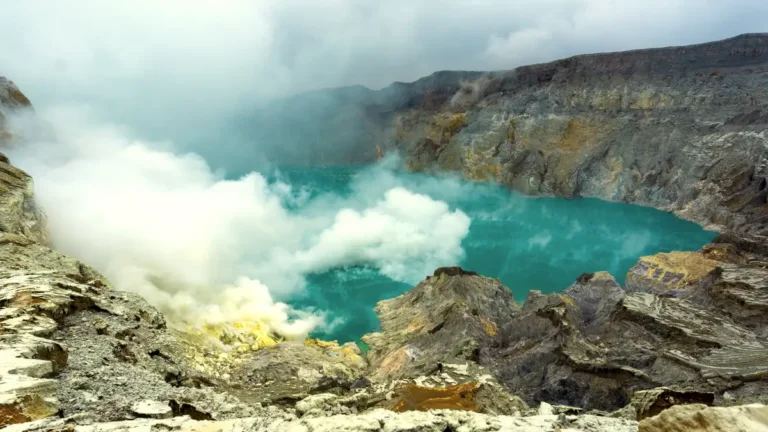
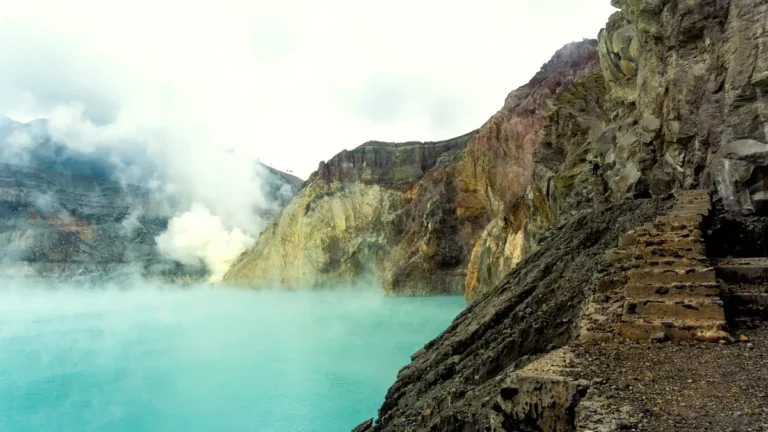
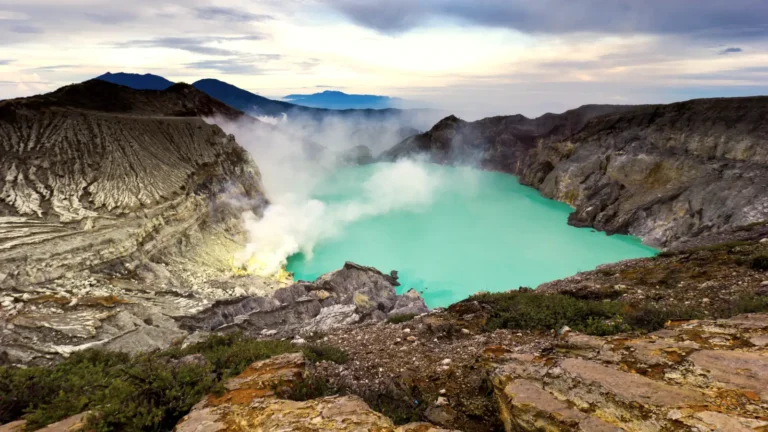
For most travelers booking an Ijen Crater Tour, the primary draw is the visual contrast. You have the stark, white-grey crater walls, the bright yellow sulfur vents, and that impossible turquoise water. It looks like a painting, but the reality is much more volatile and chemically complex.
Why Is the Water Turquoise? The Science Explained
The color of the lake is a result of chemical reactions happening deep underground. Magma chambers beneath the crater floor release volcanic gases like hydrogen chloride and sulfur dioxide. When these gases dissolve into the lake water, they create a potent mixture of hydrochloric and sulfuric acids.
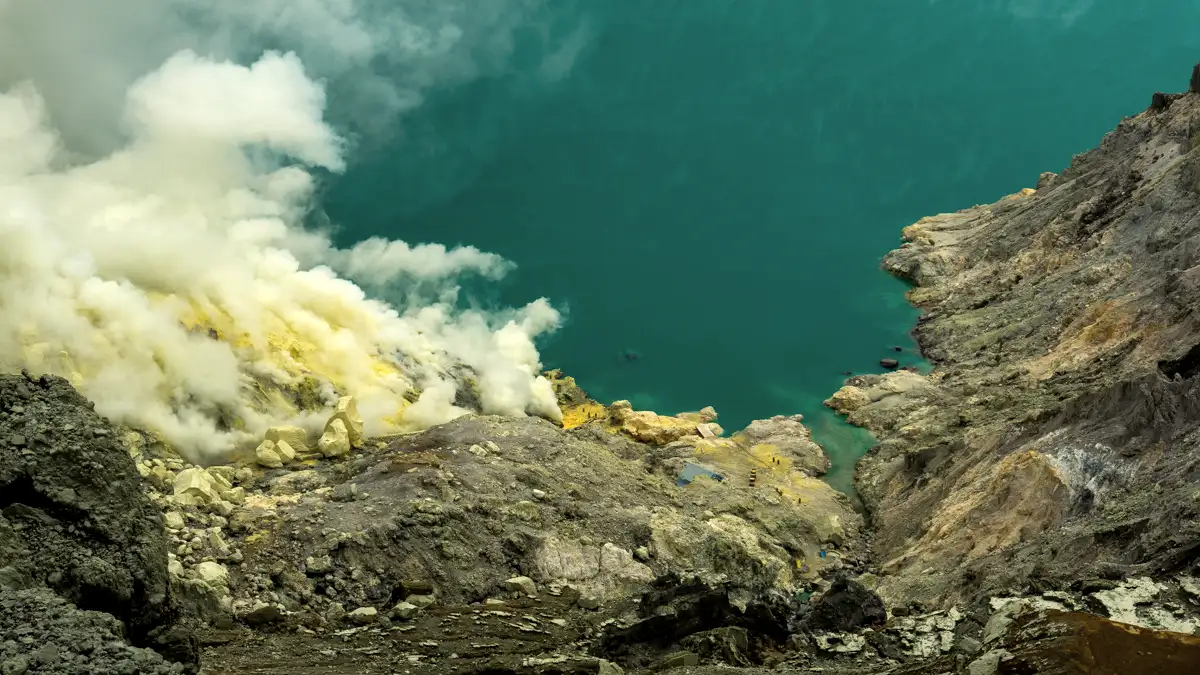
Mineral Saturation and Light Scattering
As the acid eats away at the volcanic rock within the crater, it releases minerals like aluminum, iron, and magnesium. These particles become suspended in the water. Truth is, the water itself isn’t actually “blue.” Instead, these tiny mineral particles scatter sunlight.
This phenomenon, similar to why the sky looks blue, is known as Rayleigh scattering. The shorter wavelengths of light (blue and green) are scattered more effectively by the dissolved minerals, giving the lake its signature teal or turquoise appearance. You can find more detailed Ijen Crater facts regarding its chemical makeup here.
The Role of Sulfur Deposits
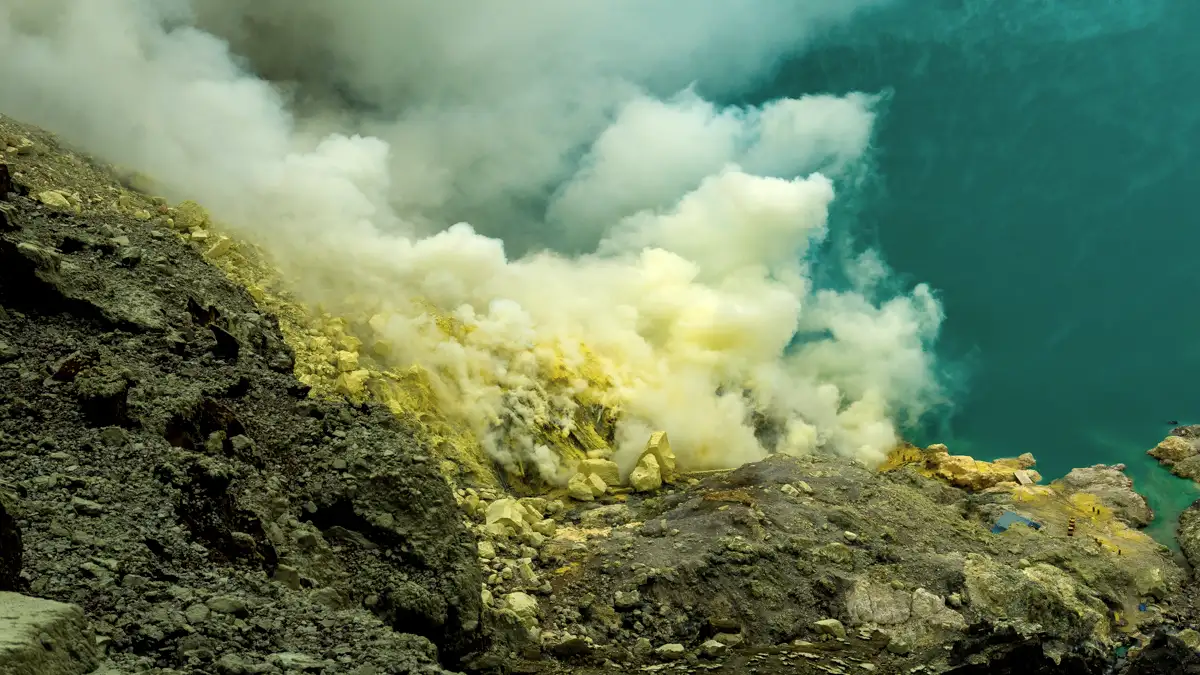
The yellow sulfur vents surrounding the lake also play a psychological role in how we perceive the color. The “yellow” of the sulfur provides a high-contrast background that makes the turquoise water appear even more vivid than it might look in isolation. It is nature’s perfect color palette, albeit a deadly one.
The World’s Most Acidic Lake
Look, when we say the lake is acidic, we aren’t exaggerating. The pH level of the water is consistently below 0.5. To put that in perspective, battery acid has a pH of about 1.0. This makes Ijen the largest highly acidic lake on Earth. According to scientific records, the concentration of sulfuric acid is high enough to dissolve metal objects in a matter of days.
Because of this, the lake is a harsh environment. No fish or plants can survive here. The steam rising from the surface isn’t just mist; it’s a mix of water vapor and acidic gases. This is why understanding why Ijen is so acidic is crucial before you stand on its rim.
Practical Information
Visiting the lake requires preparation. You can’t just stroll up in flip-flops and expect a casual walk. The trail starts at Paltuding (1,850m) and climbs steeply to the rim (2,386m). Here are the ground realities you need to know:
| Feature | Detail |
|---|---|
| Opening Hours | 02:00 AM WIB |
| Mandatory Document | Health Certificate (Surat Keterangan Sehat) |
| Lake pH | < 0.5 (Extremely Acidic) |
| Hike Difficulty | Moderate to High (Steep incline) |
Local Tips You Should Know
Timing is everything. If you arrive at the rim while it’s still dark to see the Ijen blue fire, the lake will look like a black abyss. You won’t see the turquoise color until the sun rises. Honestly, the best color saturation happens between 7:00 AM and 9:00 AM when the sun is high enough to penetrate the crater but before the clouds roll in.
Also, watch the wind. If the wind blows the sulfur smoke toward you, it will obscure the view of the lake entirely. Stay upwind and always have your gas mask ready. The gases are heavy and can sting your eyes and throat even if you aren’t descending to the crater floor.
Frequently Asked Questions
Q: Can I swim in Ijen Crater Lake?
A: Absolutely not. The water is more acidic than battery acid. Direct contact will cause severe chemical burns and the fumes are toxic. Stay on the designated paths at the rim or the safe areas of the crater floor.
Q: Does the lake color ever change?
A: Yes. While usually turquoise, it can turn a milky white or grey after heavy rain or during periods of high volcanic activity when sediment from the lake bed is stirred up by rising gas bubbles.
Q: Is the lake visible at night?
A: No. You need ambient sunlight to see the turquoise hue. At night, the crater is pitch black except for the electric-blue glow of the ignited sulfur gas (the Blue Fire).
Q: How deep is the turquoise water?
A: The lake is approximately 200 meters deep at its center. You can read more about the Ijen Crater lake depth and size in our specific guide.
Q: Do I need a gas mask to see the lake?
A: Yes, it is highly recommended. Even if you stay on the rim, the wind can shift suddenly, bringing thick sulfur clouds that make breathing difficult without a respirator.
Recommended Tour Packages
- Ijen Crater Tour from Bali: The most popular way to see the lake via a midnight ferry crossing and trek.
- Ijen Crater Tour from Banyuwangi: A quick, efficient 1-day trip for those already in East Java.
- 3D2N Bromo Ijen Tour from Bali: A complete East Java adventure covering both the sunrise at Bromo and the turquoise lake of Ijen.
- Ijen Crater Tour from Surabaya: Perfect for travelers flying into Juanda International Airport.
- Bromo Ijen Tumpak Sewu Tour: Combines the volcanoes with Java’s most famous multi-tiered waterfall.
Final Takeaway
The turquoise color of Ijen Crater is a beautiful mask for a very dangerous chemical environment. It is a rare geological wonder that exists only because of the perfect storm of volcanic gas, metal-rich rock, and extreme acidity. Seeing it in person, especially when the morning sun first hits the water, is a highlight of any Indonesian journey. Just remember: bring a mask, wear good boots, and respect the power of this acidic giant.
Planning Your Trip to East Java?
Explore our local tour options and choose a route that matches your travel schedule.