The Geological Story Behind Mount Bromo: Essential Insider Guide
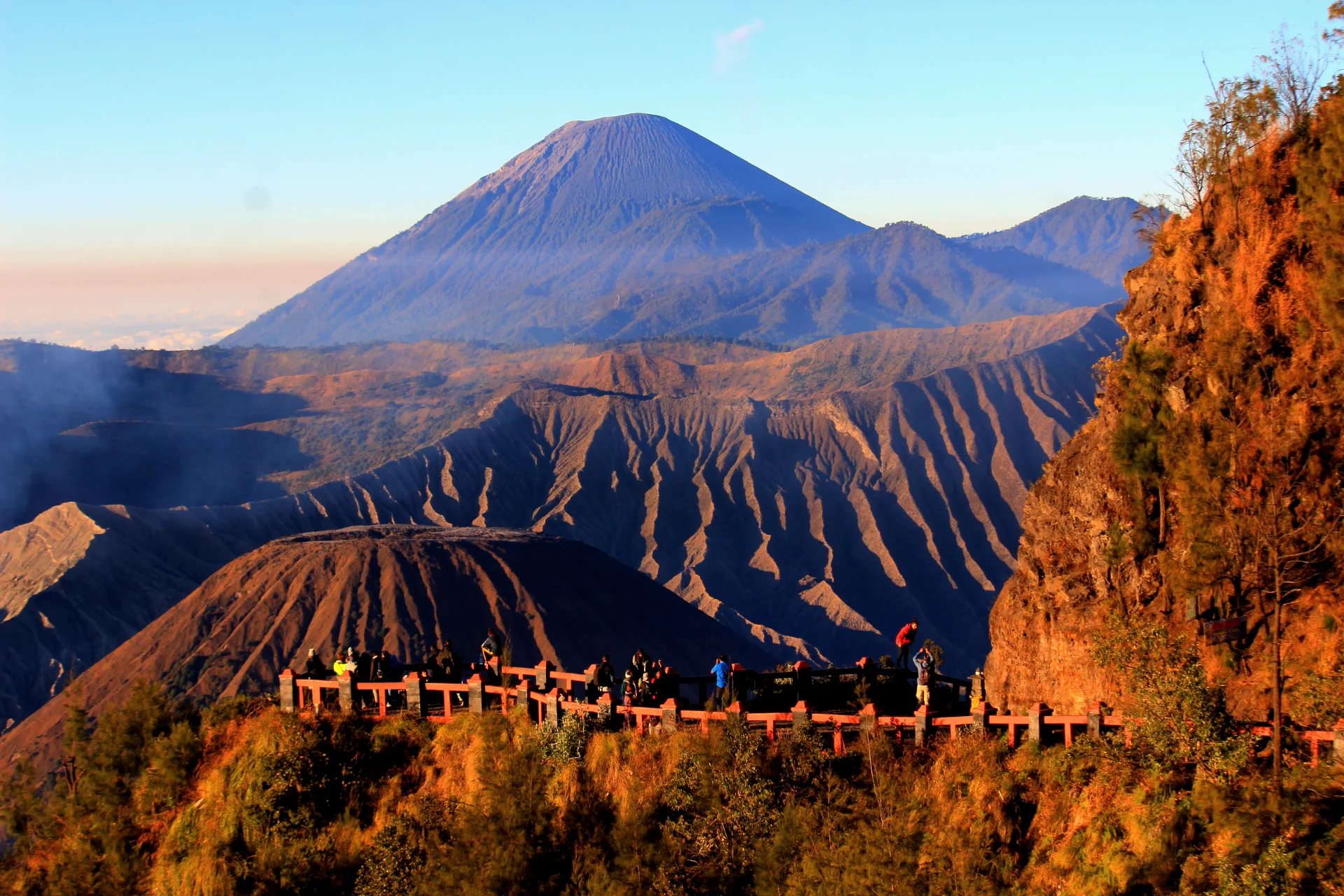
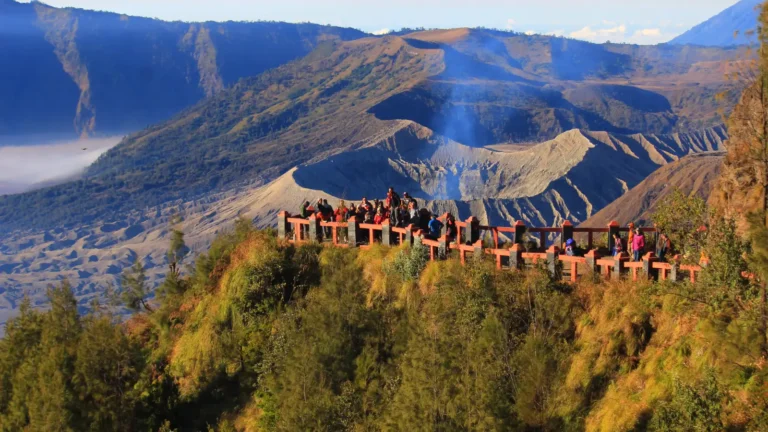
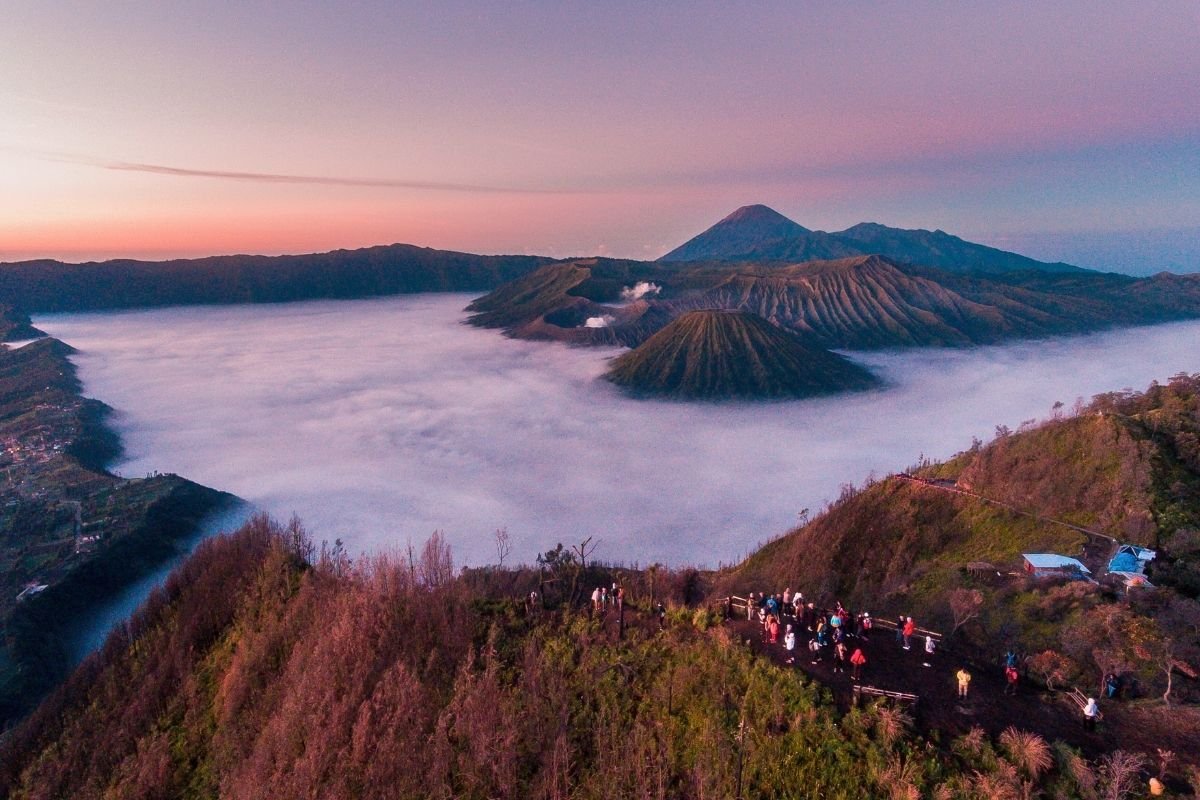
Standing on the rim of King Kong Hill at 3:30 AM, your breath hitches in the freezing mountain air. Most travelers come here for the Instagram shot, but the true magic lies beneath your boots. The landscape looks like another planet because it practically is one. This isn’t just a mountain; it is a violent, beautiful masterpiece of plate tectonics and volcanic collapse. If you are planning a Bromo Ijen tour, understanding how this Tengger Caldera formed will turn your sightseeing into a deep-time adventure. Before you book your trip now, let’s peel back the layers of this Indonesian icon.
What You Need to Know
Mount Bromo is an active stratovolcano nestled inside a massive 10-kilometer wide caldera. This region is a hyper-active segment of the Ring of Fire, where the Indo-Australian plate dives under the Eurasian plate. Access to the crater changes daily based on volcanic ash levels and gas emissions. Expect extreme temperature swings from 0°C at night to 25°C by midday. Local rangers monitor seismic activity 24/7 to ensure visitor safety.
Why Trust This Guide
We live and breathe the dust of Cemoro Lawang. As local operators who have guided thousands of travelers through the Tengger Caldera, we don’t just read about geology; we watch it happen. We have seen the crater floor change after heavy rains and felt the tremor of minor eruptions. Our team works closely with the PVMBG (Center for Volcanology and Geological Hazard Mitigation) to provide the most current, accurate safety data for every journey.
The Titanic Collapse of Old Tengger
Million of years ago, the view from the Probolinggo coastline looked very different. A massive mountain, dubbed “Old Tengger” by geologists, dominated the sky. It was likely over 4,500 meters tall, dwarfing the current Mount Semeru. Then, during the Holocene epoch, the unthinkable happened. The magma chamber beneath this giant emptied so rapidly during a cataclysmic eruption that the entire summit collapsed into itself.
This event created the “Grand Canyon” of Indonesia. Imagine a hole 10 kilometers wide and hundreds of meters deep appearing almost overnight. This collapse left behind the steep walls you see today from the sunrise viewpoints. Instead of one single peak, the earth opened up a stage for new volcanic vents to grow. Bromo is just the most famous “child” born from the wreckage of its ancestor.
The Birth of Five Vents
Inside the broken remains of Old Tengger, five distinct volcanic cones eventually rose. These include Mount Bromo, Mount Kursi, Mount Watangan, Mount Widodaren, and Mount Batok. While Batok is now dormant and covered in beautiful green ridges, Bromo remains the restless sibling. It constantly belches pyroclastic deposits and sulfurous steam, reminding us that the plumbing system beneath the caldera is very much alive.
Reading the Layers of Time
Look closely at the caldera walls during your Mount Bromo tour. You can see stripes of different colors—reds, blacks, and grays. These are individual layers of volcanic ash and solidified lava flows from thousands of years of activity. Each stripe tells a story of a specific eruption. For a geologist, this is a library. For a traveler, it is a reminder of how fleeting our time is compared to these giants.
The Sea of Sand: A Martian Landscape
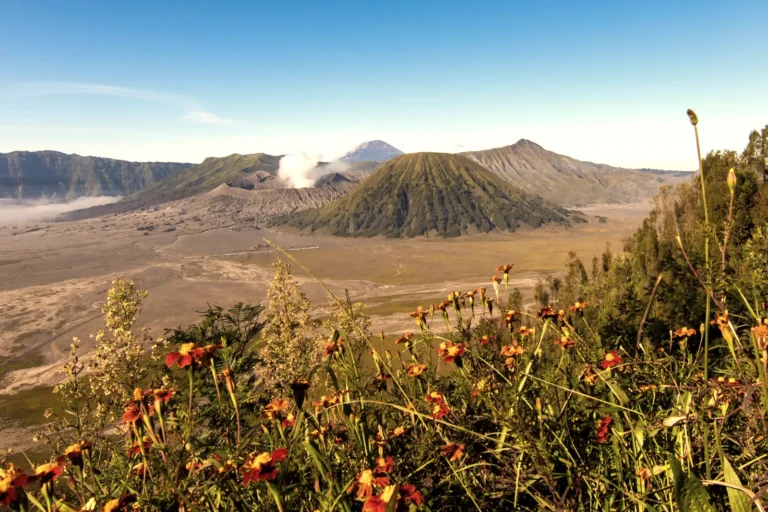
The vast, flat expanse surrounding the peaks is known locally as the Segara Wedi. This Sea of Sand is not made of desert quartz. It is composed of fine volcanic debris and “lapilli”—small stones ejected during eruptions. Walking across it feels like stepping onto the moon. The wind whips the fine dust into “dust devils,” and the sound of the wind howling across the flat basin is eerie and unforgettable.
Rainwater plays a massive role here too. During the monsoon season, the sand sea can transform into a muddy marshland, making jeep travel a chaotic challenge. These weather patterns help distribute the minerals across the plain, creating the nutrient-rich soil that makes the surrounding hillsides so incredibly green. It is a paradox of nature: the volcano destroys, but its ash provides life for the local Tenggerese farmers.
Are you ready to witness the raw power of the Ring of Fire for yourself? Whether you want to witness the Mount Bromo tour at dawn or explore the acidic beauty of an Ijen crater tour, we have the local expertise to get you there safely. Many travelers choose to see it all on a Bromo Ijen tour or go even further with a full East Java tour. Reach out to our team today to lock in your reservation.
Plate Tectonics: The Engine of East Java
Why does Java have so many volcanoes? The answer lies 100 kilometers beneath your feet. The Indo-Australian Plate is moving northward at about 7 centimeters per year. As it hits the Eurasian Plate, it is forced downward into the hot mantle in a process called subduction. This is a primary driver of the Ring of Fire, a massive horseshoe of volcanic activity surrounding the Pacific Ocean. You can learn more about this global phenomenon on the Ring of Fire Wikipedia page.
This subducting plate carries water and sediment with it. As it sinks, the water lowers the melting point of the surrounding rock, creating magma. This molten rock is less dense than the crust above, so it rises, eventually punching through the surface to create volcanoes like Bromo. Java is essentially a “volcanic arc,” a chain of fire fueled by the slow-motion collision of continents.
Magma Composition & Explosivity
The magma at Bromo is typically andesitic or basaltic-andesitic. This means it has a medium silica content, which makes it somewhat viscous (thick). Thick magma traps gas bubbles. When the pressure becomes too high, the gas expands violently, tearing the magma into tiny fragments—this is how volcanic ash is created. It is also why Bromo’s eruptions are usually “phreatic” or “explosive” rather than quiet lava flows.
Daily Rangers & Safety Decisions
Every morning, local rangers hike to the rim or use remote sensors to check the volcano’s “pulse.” They look for changes in seismic tremors or the color of the smoke. Pure white smoke is mostly steam, but dark gray or brown smoke indicates fresh volcanic ash. If the gas concentration is too high, the stairs to the crater will be closed. We always follow these rules strictly—Mother Nature doesn’t negotiate.
Pyroclastic Flows and Modern Activity
While Bromo looks serene from a distance, it is a high-energy system. One of the most dangerous geological events here is a pyroclastic flow. This is a fast-moving cloud of hot gas and volcanic matter that can reach speeds of 700 km/h. Thankfully, Bromo’s recent eruptions have been mostly “strombolian,” characterized by rhythmic bursts of ash and incandescent rocks that stay close to the vent.
The “crackle” you hear when standing at the crater rim isn’t just wind. It is the sound of rocks grinding together deep in the throat of the volcano. The smell of rotten eggs is hydrogen sulfide gas. While it adds to the atmosphere, long-term exposure can be irritating, which is why we often recommend a basic mask if you plan to spend significant time on the rim. The landscape is a living, breathing entity that demands respect.
The Changing Crater Shape
Did you know the crater itself changes shape? Major eruptions in the past few decades have widened the vent and shifted the rim. Heavy rainfall can also cause the inner walls to collapse, slightly changing the depth of the “bottomless” pit. It is a dynamic environment where the map you used ten years ago might not be 100% accurate today. This constant evolution is what makes the Tengger Caldera so fascinating for repeat visitors.
Volcanic Ash: A Blessing and a Curse
When Bromo erupts, the ash can travel for hundreds of kilometers, sometimes closing airports in Malang or Surabaya. While this is a headache for travelers, the local farmers view it differently. After the ash settles, it breaks down into soil rich in potassium, phosphorus, and calcium. This is the secret behind the incredibly productive vegetable terraces you see in the surrounding hills. Without the volcano’s “destruction,” the region would be much poorer.
Continue Your Adventure
If the geological story of Bromo has sparked your curiosity, there is so much more to see in East Java. Each volcano has a different “personality” and chemical signature. Explore these hand-picked journeys to complete your Indonesian experience:
- Secure Your Guaranteed Departure Now
- Essential Mount Bromo Sunrise Experience
- The Ultimate Bromo and Ijen Crater Combo
- Mount Bromo 2-Day Adventure from Bali
- Quick Bromo Escape from Surabaya
- Comprehensive 3-Day Java Volcano Tour from Bali
Ready to Explore the Ring of Fire?
Don’t just watch the videos. Feel the vibration of the earth and smell the sulfur for yourself. Our local guides are ready to show you the hidden corners of the Tengger Caldera that most tourists miss.
Frequently Asked Questions (FAQ)
A: Most crowds gather at Penanjakan 1. For a quieter experience with the same geological perspective, we recommend Seruni Point or King Kong Hill. If you are willing to hike a bit further, the “secret” spots along the ridge towards Dingklik offer great views without the shoulder-to-shoulder camera tripods.
Q: How bad is the dust at Mount Bromo?
A: It can be intense, especially in the dry season (July to September). The volcanic ash is very fine and can get into your eyes and lungs. We recommend bringing a buff or a surgical mask and wearing sunglasses even if it isn’t sunny, just to protect your eyes from the wind-blown grit.
Q: Can elderly travelers handle the stairs to the crater?
A: There are about 250 concrete steps to the rim. They are steep and often covered in sand, which makes them slippery. However, you can take a horse ride across the Sea of Sand to the base of the stairs to save energy. If the climb is too much, the view from the parking area near the temple is still spectacular.
Q: Is the sulfur gas at Bromo dangerous?
A: Usually, it is just a smelly nuisance. However, if the wind shifts and blows the gas directly toward the stairs, it can be suffocating. If you have asthma or respiratory issues, carry your inhaler and pay close attention to the rangers. If you see people coming down coughing, it is a sign the gas levels have temporarily spiked.
Q: What is the best month for photography?
A: June through August offers the clearest skies. This is crucial for capturing the Tengger Caldera in its full glory without heavy morning mist blocking the peaks. If you want to shoot the Milky Way, these dry months provide the least light pollution and atmospheric interference.