How Big Is the Mount Bromo Caldera? Dimensions and Ground Facts
Key Takeaways:
- The caldera is 10km wide, making it one of the largest in Indonesia.
- The floor is a vast desert of volcanic ash known as the Sea of Sand.
- Five volcanoes are situated inside this single ancient caldera complex.
- Mount Bromo is the only one among them that remains active today.
About This Guide: Written by our Banyuwangi-based local operational team with first-hand field experience across East Java, including current trail conditions, departure timing, weather shifts, and real visitor logistics.
Table of Contents
What Is the Tengger Caldera?
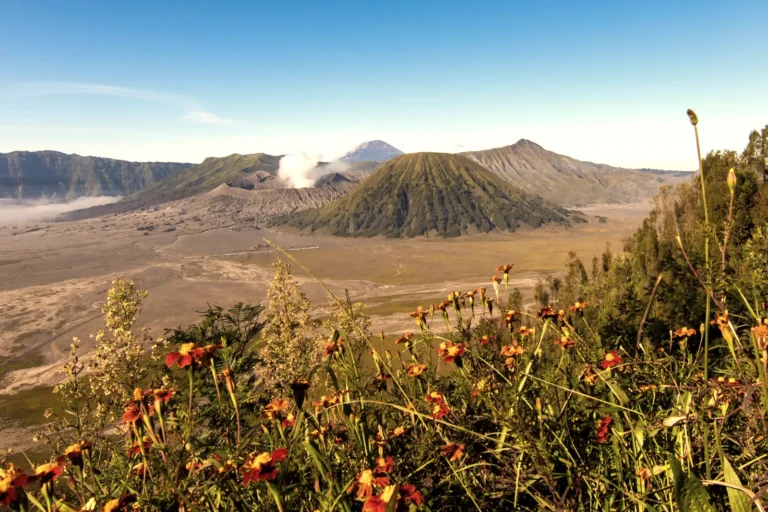
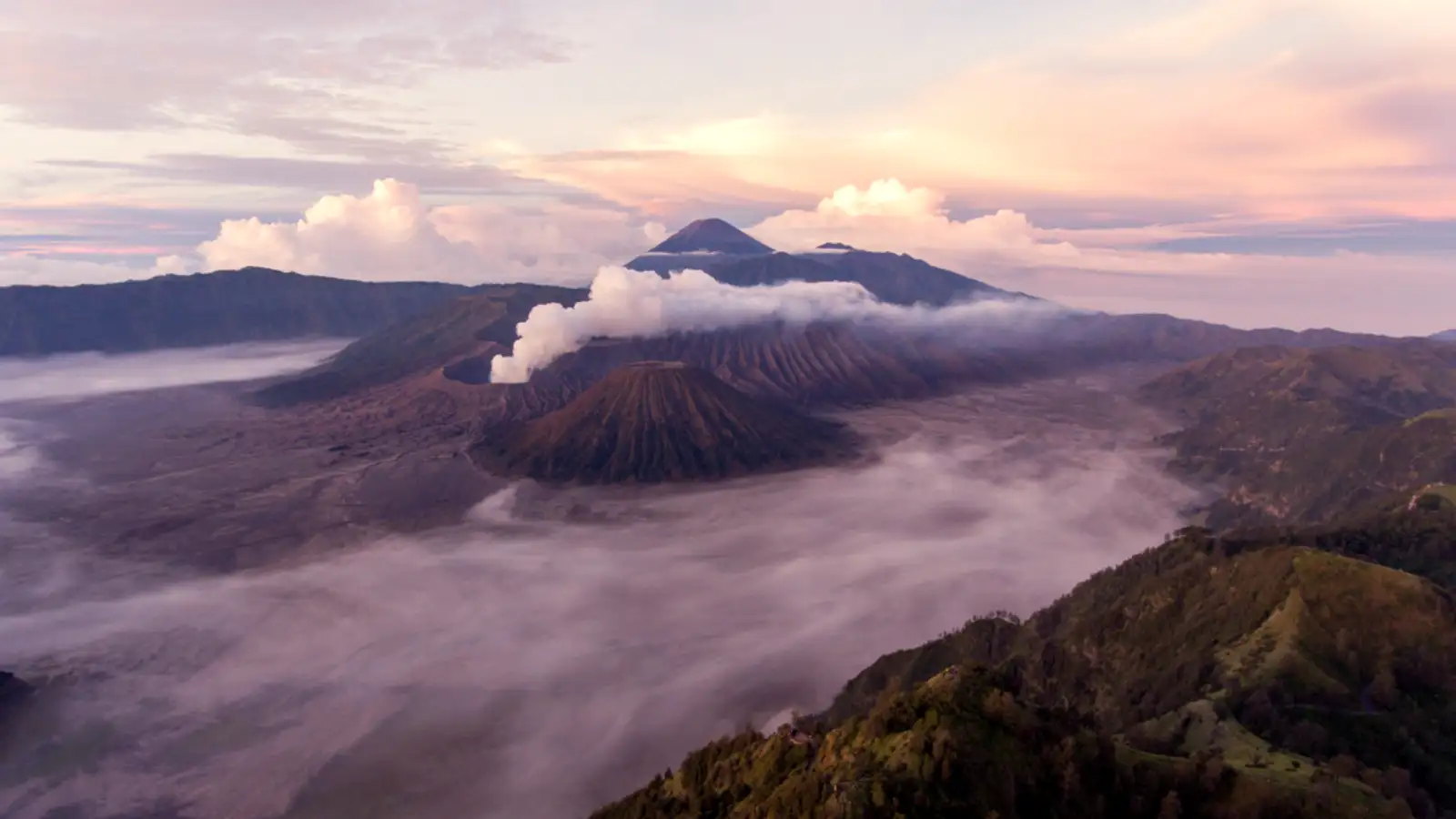
When people talk about the “Bromo caldera,” they’re usually referring to the Tengger Caldera. Look, it’s not just one mountain. It’s a giant, collapsed volcanic crater that looks like something straight out of a sci-fi movie. Inside this 10-kilometer bowl, you’ll find several peaks poking out of a flat, dusty floor.
Mount Bromo is the star of the show because it’s active, but it’s actually one of the smaller peaks inside the complex. The entire area is part of the Bromo Tengger Semeru National Park. If you’re standing at a viewpoint like Penanjakan, you’re looking down into a geological history book that spans thousands of years of eruptions.
Breaking Down the Bromo Caldera Dimensions
The numbers are impressive. The caldera is roughly 10 kilometers wide from rim to rim. If you were to walk across the center of it, you’d be trekking over 8 kilometers of volcanic sand before you even reached the base of the mountains. Truth is, the scale is hard to grasp until you see a tiny Jeep driving across the Sea of Sand, looking like an ant in a sandbox.
The Sea of Sand (Segara Wedi)
The floor of the caldera is a massive gray desert. It covers approximately 5,250 hectares. Because it’s so flat and open, the wind whips up ash constantly. This is why most travelers use a 4WD Jeep to navigate the distance. Walking it is possible, but it takes hours and your shoes will be filled with fine volcanic dust within minutes.
Vertical Scale: The Rim Walls
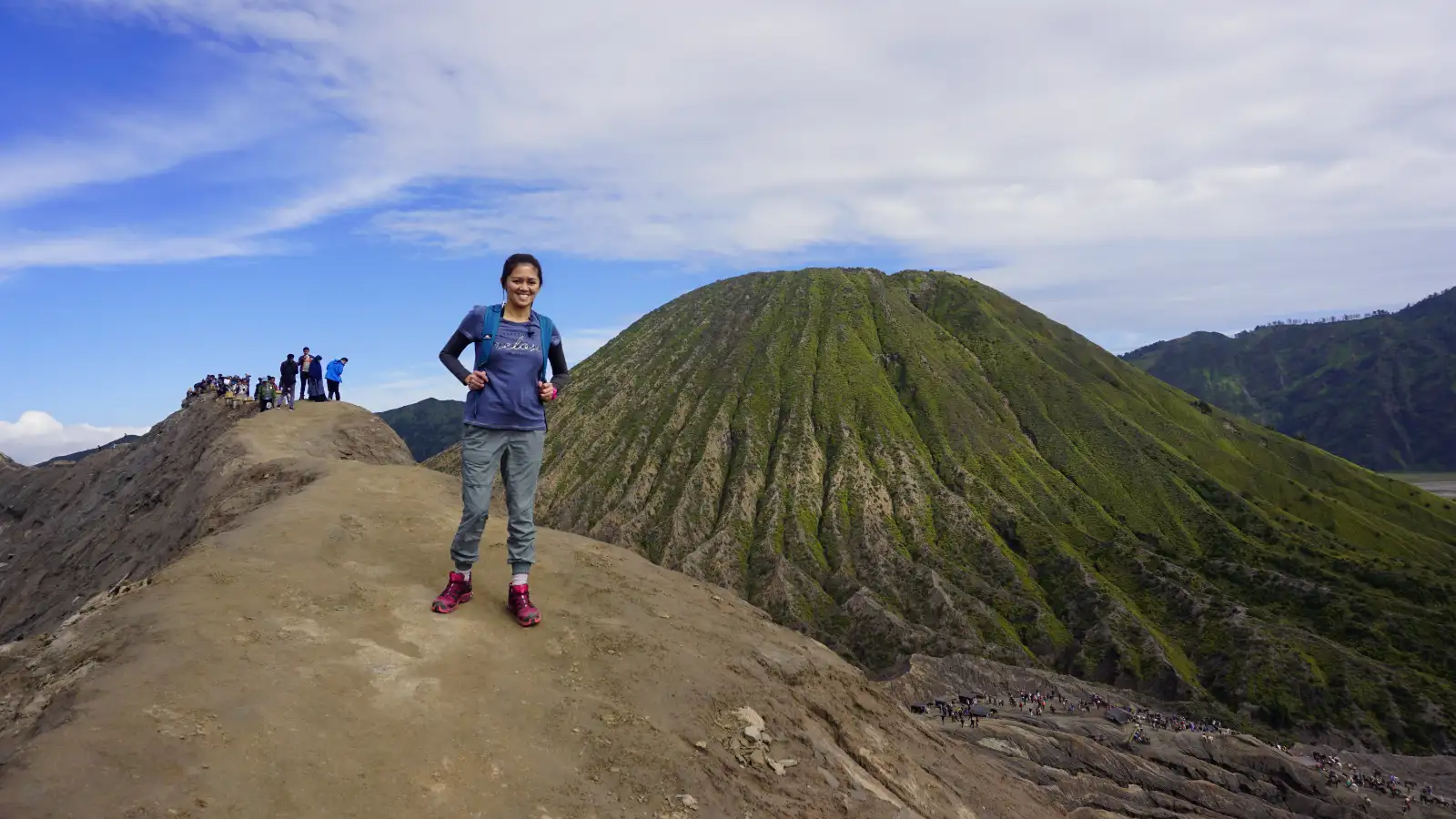
The walls of the caldera rise sharply from the sand floor. At their highest points, like Penanjakan 1, the elevation reaches 2,770 meters. The vertical drop from the rim to the caldera floor is roughly 200 to 300 meters. This steepness is why the sunrise views are so dramatic—you’re literally hanging over the edge of a volcanic world.
Geological Formation and Scale
How did something this big form? It wasn’t one event. It was a series of massive collapses. Thousands of years ago, a giant “proto-Tengger” volcano stood here. It eventually blew its top and collapsed inward, creating the first wide caldera. Over time, new volcanoes grew inside that hole, including the ones we see today: Batok, Widodaren, Kursi, Watangan, and Bromo.
For a deeper dive into how this happened, check out the geological story behind Mount Bromo. Understanding that you’re standing in the ruins of a much larger mountain makes the 10km diameter even more impressive. Many travelers experience a real sense of awe—or even FOMO if they don’t get to explore the full width of the sand sea during their visit.
Practical Information
Exploring a caldera this big requires some logistics. You can’t just wander in without a plan. Here are the core operational facts you need to know before you arrive at the gate.
- Location: East Java, bordering Probolinggo, Pasuruan, Malang, and Lumajang.
- Caldera Diameter: ~10 Kilometers.
- Sand Sea Area: ~5,250 Hectares.
- Opening Hours: 24/7, but tour departures are usually 02:30 AM to catch sunrise.
- Entrance Fees: Variable for locals/foreigners; online booking is mandatory.
- Transport: Mandatory 4WD Jeep for entering the Sea of Sand from most routes.
- Temperature: Can drop to 3-5°C on the rim before sunrise.
Caldera Viewpoint Comparison
Because the caldera is so wide, where you stand changes everything. Some spots give you the “classic” postcard view, while others let you see the sheer width of the Tengger complex.
| Viewpoint | Best For | Elevation | Accessibility |
|---|---|---|---|
| Penanjakan 1 | Full Caldera Panorama | 2,770m | Jeep + Short Walk |
| King Kong Hill | Drama & Photography | 2,650m | Jeep + Medium Walk |
| Seruni Point | Lower Angle / Closer | 2,400m | Paved Stairs |
Local Tips for Exploring the Caldera
Honestly, don’t underestimate the dust. When the wind picks up in the caldera floor, it’s like being in a sandpaper machine. Wear a buff or a mask, even if you aren’t climbing the actual Bromo crater rim. If you’re coming for a Mount Bromo tour, remember that the distance from the Jeep parking area to the crater stairs is about 1.5 kilometers of flat sand.
If you have time, ask your driver to stop in the middle of the Sea of Sand—away from the crowds. The silence is heavy and strange. It’s one of the few places on earth where you can feel the true scale of a volcanic collapse. For many, this is more impressive than the sunrise itself. If you’re combining this with other spots, a Bromo Ijen tour is the most popular way to see the two biggest volcanic icons of Java in one go.
Frequently Asked Questions
Q: Is the Mount Bromo caldera the largest in Indonesia?
A: No, Lake Toba in Sumatra is significantly larger. However, the Tengger caldera is one of the most active and visually distinct because of its desert-like floor and multiple inner peaks.
Q: Can I walk across the whole caldera?
A: Yes, but it’s about 10 kilometers wide. Walking from one side of the rim to the other across the Sea of Sand takes several hours and requires good physical fitness and sun protection.
Q: How many volcanoes are inside the Bromo caldera?
A: There are five main volcanic cones: Mount Bromo (active), Mount Batok (dormant), Mount Kursi, Mount Watangan, and Mount Widodaren. They all sit inside the same basin.
Q: Why is there so much sand in the caldera?
A: The “sand” is actually fine volcanic ash and debris from centuries of eruptions. Because the caldera is a closed basin, the material stays trapped on the floor instead of washing away.
Q: Do I need a Jeep to see the caldera?
A: To go inside the caldera floor (Sea of Sand), a 4WD Jeep is mandatory for safety and speed. However, you can see the entire caldera from the rim viewpoints by hiking or using local transport.
Recommended Tour Packages
If you want to experience the massive scale of the Bromo caldera without worrying about the logistics, these are our top-rated local packages:
- Mount Bromo Tour from Surabaya (2D1N): The best way to see the sunrise and explore the caldera floor with a comfortable overnight stay.
- Mount Bromo Tour from Bali (2D1N): A seamless transfer from the Island of Gods to the volcanic heart of Java.
- Mount Bromo Midnight Tour from Malang: A quick, intense trip for those short on time but wanting the full caldera experience.
- Bromo Sunrise Tour from Surabaya: The classic midnight departure to catch the sun rising over the Tengger rim.
- Bromo Tour from Probolinggo (2D1N): The closest gateway to the park, perfect for a deep dive into the local Tengger culture.
Final Takeaway
The Mount Bromo caldera is more than just a backdrop for a photo. It’s a 10-kilometer testament to the raw power of Indonesian geology. Whether you’re standing on the high rim of Penanjakan or kicking up dust in the Sea of Sand, the scale is genuinely humbling. To get the most out of it, don’t just rush the sunrise—take a moment to look at the vast walls surrounding you. You’re standing in one of the most unique volcanic landscapes on the planet.
Planning Your Trip to East Java?
Explore our local tour options and choose a route that matches your travel schedule.