
Why an Ijen Crater Tour from Bali Is One of the Best Day Trips to Java
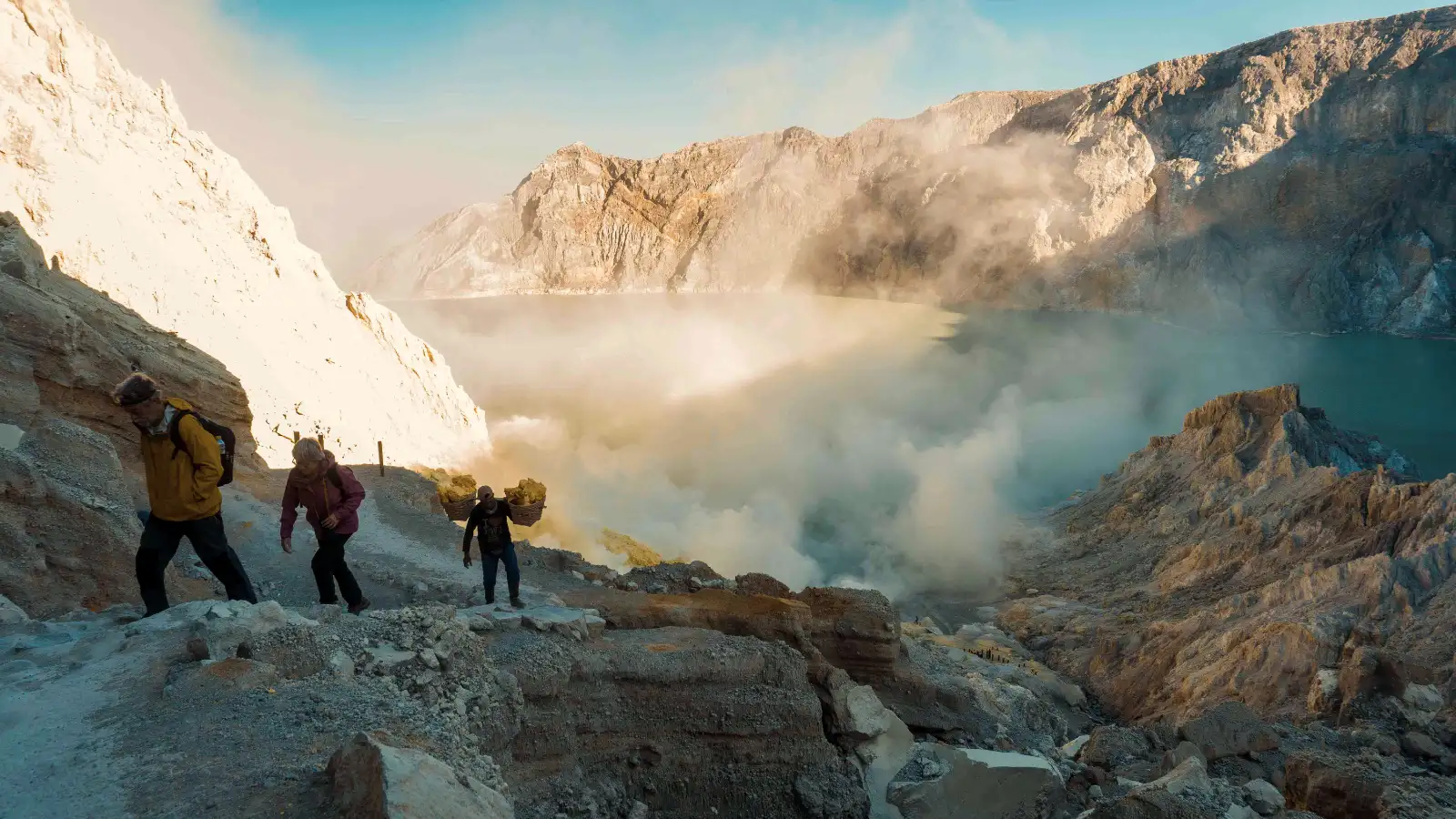
Imagine leaving your luxury villa in Seminyak at 7:00 PM, crossing a dark ocean strait by ferry, and standing on the edge of a smoking volcanic caldera by 3:00 AM. Many travelers find themselves wondering if the grueling logistics of an ijen crater tour from bali are actually worth the sleep deprivation. The short answer? It is the most raw, cinematic adventure you can find within a 24-hour radius of Bali’s tourist hubs.
Bali offers beaches and temples, but East Java offers the surreal. You are trading the humidity of the coast for the biting frost of the highlands. Is it exhausting? Absolutely. But staring down at the world’s largest acidic lake while the “Blue Fire” flickers in the dark is a core memory that makes most wonder is ijen crater worth visiting despite the long journey. This guide breaks down why this specific day trip remains the king of Javanese adventures.
What You Need to Know
- Duration: Approximately 20-24 hours round trip from Bali.
- Intensity: High. Requires a midnight hike and significant travel time.
- Highlights: Electric Blue Fire, turquoise acid lake, and incredible sunrise views.
- Key Prep: Warm layers are non-negotiable; temperatures drop to 5°C.
- Strategy: Explore our Master Pillar Guide for detailed logistics.
The Bali to Java Transit: A Midnight Odyssey
Most travelers underestimate the distance between their hotel in Ubud and the basecamp at Ijen. The journey begins with a long drive to Gilimanuk, the westernmost tip of Bali. You’ll likely spend four hours in a car before even seeing the ferry. This isn’t a commute; it is a transition into a completely different landscape, culture, and climate.
Crossing the Bali Strait at midnight is an experience in itself. The humid sea breeze hits your face as the ferry lights flicker across the water toward Ketapang. Once you touch down in Java, the air immediately feels different—sharper, cooler, and scented with tropical greenery. To make this work, you need a solid bali to ijen midnight departure strategy to ensure you reach the trailhead before the gates open.
Navigating the Paltuding Basecamp
Arrival at Paltuding happens around 1:00 AM or 2:00 AM. This is the staging area where the chaos of the night begins. Hundreds of headlamps crisscross in the dark while local guides shout instructions and hikers shiver over cups of hot ginger tea. The vibe is electric, akin to a pre-concert crowd, but the “performance” is a 3-kilometer uphill slog through the dark.
You’ll notice the local “trolley taxis” immediately. These are modified carts used by miners that now serve as transport for hikers who find the incline too punishing. The sound of these carts squeaking on the gravel is the soundtrack of the ascent. If you aren’t prepared for the 17-degree incline, the ijen trolley taxi service is a pricey but effective savior for your calves.
The Electric Blue Fire: Reality vs. Social Media
Why do thousands of people hike a volcano at 2:00 AM? The answer is usually the ijen blue fire explained by scientists as sulfuric gas igniting upon contact with air. It isn’t lava; it’s a chemical reaction that creates ethereal, ghostly flames. However, seeing it requires descending into the crater itself, a steep and rocky path that isn’t for the faint of heart.
Social media often shows massive walls of fire, but the reality is more subtle. Some nights it’s a small flicker; other nights it’s a roaring blue furnace. The wind plays a massive role. If the wind shifts, a thick cloud of toxic sulfur gas can envelop the trail in seconds, making a professional-grade gas mask mandatory. You can find more info in our ijen crater gas mask rental guide to ensure your lungs are protected.
The Descent Into the Caldera
Scrambling down the rocky inner wall of the crater is the most technical part of the journey. Your headlamp beam will catch the jagged edges of volcanic rock and the silhouettes of other hikers. It is dusty, slippery, and sometimes crowded. Patience is the only way to navigate this section without a twisted ankle.
Once at the bottom, the smell of rotten eggs—concentrated sulfur—is overwhelming. This is where you witness the miners working amidst the vents. The blue flames dance around the ceramic pipes used to collect liquid sulfur. It is a hauntingly beautiful scene that feels like it belongs on another planet, far removed from the tropical beaches of Bali.
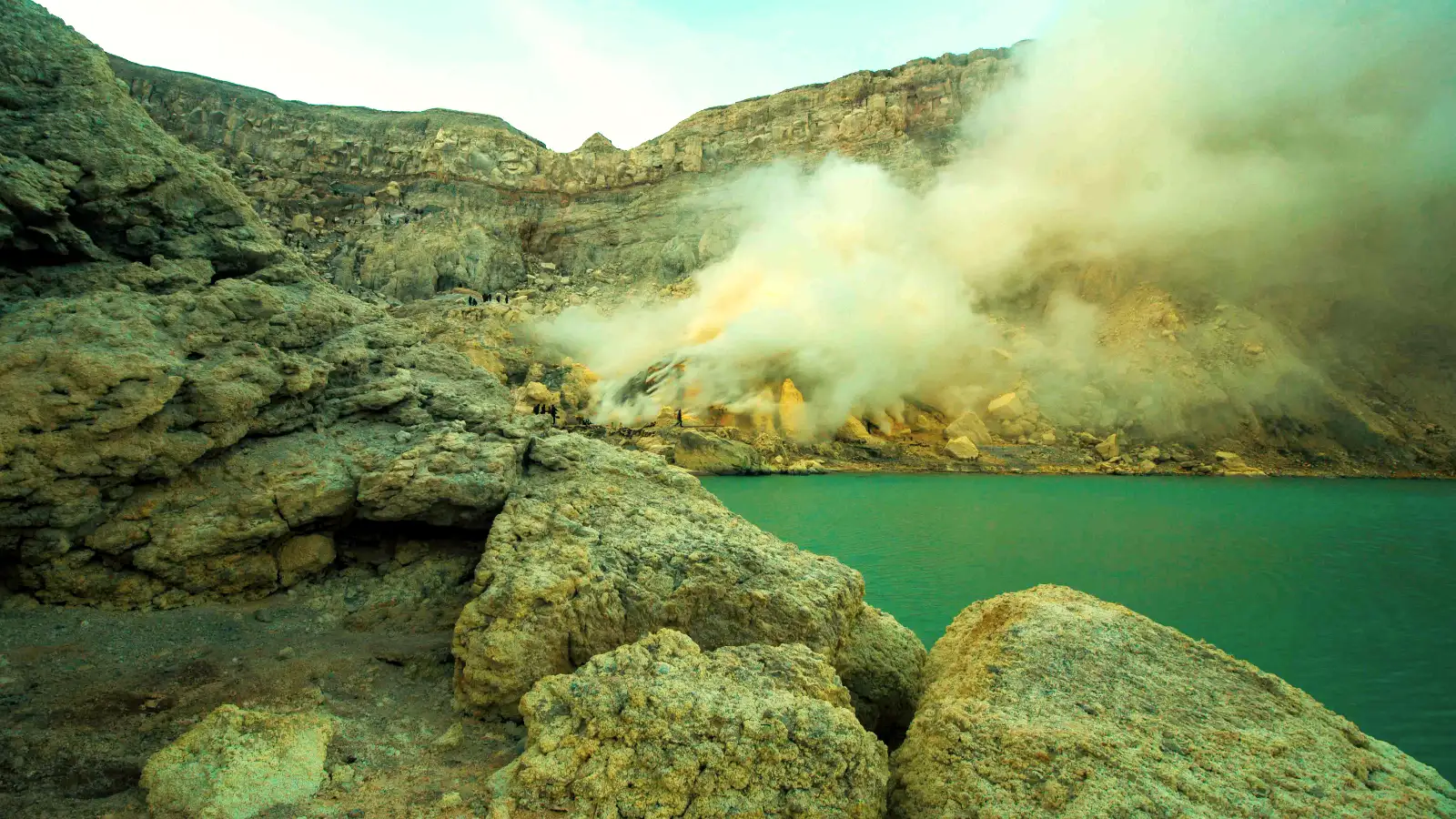
The World’s Largest Acid Lake at Sunrise
As the blue fire fades with the first light of dawn, the second spectacle reveals itself. The ijen crater lake is a massive body of turquoise water with a pH level similar to car battery acid. In the low light of morning, the color is so vibrant it looks photoshopped.
Watching the sun climb over the jagged rim of the caldera is the reward for the sleepless night. The golden light hits the steam rising from the sulfur vents, creating a play of colors that no camera can fully capture. It is a stark contrast—the deadly acidity of the water and the sheer beauty of the surrounding peaks. Most travelers agree that the sunrise here easily rivals or surpasses the famous Mount Batur sunrise in Bali.
Capturing the Perfect Shot
Photography at Ijen is a challenge. The sulfur gas can corrode camera gear over time, and the low light requires steady hands. Many people head to the the dead tree viewpoint for that iconic silhouette shot against the turquoise backdrop. It is one of the most Instagrammed spots in Indonesia for a reason.
Be prepared for crowds at the most popular viewpoints. By 6:00 AM, the rim is often lined with hundreds of people. To get a clean shot, you might need to hike further along the rim toward the higher peaks. The perspective from the higher ridges gives you a better sense of the scale of the volcano and the surrounding Javanese mountain range.
The Human Element: Meeting the Sulfur Miners
Beyond the geology, the heartbeat of Ijen is its people. The ijen sulfur miners perform one of the world’s toughest jobs. They carry 70kg to 90kg of solid sulfur on their shoulders in bamboo baskets, making the climb out of the crater multiple times a day. Seeing them navigate the steep, rocky terrain while you struggle with just a backpack is a humbling reality check.
Most miners are incredibly friendly and will happily pose for a photo or sell small sulfur carvings. If you take a photo, it is common courtesy to offer a small tip or buy one of their hand-made souvenirs. They are the true masters of the mountain, often hiking in simple rubber boots without any of the high-tech gear used by tourists. Their resilience is a defining part of the Ijen experience.
Preparation: What to Wear and Bring
Preparation is the difference between a life-changing trip and a miserable ordeal. Many tourists arrive in Bali attire—shorts and flip-flops—and realize their mistake the moment they hit the mountain air. Knowing what to wear for ijen crater is essential. Think layers: a moisture-wicking base, a warm fleece, and a windbreaker. Long pants and sturdy hiking shoes are mandatory for the descent.
Pack light but bring the essentials. You need a headlamp with fresh batteries, as hand-held torches make the rocky descent difficult. Don’t forget snacks and plenty of water, though you can buy basic supplies at the small warungs (local cafes) at the basecamp and even at a small hut halfway up the trail. The physical toll is high, so fueling your body is non-negotiable.
Why Trust This Guide?
We aren’t just a travel blog; we are local operators based in East Java who live and breathe these volcanoes. Our guides are on the slopes of Mount Ijen every single day, tracking weather patterns, gas levels, and trail conditions. We see the mistakes tourists make—the wrong shoes, the lack of masks, the poor timing—and we write these guides to prevent them.
Our expertise comes from thousands of successful bali to ijen tour operations. We understand the specific logistics of the Bali-to-Java crossing better than anyone. When we tell you it’s cold, it’s because we’ve stood there at 3 AM in the frost. When we say the gas is strong, it’s because we’ve felt the sting in our eyes. You are getting raw, boots-on-the-ground intelligence designed to make your Java adventure seamless and safe.
Popular Related Tour Packages
If you’re ready to make the leap from Bali to Java, these are our most popular and highly-rated commercial tour packages:
- Ijen Volcano Tour From Bali 1 Day (All-Inclusive)
- Ijen Crater Tour Package From Ubud
- Ijen Crater Tour Package From Canggu
- Ijen Crater Tour Package From Seminyak
- Ijen Crater Tour Package From Nusa Dua
- Bromo Ijen 3-Day Tour From Bali (The Full Java Experience)
Ready for Your Ultimate Mount Bromo & Ijen Adventure?
Don’t leave your trip to chance. Join thousands of happy travelers and experience East Java with our top-rated local tour operators.
Frequently Asked Questions
Q: Can I really visit Ijen from Bali in just one day?
A: Yes, it is a very common “overnight” trip. You depart Bali in the evening, hike Ijen for sunrise, and return to Bali by the following afternoon. It is intense but efficient for those with limited time.
Q: Is the hike difficult for beginners?
A: The trail is a wide, well-maintained dirt path, but it is steep. Most beginners can do it if they take their time. The ijen hike difficulty is considered moderate, mainly due to the incline and the sulfur gas.
Q: What is the best time of year to visit?
A: The dry season (April to October) is the best time to visit ijen crater. During this window, trails are less slippery and the sky is usually clearer for sunrise and Milky Way photography.
Q: Do I really need a gas mask?
A: Absolutely. Even if you don’t go down to the blue fire, the wind can carry thick sulfur clouds to the rim. Breathing this gas is painful and dangerous without a proper respirator mask.
Q: Are there any age or health restrictions?
A: People with asthma or respiratory issues should avoid the crater descent. While there is no official age limit, the physical demand is high. Many families with older children successfully complete the rim hike.
Planning to visit Ijen or Mount Bromo?
Explore available tour options and ask our local team about your itinerary.
Explore Tour Packages →