Best Time to Visit Ijen Crater: The Ultimate Weather & Local Hiking Guide

Key Takeaways:
- Dry season (April–October) provides the best visibility for the acidic lake.
- Rainy season (November–March) brings slippery paths and thick fog.
- A mandatory health certificate is required for all hikers.
- Temperatures at the summit can drop to 2°C–10°C before dawn.
About This Guide: Written by our Banyuwangi-based local operational team with first-hand field experience across East Java, including current trail conditions, departure timing, weather shifts, and real visitor logistics.
Table of Contents
Understanding the Ijen Crater Climate
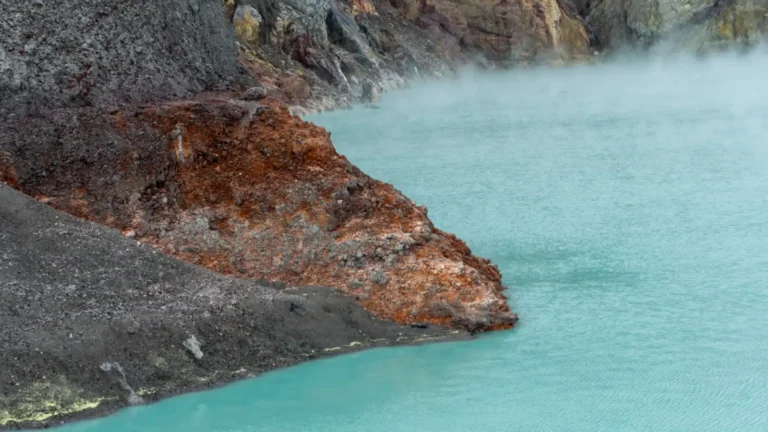
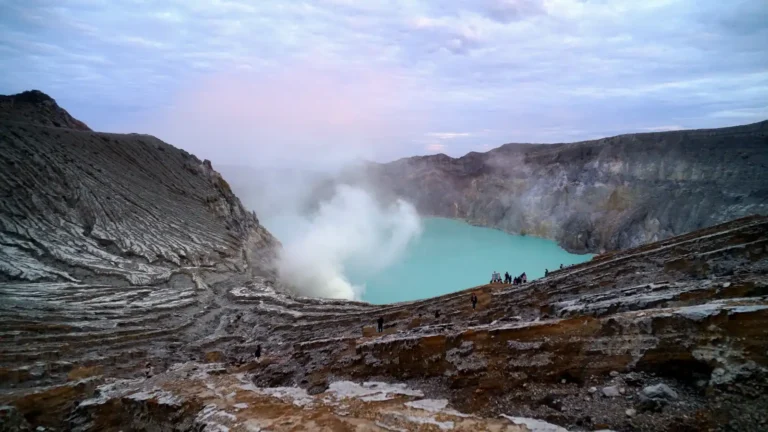
Timing is everything when you’re standing on the edge of a massive volcanic caldera. Ijen Crater, located on the eastern tip of Java, doesn’t just offer a pretty view; it’s home to the world’s most acidic crater lake, with a pH lower than 0.5. Because the volcano sits at an elevation of 2,386 meters, the weather behaves differently than in the coastal towns of Banyuwangi or Bali.
Truth is, the mountain creates its own microclimate. You might start your drive from a humid, warm hotel and arrive at the Paltuding basecamp feeling a sharp, freezing wind. Understanding the best time to visit Ijen Crater means balancing clear views of the turquoise water with the safety of the trekking path. If you arrive during a heavy downpour, the sulfur smoke becomes denser, and rangers often close the trail to the crater floor for safety.
The Best Month to Visit Ijen Crater
If you want the “postcard” shot, aim for the dry season. From April to October, the southeast monsoon brings dry air from Australia, resulting in crisp mornings and clear horizons. This is the best time to visit Kawah Ijen if you are keen on photography or seeing the Milky Way before the sun comes up.
Peak Dry Season (July to September)
These months are arguably the peak of the experience. The sky is deep blue, and the sunrise typically glows with vibrant oranges and pinks. However, this is also when the crowds are at their highest. To understand the trade-offs, check our guide on peak season vs low season at Ijen Crater to see which fits your style better.
The Shoulder Months (April, May, October)
If you prefer a quieter trail, the shoulder months are fantastic. You might get an occasional afternoon shower, but the mornings are usually clear. The dust on the trail is less intense than in August, making the hike slightly more comfortable for your lungs. This period offers a great balance between Ijen Crater weather stability and smaller crowds.
The Ideal Time of Day for Hiking
When to visit Ijen Crater during the day is just as important as the month. Unlike many tourist spots, Ijen is a midnight-to-morning destination. The official Ijen Crater opening hours usually start at 2:00 AM WIB.
Here’s the deal: If you want to see the Blue Fire—a rare natural phenomenon caused by ignited sulfuric gas—you must be on the trail the moment it opens. The blue glow is only visible in total darkness. As soon as the first light of dawn hits the crater at around 5:00 AM, the blue flames “disappear” into the daylight. Most travelers choose an Ijen Crater tour from Banyuwangi 1 day package to handle the midnight logistics and transportation.
Practical Information
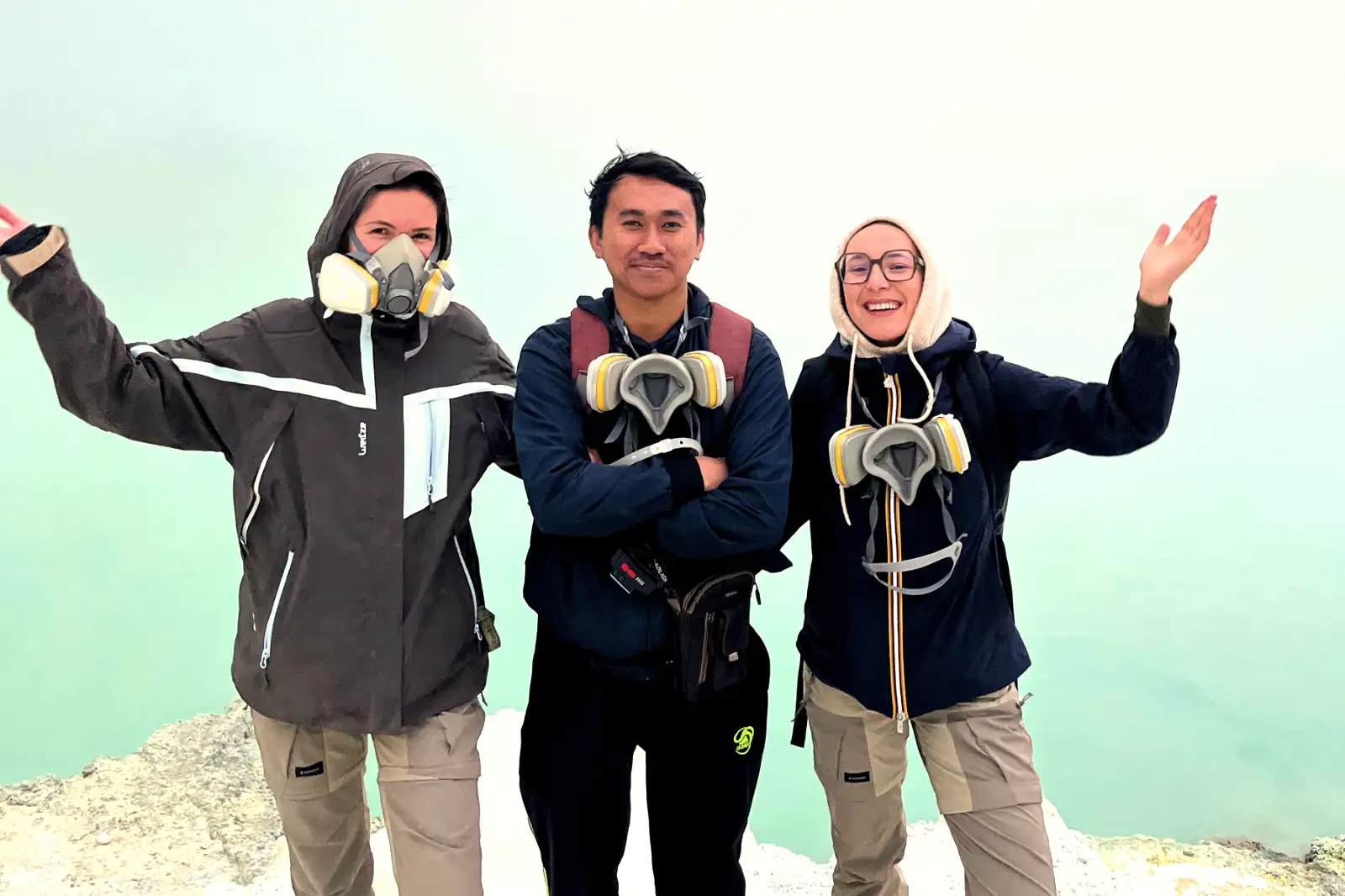
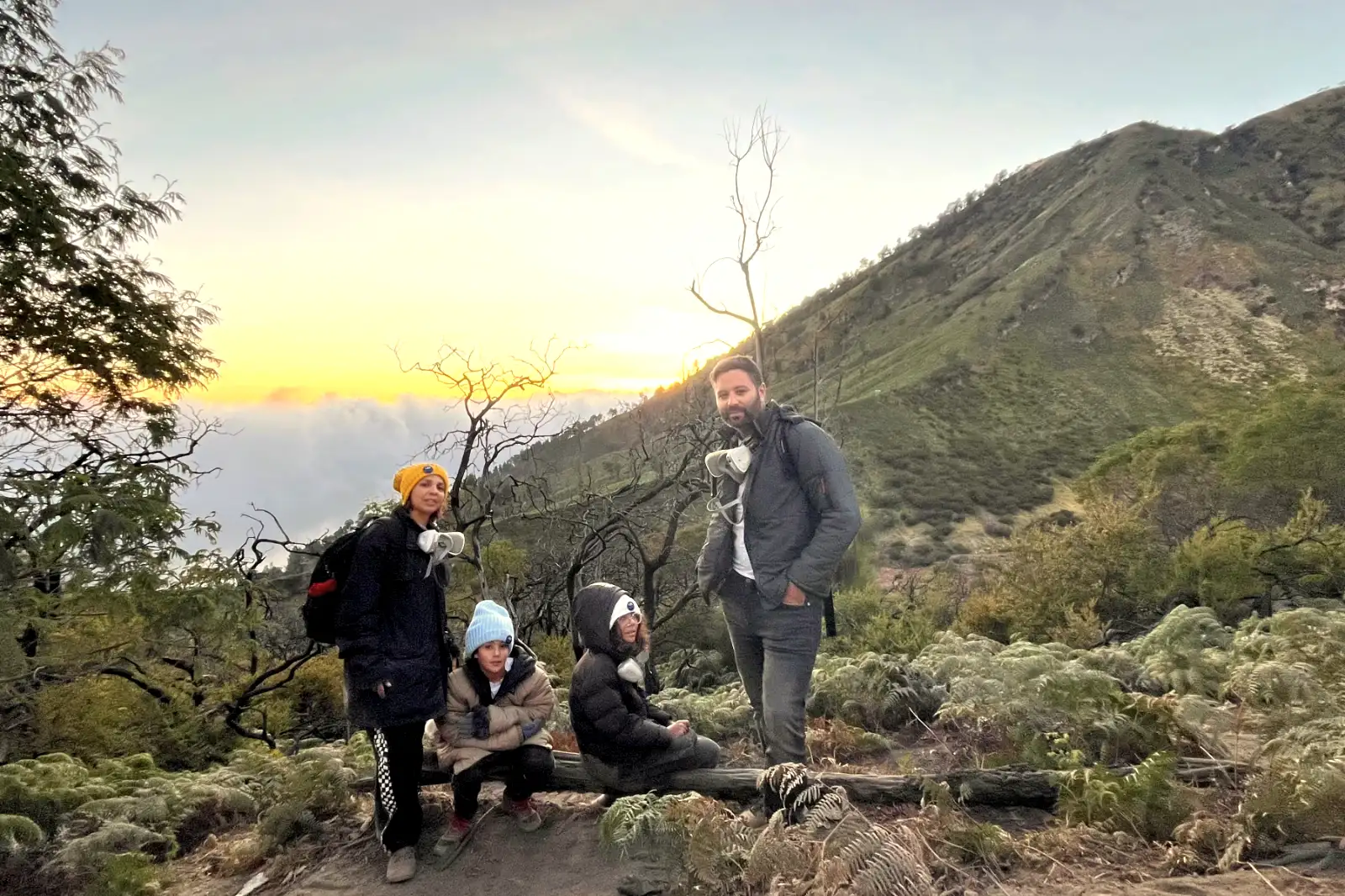
Waking up at midnight requires some prep. The Ijen Crater temperature at the basecamp can be around 10°C, but as you climb and the wind picks up, it can feel like 2°C. Layers are your best friend. You’ll sweat on the way up and freeze the moment you stop to look at the view.
- Location: Boundary between Banyuwangi and Bondowoso, East Java.
- Opening Hours: 02:00 AM – 12:00 PM (Daily).
- Hike Duration: 1.5 to 2 hours to the rim; another 30-45 mins to the crater floor.
- Difficulty: Moderate. The first 2km are quite steep.
- Mandatory: Health certificate (Surat Keterangan Sehat) and a gas mask.
Season Comparison: Dry vs. Rainy
| Feature | Dry Season (Apr-Oct) | Rainy Season (Nov-Mar) |
|---|---|---|
| Visibility | High – Clear views of lake | Low – Frequent fog/clouds |
| Trail Condition | Dry and dusty | Slippery and muddy |
| Blue Fire View | Excellent | Hit or miss (gas density) |
| Temperature | Colder at night (under 5°C) | Milder but damp (8°C-12°C) |
Local Tips You Should Know
Look, we see people make the same mistakes every week. One of the biggest Ijen Crater travel tips is to avoid visiting on the first Friday of every month. Why? The park usually closes for “Ijen Reikik” (a cleaning day) to let the ecosystem breathe. Always check the official BBKSDA East Java website for sudden closures due to volcanic activity.
Also, don’t underestimate the sulfur. If you have asthma, this hike isn’t for you. Even for healthy hikers, the wind can shift and send a thick cloud of sulfur gas your way. A professional gas mask is non-negotiable. If you’re coming from across the strait, many find the Ijen Crater tour from Bali the most convenient way to manage these safety requirements without stress.
Safety & Important Considerations
Safety at Ijen isn’t just about the hike; it’s about the volcano itself. The status can change from Level I (Normal) to Level II (Alert) based on seismic activity. When activity is high, the trail to the crater floor—where you see the Blue Fire—is strictly closed. You can still see the sunrise from the rim, but you won’t be able to go down.
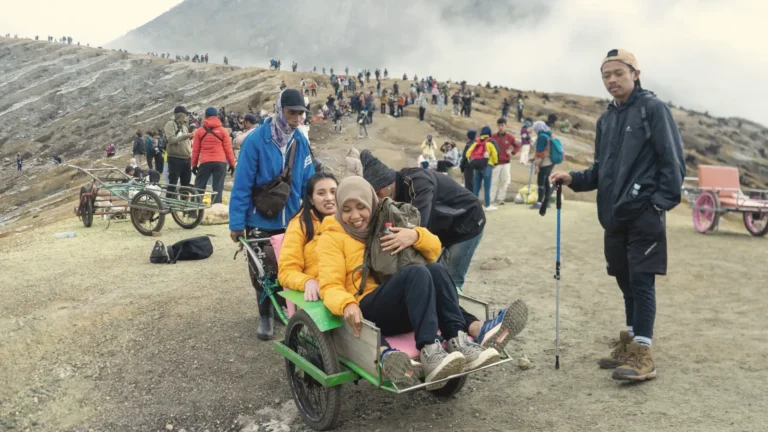
Honestly, the “trolley taxi” guys are a lifesaver if you’re not fit enough for the climb. Local sulfur miners use these carts to haul sulfur, but they’ll also pull tourists up the hill for a fee. It’s an intense job, and supporting them is a common way for visitors to manage the 3km ascent. For more prep, read our Ijen Crater tour checklist before you pack your bags.
Recommended Tour Packages
- Ijen Crater Tour from Banyuwangi (1 Day) – The most popular choice. Direct midnight departure for the Blue Fire and sunrise.
- Ijen Crater Tour from Bali – Includes ferry crossing and private transport. Perfect for travelers based in Ubud or Canggu.
- 3D2N Bromo Ijen Tour from Surabaya – The ultimate East Java volcano circuit. Covers both the Bromo sunrise and Ijen’s acidic lake.
- 2D1N Ijen Crater Tour from Banyuwangi – A more relaxed pace that includes local waterfall visits and coffee plantation stops.
- 4D3N Bromo Ijen Tumpak Sewu Tour – For adventure seekers who want to add Indonesia’s most famous waterfall to their volcano trek.
Frequently Asked Questions
Q: What is the best month to visit Ijen Crater for hiking?
A: August and September are the best months. You get the lowest chance of rain and the clearest views of the turquoise lake and the star-filled sky for astrophotography.
Q: Is Ijen Crater open during the rainy season?
A: Yes, it usually stays open, but the experience is different. Expect slippery paths and a higher chance of the crater rim being shrouded in thick fog, which can block the view of the lake.
Q: What time should I start the hike to see the Blue Fire?
A: You should be at the Paltuding entrance by 2:00 AM. The hike takes about 90 minutes to the rim, and you’ll need time to descend into the crater before the sun rises at 5:00 AM.
Q: How cold is it at Ijen Crater?
A: Before sunrise, temperatures typically range between 2°C and 10°C. Once the sun is up, it warms up to a comfortable 18°C to 20°C. Wind chill on the rim makes it feel much colder.
Q: Can I visit Ijen Crater without a guide?
A: While physically possible, it is highly discouraged for night hikes. A local guide monitors the sulfur gas direction and knows when it is safe to enter the crater floor, which is vital for your safety.
Final Takeaway
The best time to visit Ijen Crater is during the dry months from April to October, with July and August offering the most reliable weather. However, no matter when you go, the mountain requires respect. Bring layers, wear sturdy shoes, and always listen to the local rangers regarding gas safety. Whether you’re chasing the electric Blue Fire or the soft glow of a Java sunrise, the effort of a midnight climb is always rewarded by the view of that glowing turquoise lake.
Planning Your Trip to East Java?
Explore our local tour options and choose a route that matches your travel schedule.