
What Gases Are Released by Ijen Volcano? A Guide to Volcanic Air
Key Takeaways:
- Sulfur Dioxide (SO2) is the most prominent and pungent gas.
- Hydrogen Sulfide (H2S) creates the distinct “rotten egg” odor.
- Gas concentrations can change rapidly based on wind and volcanic activity.
- A professional-grade respirator is required to hike into the crater safely.
About This Guide: Written by our Banyuwangi-based local operational team with first-hand field experience across East Java, including current trail conditions, departure timing, weather shifts, and real visitor logistics.
Table of Contents
What Is Ijen Volcano’s Atmosphere Like?
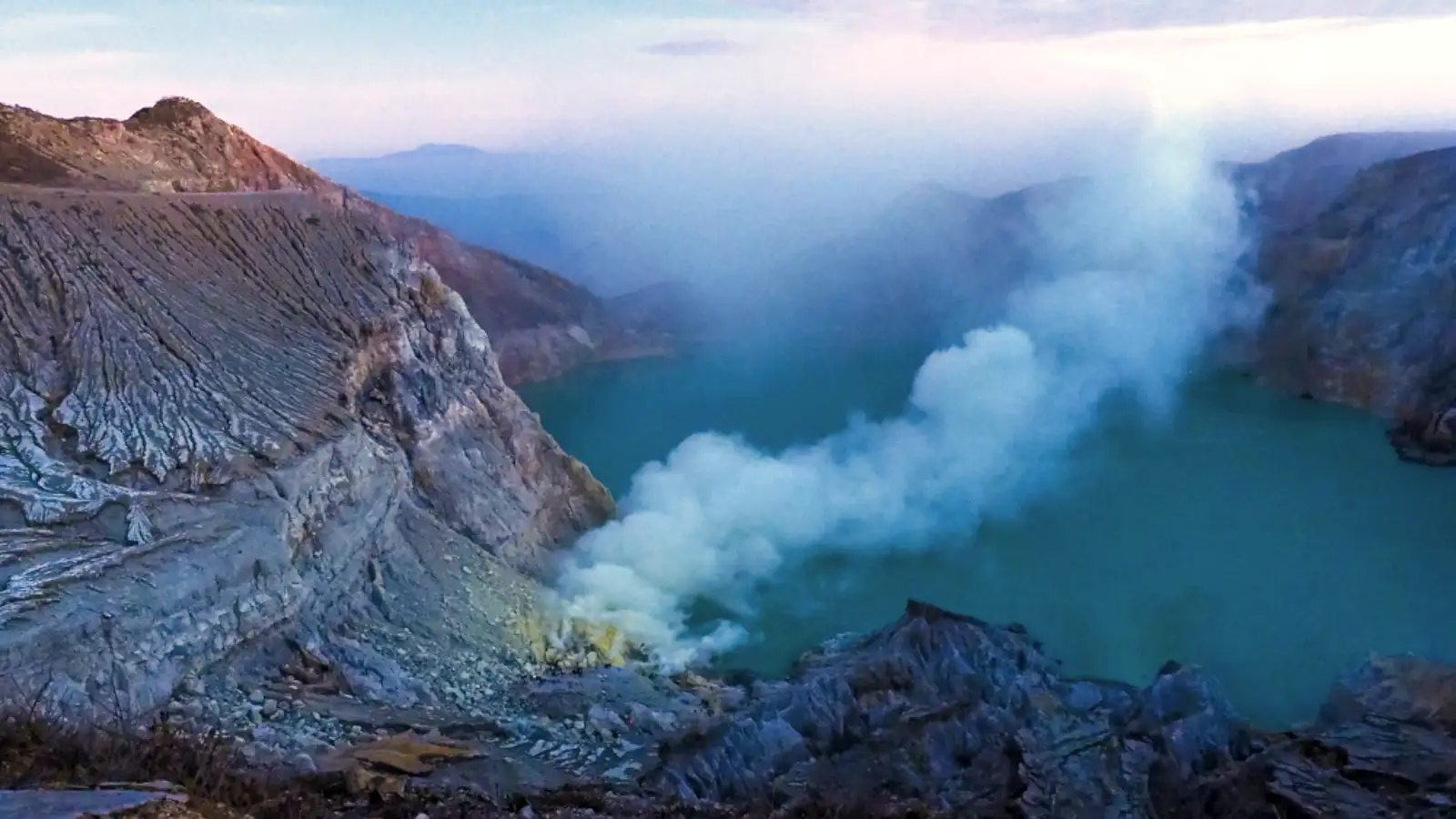
The sulfur hits you first. Thick, acrid, and biting into the back of your throat. Standing on the rim of Mount Ijen isn’t like standing on any other mountain. It’s a chemical powerhouse. Located in East Java, this volcano is famous for its hyper-acidic lake and active solfatara (gas vents).
Look, the air here is a living thing. One minute it’s clear, and the next, a shift in the wind wraps you in a dense, yellow cloud. It’s visceral. If you are planning an Ijen Crater tour, understanding these gases isn’t just “science”—it’s a requirement for your safety and comfort.
This guide breaks down exactly what you’re breathing, why it smells like that, and how the local Ijen sulfur miners navigate this environment every single day without the fancy gear tourists wear.
Primary Gases Released by Ijen
Ijen is basically a massive chemical factory. The magma deep below interacts with the groundwater and the lake above, pumping out a specific cocktail of gases through vents called fumaroles. Here is the breakdown of what is actually in that smoke.
Sulfur Dioxide (SO2)
This is the big one. Sulfur dioxide is a colorless gas with a sharp, irritating odor, similar to a just-struck match but much more intense. When it meets the moisture in your eyes or lungs, it can form mild sulfuric acid. This is why is Ijen Crater safe is such a common question. It is safe, provided you respect this gas.
Hydrogen Sulfide (H2S)
Ever smelled a rotten egg? That’s H2S. While SO2 is sharp, H2S is heavy and pungent. At Ijen, it’s released in smaller quantities than SO2 but is highly noticeable. It’s also dangerous because it can “numb” your sense of smell at high concentrations, making you think the gas is gone when it’s actually at its peak.
Carbon Dioxide (CO2) & Hydrogen Chloride (HCl)
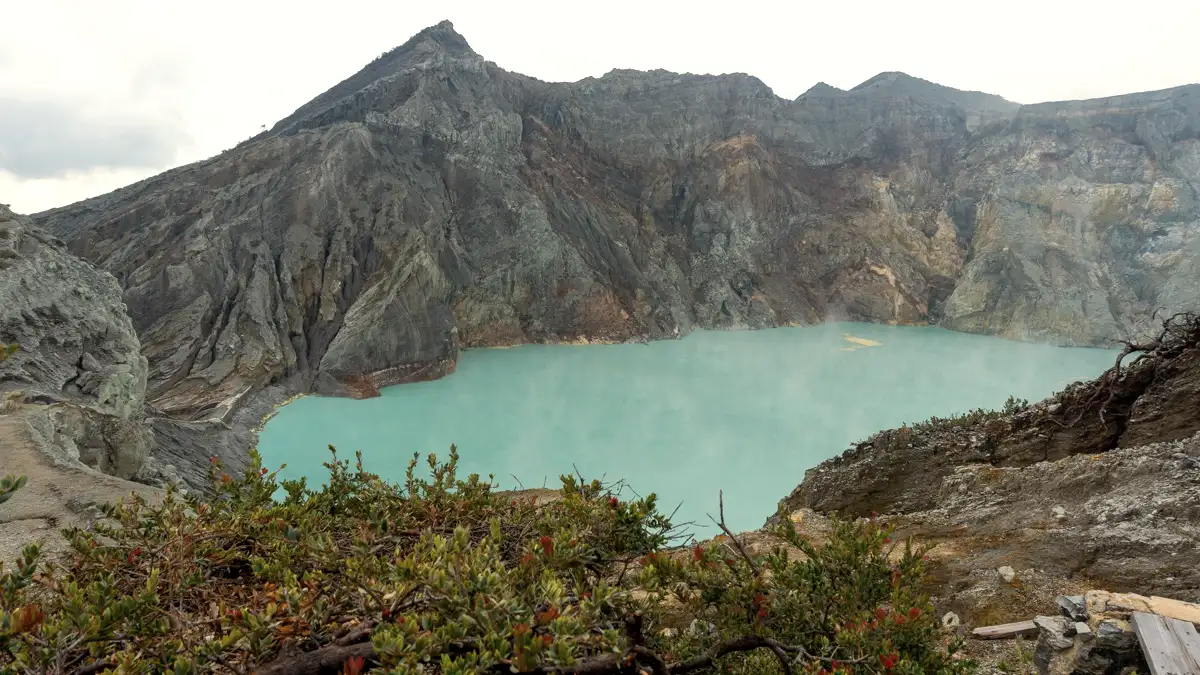
Carbon dioxide is odorless but can displace oxygen in low-lying areas. Hydrogen Chloride is what makes the steam rising from the lake so dangerous. It contributes to why Ijen has the world’s most acidic crater lake, with a pH lower than 0.5—strong enough to dissolve metal.
The Blue Fire Gas Connection
The “Blue Fire” isn’t lava. It’s gas. Specifically, it is high-pressure sulfuric gases emerging from cracks in the volcano at temperatures up to 600°C. When these gases hit the oxygen-rich air, they ignite, creating an electric-blue flame. It’s a rare chemical reaction you won’t see many places on Earth.
Truth is, the Ijen blue fire explained simply is: high heat meets concentrated sulfur gas. Because this reaction is purely gas-driven, it is only visible in total darkness. As soon as the sun rises, the light drowns out the blue glow, leaving only the thick yellow smoke.
Getting close to the blue fire means descending into the highest gas concentration zone. This is why our Ijen Crater tour from Bali involves a midnight departure—you need to be inside that crater while it’s still dark to witness the chemistry in action.
Practical Information
| Category | Details |
|---|---|
| Primary Gas | Sulfur Dioxide (SO2) |
| Required Gear | Half-face respirator with multi-gas filters |
| Health Req | Mandatory Health Certificate (Surat Sehat) |
| Opening Hours | Typically 02:00 AM (Subject to volcanic status) |
| Temperature | 3°C to 12°C at the summit before sunrise |
Gas Exposure Levels by Zone
Not every part of the hike has the same gas concentration. The wind plays a massive role in your experience. Here is what to expect based on where you are standing on the trail.
| Location | Gas Density | Mask Required? | Symptoms |
|---|---|---|---|
| Paltuding Basecamp | None / Very Low | No | Fresh pine air |
| Crater Rim | Moderate / Intermittent | Recommended | Mild throat tickle |
| Crater Floor (Blue Fire) | High | Mandatory | Coughing, eye watering |
Local Tips You Should Know
Don’t rely on a N95 mask or a surgical mask. They are useless against volcanic gases. You need a respirator with a chemical filter. You can check our Ijen Crater gas mask rental guide to see what a proper setup looks like.
Here’s a secret from the locals: If a gas cloud moves toward you and you don’t have your mask on yet, don’t panic. Close your eyes, hold your breath, and move perpendicular to the wind. Also, if you wear contact lenses, leave them at your hotel. The sulfur gas can react with the moisture in your eyes and trap acid behind the lens. Stick to glasses for this hike.
Check the understanding Ijen volcano activity updates before you go. If the alert level rises, the authorities might close the descent to the crater floor due to high gas concentrations. Even if you can’t go down, the view from the rim is still world-class.
Common Mistakes Travelers Make
Many hikers forget that the Ijen Crater temperature guide matters for gas, too. Cold air is denser, often trapping gas closer to the ground in the early hours. People arrive in thin t-shirts, get shivering cold, and then find their breathing is more labored because of the chill and the gas combined.
Another mistake is ignoring the acidity of the air. Any jewelry made of silver will turn black almost instantly in the crater due to the sulfur. Leave your expensive rings and necklaces behind. Also, the lake itself might look like a beautiful turquoise paradise, but do not touch the water. It’s battery acid. It will ruin your clothes and irritate your skin immediately.
Frequently Asked Questions
Q: Is the sulfur gas at Ijen toxic?
A: Yes, in high concentrations and long exposure. However, for a short visit with a proper gas mask, it is generally safe for healthy individuals. This is why the health certificate is now mandatory.
Q: Can I hike Ijen if I have asthma?
A: It is risky. Volcanic gases are strong respiratory irritants. We highly recommend consulting a doctor first and staying on the crater rim where the air is much clearer than at the bottom.
Q: Why does the gas look yellow?
A: The gas itself is often colorless, but it carries tiny particles of elemental sulfur. When these gases cool and condense, they form the bright yellow solid sulfur that miners collect.
Q: Will the gas mask protect my eyes?
A: A standard half-face respirator protects your lungs. It does not protect your eyes. If you have sensitive eyes, consider bringing tight-fitting goggles to prevent stinging from the acidic mist.
Q: How long can I stay in the high-gas zone?
A: Most guides recommend spending no more than 30-45 minutes at the crater floor near the vents. Listen to your body and your guide; if you feel lightheaded, move to higher ground immediately.
Recommended Tour Packages
-
1. Ijen Crater Midnight Tour from Banyuwangi
The most efficient way to see the blue fire. Includes pickup, gas masks, and a local guide to navigate the gas zones. -
2. Ijen Crater Tour from Surabaya (2D1N)
A comfortable pace for those coming from the regional capital. Includes overnight stay near the volcano. -
3. Mount Bromo and Ijen Crater Combo Tour
The ultimate East Java experience, combining the volcanic sunrise of Bromo with the chemical wonders of Ijen. -
4. Ijen Crater Day Trip from Bali
Full-service trip from your Bali hotel across the ferry to Java and back in 24 hours. -
5. Comprehensive East Java Multi-Day Adventure
Explore Ijen, Bromo, and hidden waterfalls with full logistical support and safety gear provided.
Final Takeaway
Ijen is one of the most unique places on the planet, but it demands respect. The gases released—Sulfur Dioxide and Hydrogen Sulfide—create the otherworldly blue fire and the neon-yellow landscape, but they are also potent chemicals. With a professional respirator, a local guide, and a bit of common sense, you can safely witness one of nature’s most intense displays.
Planning Your Trip to East Java?
Explore our local tour options and choose a route that matches your travel schedule.
Planning to visit Ijen or Mount Bromo?
Explore available tour options and ask our local team about your itinerary.
Explore Tour Packages →