
Why Ijen Has One of the World’s Most Acidic Crater Lakes
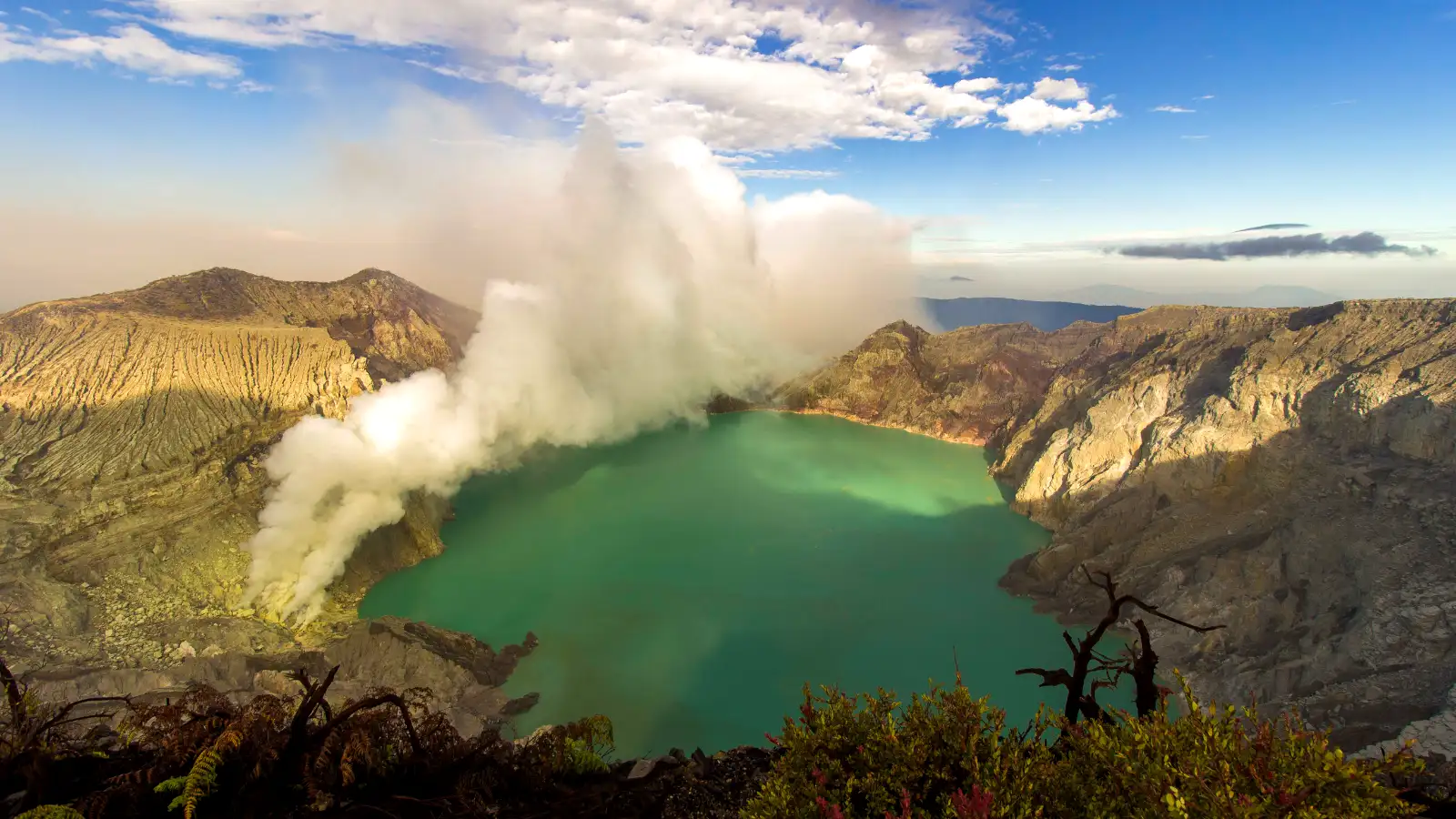
You stand on the rim of a massive caldera at 3:00 AM, lungs burning from a mix of thin mountain air and the sharp, biting scent of rotten eggs. Below you, a deceptive turquoise glow beckons through the darkness. It looks like a tropical paradise, but don’t let the color fool you. This is a vat of concentrated acid powerful enough to dissolve metal. Understanding what the Ijen Crater lake actually is requires looking past the Instagram photos. It is a geological anomaly where volcanic fire meets a massive reservoir of water.
Planning a trip here usually involves a midnight wake-up call and a steep, dusty climb. You might be wondering if the effort is worth the stinging eyes and freezing temperatures. The reality is that Ijen is one of the few places on Earth where you can witness high-intensity volcanic chemistry in person. If you are ready to witness this phenomenon safely, you should reserve your spot with a professional team to navigate the toxic fumes and steep trails of East Java.
- pH Level: Approximately 0.3, making it nearly as acidic as battery acid.
- The Cause: Magmatic gases like SO2 and HCl reacting with lake water.
- The Color: Dissolved metals (alum and iron) create that famous turquoise hue.
- Safety: Gas masks are mandatory for the descent into the crater.
Table of Contents
The Chemistry of a Turquoise Trap
Ijen isn’t your average mountain lake. While most lakes are fed by rainwater and mountain runoff, this one is essentially a giant chemical reactor. The water is saturated with high concentrations of dissolved sulfuric and hydrochloric acid. These acids are produced when magmatic gases from deep within the earth bubble up through the lake floor. If you dipped your hand in here, you’d feel a painful sting almost instantly. This extreme acidity is why you won’t find any fish or plants living in its depths.
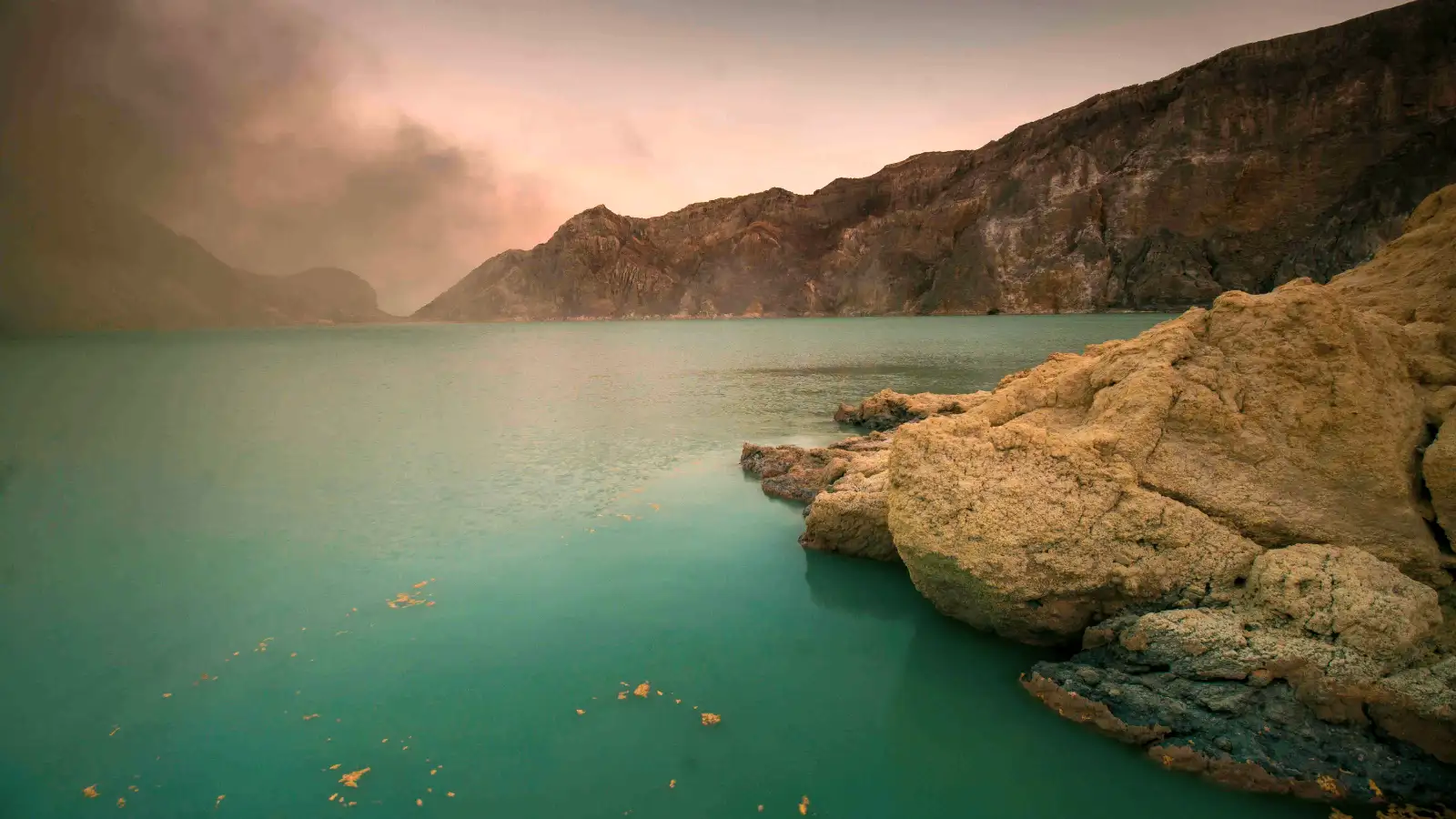
The stunning turquoise color is actually a warning sign. It comes from the high concentration of dissolved metals, specifically aluminum and iron, which react with the acidic water. When the sun hits the surface, these minerals reflect a brilliant blue-green light. It looks inviting, but the steam rising from the surface reminds you that the temperature can reach 40°C (104°F) or higher near the vents. To learn more about the raw numbers, check out these surprising Ijen Crater facts.
The Corrosive pH Levels
Scientists measure the acidity of Ijen regularly. Most freshwater lakes have a pH between 6 and 8. Ijen sits comfortably at a pH of 0.3. This puts it on par with the acid found inside a car battery. The sheer volume of acid—estimated at around 36 million cubic meters—makes it the largest highly acidic lake in the world. Imagine the amount of volcanic energy required to maintain such a massive pool of liquid corrosion.
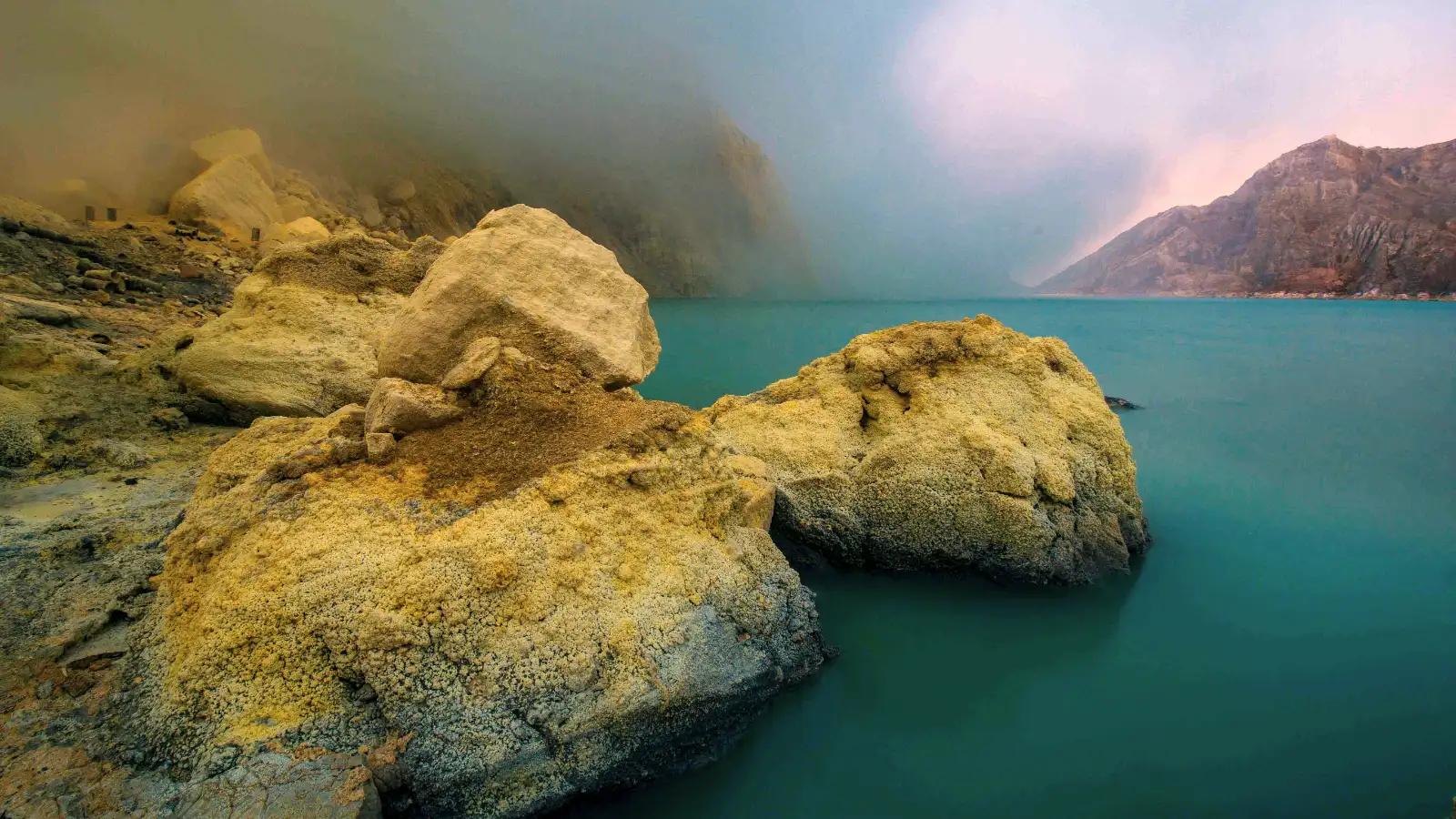
Walking along the shore, you’ll see rocks that have been bleached white or yellow. These stones are being slowly dissolved by the water and the acidic mist. The air itself feels heavy and metallic. Every breath taken without a mask reminds you of the lake’s power. It is a visceral, sensory experience that no photograph can fully capture.
Why Ijen Has One of the World’s Most Acidic Crater Lakes
The secret lies in the hydrothermal plumbing of the volcano. Deep beneath the lake, the Ijen volcanic complex is incredibly active. Magma reservoirs release intense heat and a cocktail of gases, primarily sulfur dioxide (SO2), hydrogen chloride (HCl), and hydrogen fluoride (HF). These gases don’t just vanish into the atmosphere. Instead, they are forced through a network of fissures and vents located at the bottom of the lake.
When these scorching hot gases meet the lake water, a massive chemical reaction occurs. The sulfur dioxide dissolves to form sulfuric acid, while the hydrogen chloride turns into hydrochloric acid. This constant replenishment of chemicals keeps the pH levels extremely low. This is the core reason understanding Ijen’s volcanic activity is crucial for any visitor. The mountain is literally “breathing” acid into the water.
The Role of Solfataras
Near the edge of the lake, you will find solfataras—vents that blow out pure volcanic steam and sulfur. This is where the famous “Blue Fire” occurs. The sulfur exits the vents as a liquid at temperatures over 200°C. When it catches fire, it burns with an ethereal blue flame that is only visible in total darkness. The runoff from these vents often trickles directly into the lake, adding even more concentrated sulfur to the mix.
This process is what creates the massive sulfur deposits. Local miners harvest this sulfur daily, carrying heavy loads up the steep crater walls. Their presence is a stark reminder of the human element in this harsh landscape. Watching them navigate the acidic smoke without modern gear is humbling. It adds a layer of grit to the geological wonder that defines Ijen.
Hydrothermal Convection Loops
The lake isn’t static. It operates like a boiling pot of water on a stove. Hot water rises from the vents at the bottom, cools at the surface, and sinks back down. This convection loop ensures that the acids and minerals are perfectly mixed throughout the entire body of water. Because the lake is so deep—up to 200 meters in some spots—the pressure at the bottom allows the water to hold even more dissolved gases than a shallow pond could.
Heavy rainfall during the monsoon season can sometimes dilute the lake slightly, but the volcanic engine is so powerful that the pH rarely changes significantly. The balance between the massive amount of rain East Java receives and the constant volcanic input is a delicate geological dance. This stability is why Ijen remains the world champion of acidic lakes year after year.
The Raw Reality of the Descent
Descending into the crater is an exercise in controlled chaos. The path is made of loose volcanic scree and jagged rocks. You’ll likely be part of a long line of headlamps bobbing in the dark. At 4 AM, the rim is crowded, but the real challenge begins when you head down toward the lake. The wind often shifts, sending thick clouds of white sulfur smoke directly into the path. This is when the panic starts for some—the smoke is thick, suffocating, and smells like a chemical fire.
Your eyes will water, and your skin might itch. This is why many travelers choose the comprehensive Ijen Crater tour which includes high-quality gas masks and experienced guides. These guides know the wind patterns and can tell you when to hunker down and when to move. Without them, you’re just another tourist lost in a toxic cloud, desperately trying to find a photo spot while gasping for air.
Meeting the Sulfur Miners
As you struggle with your lightweight backpack, you will pass the legendary sulfur miners of Ijen. They carry bamboo baskets loaded with 70 to 90 kilograms of bright yellow sulfur rock. They do this twice a day, every day, wearing nothing but flip-flops or rubber boots. The sound of their heavy breathing and the creak of their baskets is the soundtrack of the crater. It is a brutal way to make a living, yet they often greet tourists with a smile or a nod.
These men are the true experts of the volcano. They know the lake’s moods better than any scientist. They understand when the gas is too dangerous and when the lake level is rising. Respecting their space on the narrow trails is the first rule of Ijen etiquette. Step aside, let them pass, and realize that while you are there for a vacation, they are there for survival.
Comparing Ijen to Other Volcanic Lakes
How does Ijen stack up against other famous volcanic sites? While places like Mount Bromo offer iconic landscapes, they don’t have the same chemical intensity. Most crater lakes in Indonesia are either dormant and filled with rainwater or have much higher pH levels. Ijen is a rarity because it combines a large water volume with high-output magmatic plumbing.
| Feature | Kawah Ijen | Mount Bromo | Crater Lake (USA) |
|---|---|---|---|
| Average pH | 0.3 (Highly Acidic) | N/A (Dry Crater) | 7.5 (Neutral) |
| Main Gas | Sulfur Dioxide | Sulfur / Steam | None |
| Color Cause | Dissolved Metals | Grey Ash | Depth & Clarity |
Compared to other “acid lakes” in the world, such as Poás Volcano in Costa Rica, Ijen is significantly larger and more accessible. It offers a scale of chemistry that is hard to find anywhere else on the planet. This makes it a bucket-list destination for anyone interested in geology or extreme environments.
Safety First: Navigating the Corrosive Environment
You cannot hike Ijen like a normal mountain. The acidity isn’t just in the water; it’s in the air. On days with high gas activity, the sulfuric mist can ruin electronic equipment and irritate your respiratory system. Your smartphone or expensive DSLR camera is at risk of corrosion if exposed to the fumes for too long. Many professional photographers use specialized covers or simply minimize the time their gear is out of the bag.
The most important piece of gear is your mask. A simple N95 or surgical mask will do nothing against volcanic gases. You need a proper industrial respirator with acid-gas cartridges. Most Ijen gas mask rental guides recommend checking the seal before you start your descent. If you can smell sulfur through the mask, it isn’t fitted correctly.
Physical Demands and Preparation
The hike is about 3 kilometers long, but it is steep. The first kilometer is the hardest, with a consistent 20-30 degree incline. If you aren’t in great shape, don’t worry—local “trolley taxis” are available. These are modified carts originally used for sulfur, now used to ferry tourists up the mountain for a fee. It’s a bit of a surreal sight, but for those with knee issues or low stamina, it’s a lifesaver.
Layering your clothes is essential. It can be 5°C (41°F) at the basecamp at midnight, but you will sweat during the climb. Once you reach the rim and stop moving, the wind chill will make you freeze again. Bring a windbreaker and a warm hat. For a full list of what to pack, refer to our ultimate Ijen clothing guide.
Why Trust This Guide?
We aren’t just writers sitting in an office; we are local operators based in East Java. Our teams are on the slopes of Mount Ijen every single day. We talk to the miners, monitor the seismic activity reports, and check the lake levels personally. When the park rangers issue a warning, we are the first to know. This guide is built on thousands of successful ascents and a deep respect for the volatile nature of our home volcanoes.
Our goal is to ensure you experience the raw beauty of Ijen without the common pitfalls of mass tourism. We understand the logistics of traveling from Bali or Surabaya and the importance of timing your hike perfectly to see the sunrise. When you book with us, you are supporting a local ecosystem of guides and drivers who know these trails like the back of their hands.
Popular Related Tour Packages
Ready to see the world’s most acidic lake for yourself? Explore our top-rated tour packages, designed for every type of traveler:
- 🌟 The Classic Ijen Crater Adventure (Full Guide)
- 🌟 Ijen Midnight Tour from Banyuwangi (Best Value)
- 🌟 2-Day Ijen & Jagir Waterfall Experience
- 🌟 Ijen Tour from Surabaya (Comfort & Convenience)
- 🌟 Private Ijen Volcano Tour from Bali
Ready for Your Ultimate Mount Bromo & Ijen Adventure?
Don’t leave your trip to chance. Join thousands of happy travelers and experience East Java with our top-rated local tour operators.
Frequently Asked Questions
Q: Can I swim in Ijen Crater Lake?
A: Absolutely not. The water is extremely acidic (pH 0.3) and will cause severe chemical burns to your skin and eyes. It is also hot enough in some areas to cause thermal burns.
Q: Do I really need a gas mask?
A: Yes. The sulfur dioxide fumes are toxic and can cause permanent lung damage or immediate respiratory distress. We include high-quality respirators in all our tour packages for your safety.
Q: How long does the hike take?
A: The ascent usually takes 1.5 to 2 hours, depending on your fitness. If you choose to descend into the crater for the Blue Fire, add another 45 minutes for the rocky descent.
Q: Is Ijen safe for children?
A: We generally recommend Ijen for children aged 7 and above who are comfortable with steep hiking. However, children should not be taken down into the crater where the gas concentration is highest.
Q: What is the best month to visit?
A: The dry season (April to October) is best. During the rainy season, the trails can be very slippery and the “Blue Fire” is often obscured by steam and clouds.
Planning to visit Ijen or Mount Bromo?
Explore available tour options and ask our local team about your itinerary.
Explore Tour Packages →