
How Was Ijen Crater Formed? A Guide to Its Volcanic History
Key Takeaways:
- Tectonic subduction of the Indo-Australian plate fueled the birth of the volcano.
- A massive caldera collapse defined the modern landscape of the Ijen plateau.
- Kawah Ijen is a “post-caldera” cone, much younger than the original rim.
- The high acidity comes from volcanic hydrogen chloride gas dissolving in water.
About This Guide: Written by our Banyuwangi-based local operational team with first-hand field experience across East Java, including current trail conditions, departure timing, weather shifts, and real visitor logistics.
Table of Contents
What Is the Ijen Volcanic Complex?
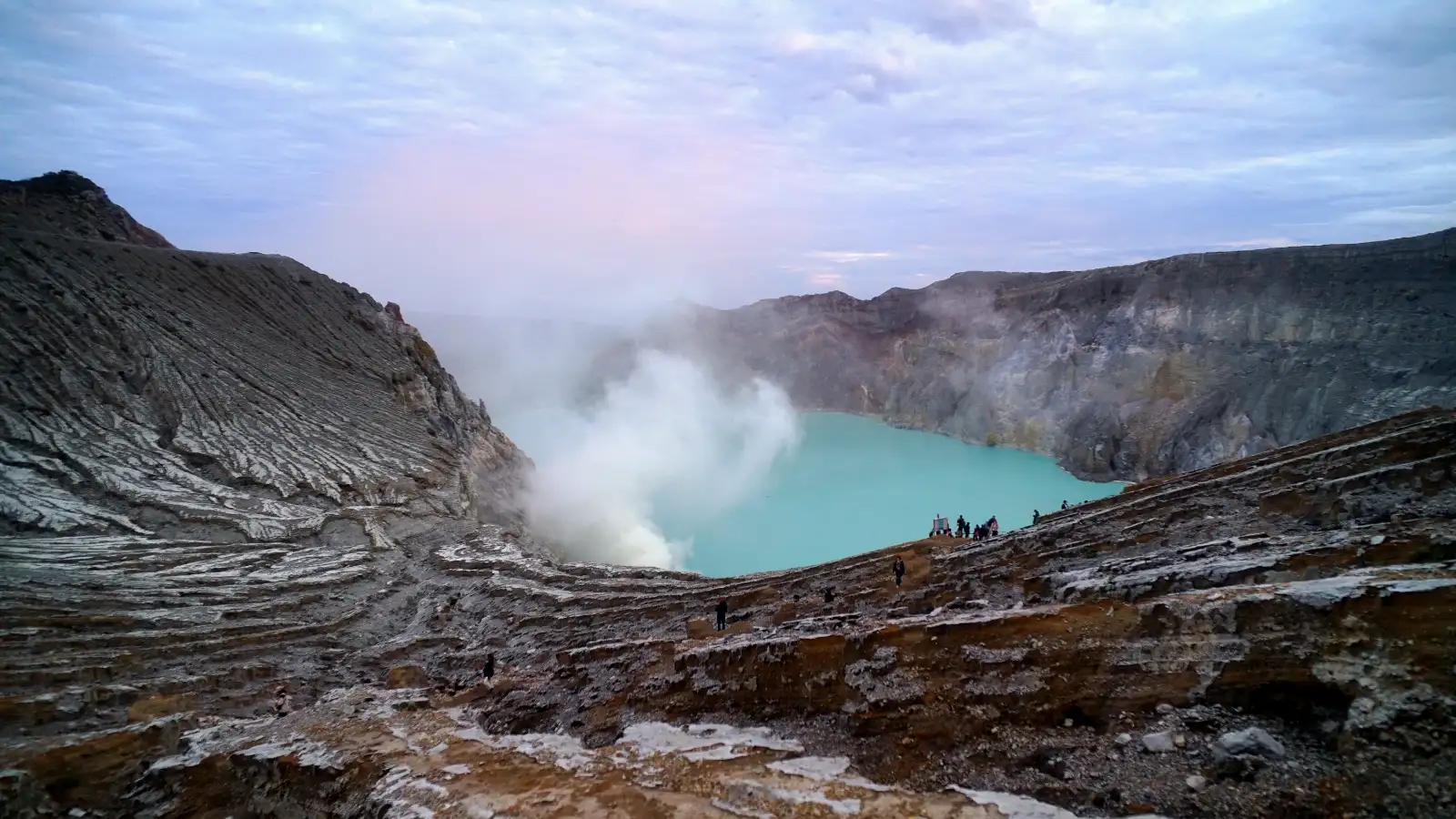
Ijen isn’t just one lonely mountain. It’s a massive family of volcanoes. Located on the eastern edge of Java, this area is a geological giant. When you stand at the summit of Kawah Ijen, you’re actually standing on the edge of a much larger story. Understanding the Ijen volcanic complex is the first step to realizing why this place looks so alien.
The complex is dominated by a 20-kilometer wide depression called a caldera. It looks like a giant bowl from the air. Inside this bowl, several volcanic peaks have grown over thousands of years. Kawah Ijen is the most famous because of its active vent and turquoise lake. But the surrounding peaks, like Mount Merapi (not the one in Central Java) and Mount Raung, are all part of this same tectonic engine.
How Ijen Crater Formed: A Geological Timeline
The story starts deep underground. Look, the earth beneath Indonesia is incredibly restless. The Indo-Australian plate is constantly sliding under the Eurasian plate. This process, called subduction, creates intense heat and pressure. This pressure melts rock into magma, which eventually fights its way to the surface. This is the “spark” that lit the first fires of Ijen.
The Ancient Super-Volcano
Roughly 300,000 years ago, a massive volcano rose here. Geologists call it “Old Ijen.” It was likely much taller than anything you see today. Over long periods, magma chambers beneath the mountain filled up. Eventually, the pressure became too much. A cataclysmic eruption occurred, blasting away the top of the mountain. Truth is, the mountain didn’t just blow up; it collapsed into itself because the magma chamber was empty. This left behind the Ijen caldera we see today.
The Birth of Kawah Ijen
After the big collapse, the volcanic activity didn’t stop. New vents opened up on the floor of the caldera. Over time, several smaller volcanoes grew. Kawah Ijen is one of these younger “children” of the old caldera. The evolution of Mount Ijen continued as successive eruptions built up the crater walls we hike today. If you’ve ever done an Ijen Crater tour, you’ve walked on the layers of ash and stone from these very events.
The Formation of the Acidic Crater Lake
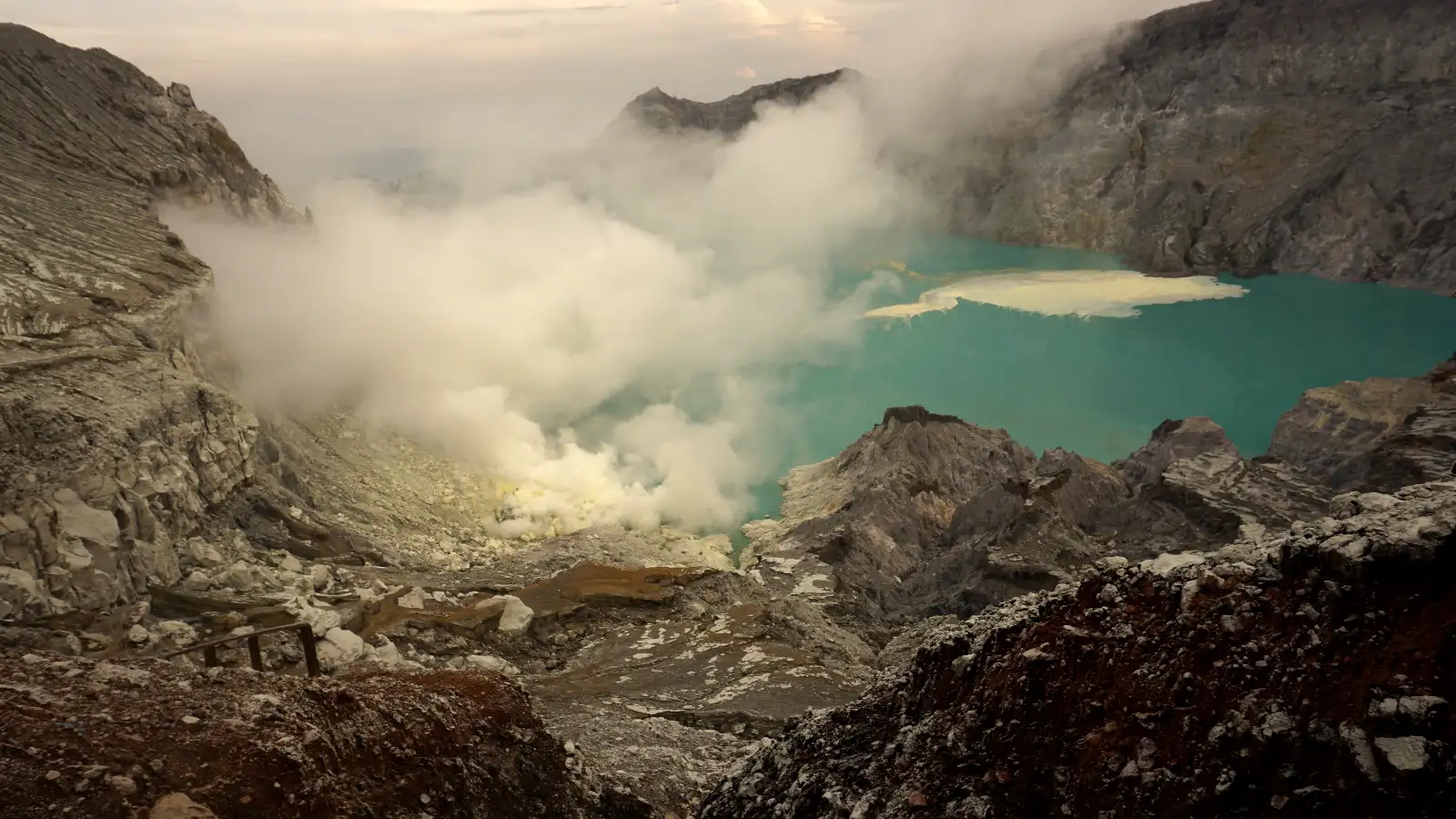
The turquoise water is a trap. It looks beautiful, but it’s actually a massive vat of acid. How did it get that way? It’s a mix of rain and volcanic plumbing. The crater acts like a giant funnel for rainwater. Beneath the lake, the volcano is still breathing. It releases gases like sulfur dioxide and hydrogen chloride through vents called fumaroles.
When these gases meet the water, they dissolve. The result is a chemical reaction that creates sulfuric and hydrochloric acid. This is why Ijen is known for having the most acidic crater lake on the planet, with a pH often lower than 0.5. For context, that’s stronger than car battery acid. The turquoise color comes from high concentrations of dissolved metals like aluminum and iron reflecting the sunlight.
Sulfur and the Blue Fire
The geological history of Ijen Crater is also responsible for its famous blue fire. High-pressure volcanic gases escape through cracks in the rock. These gases contain high amounts of sulfur. When they hit the oxygen-rich air at temperatures above 600°C, they ignite. The flames are blue because of the high sulfur content. It’s a rare sight that only happens in a few places on Earth, and it’s a direct window into the active tectonic heart of the volcano.
Practical Geological Information
If you’re planning to visit this geological wonder, you need to be prepared for more than just a hike. The terrain is steep, and the air is thick with the very elements that formed the crater. Here are the hard facts for your visit.
| Feature | Detail | Significance |
|---|---|---|
| Summit Elevation | 2,386 meters | Part of the post-caldera cone growth. |
| Lake pH | < 0.5 | Worlds most acidic volcanic lake. |
| Caldera Width | 20 Kilometers | Remnant of the Old Ijen collapse. |
| Main Gas | Sulfur Dioxide (SO2) | Causes the Blue Fire phenomenon. |
Local Tips for Geology Buffs
If you really want to see the Ijen volcano geology in action, don’t just stay on the rim. If the rangers allow it, look at the rock layers on the way down to the lake. You can see the different “strata”—stripes of rock that represent different eruptions over time. Some are dark and basaltic, others are lighter ash deposits.
Here’s the deal: arrive at Paltuding (the basecamp) around 1:00 AM. The hike takes about 1.5 to 2 hours. The sulfur smell hits you long before you see the crater. It’s acrid and biting. Make sure you have a proper gas mask. If you’re coming from a Bromo Ijen tour, you’ll notice how different the two volcanoes are. Bromo is a sand-filled moonscape, while Ijen is a chemical laboratory.
Frequently Asked Questions
Q: Is Kawah Ijen still active?
A: Yes, it is very active. While it hasn’t had a massive lava eruption recently, it continuously releases volcanic gases and experiences small phreatic explosions, which are steam-driven blasts.
Q: Why is the lake turquoise?
A: The color comes from the high concentration of dissolved metals and sulfuric acid. These particles reflect light in the blue-green spectrum, giving it that vibrant, unnatural glow.
Q: Can you swim in the Ijen crater lake?
A: Absolutely not. The water is highly acidic and can cause severe chemical burns to your skin and eyes. It is also quite deep, reaching about 200 meters in some spots.
Q: What caused the Ijen caldera to form?
A: A massive eruption of an ancient volcano roughly 300,000 years ago caused its magma chamber to empty, leading the entire mountain to collapse inward.
Q: Where does the sulfur at Ijen come from?
A: It comes from volcanic gases escaping from the magma chamber. As the gas cools near the surface, it condenses into liquid sulfur and then solidifies into the bright yellow rocks miners collect.
Q: How does Ijen compare to other volcanoes?
A: It’s unique because of its high acidity and blue fire. Most volcanoes release lava; Ijen is more famous for its intense hydrothermal and gas activity.
Recommended Tour Packages
To witness this geological masterpiece first-hand, we recommend these curated local experiences:
- Ijen Crater Tour from Bali – The most popular choice for a seamless crossing from Bali to Java for a sunrise hike.
- 1-Day Ijen Volcano Adventure – A fast-paced, high-intensity trek designed for travelers with limited time.
- Ijen Tour from Surabaya (2D1N) – Perfect if you are arriving via Surabaya’s international airport and want a comfortable pace.
- Bromo & Ijen 3D2N from Bali – The ultimate volcanic duo package covering both of East Java’s famous peaks.
- The Java Triple Crown (4D3N) – See Bromo, Ijen, and the massive Tumpak Sewu waterfall in one epic journey.
Final Takeaway
Ijen is more than just a photo op for social media. It’s a living, breathing example of the earth’s raw power. From the ancient caldera collapse to the chemical reactions forming the turquoise lake, every part of the landscape tells a story of tectonic violence and natural beauty. When you climb that trail in the dark, remember you’re walking on 300,000 years of history. It’s a perspective that makes the cold wind and the sulfur smell worth every second.
Planning Your Trip to East Java?
Explore our local tour options and choose a route that matches your travel schedule.
Planning to visit Ijen or Mount Bromo?
Explore available tour options and ask our local team about your itinerary.
Explore Tour Packages →