
Understanding the Ijen Caldera: More Than Just One Volcano
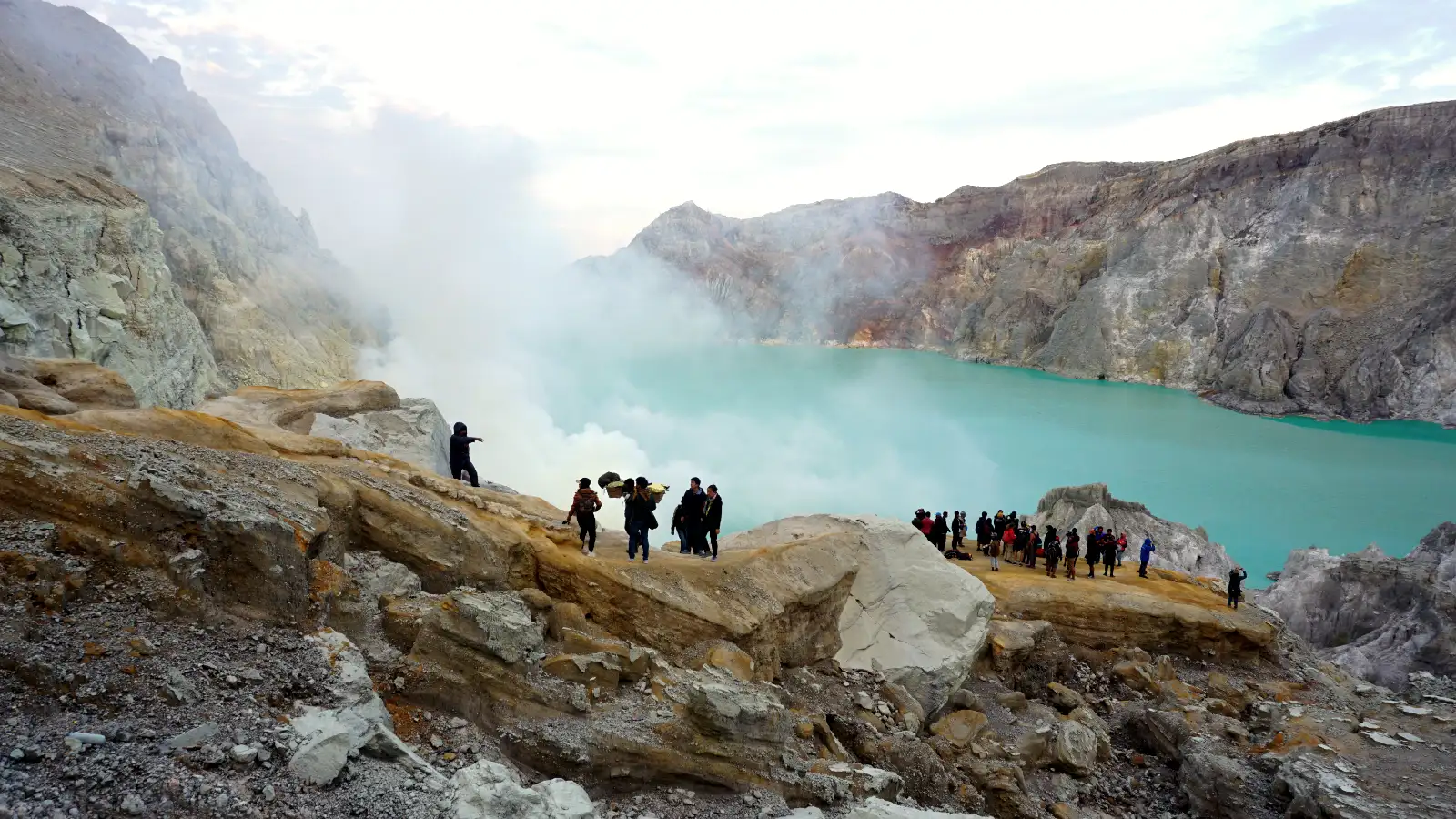
The Ijen volcanic complex is far more than a single mountain with a turquoise lake. It is a massive, prehistoric geological fortress spanning 20 kilometers, housing multiple peaks and a volatile history. By booking your trip now, you gain access to one of the most complex stratovolcano systems in the Indonesia Ring of Fire. Understanding the volcanic activity at Ijen is the first step toward respecting this raw, elemental landscape.
What You Need to Know
The Ijen caldera is a vast volcanic depression formed by a massive collapse thousands of years ago. Within its rim, several volcanoes like Mount Merapi Ijen and Kawah Ijen reside. It’s a site of intense geothermal activity and the world’s most acidic crater lake.
Table of Contents
Why Trust This Guide?
We don’t just write about Ijen; we breathe its sulfurous air weekly. Our team consists of local operators and guides who have navigated the steep trails of Paltuding for decades. We’ve seen the blue fire roar and seen it whisper. We’ve shared coffee with the miners in the 3 AM cold and watched the sunrise paint the caldera walls from every possible angle. This guide is built on real boots-on-the-ground experience, not just geological textbooks.
The Ancient Origins: How the Ijen Volcanic Complex Was Born
Imagine a mountain so massive it once dwarfed everything in East Java. That was the “Old Ijen.” Roughly 50,000 years ago, a series of cataclysmic eruptions led to a massive caldera collapse. The mountain literally swallowed itself, creating a 20-kilometer-wide volcanic depression. This wasn’t a quiet event. It was a world-shaping explosion that left behind the jagged rim we see today.
Walking along the rim now, you aren’t just on a mountain; you are standing on the edge of a geological grave. The Ijen crater facts tell a story of immense pressure and sudden release. The floor of this caldera is now a fertile plateau, but the fire never truly left. It just found new vents to climb through, creating the smaller cones we visit today.
The 20-Kilometer Super-Structure
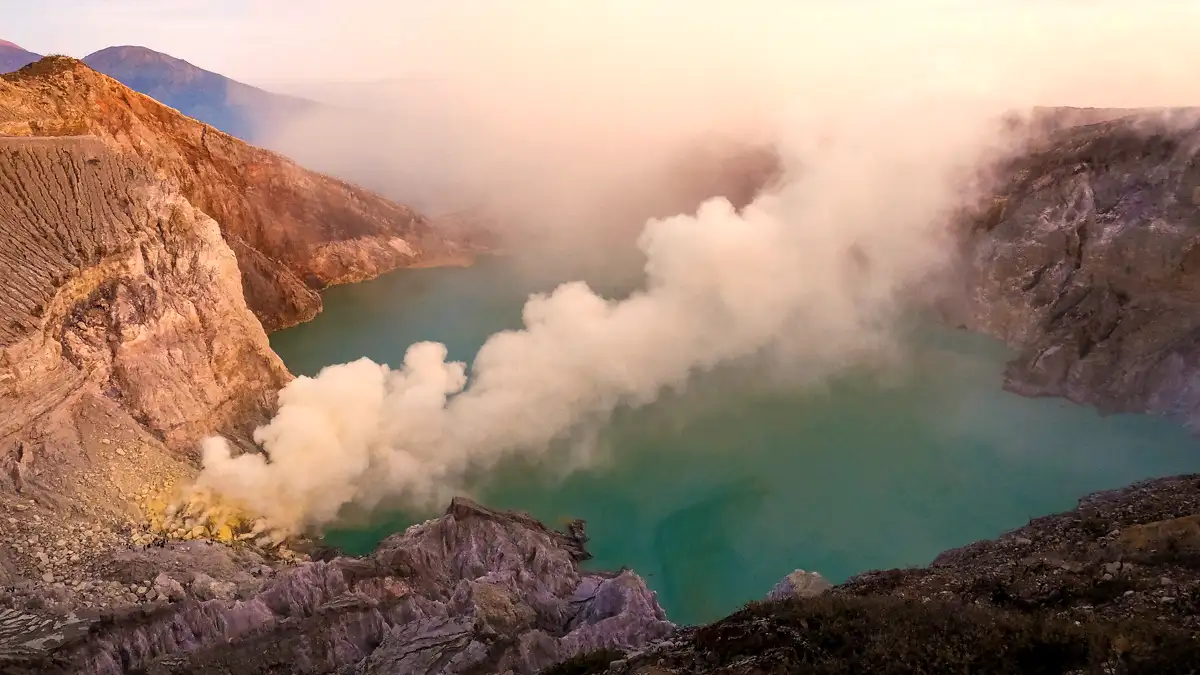
The scale is hard to grasp until you see it from the air. Most hikers only see the small section leading to Kawah Ijen. However, the entire complex is a massive circular basin. High ridges like Mount Merapi (not to be confused with the one in Yogyakarta) form the northern walls. These peaks act as silent guardians over the inner volcanic system.
Driving up from Banyuwangi, the road winds through lush rainforests that have reclaimed the outer slopes. You can feel the air thin as the jeep climbs. Every hairpin turn reveals a bit more of the scale. This is the Ijen crater tour from Bali experience—transitioning from tropical beaches to a prehistoric volcanic fortress in a single night.
A Landscape Scarred by Fire
The ground beneath Paltuding basecamp is composed of layers of ash and pumice. Each layer represents a different heartbeat of the volcano. Geologists view this as a stratovolcano complex, meaning it’s built of alternating layers of lava and ash. It’s a messy, violent way for a landscape to grow. The “beauty” tourists seek is actually the result of chemical warfare between the earth’s core and the atmosphere.
The Sleeping Giants: Volcanoes Inside Ijen Caldera
Kawah Ijen is the celebrity, but it isn’t alone. Several other cones have risen from the caldera floor over the millennia. Mount Merapi Ijen is the highest point, often shrouded in mist. Then there is Mount Papak, a flatter, less aggressive peak. These volcanoes collectively form the Ijen volcano system, a family of fire where each member has a different personality.
Mount Raung sits just to the southwest, often seen puffing smoke in the distance. While not technically inside the Ijen caldera, it is a crucial part of the East Java volcanic arc. When Raung rumbles, Ijen often feels the tremors. It’s a reminder that this entire region is interconnected by a massive underground plumbing system of magma.
Mount Merapi Ijen: The High Peak
Often overlooked because it lacks a bright blue lake, Mount Merapi Ijen is the true summit of the complex. It stands as a dark, imposing silhouette against the morning sky. For those who want more than just a selfie by the lake, exploring the ridges around Merapi offers a raw look at volcanic desolation. There are no crowds here, just the sound of the wind whipping through scorched trees.
Mount Papak and the Plateaus
Between the active vents lie plateaus where the local vibe shifts. Here, you might see coffee plantations thriving in the nutrient-rich volcanic soil. The contrast is jarring. One moment you are staring at a toxic acid lake, and the next, you are surrounded by some of the world’s best Arabica beans. This is the duality of the Ijen volcanic landscape—life thriving on the edge of destruction.
Kawah Ijen: The Toxic Heart of the System
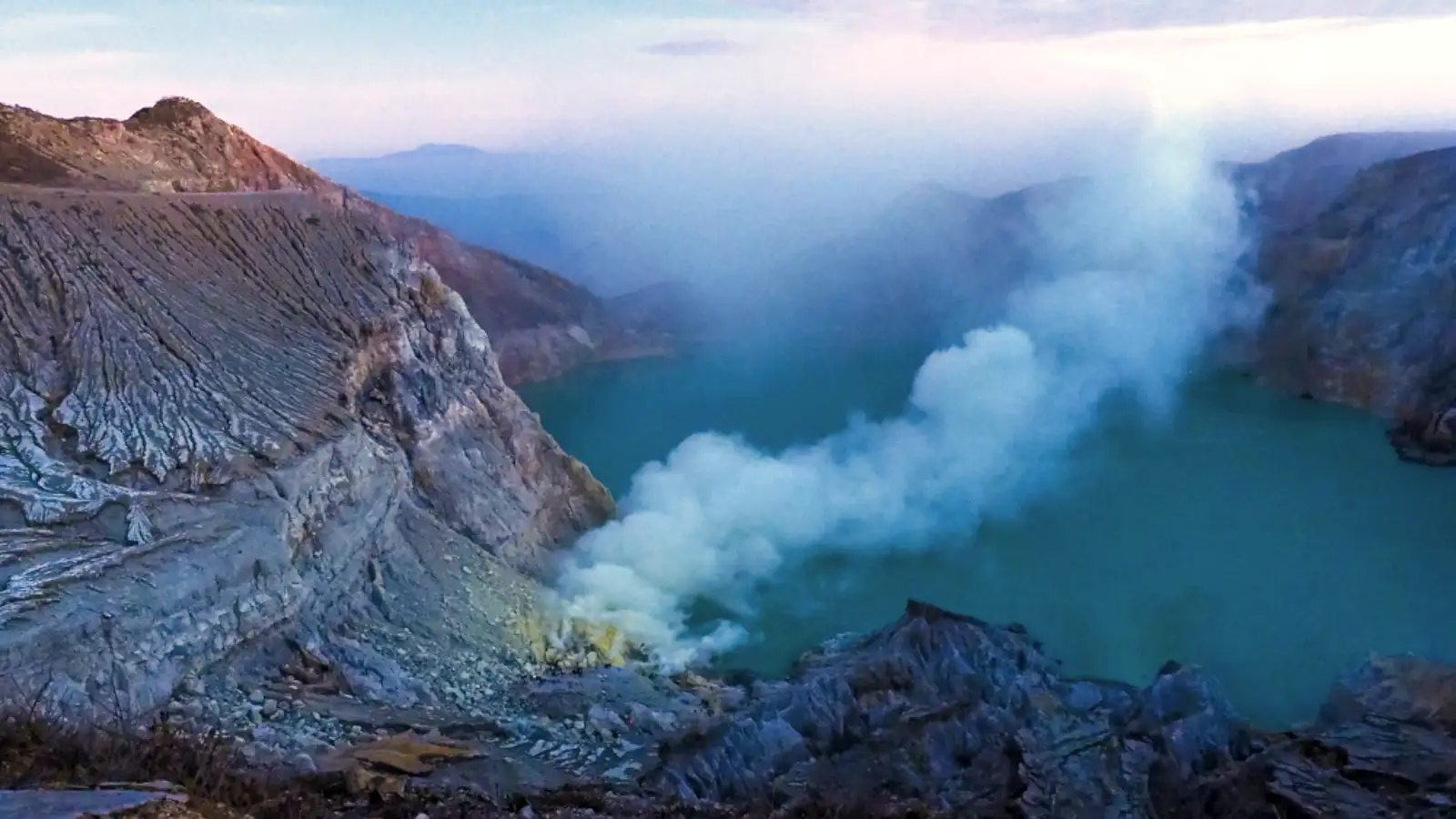
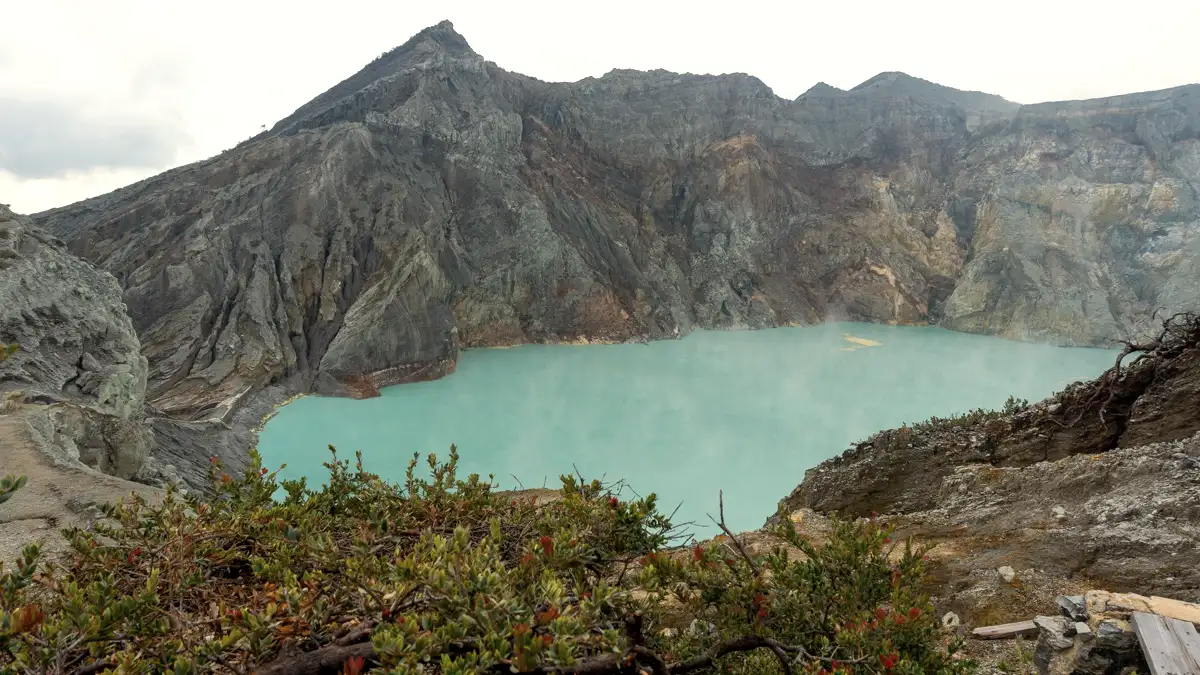
The centerpiece is, without doubt, the Ijen crater lake. This isn’t water you’d want to swim in. With a pH close to zero, it is essentially a massive vat of sulfuric acid. The color is a deceptive, milky turquoise, a result of dissolved metals and extreme acidity. It’s hauntingly beautiful and incredibly dangerous.
Gas masks are non-negotiable here. As you descend into the crater, the wind can shift in a heartbeat. One second you are taking a photo; the next, a white wall of sulfur gas hits your lungs. It’s suffocating and triggers an immediate panic in the unprepared. This is the reality of a safe Ijen crater visit: constant vigilance and the right gear.
The World’s Most Acidic Acid Lake
The lake acts as a giant chemical reactor. Magma underneath the crater floor releases gases that react with the water. The result is a lake that could dissolve a soda can in minutes. Despite this, the site attracts thousands. They come for the “Blue Fire,” an electric blue glow caused by sulfuric gases igniting upon contact with the air. It’s a rare phenomenon, found in only a few places on Earth.
The hike down to the lake is a scramble over loose volcanic rock. Your headlamp beam will catch the erratic shadows of other hikers. By 3 AM, the trail is a line of bobbing lights. It’s a silent, focused procession toward the lake’s edge. You’ll hear the rhythmic clink of metal against rock—the sound of sulfur miners at work.
The Reality of the Sulfur Mines
Among the tourists are the Ijen sulfur miners. They carry loads of 70 to 90 kilograms of solid sulfur on their shoulders. They do this twice a day, every day, without the fancy Gore-Tex jackets or high-end respirators tourists wear. Their strength is legendary, their reality sobering. Seeing them navigate the steep, slippery slopes in flip-flops puts your “difficult” hike into perspective.
Survival Guide: Navigating the East Java Volcanic Arc
Coming to Ijen isn’t a walk in the park. The temperature at the rim can drop to 5°C before dawn. The wind is biting. Most travelers underestimate the Ijen crater temperature and arrive in shorts, only to huddle for warmth in a local warung at the basecamp. Layering is your best friend here.
The trail itself is a 3-kilometer uphill grind. It starts wide but steep. The dust gets into everything—your hair, your camera, your lungs. But as the sky begins to turn a bruised purple, and the silhouettes of the caldera rim emerge, the physical struggle fades. You are witnessing the earth in its most raw, unfinished state. This is why we recommend the Bromo Ijen tour to see the full spectrum of Java’s volcanic power.
Getting to Paltuding Basecamp
Most journeys start at midnight. Whether you are coming from Banyuwangi or Bondowoso, the drive is part of the adventure. Jeeps navigate the dark forest roads, their headlights cutting through the mist. At Paltuding, the vibe is electric. Hundreds of people are prepping their gas masks and drinking sweet Javanese coffee. It feels less like a hike and more like a shared mission.
Gear You Actually Need
Forget the fashion. You need a windbreaker, a beanie, and sturdy shoes with good grip. The trail can be slippery, especially on the descent into the crater. A headlamp is essential; don’t rely on your phone’s flashlight. Your hands need to be free to steady yourself on the rocks. Most importantly, bring a sense of patience. The mountain dictates the schedule, not your itinerary.
Understanding the Scale: Ijen vs. Bromo
Many travelers try to compare Bromo and Ijen. Bromo is ethereal, like landing on the moon. Ijen is industrial and visceral. At Bromo, you watch the sunrise from a distance. At Ijen, you are in the thick of it. You feel the sulfur on your skin and hear the roar of the vents. They are two different chapters of the same geological story, and you haven’t seen Java until you’ve experienced both.
| Feature | Kawah Ijen | Mount Bromo |
|---|---|---|
| Main Attraction | Acid Lake & Blue Fire | Sea of Sand & Sunrise |
| Hike Difficulty | Challenging (Steep) | Moderate (Stairs/Jeep) |
| Temperature | Very Cold (5°C – 10°C) | Cold (10°C – 15°C) |
| Sulfur Intensity | High (Mask Required) | Low to Moderate |
Ready for Your Ultimate Mount Bromo & Ijen Adventure?
Don’t leave your trip to chance. Join thousands of happy travelers and experience East Java with our top-rated local tour operators.
Popular Related Tour Packages
Ready to see the Ijen volcanic complex for yourself? Choose from our most popular packages, designed by local experts for the best possible experience.
- Full Ijen Crater Adventure Guide
- Banyuwangi to Ijen (1-Day Express)
- Banyuwangi to Ijen (2-Day Immersive)
- Surabaya to Ijen (2D1N Package)
- Bali to Ijen Crater Day Trip
Frequently Asked Questions
Q: Is the Ijen caldera still active?
A: Yes, the Ijen complex is very active. While major eruptions are rare, the geothermal activity is constant, evidenced by the sulfur vents and the acidic lake.
Q: How long does it take to hike to the rim?
A: For an average hiker, it takes about 1.5 to 2 hours to reach the rim from Paltuding basecamp. If you want to go down to the blue fire, add another 45 minutes of scrambling.
Q: Do I really need a gas mask?
A: Absolutely. The sulfur fumes are toxic and can cause severe respiratory distress. Even if the wind seems calm, a sudden shift can leave you gasping. We provide them on all our tours.
Q: Can I see the blue fire every day?
A: No. It depends on volcanic gas density and the weather. If it rains, the blue fire is usually not visible. It’s best to check with local guides on the day of your hike.
Q: Is Ijen safe for children?
A: We generally recommend it for children aged 10 and older due to the steepness and the gas. However, younger children can use the “trolley taxi” service if they are comfortable with the cold and potential gas smells.
Final Thoughts: A Respect for the Mountain
The Ijen caldera is a place of extremes. It is a site of staggering natural beauty, back-breaking human labor, and geological violence. When you stand on that rim, you are witnessing the raw power of the Indonesia Ring of Fire. It’s more than a checkbox on a travel list; it’s a humbling encounter with a planet that is still very much alive. Respect the trail, respect the miners, and most importantly, respect the volcano. It will be there long after our footprints have vanished into the volcanic ash.
Planning to visit Ijen or Mount Bromo?
Explore available tour options and ask our local team about your itinerary.
Explore Tour Packages →