
Exploring the Ijen Volcanic Complex: Java’s Electric Blue Wonder
Key Takeaways:
- Home to the world’s most acidic crater lake (pH < 0.5).
- Famous for the electric-blue ignited sulfur gas (Blue Fire).
- A primary source of traditional sulfur mining in Indonesia.
- Includes a 20-kilometer wide caldera and multiple volcanic peaks.
About This Guide: Written by our Banyuwangi-based local operational team with first-hand field experience across East Java, including current trail conditions, departure timing, weather shifts, and real visitor logistics.
Table of Contents
What Is the Ijen Volcanic Complex?
The Ijen volcanic complex isn’t just one mountain. It’s a vast collection of volcanic cones stretching across the eastern tip of Java. Most travelers come for the famous Ijen crater, but the area actually covers a massive 20-kilometer-wide Ijen caldera. It’s a landscape shaped by thousands of years of violent eruptions and geological shifts.
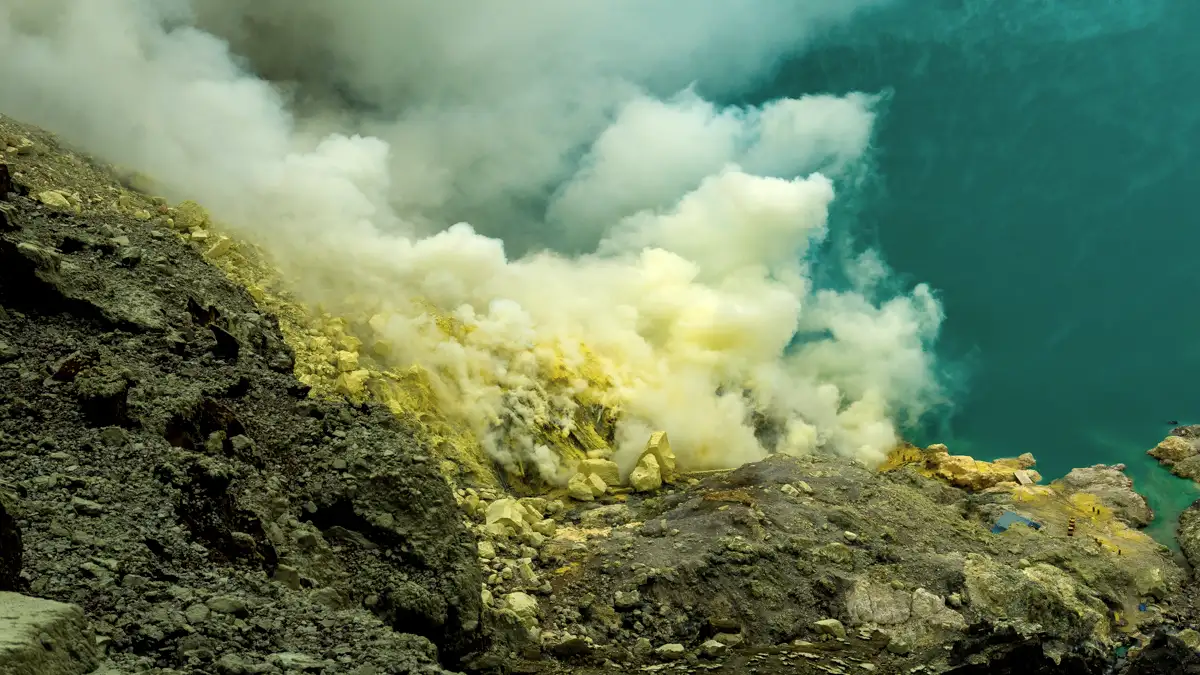
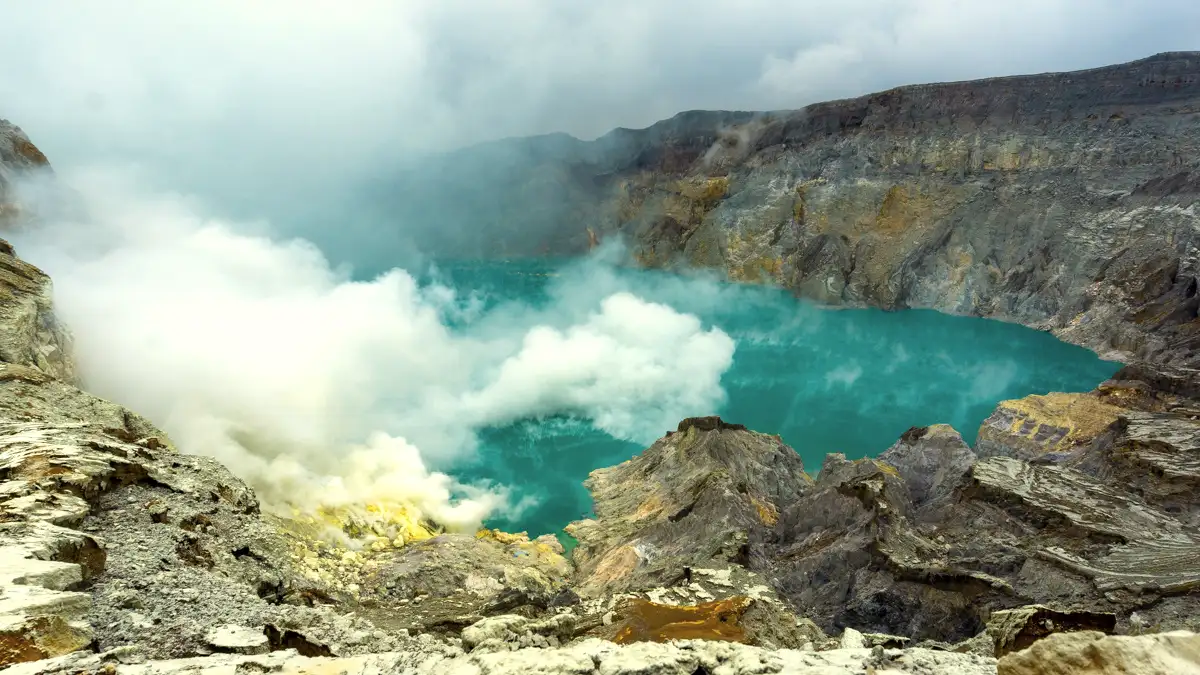
The star of the show is Kawah Ijen. This active crater is known globally for its surreal turquoise lake. But don’t let the color fool you. It’s essentially a giant vat of sulfuric acid. If you’re coming from the neighboring island, taking an Ijen crater tour from Bali is the most popular way to see it. You cross the Bali Strait by ferry and drive into the cool, misty highlands of Banyuwangi.
A Land of Fire and Sulfur
Look, the environment here is harsh. The air smells like burnt matches because of the constant sulfur vents. It’s one of the few places on Earth where you can see Ijen sulfur miners carrying 70kg to 90kg of yellow stone up steep trails. It’s raw, it’s intense, and it’s unlike any other tourist spot in Indonesia.
The Geology of the Ijen System
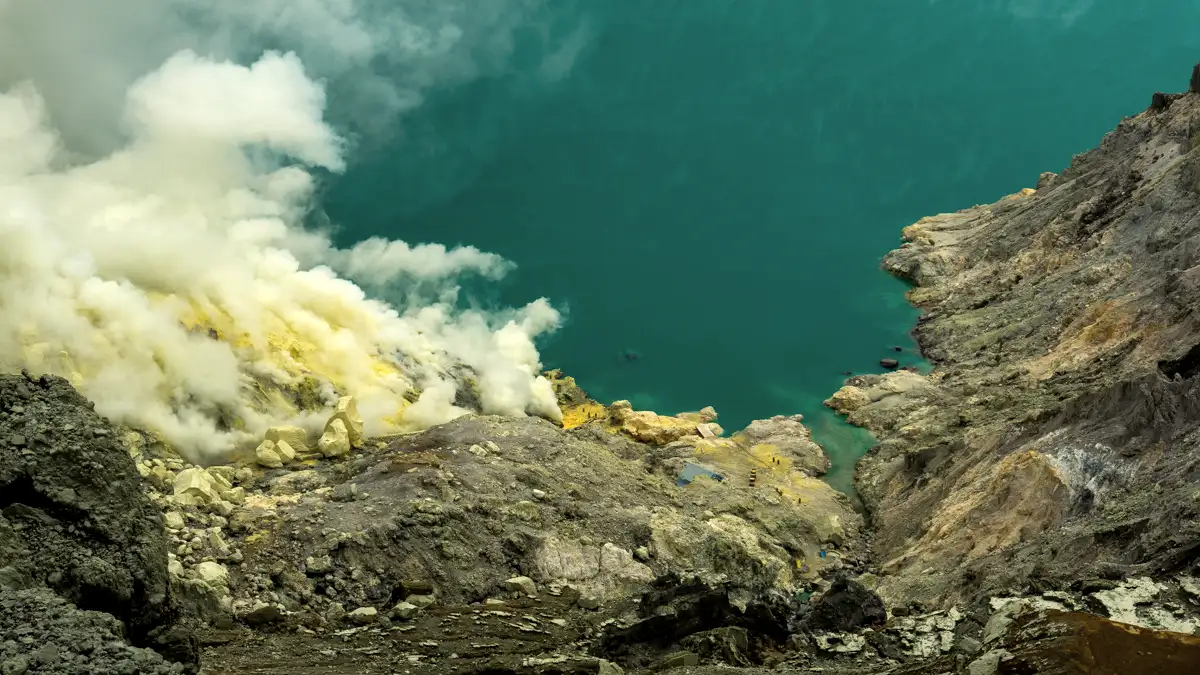
According to official geological records, the complex is dominated by the large Ijen Caldera. Within this rim, several post-caldera cones have formed, including Mount Merapi (not to be confused with the one in Central Java) and Mount Raung. This area is part of the Pacific Ring of Fire, which explains why the ground feels so alive.
Understanding how the Ijen volcanic complex was formed requires looking back at the collapse of an ancient volcano. That collapse created the plateau we see today. Now, the main activity is focused at Kawah Ijen, where volcanic gases react with the atmosphere to create some of the most unique chemical displays on the planet.
Why the Lake Is So Acidic
The acidic crater lake has a pH of nearly zero. This happens because volcanic gases like hydrogen chloride and sulfur dioxide dissolve directly into the water. This creates a highly concentrated mixture of sulfuric and hydrochloric acids. It’s beautiful to look at, but touching it is definitely not an option.
Main Attractions Within the Complex
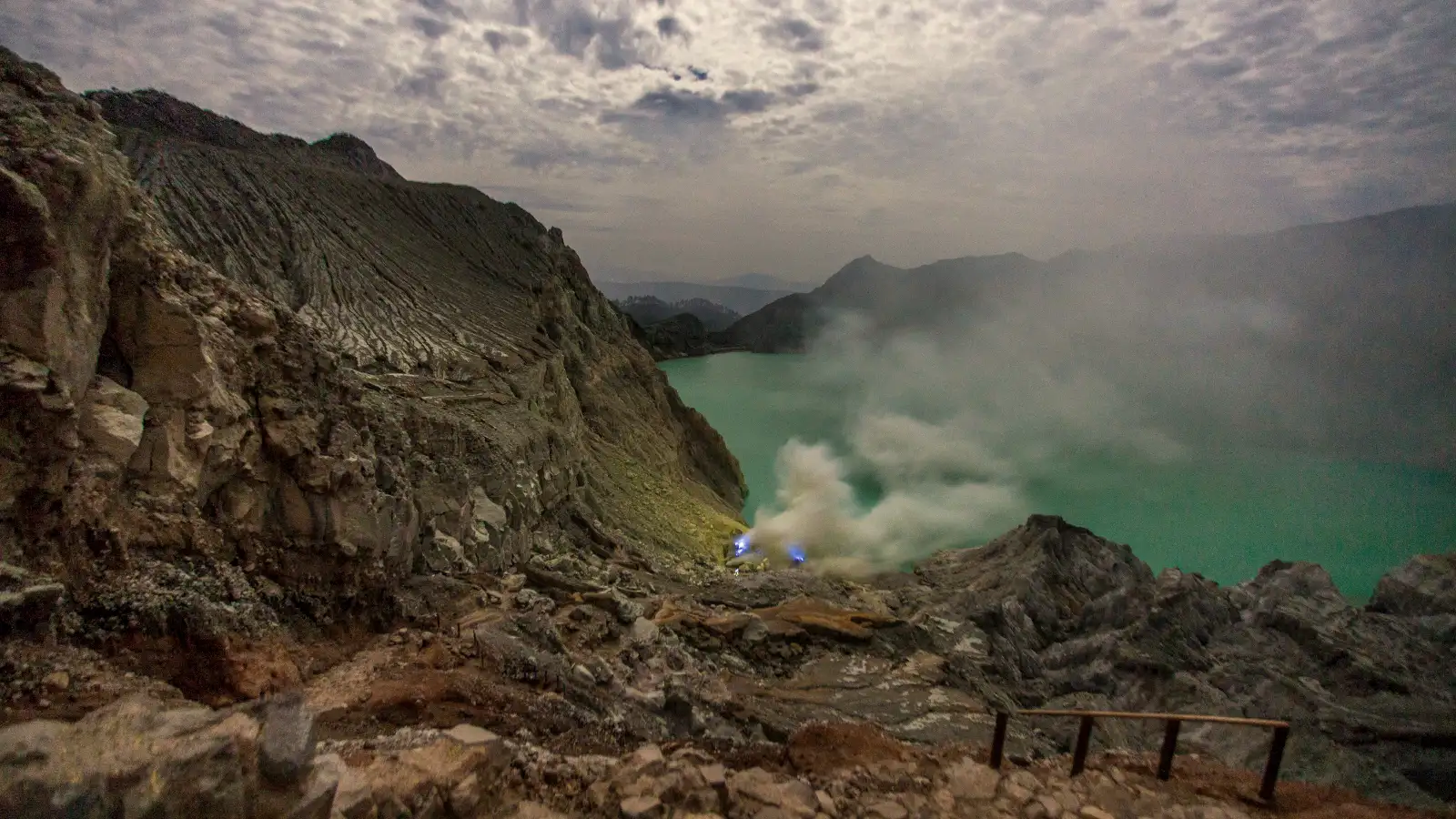
The primary reason people book an Ijen crater tour is the Blue Fire. This isn’t lava. It’s actually high-pressure sulfuric gas that ignites when it hits the oxygen-rich air at temperatures above 600°C. You can only see it in the dead of night, usually between 2:00 AM and 5:00 AM.
Then there are the Ijen crater facts regarding the landscape itself. The “Dead Forest” or Hutan Mati offers a ghostly view of blackened trees against a backdrop of rising steam. It’s a photographer’s dream, especially as the first light hits the caldera rim.
The Electric Blue Fire
Truth is, seeing the Ijen blue fire requires a bit of luck and a lot of effort. You have to hike for about 90 minutes uphill and then scramble down into the crater itself. If the wind is too strong or the gas is too thick, the local rangers might close the path down for safety. Always bring a professional gas mask.
Practical Visitor Information
The trailhead begins at Paltuding. The gates usually open at 2:00 AM, but this changes based on volcanic activity. You’ll need a health certificate to climb, which you can get at local clinics in Banyuwangi for a small fee. The hike is roughly 3 kilometers long with a steep incline at the beginning.
| Feature | Details |
|---|---|
| Elevation | 2,386 Meters (Summit) |
| Difficulty | Moderate to Challenging |
| Temperature | 3°C to 12°C at night |
| Best Season | Dry Season (April – October) |
What to Bring
Don’t forget warm layers. It gets freezing while you wait for the sunrise. A good headlamp is non-negotiable since you’ll be hiking in total darkness. Also, wear shoes with good grip. The volcanic sand on the trail can be slippery, especially during the descent.
Local Tips You Should Know
Here’s the deal: most people rush to the crater rim and stay there. If you have the energy, walk around the rim to the right. You’ll find fewer crowds and a much better angle of the lake. Also, the best time to visit is mid-week. Weekends and public holidays see thousands of local visitors, making the narrow trails quite packed.
If you’re worried about the hike, there’s a “trolley taxi” service run by the miners. They’ll pull you up the mountain for a fee. It’s not cheap, but it helps the local economy and saves your knees if you’re struggling. Lastly, always check if is Ijen crater safe before you head out, as volcanic gas levels can spike without warning.
Frequently Asked Questions
Q: Is the Blue Fire always visible?
A: Not always. It depends on gas activity, weather, and safety regulations. If it’s raining or the gas is too thick, the path to the crater floor might be closed by rangers.
Q: Can I visit Ijen without a guide?
A: While possible, it’s not recommended for first-timers. The trail is dark, and managing a gas mask inside a sulfur cloud is tricky. A guide ensures you stay in safe zones.
Q: How cold does it get at the summit?
A: It can drop to 3°C or 5°C before sunrise. Once the sun is up, it warms up quickly to about 15-20°C. Dressing in layers is the best strategy.
Q: What is the health certificate requirement?
A: As of recent regulations, all hikers must provide a basic medical certificate. You can get these easily in Banyuwangi or at the clinic near the base of the mountain.
Q: Is the sulfur smell dangerous?
A: Long-term exposure isn’t good, but for a short visit, it’s fine as long as you wear a proper N95 or respirator mask with a multi-gas cartridge.
Recommended Tour Packages
- Ijen Crater Tour from Banyuwangi 1 Day: The quickest way to see the blue fire and acidic lake starting from Banyuwangi city or the ferry port.
- Bromo Ijen Tour from Surabaya 3D2N: A classic East Java loop covering the two most iconic volcanoes in a single trip.
- Bromo Ijen Tumpak Sewu Tour from Bali 4D3N: The ultimate adventure package including volcanoes and Indonesia’s most grand waterfall.
- Ijen Crater Tour from Ubud: A specialized day-trip option for those staying in Bali’s cultural heart who want a midnight adventure.
- Mount Bromo & Ijen Crater 2D1N: A fast-paced tour for travelers with limited time who don’t want to miss Java’s highlights.
Final Takeaway
The Ijen Volcanic Complex is more than just a hike; it’s a visceral experience of the Earth’s raw power. Between the electric blue flames and the turquoise acid lake, it feels like visiting another planet. Just remember to pack your warm clothes, respect the miners on the trail, and bring a good camera. The views at sunrise are something you won’t soon forget.
Planning Your Trip to East Java?
Explore our local tour options and choose a route that matches your travel schedule.
Planning to visit Ijen or Mount Bromo?
Explore available tour options and ask our local team about your itinerary.
Explore Tour Packages →