
How the Ijen Volcanic Complex Was Formed: Ultimate Guide
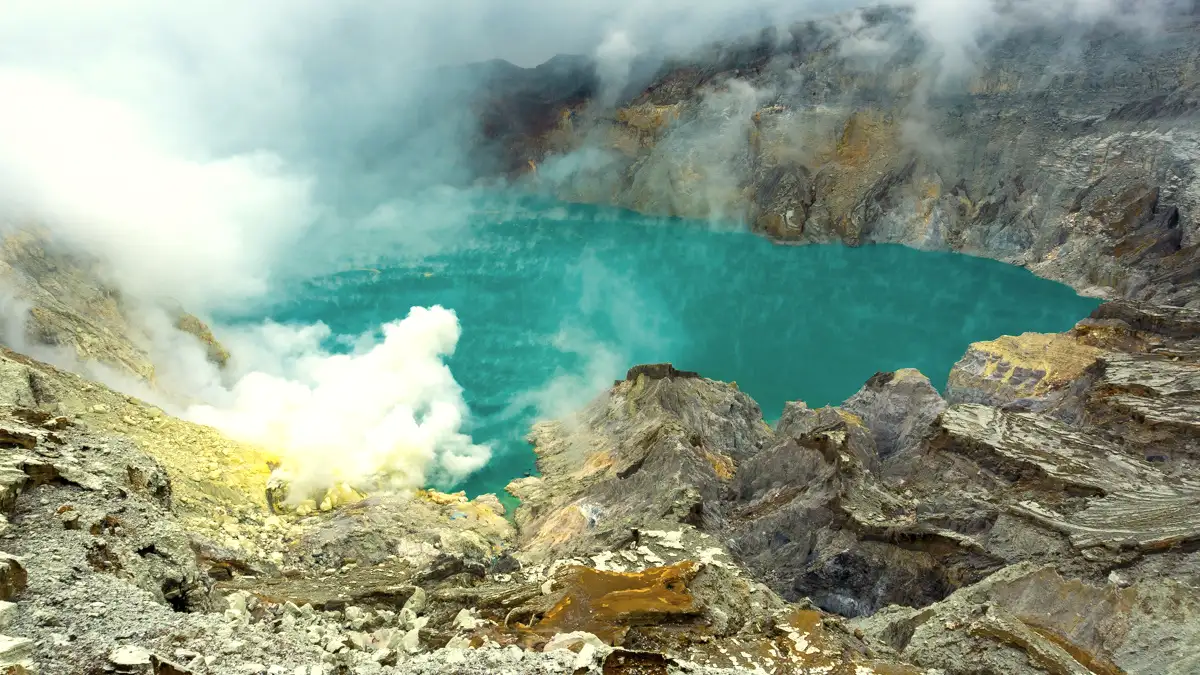
The Ijen Volcanic Complex formed through millions of years of tectonic subduction, where the Indo-Australian plate dove beneath the Eurasian plate. This violent process created a massive 20km-wide caldera, eventually giving rise to the modern Ijen crater and its world-famous turquoise acid lake and electric blue flames.
Why Trust Our Geological Insights?
Walking the rim of an active volcano isn’t just about the photos; it’s about understanding the sleeping giant beneath your boots. Our team lives and breathes the East Java landscape. We spend our weeks navigating the sulfur-rich trails, chatting with local observers at the Explore our Master Pillar Guide, and documenting the shifts in the landscape. We don’t just read textbooks; we watch the earth breathe through the solfataras every single day. Before you book your trip now, dive into the actual science that makes this place a global anomaly.
- The Ijen complex isn’t one volcano; it’s a massive cluster within a 20km caldera.
- The turquoise lake is the world’s most acidic natural body of water.
- Formation began roughly 300,000 years ago with the “Old Ijen” volcano.
- Understanding Ijen crater facts helps you appreciate the hike’s intensity.
Table of Contents
Tectonic Foundations: The Java Trench
Every step you take on the steep climb toward the crater rim is a step over a geological battlefield. Thousands of feet below the Java Sea, the Indo-Australian plate is relentlessly shoving its way northward. It grinds against the Eurasian plate at a rate of several centimeters per year. This isn’t a smooth slide. It’s a jagged, high-pressure friction that melts rock into magma. This magma, lighter than the surrounding crust, seeks the path of least resistance. It forces its way upward, creating the volcanic arc that defines Indonesia’s backbone.
Subduction and Magma Creation
When the oceanic plate sinks, it carries water and sediment deep into the mantle. This moisture lowers the melting point of the rocks above it, creating a “magma factory.” For the Ijen volcanic system, this meant a steady supply of gas-rich, silica-heavy molten rock. Over hundreds of thousands of years, this pressure built up until it punctured the surface. Imagine a slow-motion explosion lasting epochs. That’s how East Java’s geography was drafted. Many visitors don’t realize the sheer power required to lift this much rock from the seafloor to 2,799 meters above sea level.
Understanding understanding Ijen volcano activity is crucial for any hiker. The mountain isn’t just a static object; it’s the exhaust vent for a massive subterranean engine. The gasses you smell at the summit are literally the breath of the tectonic plates grinding below. It’s a reminder of how fragile our surface world really is compared to the molten furnace beneath us.
The Rise and Fall of Ancient Ijen
Before the crater we know today existed, there was a giant. Geologists call it “Old Ijen.” This was a massive stratovolcano, likely reaching heights of over 3,500 meters. For a long period, it dominated the horizon of East Java. Layers of lava and ash built up, mountain-forming through thousands of eruptions. This structure was massive, but it was also inherently unstable. The weight of the mountain itself eventually became its own undoing. Internal pressure and the evacuation of magma chambers beneath created a hollow foundation that couldn’t support the peak’s massive weight.
The Catastrophic Transformation
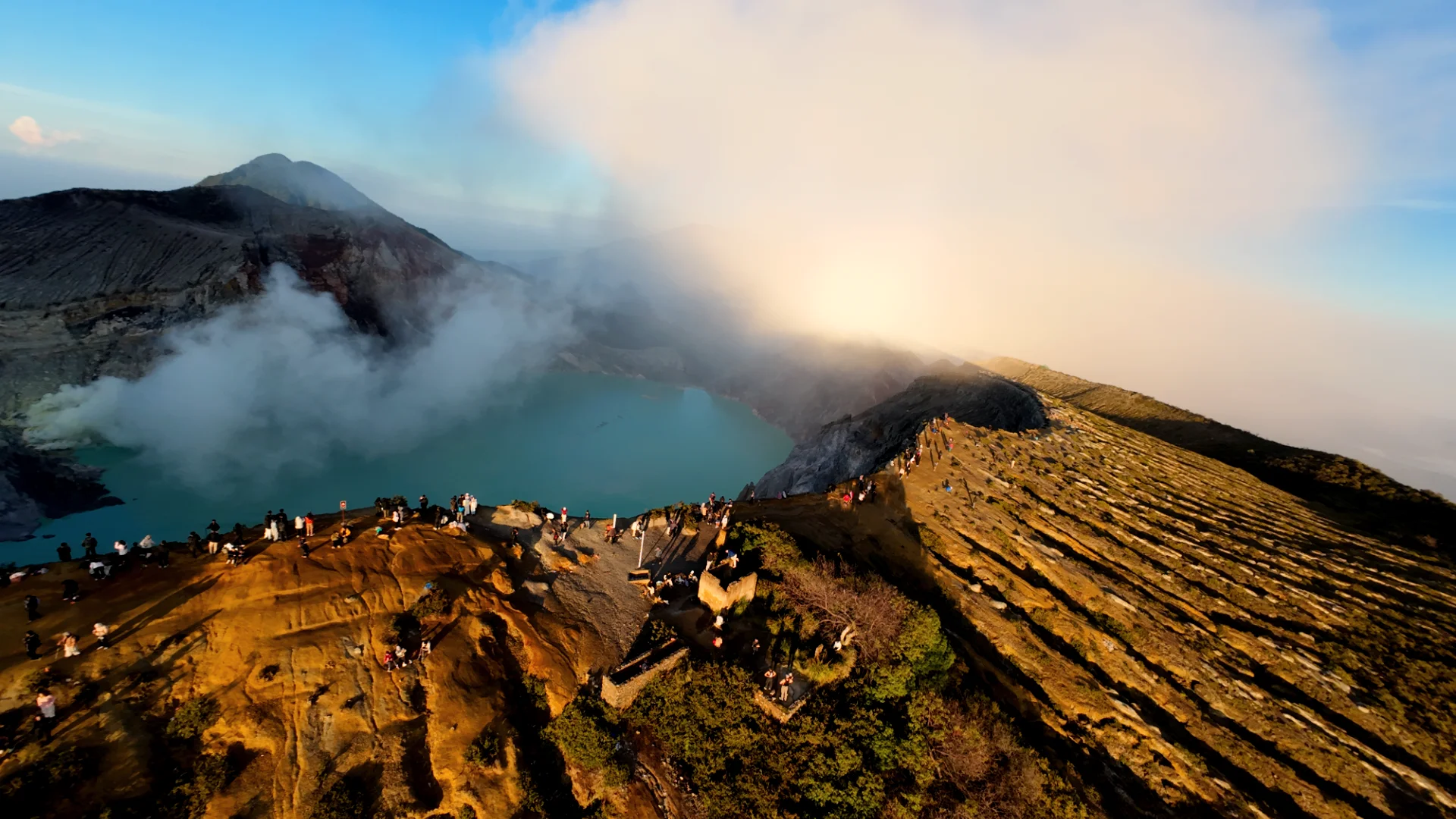
Around 50,000 to 70,000 years ago, Old Ijen suffered a series of colossal eruptions. These weren’t your typical lava flows. These were mountain-shattering events that emptied the magma reservoir. With no support below, the entire summit of the mountain collapsed into itself. This created the Mount Ijen caldera formation, a 20-kilometer-wide basin that you can still see today from satellite imagery. If you stand on the rim of the current crater, you are actually looking at a small portion of this much larger, ancient collapse site. It’s geological destruction on a scale that’s hard to visualize.
The resulting caldera floor is now home to coffee plantations and smaller volcanic peaks. When you take the Ijen crater tour from Banyuwangi 1 day, you drive through this ancient landscape. The fertile soil in the basin is a direct gift from the violent death of the Old Ijen volcano. It’s a classic story of nature: destruction leading to incredible fertility and new life. The sheer scale of the caldera is why the East Java volcanic complex is considered one of the most significant in the Ring of Fire.
The Great Collapse: Creating the Caldera
Why does the Ijen complex look so different from the perfect cones of Mount Semeru or Mount Merapi? The answer lies in that 20km collapse. Most volcanoes grow upward until they go dormant. Ijen, however, grew upward, exploded, collapsed, and then started growing again from the ruins. This “nesting” of volcanoes makes the Ijen caldera geology incredibly complex. Inside the ring of the old walls, at least 22 separate eruptive vents have been identified. These smaller cones, like Gunung Merapi (not to be confused with the one in Central Java) and Gunung Ijen, are the “children” of the ancient giant.
A Landscape of Multiple Cones
The current Ijen volcano formation is actually a series of smaller stratovolcanoes and cinder cones built on the eastern edge of the caldera. Kawah Ijen, the one you hike to see the lake, is just the most famous of these. To its east sits Mount Merapi, the highest point of the complex. To the south, you’ll find the older, heavily eroded remains of the caldera wall. This multi-vent system means that volcanic activity can shift. While the crater lake is currently the focal point, the entire region remains geologically “alive” and monitored by sensors 24/7.
Hiking here feels like moving through a graveyard of giants. You can see the rim of the old caldera in the distance, a massive wall of rock encircling the horizon. This unique volcanic evolution of Ijen is what creates the diverse microclimates. The high altitude and the bowl-like shape of the caldera trap mist and cold air, making the 3 AM hike feel more like a trek in the Alps than in tropical Indonesia. Many people are shocked by the cold, so checking a what to wear for Ijen crater guide is essential.
Post-Caldera Evolution: The Modern Cones
As the millennia passed, the focus of the eruptions shifted to the eastern side of the caldera. This is where the Ijen volcanic complex gets its “modern” look. The current Kawah Ijen crater didn’t just appear; it was carved out by repeated phreatic (steam-driven) and magmatic eruptions. Each blast deepened the hole, eventually reaching a point where groundwater could seep in. Because the rocks here are incredibly rich in sulfur and other minerals, the water didn’t stay pure. It reacted with the volcanic gasses, creating the chemical cocktail we see today.
The Solfatara and Sulfur Production
The southern edge of the lake is home to an active solfatara—a volcanic vent that emits steam and gas. This is where the Ijen sulfur miners work. The formation of the sulfur is a direct result of the volcanic gasses (hydrogen sulfide and sulfur dioxide) cooling as they reach the surface. When these gasses hit the air, they condense into liquid sulfur and eventually solidify into bright yellow rock. This process has been happening for thousands of years, creating a massive deposit that is harvested by hand in one of the toughest jobs on Earth.
Seeing the miners carry 80kg of rock up a 45-degree slope is a sobering experience. It puts the geological history into a human context. The volcano provides a livelihood, but it demands an incredible physical toll in return. This interaction between humans and Indonesia volcanic history is unique to Ijen. Unlike other peaks where the geology is just a backdrop, here the geology is the economy. If you find the hike too difficult, some travelers opt for the Ijen trolley taxi, which is another local adaptation to this vertical landscape.
The Chemistry of the Acid Lake
The crown jewel of the formation is the turquoise lake. But don’t let the color fool you. With a pH of nearly 0, it’s essentially a pool of battery acid. This Ijen crater lake guide explains how the mixture of sulfuric and hydrochloric acids creates that surreal color. The lake acts as a massive chemical filter for the volcano’s gasses. As the gasses bubble up from the crater floor, they dissolve into the water. This makes the lake a barometer for the volcano’s health; changes in temperature or color often precede an increase in seismic activity.
Why the Water is Turquoise
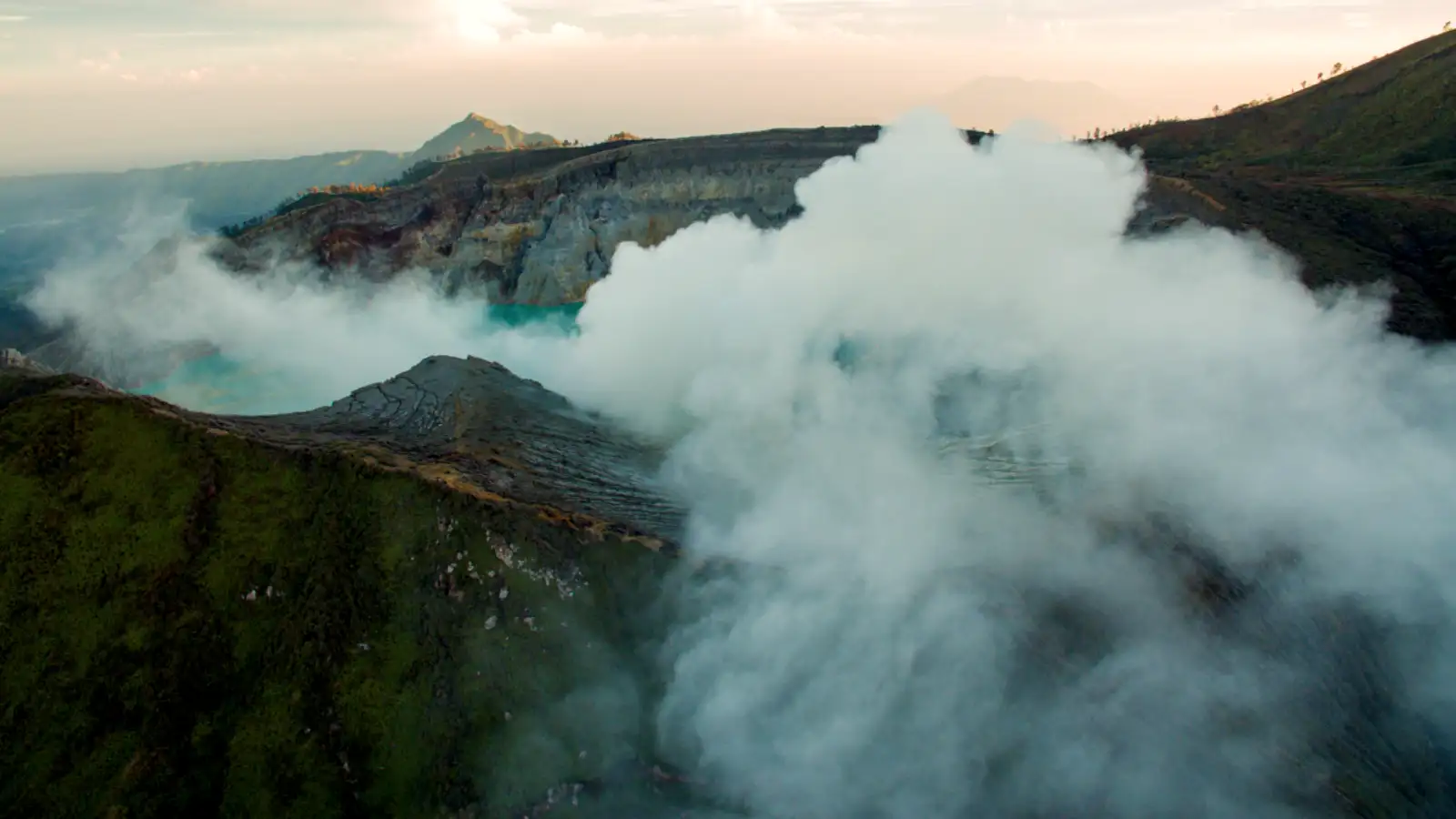
The striking turquoise color comes from high concentrations of dissolved metals and sulfur. It’s a visual trick of light scattering off these particles. Underneath the surface, the water is a lethal environment for any life. The formation of this lake is rare; most volcanic craters are either dry or contain fresh rainwater. Ijen’s unique plumbing system keeps the acid concentrated. It’s a delicate balance of rainfall, evaporation, and constant gas injection from the magma chamber below. This is why it’s globally recognized as a “natural laboratory” for geochemists.
When you stand at the viewpoint, the wind can shift in seconds. One moment you’re looking at a pristine blue lake; the next, you’re engulfed in a white cloud of choking sulfur. This is why a Ijen crater gas mask rental guide is the first thing you should read. The chemistry of the mountain isn’t just a fun fact; it’s a safety hazard that requires respect. The gasses can damage your lungs and even your camera gear if you aren’t careful. It’s raw, unfiltered nature at its most aggressive.
Important Blue Fire Update
The famous Blue Fire is actually the ignition of high-pressure sulfuric gasses. When these gasses emerge from cracks in the earth at temperatures over 600°C, they spontaneously combust upon contact with oxygen. The resulting blue flames are a purely chemical phenomenon. They aren’t “lava” as some mistakenly believe. This is a crucial part of the Ijen blue fire explained experience. Because this relies on gas pressure, the flames can be huge one night and invisible the next. It’s the mountain’s most temperamental feature.
Geological Summary Table
| Feature | Details | Formation Reason |
|---|---|---|
| Main Caldera | 20km diameter | Collapse of “Old Ijen” volcano |
| Acid Lake | Turquoise, pH < 0.5 | Dissolved volcanic gasses |
| Blue Fire | Electric blue flames | Ignition of sulfuric gas |
| Sulfur Vents | Southern crater floor | Cooling of volcanic gasses |
Every year, thousands of travelers make the trek. Some come for the geological history, others for the “Instagrammable” lake. But everyone leaves with a profound respect for the earth’s power. If you’re wondering is Ijen crater worth visiting, the answer is a resounding yes—provided you are prepared for the grit and the smell of sulfur that will stay in your clothes for days. It’s not just a mountain; it’s a portal into the deep history of our planet.
Popular Related Tour Packages
Ready to see this geological marvel in person? Check out our top-rated curated experiences:
- Ijen Crater Private Tour from Banyuwangi
- Mount Ijen Sunrise Tour from Bali (All-Inclusive)
- 1-Day Ijen Express Hike
- 2-Day Deep Dive Ijen Adventure
- Ijen Tour Package from Surabaya/Malang
Ready for Your Ultimate Mount Bromo & Ijen Adventure?
Don’t leave your trip to chance. Join thousands of happy travelers and experience East Java with our top-rated local tour operators.
Frequently Asked Questions
Q: Is the Ijen Volcanic Complex still active?
A: Yes, it is a highly active volcanic complex. While the last major magmatic eruption was decades ago, it frequently experiences phreatic explosions and seismic unrest. Local authorities monitor it daily to ensure hiker safety.
Q: Why is the Ijen crater lake so acidic?
A: The acidity comes from the high volume of volcanic gasses, specifically hydrogen chloride and sulfur dioxide, that dissolve into the water. This creates a high concentration of sulfuric and hydrochloric acid.
Q: How long did it take for the Ijen caldera to form?
A: The initial “Old Ijen” volcano was active for hundreds of thousands of years. The catastrophic collapse that formed the 20km caldera happened in a geological heartbeat—likely over a series of massive eruptions roughly 50,000 years ago.
Q: Can I hike to the bottom of the crater to see the lake?
A: Currently, visitors are often allowed to descend into the crater to see the Blue Fire and the sulfur works, but this depends strictly on volcanic activity levels. Always check local regulations before attempting the descent.
Q: What causes the blue flames at Ijen?
A: The Blue Fire is the result of sulfuric gas escaping the earth at high temperatures. When these gasses hit the oxygen-rich air at the surface, they ignite and burn with an electric blue color.
Final Thoughts: A Living Monument of Time
The Ijen Volcanic Complex is more than just a destination; it’s a window into the violent forces that build our world. From the slow grind of tectonic plates to the sudden collapse of ancient peaks, every rock tells a story of transformation. Standing on the rim at sunrise, watching the mist dance over the acid lake, you realize that you aren’t just looking at scenery. You’re looking at the result of 300,000 years of geological drama. It’s a humbling, exhausting, and ultimately beautiful experience that every traveler should have at least once.
Planning to visit Ijen or Mount Bromo?
Explore available tour options and ask our local team about your itinerary.
Explore Tour Packages →