
The Geological History of Ijen Crater: Secret Master Guide
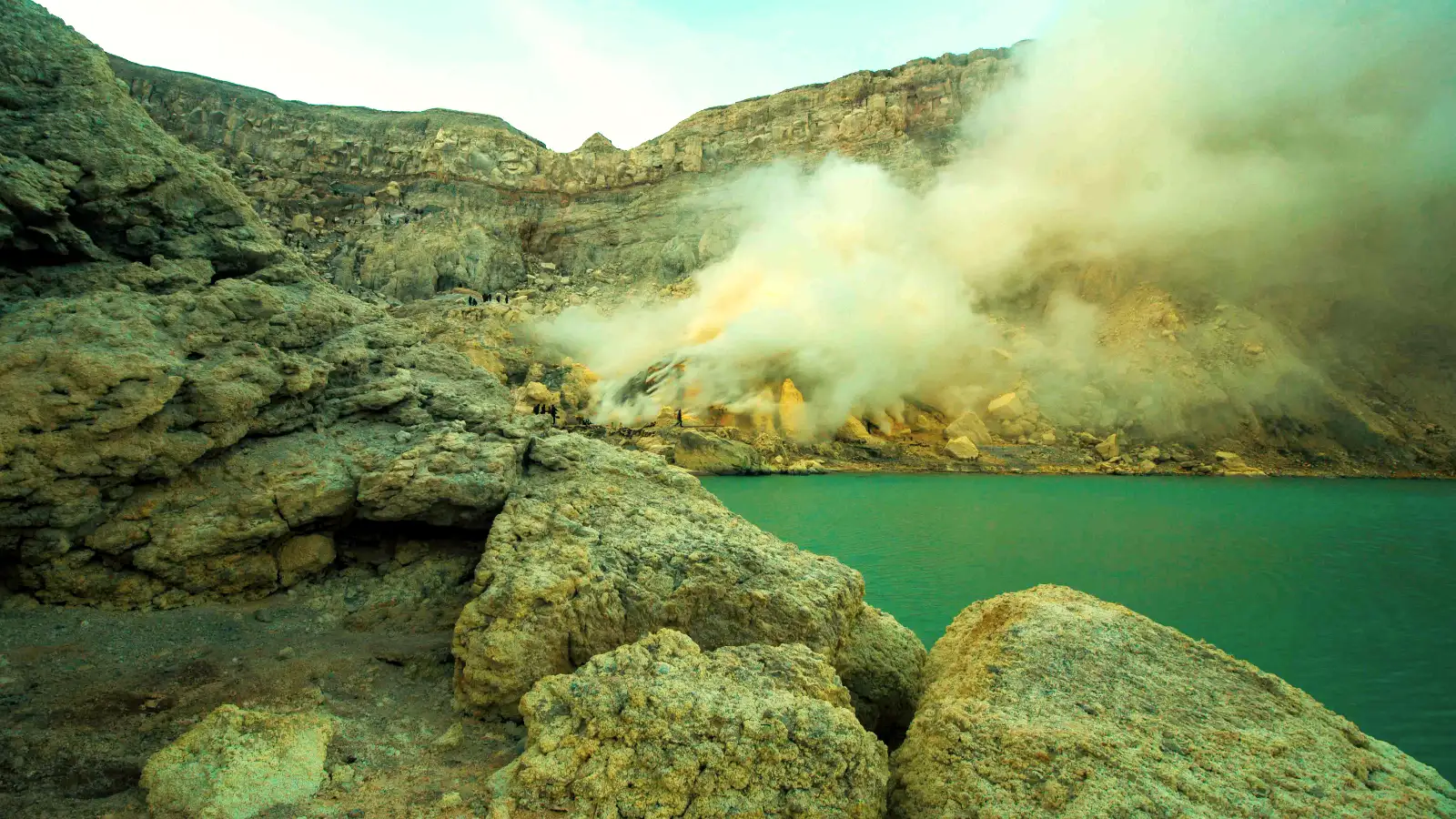
You wake up at midnight. The air in Banyuwangi is humid, but by the time your 4×4 reaches the Paltuding basecamp, the temperature has plummeted. Your breath hitches in the freezing 3 AM air as you begin the steep, sandy trek. Most people come for the Instagram shot, but the real story of Ijen Crater Indonesia is written in the layers of ash and the toxic turquoise water below. It is a story of cataclysmic collapses and chemical reactions that defy logic.
Ijen Crater was formed through the collapse of a massive “Old Ijen” volcano about 50,000 years ago, creating a 20-kilometer wide caldera. Today’s active landscape, featuring the world’s largest acidic lake and the famous blue fire, is the result of continuous hydrothermal activity and deep-seated magmatic pressure within this ancient volcanic complex.
What You Need to Know
- Location: East Java, Indonesia.
- Geological Feature: A composite volcano within a massive 20km wide caldera.
- Primary Attraction: Highly acidic turquoise crater lake (pH < 0.3) and electric blue flames.
- Status: Active volcano with ongoing sulfur mining operations.
Table of Contents
Why Trust This Guide?
We aren’t just writers sitting in an office; we are local operators who have breathed the sulfurous air of Kawah Ijen hundreds of times. We’ve watched the sunrise from the “Dead Tree” viewpoint in every season and navigated the treacherous paths alongside the Ijen sulfur miners. This guide combines raw, on-the-ground experience with deep geological data to give you the most accurate picture of this volcanic titan.
Walking the rim of Ijen feels like stepping onto another planet. The sound of hacking coughs through gas masks and the erratic beams of headlamps crisscrossing in the dark remind you that this is a wild, unpredictable environment. We understand the nuances of understanding Ijen volcano activity because we live it every day. When the gas shifts and the rangers close the trail, we are the ones who know why.
The Ancient Origins: The Rise of Old Ijen
Long before backpackers crowded the rim, a monster stood here. Geologists call it “Old Ijen.” This was a massive stratovolcano, similar in shape and scale to Mount Raung or Mount Semeru today. It grew over hundreds of thousands of years through successive eruptions of lava and pyroclastic flows. The Ijen volcanic complex was born from the subduction of the Indo-Australian plate beneath the Eurasian plate.
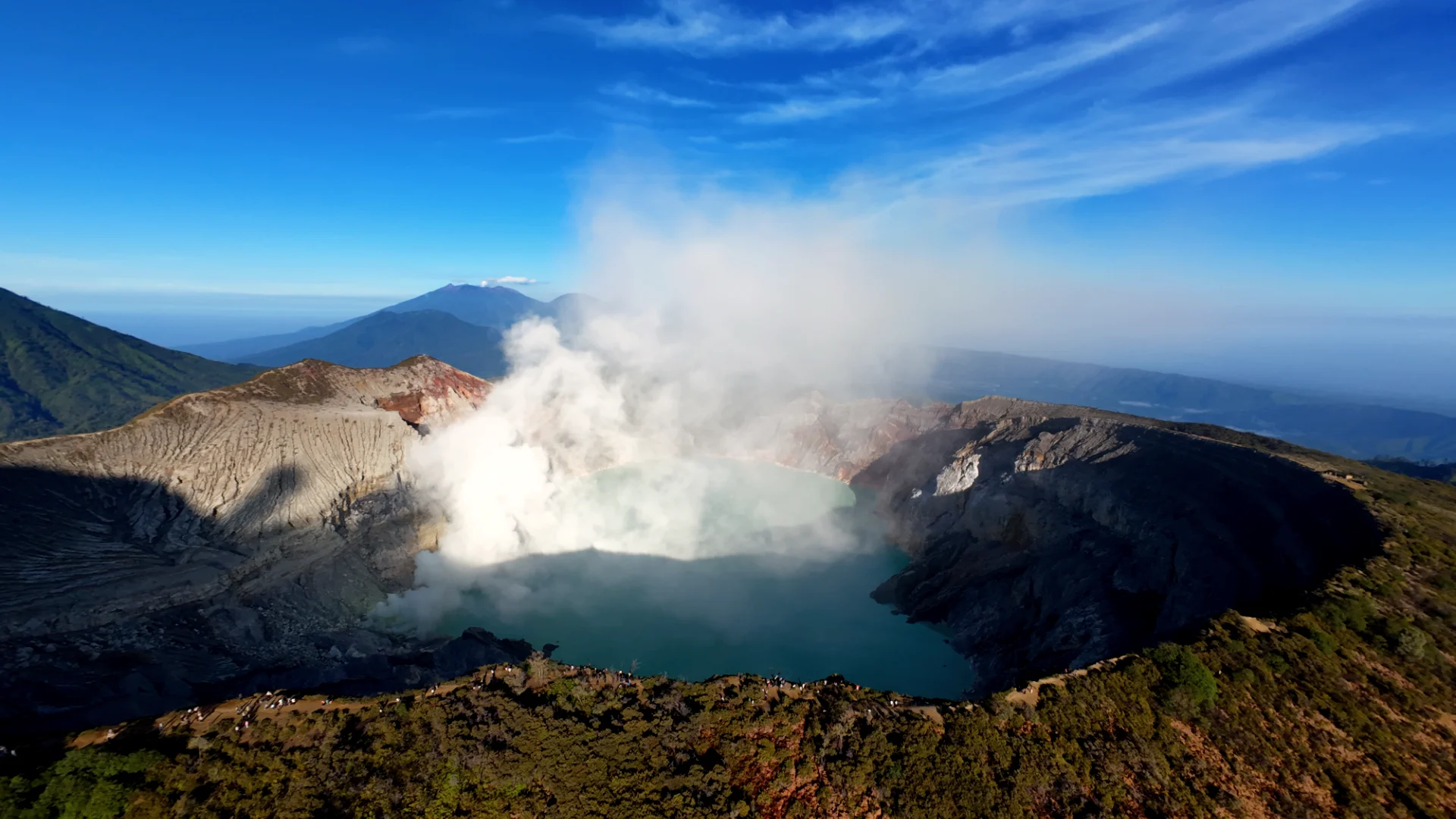
The sheer scale of the original mountain is hard to wrap your head around. It dominated the skyline of East Java. Layers upon layers of andesitic and basaltic rock built a towering cone that eventually became unstable. Magma chambers deep below were constantly recharging, setting the stage for one of the most significant events in Indonesian volcanic history.
Subduction and Magma Creation
The engine driving Ijen is the Java Trench. As the oceanic plate sinks, it carries water and sediment into the hot mantle. This lowers the melting point of the rock, creating magma that rises through the crust. This process makes the East Java volcanoes some of the most active and dangerous on the planet. Ijen is a key player in this fiery arc.
Magma doesn’t just sit still. It interacts with the surrounding rocks, picking up minerals and gases. This “plumbing system” is what eventually created the unique mineral wealth found at Ijen today. The geological formation of Kawah Ijen is essentially a story of pressure looking for an exit. That exit was found in a series of violent, mountain-shaping eruptions.
The Great Collapse: Forming the Ijen Caldera
Around 50,000 years ago, Old Ijen couldn’t hold its own weight any longer. A massive eruption emptied the magma chamber so quickly that the entire summit collapsed into itself. This created the Ijen caldera formation, a giant 20-kilometer-wide depression. If you look at a satellite map, you can still see the high walls of this ancient rim circling the modern peaks.
This wasn’t just a small pop. It was a cataclysmic event that blanketed the region in ash and changed the climate of Java for years. The floor of this new caldera became a stage for secondary volcanoes to grow. Peaks like Gunung Merapi (not to be confused with the one in Central Java) and the current Mount Ijen rose from the wreckage of the old mountain.
The Birth of the Modern Crater
The Ijen crater formation we see today is relatively young in geological terms. Within the larger caldera, smaller vents began to erupt. The active vent of Kawah Ijen is just one of many, but it is the only one with such a high concentration of hydrothermal activity. It sits on the eastern edge of the caldera, a scar that remains open and breathing.
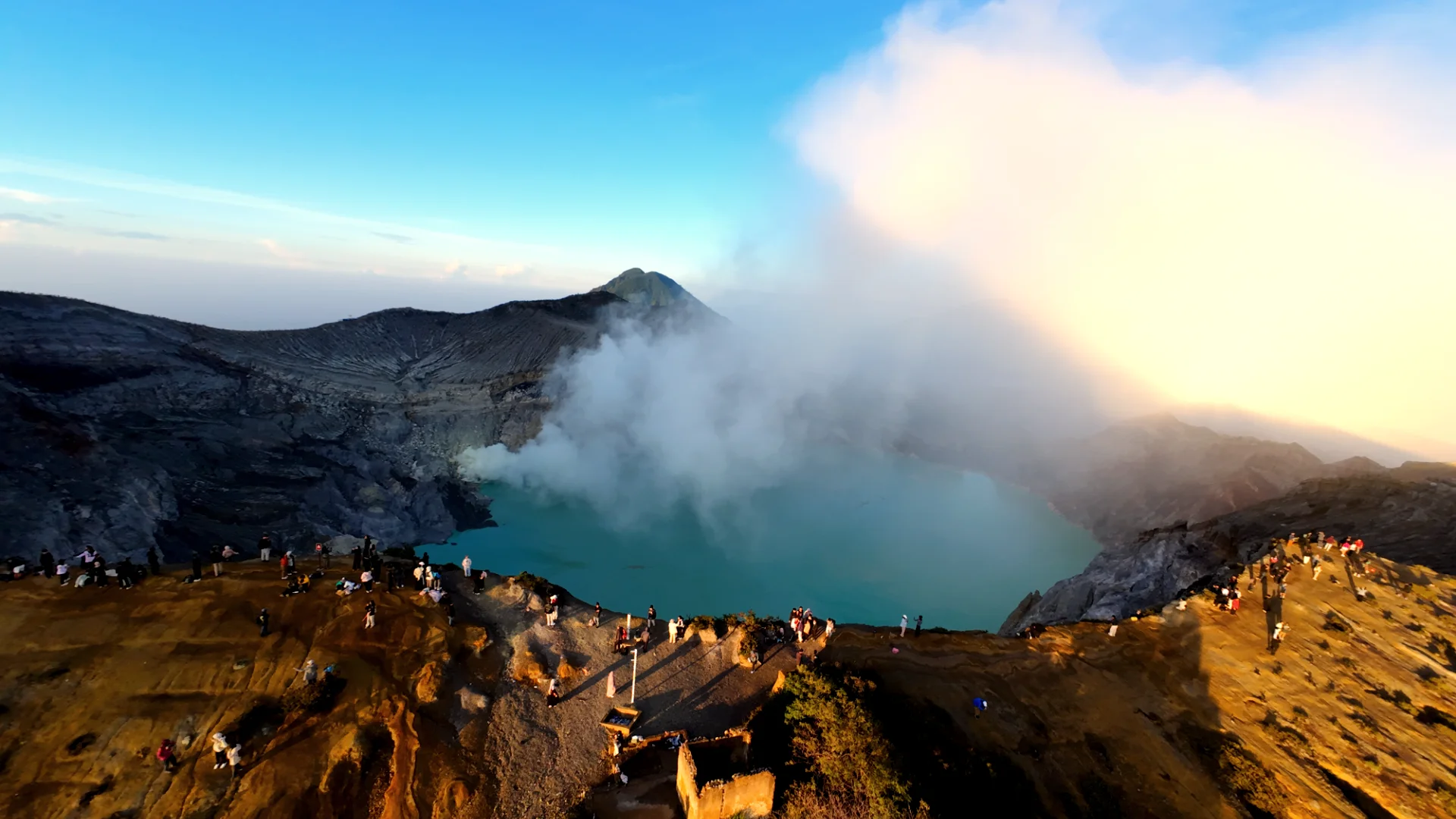
Post-caldera activity has been characterized by phreatic eruptions. This happens when water meets hot magma, causing instant steam explosions. These blasts helped carve out the deep, steep-sided bowl that now holds the acidic crater lake Indonesia is famous for. The terrain is rugged, brittle, and constantly shifting under the weight of its own chemistry.
The Chemistry of Chaos: Ijen’s Acidic Crater Lake
The turquoise color is a lie. While it looks like a tropical paradise, the Ijen crater lake geology is actually a giant vat of sulfuric and hydrochloric acid. With a pH level near zero, it is the most acidic large volcanic lake on Earth. This acidity comes from the volcanic gases—mostly sulfur dioxide and hydrogen chloride—that dissolve into the water from the vents below.
As these gases mix with rainwater, they create a corrosive cocktail. This acid dissolves the volcanic rock around the lake, leaching out metals like aluminum and iron. These dissolved minerals are what give the lake its striking, vibrant color. It is a beautiful but deadly chemical reaction happening in real-time. Don’t let the “milkshake” appearance fool you; it would dissolve a piece of metal in days.
Thermal Layers and Gas Seepage
The lake isn’t just a static body of water. It is a dynamic hydrothermal system. The temperature at the bottom can be significantly higher than the surface. Periodically, gas bubbles up from the depths, which can cause the lake to change color or even “turn over.” This Ijen volcanic activity is closely monitored because gas bursts can be lethal to anyone on the crater floor.
Understanding the formation of volcanic lakes helps explain why Ijen is so unique. Most crater lakes are filled with relatively fresh water once the volcano goes dormant. But Ijen is very much alive. The “magmatic plumbing” keeps feeding the lake with hyper-acidic fluids, preventing it from ever becoming a standard alpine lake. It is a living, breathing chemical plant.
Solfataras and the Electric Blue Fire
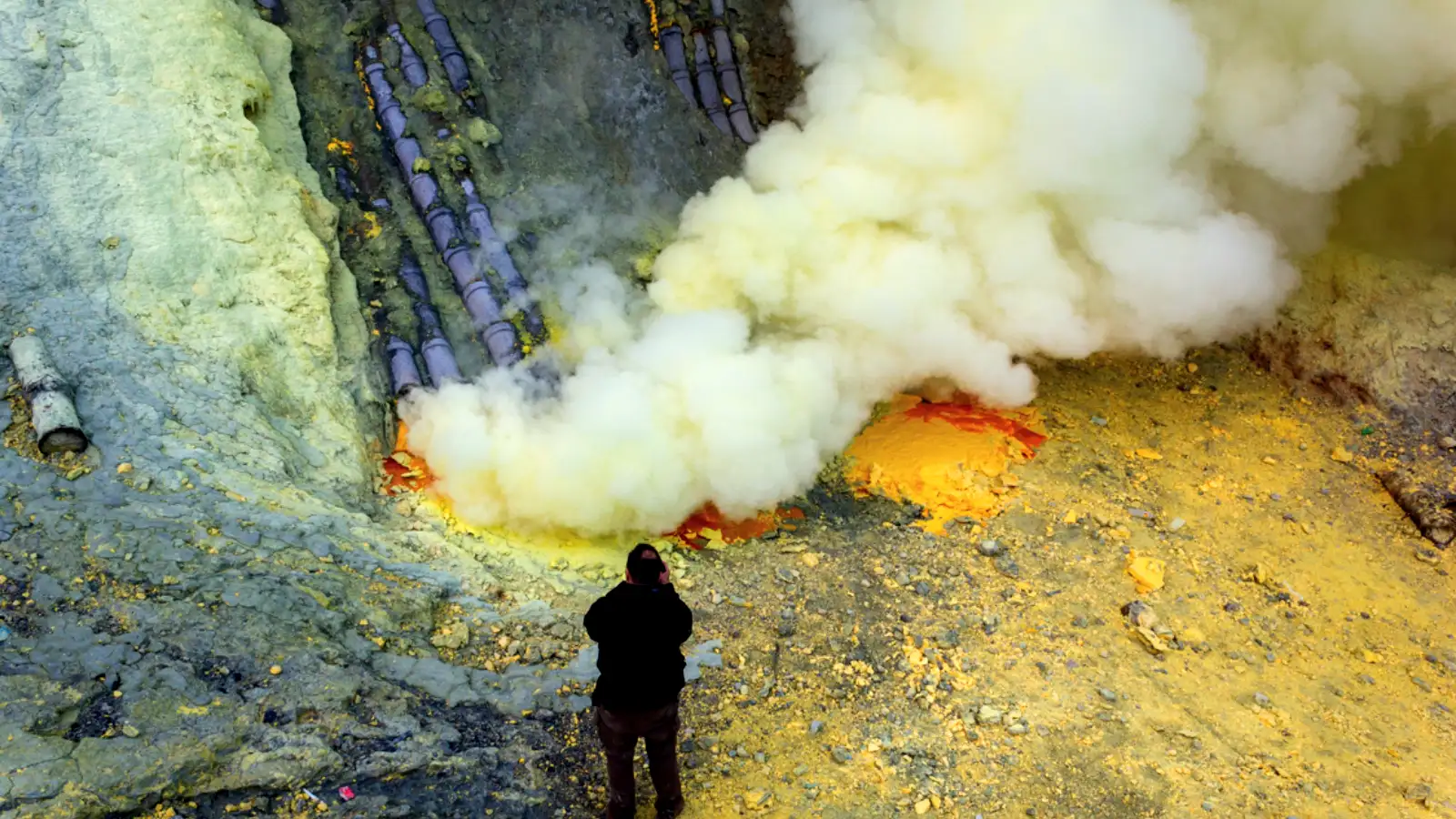
The “Blue Fire” is Ijen’s most famous trick. But here’s the truth: it isn’t lava. Geologically, what you are seeing is the combustion of sulfuric gases. High-pressure volcanic gases emerge from cracks (fumaroles) at temperatures over 600°C. When these gases hit the oxygen-rich air, they ignite, creating the ethereal blue flames that flow like liquid light down the rocks.
This phenomenon only happens in a few places on Earth, and Ijen is the most accessible. The Ijen blue fire explained simply is: high-temp sulfur gas + oxygen = blue combustion. It is best seen in the pitch black of night, often requiring a 2 AM descent into the crater. The smell is overpowering—a thick, rotten-egg scent that burns the throat if your mask isn’t tight.
Sulfur Mining and Deposition
As the sulfur gas cools, it condenses into liquid sulfur and eventually hardens into bright yellow rocks. This is where the Ijen sulfur deposits come from. For decades, local miners have placed ceramic pipes over the fumaroles to speed up this condensation. They break the cooled sulfur with iron bars and carry loads of up to 90kg out of the crater on their shoulders.
The geology of Indonesian volcanoes often includes sulfur, but nowhere is it as concentrated as here. The miners are a living part of the geological story. They work in a landscape that is actively growing. Every day, the volcano breathes out more raw material, and every day, the miners carry it away. It is an exhausting, ancient cycle of human endurance and volcanic output.
Modern Volcanic Activity and Safety
Don’t let the serene photos fool you; Ijen is an active volcano. Its eruption history includes several phreatic events where the lake water was ejected into the air. Modern monitoring involves seismic sensors and gas detectors placed around the rim. The safety of Ijen Crater depends on these early warning systems managed by the Indonesian Center for Volcanology.
The biggest risk isn’t a massive explosion, but the gas. High concentrations of CO2 or SO2 can settle in the crater floor on windless days, making it impossible to breathe even with a mask. This is why the trail sometimes closes without warning. The Ijen volcano geology is a reminder that we are just guests on a very active, very dangerous piece of Earth’s crust.
The Changing Landscape
The crater rim is constantly eroding. Sandy trails turn into mud during the rainy season, and rocks frequently tumble into the lake. If you visit, you might notice the “Dead Tree” forest. These trees were killed by a massive gas release years ago, leaving behind bleached skeletons that look like a scene from a post-apocalyptic movie. It’s a hauntingly beautiful reminder of the mountain’s power.
When you stand on the edge, looking down into that steaming turquoise eye, you are looking at 50,000 years of violence and beauty. The Ijen volcanic complex is not just a destination; it’s a geological masterclass. Whether you’re here for the science or the soul-stirring views, respect the mountain. It was here long before us, and it will be here long after.
Popular Related Tour Packages
- 🚀 Ijen Crater Tour from Bali: The Complete Midnight Adventure
- 🚀 3-Day Bromo & Ijen Crater Tour (Top Rated)
- 🚀 Mount Bromo Sunrise Discovery Tour
- 🚀 1-Day Ijen Crater Tour from Banyuwangi
- 🚀 4-Day East Java Highlights: Bromo, Ijen & Tumpak Sewu
Ready for Your Ultimate Mount Bromo & Ijen Adventure?
Don’t leave your trip to chance. Join thousands of happy travelers and experience East Java with our top-rated local tour operators.
Frequently Asked Questions
Q: How old is the Ijen Crater?
A: The current active crater is part of a complex that began forming hundreds of thousands of years ago, but the massive caldera collapse that shaped the landscape happened roughly 50,000 years ago.
Q: Why is the Ijen lake so acidic?
A: Volcanic gases like sulfur dioxide dissolve into the lake water, creating high concentrations of sulfuric and hydrochloric acid. This makes it the largest hyper-acidic lake in the world.
Q: Is the Blue Fire at Ijen actually lava?
A: No, the Blue Fire is the combustion of sulfuric gases that emerge at high temperatures and ignite upon contact with air. It is a chemical flame, not molten rock.
Q: Can I swim in the Ijen crater lake?
A: Absolutely not. The water is extremely corrosive and can cause severe chemical burns. The fumes at the lake level are also highly toxic.
Q: Is the Ijen volcano still active?
A: Yes, Ijen is an active volcano. It is constantly monitored for seismic activity and gas emissions to ensure the safety of visitors and miners.
The journey to Ijen is more than a hike; it’s a deep dive into the earth’s rawest mechanics. From the ancient caldera to the modern sulfur vents, every step tells a story of transformation. If you’re ready to see this geological marvel for yourself, we’re here to guide you safely through the mist and the flames.
Planning to visit Ijen or Mount Bromo?
Explore available tour options and ask our local team about your itinerary.
Explore Tour Packages →