
Understanding the Ijen Volcanic System: Geology, Blue Fire & Facts
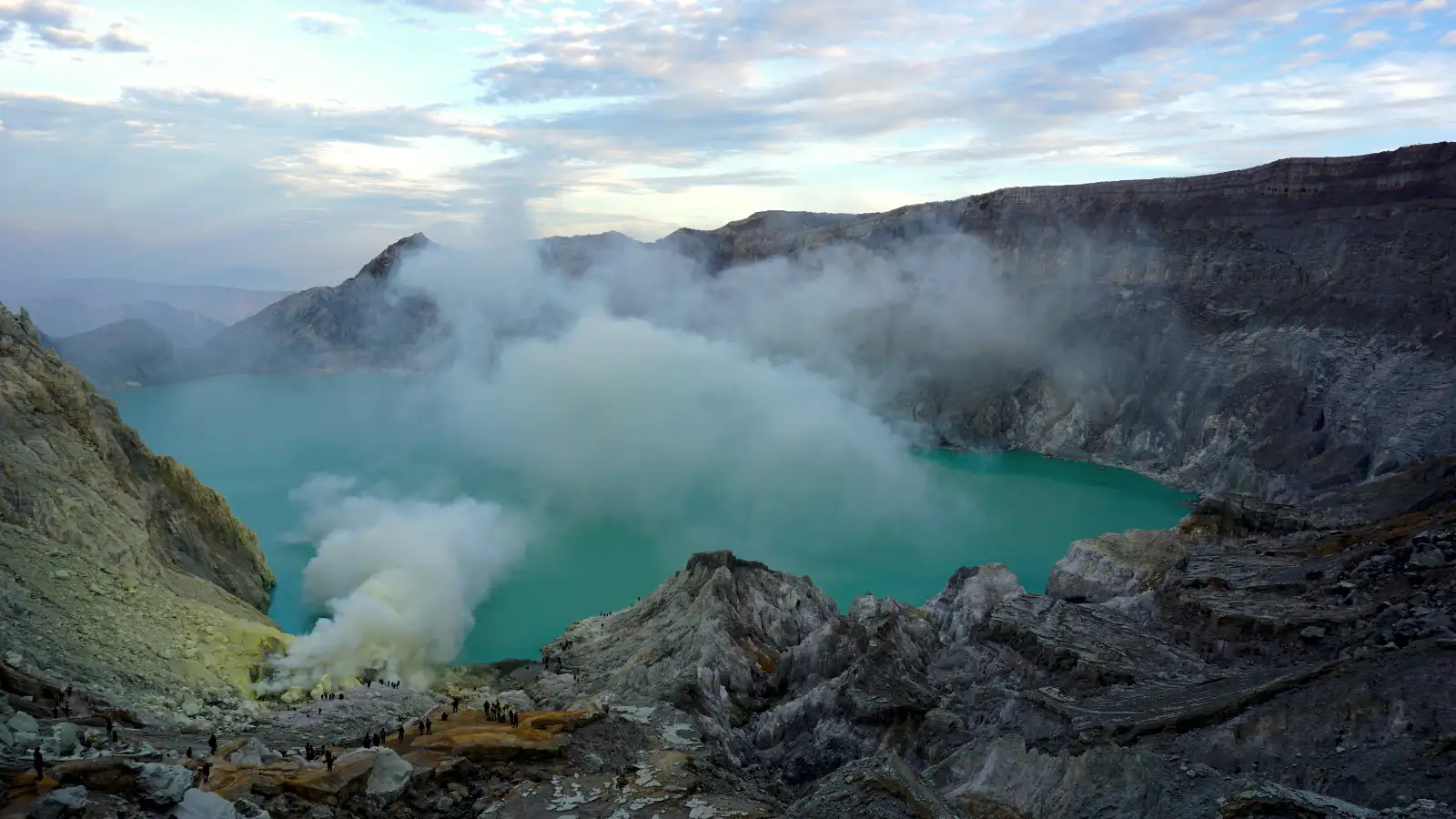
- It’s a complex system, not just a single mountain peak.
- Home to the world’s most acidic lake (Kawah Ijen).
- Famous for the “Blue Fire” visible only in total darkness.
- A critical site for traditional manual sulfur mining.
About This Guide: Written by our Banyuwangi-based local operational team with first-hand field experience across East Java, including current trail conditions, departure timing, weather shifts, and real visitor logistics.
Table of Contents
What Is the Ijen Volcanic System?
Look, when most people talk about “Ijen,” they’re usually picturing the turquoise lake or the blue flames. But geographically, it’s way bigger than that. The Ijen Volcanic System is a vast complex of volcanic cones situated on the border between Banyuwangi and Bondowoso in East Java. It sits within the massive Ijen Caldera, a “super-structure” that spans roughly 20 kilometers across.
Here’s the deal: this isn’t just one lonely volcano sticking out of the ground. It’s a group of peaks. You have Mount Merapi (not the one in Yogyakarta), Mount Raung to the southwest, and the most famous one—Kawah Ijen. For a deeper dive into these specifics, check out our local guide to the Ijen volcanic complex.
The Architecture of the Ijen Caldera
The caldera itself was formed thousands of years ago after a massive eruption caused the ground to collapse. Today, the northern rim of the caldera is still visible as a long, curved ridge. Inside this “bowl,” several younger volcanoes have grown over time. It’s a fascinating landscape where coffee plantations sit right next to rugged, barren volcanic slopes.
Mount Ijen vs. Ijen Crater
Travelers often use these terms interchangeably, but there’s a slight technical difference. Mount Ijen refers to the mountain itself, while Kawah Ijen (Ijen Crater) is the actual volcanic opening containing the lake. If you want to know the nuances, we’ve mapped out the difference between Mount Ijen and Ijen Crater for clarity.
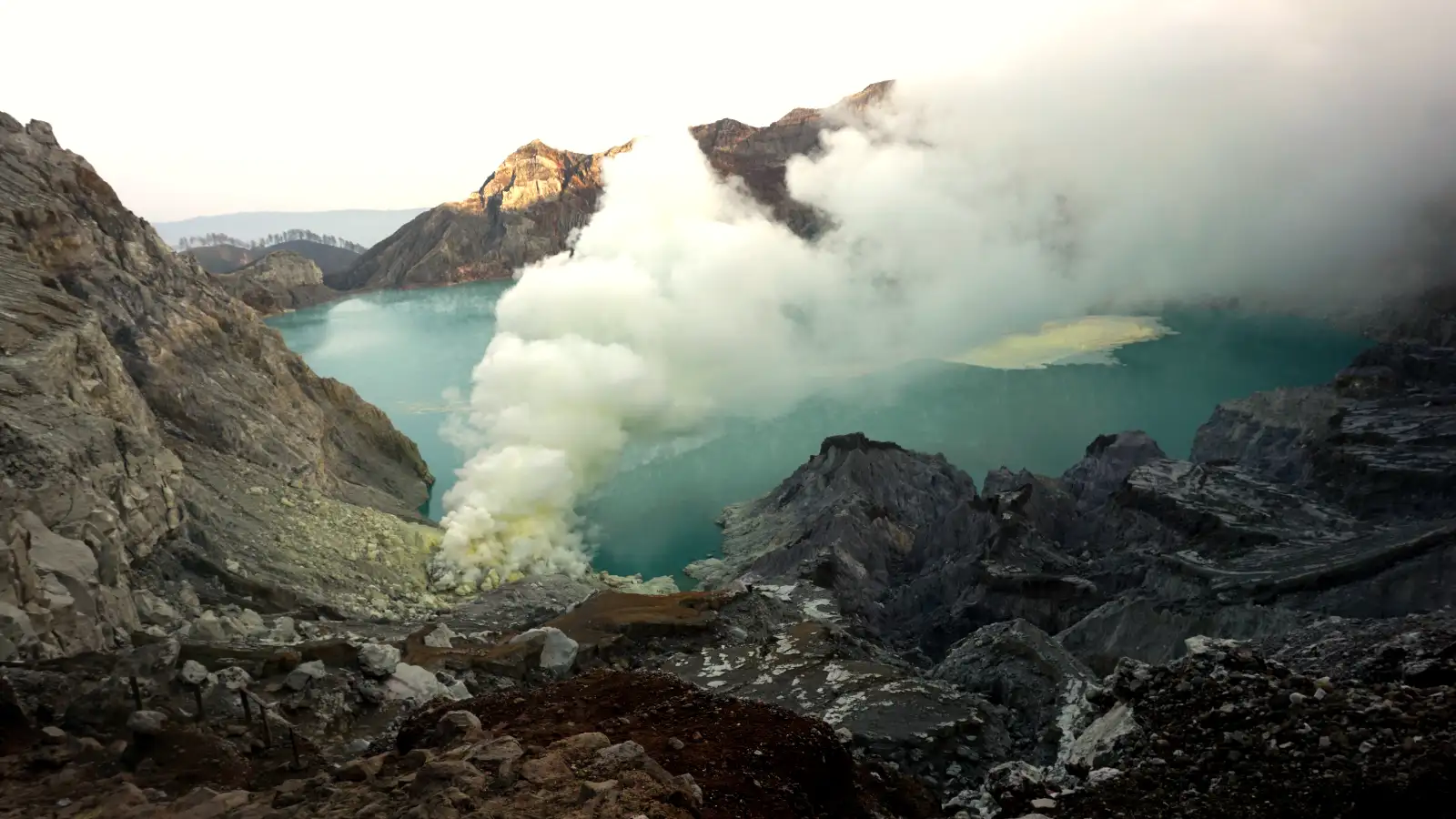
The hike starts at Paltuding, which sits at about 1,850 meters above sea level. From there, you trek up to the summit at 2,386 meters. It’s a steep, dusty climb. The path is well-worn but can be slippery when dry volcanic gravel acts like marbles under your boots. Most people start this trek at 2:00 AM to catch the sulfur gases igniting in the dark.
The World’s Most Acidic Crater Lake
The crown jewel of the system is the Kawah Ijen lake. It looks peaceful and inviting with its bright turquoise color, but don’t let that fool you. The water is a concentrated mixture of sulfuric and hydrochloric acid with a pH of less than 0.5. To put that in perspective, that’s about the same acidity as battery acid. You can read more about the depth and facts of the acidic lake to understand why it’s so extreme.
The Blue Fire Phenomenon
Truth is, the “blue fire” isn’t lava. It’s actually sulfuric gas that emerges from cracks in the volcano at high pressure and temperatures up to 600°C. When these gases hit the oxygen-rich air, they ignite into blue flames that can reach five meters high. This is one of the few places on Earth where this is visible on such a scale. For a full breakdown, see our Ijen blue fire explanation.
Because the fire is only visible in the dark, visitors must navigate the crater floor before sunrise. This area is also where the local sulfur miners work. They carry up to 90kg of solid sulfur in bamboo baskets, trekking up the steep crater walls several times a day. It’s one of the toughest jobs in the world, and seeing it firsthand is a humbling experience.
Practical Information
Planning a visit to the Ijen volcanic system requires some logistical prep. You can’t just show up and wing it, especially with the current safety regulations. According to official geological data, the area is constantly monitored for gas activity.
- Location: Banyuwangi / Bondowoso border, East Java.
- Opening Hours: Usually 02:00 AM (Check official opening hours as they vary).
- Health Requirement: A mandatory medical certificate (Surat Keterangan Sehat) is now required.
- Elevation: Paltuding Basecamp (1,850m), Summit (2,386m).
- Temperature: Can drop to 3°C – 10°C at night.
Comparing Ijen to Other Java Volcanoes
| Feature | Mount Ijen | Mount Bromo | Mount Merapi |
|---|---|---|---|
| Main Draw | Blue Fire & Acid Lake | Caldera Sunrise & Sand Sea | Classical Volcano Peak |
| Hike Difficulty | Moderate (Steep) | Easy (Jeep + Short walk) | Challenging |
| Best Time | Midnight to Sunrise | Pre-sunrise | Daytime/Morning |
Local Tips You Should Know
If you ask me, the most important thing to remember is the gas. The wind changes direction constantly. One minute you’re looking at the lake, the next you’re engulfed in a thick cloud of white sulfur smoke. This is why gas masks aren’t optional; they are a necessity for survival near the rim.
Also, don’t underestimate the cold. While Java is tropical, the high altitude and wind chill at 2:00 AM will bite through a single layer. Wear layers you can shed as you warm up during the hike. Most people opt for an Ijen crater tour because it includes all the necessary gear like headlamps and masks.
Safety & Important Considerations
Is it safe? Generally, yes, but you must respect the volcano. The volcanic alert level is monitored by the PVMBG (Center for Volcanology and Geological Hazard Mitigation). If the gas density is too high, the authorities will close the path to the crater floor. Always listen to your local guide. We’ve detailed more on this in our guide on whether Ijen crater is safe for tourists.
Common Mistakes Travelers Make
The biggest mistake is ignoring the sleep schedule. If you are coming on an Ijen crater tour from Bali, you’ll likely leave at 7:00 PM and start hiking by 2:00 AM without much sleep. It’s intense. Another mistake? Not bringing enough water. The dry air and physical exertion will dehydrate you faster than you think.
Recommended Tour Packages
To experience the Ijen volcanic system safely and efficiently, we recommend these curated local packages:
- Ijen Crater Tour from Bali (1 Day): The most popular option for travelers staying in Ubud, Canggu, or Seminyak.
- Ijen Crater Tour from Banyuwangi (1 Day): Ideal for those already in East Java looking for a quick, local departure.
- Bromo Ijen Tour (3 Days 2 Nights): The classic East Java volcano circuit combining the best of both peaks.
- Bromo Ijen Tumpak Sewu Tour: A multi-day adventure including Java’s most famous waterfall.
- Mount Bromo Tour from Surabaya: Perfect for those starting their journey from East Java’s capital city.
Frequently Asked Questions
Q: What causes the blue fire at Ijen?
A: It is caused by the combustion of sulfuric gases when they come into contact with air at temperatures above 360°C. It is a chemical reaction, not blue lava.
Q: Can I swim in the Ijen crater lake?
A: Absolutely not. The lake is extremely acidic (pH < 0.5) and would cause severe chemical burns and potentially be fatal if ingested or entered.
Q: Is the hike difficult for beginners?
A: It is a moderate hike. The first 2 kilometers are a steady, steep incline on a wide dirt path. It requires a decent level of fitness but is achievable for most people.
Q: Why do I need a medical certificate?
A: Local authorities (BBKSDA) mandate it to ensure visitors are physically capable of the high-altitude trek and the respiratory stress caused by volcanic gases.
Q: When is the best time to see the blue fire?
A: Between 2:30 AM and 4:30 AM. Once the sun begins to rise, the ambient light makes the blue flames invisible to the naked eye.
Final Takeaway
The Ijen Volcanic System is more than just a photo spot; it’s a living, breathing geological marvel. From the harsh reality of sulfur mining to the surreal beauty of the blue fire, it offers a visceral connection to the Earth’s power. Just remember to pack warm, get your health cert ready, and respect the local guidelines.
Planning Your Trip to East Java?
Explore our local tour options and choose a route that matches your travel schedule.
Planning to visit Ijen or Mount Bromo?
Explore available tour options and ask our local team about your itinerary.
Explore Tour Packages →