
Hiking the Ijen Crater Trail: A Start to Finish Visual Guide
Key Takeaways:
- Starts at 1,850m elevation (Paltuding) and peaks at 2,386m.
- First 2 kilometers are the steepest part of the hike.
- Mandatory health certificate required before starting the trek.
- Gas masks are essential once you reach the sulfurous rim.
About This Guide: Written by our Banyuwangi-based local operational team with first-hand field experience across East Java, including current trail conditions, departure timing, weather shifts, and real visitor logistics.
Table of Contents
What Is the Ijen Crater Trail?
The Ijen crater trail is more than just a mountain path. It’s an active volcanic route in East Java that leads to the world’s largest highly acidic lake. This trail serves two very different groups: tourists looking for the rare blue fire and local sulfur miners who carry 70kg loads on their shoulders every single day.
Look, if you are coming from Bali or Surabaya, this is the most visceral hike you will experience. The terrain shifts from dark, forested paths to a stark, lunar-like landscape at the summit. If you’re wondering how difficult is the ijen crater hike for beginners, the answer is manageable, but your calves will definitely feel it the next morning.
The Starting Point: Paltuding Basecamp
Everything begins at Paltuding. Most hikers arrive between 1:00 AM and 2:00 AM. It’s freezing—usually around 10°C, sometimes dropping to 5°C. You’ll see dozens of small stalls (warungs) selling hot ginger tea and instant noodles. The air smells like woodsmoke and anticipation.
Before you take a single step, you must show your health certificate. This is a non-negotiable rule. There is a small clinic on-site, but it’s better to get yours in Banyuwangi or Licin to save time. Once the gate opens at 2:00 AM, the sea of headlamps begins to move. Many travelers choose an Ijen crater tour from Bali which handles these logistics for you, including the midnight ferry crossing.
The First 2km: The Infamous Steep Section
Here’s the deal: the first two-thirds of the hike is the hardest. The ijen crater ascent is a wide, sandy road that winds upward at a sharp angle. There are no stairs, just a steady, unrelenting incline. You will see local “trolley taxis” passing by—these are carts used by miners that now carry tourists who find the climb too taxing.
The ground is a mix of packed dirt and loose volcanic gravel. It’s easy to lose traction if your shoes don’t have a good grip. Honestly, the best strategy is a slow, rhythmic pace. Don’t race. You have plenty of time before the sun comes up. If you need a break, there is a “canteen” or rest area at the 2km mark where miners weigh their sulfur.
The Halfway Point: Canteen Pos Bundar
Once you reach Pos Bundar, the worst is over. The path levels out significantly. You’ll notice the vegetation starting to thin out. The trees look skeletal, charred by volcanic gases over the years. This is where most people put on their jackets because the wind really starts to bite here.
It’s also where you should prepare your gear. If you haven’t checked the ijen crater gas mask rental guide yet, make sure you have a mask ready. You aren’t in the danger zone yet, but the smell of sulfur—like rotten eggs—will begin to drift over the ridge on the wind.
Reaching the Rim: Wind and Sulfur
The last kilometer of the ijen hiking path is a joy compared to the start. It’s a narrow, winding mountain path that hugs the side of the volcano. To your left, you can see the lights of Bondowoso and Banyuwangi in the distance. To your right, the massive shadow of the crater wall.
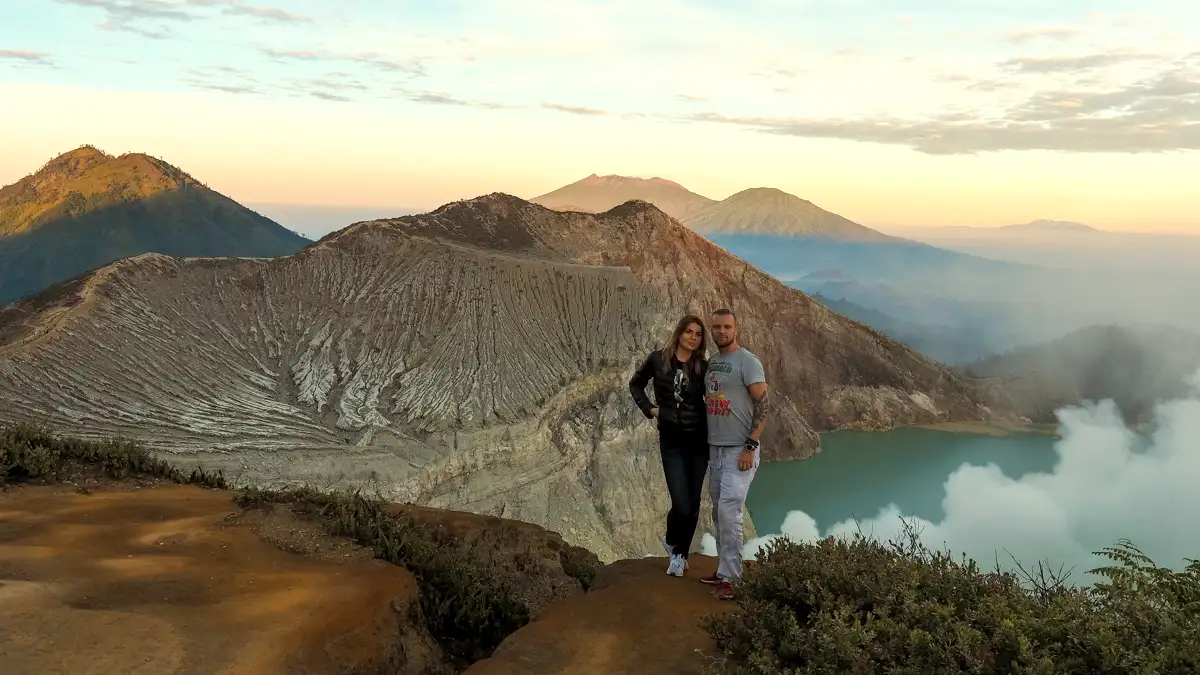
When you finally hit the rim, the view is haunting. If you arrive before dawn, you’ll see a faint blue glow deep inside the pit. That’s the Ijen blue fire. The wind at the rim is fierce. It can whip up volcanic dust into your eyes, so wearing glasses or goggles is a smart move.
Going Down: The Blue Fire Path
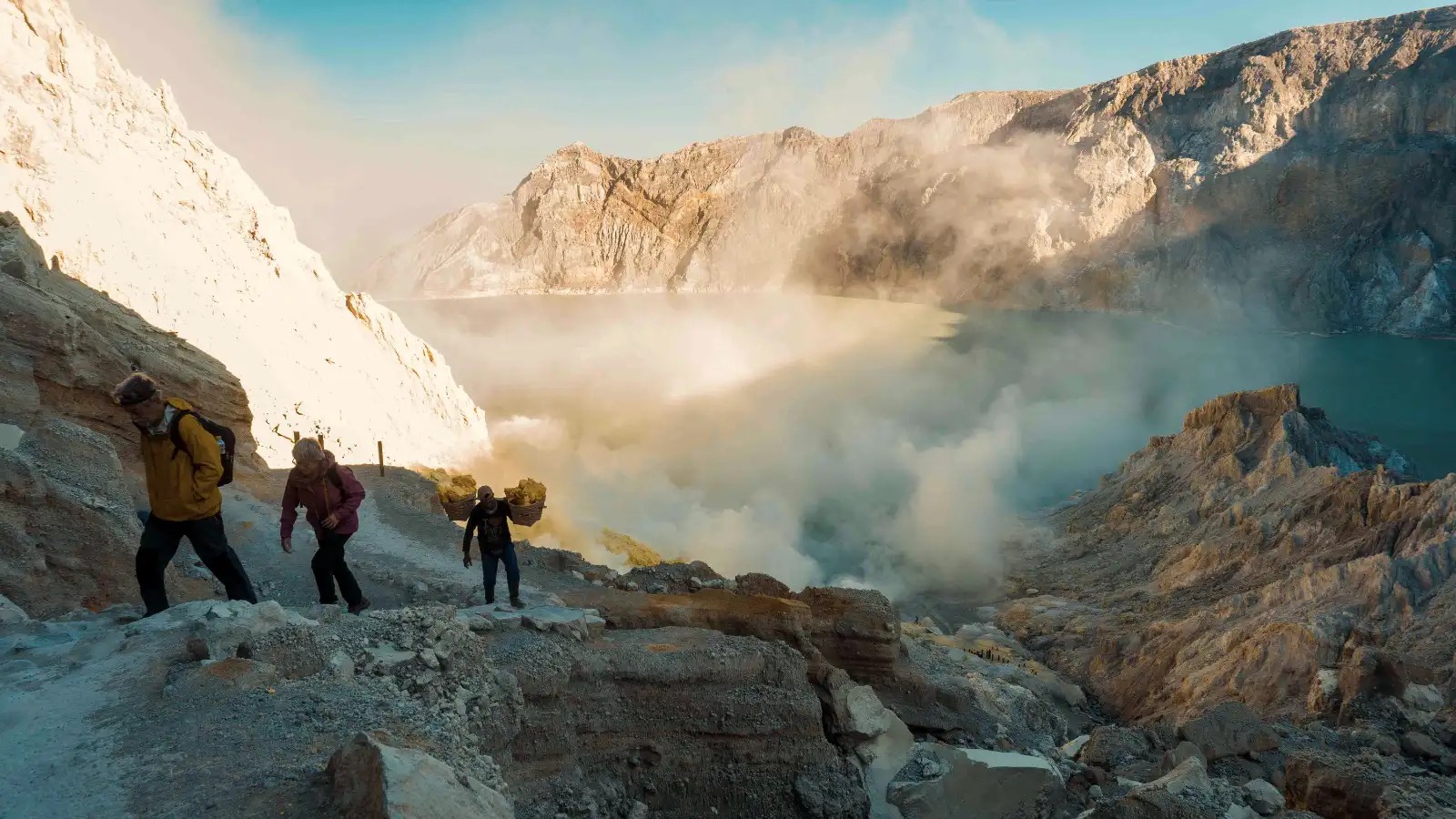
This is the most technical part of the trek. If the authorities allow it (depending on gas levels), you can descend 800 meters down to the crater floor. This isn’t a “walking route”—it’s a scramble over jagged rocks and loose stones. It’s narrow, and you have to share the space with miners coming up with heavy baskets.
Truth is, this part is crowded and can be overwhelming. The sulfur smoke can become thick in seconds, completely blocking your vision. You must wear your gas mask here. The reward? Standing a few meters away from electric blue flames and the edge of the world’s most acidic lake. Just remember: what goes down must come back up, and the climb back to the rim is exhausting.
Practical Information
Before you set out on an Ijen crater tour from Banyuwangi, keep these logistics in mind. Conditions change fast on a volcano.
| Section | Distance | Duration | Terrain |
|---|---|---|---|
| Paltuding to Canteen | 2.0 km | 60-80 min | Steep Dirt Road |
| Canteen to Rim | 1.0 km | 20-30 min | Flat Mountain Path |
| Rim to Crater Floor | 0.8 km | 30-45 min | Rocky Scramble |
Local Tips for the Trail
I’ve walked this trail hundreds of times. Here is what the guidebooks usually forget to tell you. First, the descent back to Paltuding is often harder on the knees than the climb up. The sandy volcanic soil acts like ball bearings under your boots. Take small steps.
Second, don’t forget to pack according to a proper what to wear for ijen crater list. Layers are your best friend. You’ll sweat during the steep climb, but the moment you stop at the rim, the wind chill will make you shiver. Also, if you find the hike too tough, the Ijen trolley taxi is a legitimate local business that helps the community, though it’s more expensive than walking.
Finally, check the ijen crater opening hours before you leave your hotel. The trail usually opens at 2:00 AM, but volcanic activity or heavy rain can delay this. Always listen to the rangers at the Paltuding gate.
Frequently Asked Questions
Q: Is the Ijen Crater trail dangerous?
A: It is generally safe if you follow the rules. The main risks are the steep incline, slippery sand on the way down, and sulfur gas. Always wear a mask and stay on the marked path.
Q: Can I hike Ijen without a guide?
A: While it is possible to hike alone since the path is clear, a local guide is highly recommended for safety, especially if you plan to go down into the crater for the blue fire.
Q: How much does it cost to enter Ijen?
A: The entrance fee varies for locals and foreigners. Generally, it’s around 100,000 to 150,000 IDR for international tourists, plus the cost of your health certificate and mask rental.
Q: Why is the Ijen lake so acidic?
A: The lake sits in a volcanic vent that leaks sulfuric acid and other minerals. This creates a highly acidic environment with a pH of almost zero.
Q: What should I pack for the hike?
A: Bring a warm jacket, headlamp, sturdy hiking shoes, water, and some snacks. Check our Ijen tour checklist for a complete list of essentials.
Recommended Tour Packages
- Ijen Volcano Tour from Bali (1 Day) – Perfect for travelers with limited time who want a direct round-trip from Bali to the crater.
- 3D2N Bromo Ijen Tour from Surabaya – The ultimate volcano adventure covering the two most famous peaks in East Java.
- Full East Java Overland Tour – A comprehensive journey through Java’s best natural wonders, including waterfalls and volcanoes.
- Ijen Crater Day Trip from Banyuwangi – The most popular local option for those already staying in the gateway city.
- Bromo Ijen Tumpak Sewu Tour – Adds the “Thousand Waterfalls” to your itinerary for a truly diverse nature experience.
Final Takeaway
The Ijen crater trail is a challenge of endurance and a feast for the senses. It’s not just a walk; it’s an encounter with the raw power of the earth. From the cold, dark start at Paltuding to the sulfurous clouds at the rim, every step tells a story of the volcanic landscape. According to National Geographic/Wikipedia, this complex remains one of the most unique geological sites on the planet. Whether you are there for the photography or the physical challenge, the trail will leave an impression long after the sulfur smell fades from your clothes.
Planning Your Trip to East Java?
Explore our local tour options and choose a route that matches your travel schedule.
Planning to visit Ijen or Mount Bromo?
Explore available tour options and ask our local team about your itinerary.
Explore Tour Packages →