
How Crowded Is Ijen Crater?: The Ultimate Insider Guide
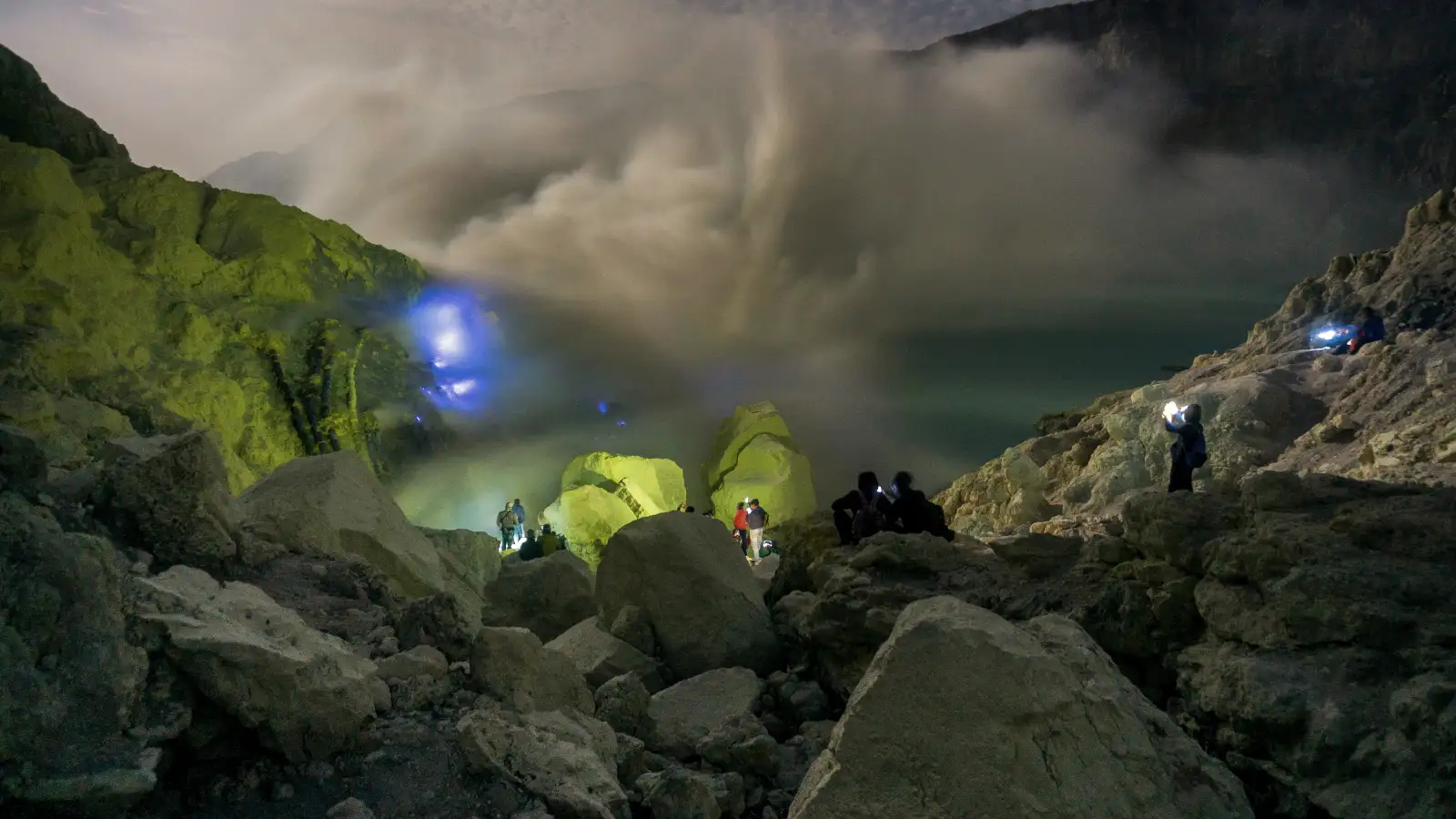
Ijen Crater is no longer a secret. Standing at the Ijen Crater tour rim at 4 AM, you might expect a silent, spiritual encounter with nature. Instead, you are often met with a sea of headlamps, the clatter of sulfur trolleys, and a thousand other travelers chasing the same blue flame. It can be overwhelming if you aren’t prepared for the Ijen hiking trail congestion that peaks during the dry season. If you want to escape the madness and find your own slice of volcanic peace, you need to lock in your reservation with a guide who knows the shortcuts.
What You Need to Know
The Quick Answer: On an average weekday, expect 500 to 800 hikers. On Indonesian public holidays or weekends, that number can explode to over 3,000. The most crowded areas are the “Blue Fire” descent path and the sunrise photo spots. Timing is your only weapon against the rush.
- Peak Hours: 2:00 AM – 4:00 AM (The Blue Fire rush).
- Peak Days: Saturday, Sunday, and National Holidays.
- Quietest Time: Tuesday to Thursday, arriving after sunrise.
- Bottleneck: The narrow, steep path leading down into the crater.
Why Trust This Guide
We live and breathe the dust of East Java. Our team of local guides has climbed this volcano thousands of times, navigating through shifting gas clouds and varying Paltuding basecamp crowds. We have seen Ijen at its quietest during the rainy season and its most chaotic during the Eid al-Fitr holidays. This isn’t a guide based on a one-time visit; it’s built on years of observing the best time to visit Ijen Crater and knowing exactly when the rangers open the gates. We deal with the logistics so you can focus on the view.
The Brutal Reality of Ijen Crowds
Imagine a pitch-black trail, the air smelling of rotten eggs, and a line of people stretching as far as your headlamp can reach. This is the sulfur miners path during a busy weekend. The trail from Paltuding to the rim is wide, but the sheer volume of people makes it feel claustrophobic. You’ll hear a cacophony of languages, the heavy breathing of hikers, and the constant “Permisi!” (Excuse me) from Ijen trolley taxis pushing through the throng.
Most travelers start their hike between 1:30 AM and 2:30 AM. This creates a massive surge. Everyone wants to reach the crater rim at the same time to see the electric-blue flames before the sun comes up. If you are part of this wave, expect to spend more time looking at the heels of the person in front of you than at the stars above. The Ijen sunrise crowds at the “Instagram trees” can be equally intense, with people jostling for that perfect, unobstructed shot of the turquoise lake.
Weekday vs. Weekend Dynamics
Tuesday morning is a completely different world compared to Saturday. During the week, the atmosphere is focused and rhythmic. You can actually hear the wind whistling over the rim and the clinking of the Ijen sulfur miners’ baskets. The difference in crowd size is often as much as 70%. If your itinerary is flexible, moving your Ijen visit to a Tuesday or Wednesday is the single best decision you can make for your sanity.
Weekends bring local tourists from nearby cities like Surabaya and Malang. Many are students or large families who travel in big groups. While the energy is lively, the noise levels skyrocket, and the pace on the trail slows down significantly. If you must go on a weekend, prepare yourself mentally for a “festival” vibe rather than a “wilderness” experience. You aren’t just hiking a volcano; you are participating in a major Indonesian cultural event.
How Weather Dictates the Crowd
Rain is the ultimate crowd-killer. When the clouds open up over Banyuwangi, many casual hikers stay in their hotels. For the hardcore traveler, this is an opportunity. A light drizzle might mean a muddy trail, but it also means having the acid lake viewpoint almost to yourself. Just keep in mind that safety is paramount; heavy rains can lead to the rangers closing the crater descent for the day.
The Blue Fire Bottleneck
The descent into the crater is the most technical and dangerous part of the journey. This is where the blue fire viewing area congestion becomes a genuine safety concern. The path is narrow, composed of loose volcanic rock, and shared with miners carrying 80kg of sulfur on their shoulders. When hundreds of tourists try to go down while others are coming up, the result is a slow-motion gridlock that can be terrifying if you aren’t comfortable with heights.
Gas masks are non-negotiable here. As the crowd thickens, the movement of people stirs up dust and traps the sulfur fumes. If the wind shifts, the entire crowd may have to stop and crouch to avoid the suffocating gas. In these moments, the “crowd” becomes a liability. Having an experienced guide who can read the wind and the flow of people is vital. They know when to push forward and when to pull you back into a safe pocket of air.
The “Ferrari” of Ijen
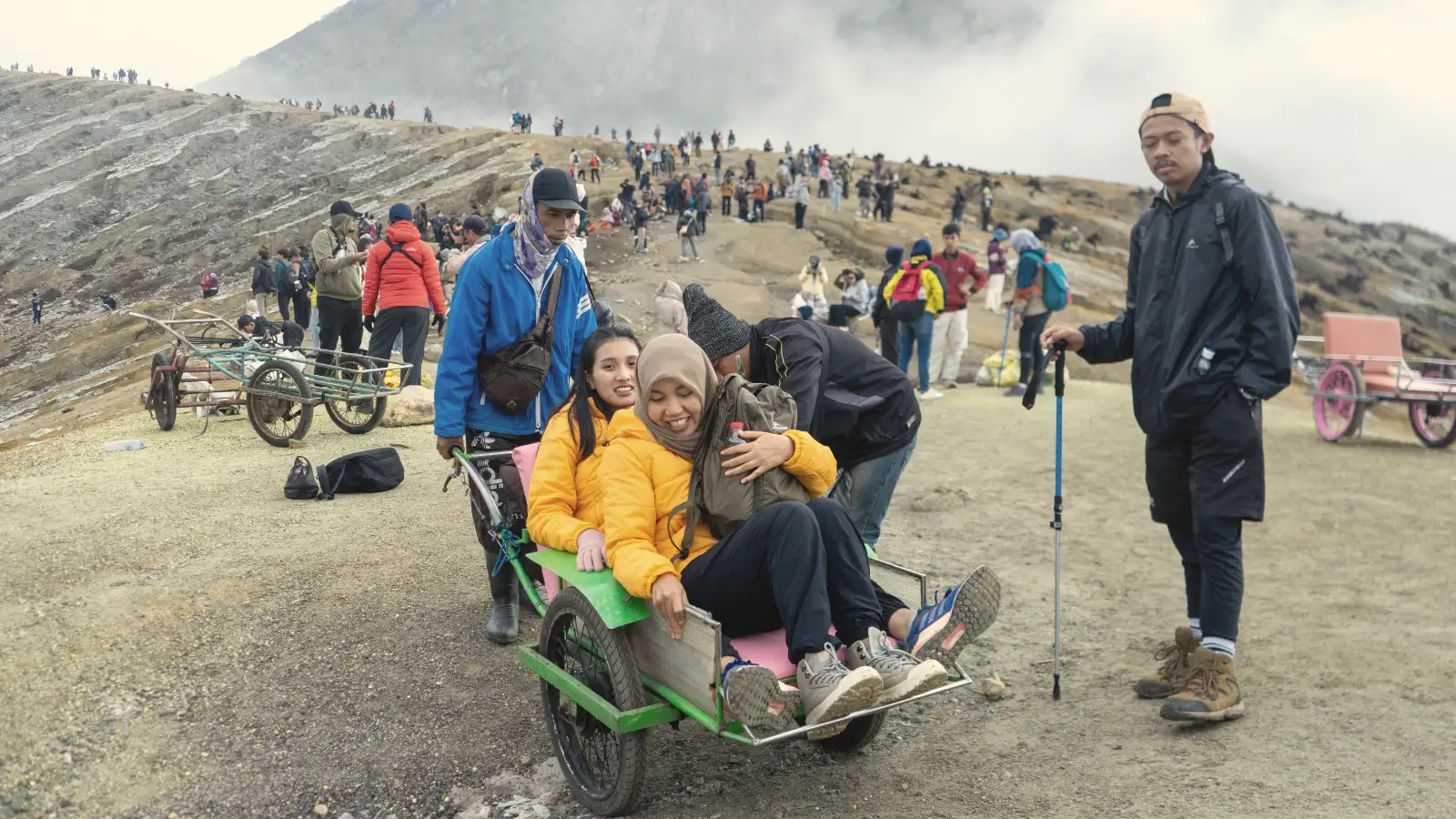
The local trolley pushers, often called “Ijen Taxis,” are a unique part of the landscape. They can be a blessing if you are exhausted, but they also contribute to the trail’s chaotic feel. These trolleys move fast. You’ll often hear a frantic shout from behind as a trolley comes barreling down the slope. Hikers have to scramble to the edge of the trail to let them pass. It adds a level of unpredictability to the hike that keeps you on your toes.
Waiting for the Shot
Once you reach the bottom, the area near the blue flames is surprisingly small. People will cluster around the hottest spots, cameras and phones at the ready. You might have to wait 10 or 15 minutes just to get a clear view of the flames. The same happens at the famous “dead tree” on the rim. In peak season, there is literally a line of people waiting to stand on a specific branch for a photo. It can feel a bit like Disneyland, but with more volcanic ash and less oxygen.
The logic of East Java travel often involves connecting these massive volcanic landscapes. Most travelers find that a comprehensive Ijen Crater tour is best enjoyed when paired with the lunar landscapes of a Mount Bromo tour. If you are tight on time, the Bromo Ijen tour package is the gold standard for seeing the best of the region in one go. For those wanting to see the deep jungles and waterfalls beyond the volcanoes, the East Java tour offers a much more rugged and less crowded perspective of our home.
Peak Season and Local Holidays
The Banyuwangi to Ijen logistics become significantly more complicated during peak holiday periods. You should avoid the weeks surrounding Lebaran (Eid al-Fitr), the school holidays in June and July, and the Christmas/New Year stretch. During these times, the number of hikers can quadruple. The parking lot at Paltuding overflows with tour buses, and the queue for the toilets can be twenty people deep before you even start the hike.
International peak season also aligns with the dry months from July to September. This is when the weather is most stable, but it’s also when every backpacker in Southeast Asia seems to descend on East Java. If you visit during these months, the “wilderness” aspect of Ijen is replaced by a massive communal struggle up a hill. It’s still beautiful, but it’s a shared beauty with three thousand of your new best friends.
The Impact of Long Weekends
Indonesians love a “Harput” (Hari Terjepit) or bridge holiday. If a national holiday falls on a Thursday, expect the entire weekend to be flooded with local travelers. These are the worst times for anyone seeking solitude. The noise from large groups playing music or shouting to friends across the crater can diminish the spiritual impact of the sunrise. Check the Indonesian holiday calendar before booking your flights!
The Beauty of the Wet Season
Visiting between November and March is often discouraged due to the rain, but it’s actually our favorite time for those who hate crowds. Yes, you might get wet. Yes, the best time for Ijen crater views is usually the dry season, but the rain turns the landscape a vivid, electric green. The mist rolling over the rim creates an eerie, cinematic atmosphere that most people never see. And best of all? You might be one of only fifty people on the mountain.
Insider Strategies to Avoid the Mob
Timing is everything. If the gates open at 2:00 AM, the massive crowd will be at the gate at 1:45 AM. You have two choices to beat the Ijen hiking trail congestion. The first is to be at the very front of the line. This means arriving at Paltuding by midnight and being ready to move the second the ranger gives the signal. You’ll need a fast pace to stay ahead of the pack and reach the blue fire before the descent path turns into a parking lot.
The second strategy—and the one we often recommend for luxury travelers or those who value peace—is to wait. Let the “Blue Fire” crowd go. Start your hike at 3:30 AM or 4:00 AM. You won’t see the blue flames (or they will be very faint), but you will have a much more pleasant hike up the mountain. By the time you reach the rim, the early birds are already heading down, and you can enjoy the sunrise and the acid lake with 50% fewer people around you.
Exploring the Far Rim
Most tourists stop at the first viewpoint they hit on the rim. It’s a classic spot, but it’s packed. If you walk another 20 to 30 minutes along the rim towards the higher peaks, the crowd thins out remarkably. This is where the dead tree viewpoint is located, but even further past that, you’ll find spots where you are truly alone. The perspective of the lake changes, and the silence of the volcano finally reveals itself.
Sleep at the Basecamp
If you stay in a hotel in Banyuwangi, you have a 1-hour drive before you even start. Staying in a homestay or a basic lodge closer to the Paltuding gate allows you to gauge the crowd in real-time. You can wake up, see the line of cars, and decide to wait another hour if it looks too busy. This flexibility is a luxury that “day-trippers” coming from Bali simply don’t have.
What Nobody Tells You About the Hike
The physical toll is often underestimated. Social media makes it look like a casual stroll for a photo. In reality, the first 2 kilometers are a relentless uphill slog at a 20-30 degree incline. In the dark, and in the cold, it can be grueling. According to the Smithsonian Global Volcanism Program, Ijen is one of the most active systems in Indonesia, and the environment reflects that raw power. This isn’t just a hike; it’s an encounter with a living, breathing earth.
Another “secret” is the dust. On a crowded day, thousands of feet kick up volcanic ash. It gets into your eyes, your lungs, and your camera gear. Even if you don’t use a gas mask for the sulfur, you might want a buff or a face mask just to deal with the dust on the trail. And finally, the temperature. It can drop to 5°C (41°F) at the top. While you’ll be sweating on the way up, the moment you stop to wait for the sunrise, the chill will set in deep. Layering is your best friend.
Safety in Numbers? Not Here
In many hiking scenarios, more people means more safety. At Ijen, it’s the opposite. Large, inexperienced crowds on the crater descent increase the risk of rockfalls. One person slips, and it can cause a chain reaction. This is why we emphasize visitor regulations and the importance of following the guide’s instructions. When the crowd is thick, your situational awareness needs to be at its peak.
Continue Your Adventure
The journey through East Java is best understood as a series of connected wonders. If you’ve survived the crowds at Ijen, you are ready for the next challenge. Here are the most popular ways to continue your journey:
- Secure Your Next Departure Now
- Private Ijen Crater Insider Experience
- Mount Bromo Sunrise & Sea of Sand
- The Classic 3-Day Bromo & Ijen Loop
- Full East Java Exploration (Waterfalls & Volcanoes)
- Tumpak Sewu: Indonesia’s Most Viral Waterfall
Ready to Beat the Crowds?
Don’t leave your Ijen experience to chance. Our local experts know the exact timings to ensure you get the best views with the fewest people.
Frequently Asked Questions
Q: Which viewpoint is the least crowded?
A: The viewpoints located further along the rim, away from the main entrance point and the “Instagram trees,” are significantly quieter. If you walk 20 minutes clockwise around the rim, the crowds drop by about 80%.
Q: How bad is the dust on the trail?
A: On busy days with thousands of hikers, the dust is significant. It can irritate your eyes and throat. We highly recommend wearing a face buff or mask even when you are not in the sulfur gas zones to keep the volcanic ash out of your lungs.
Q: Can elderly travelers handle the stairs and crowds?
A: The trail is a steep, natural path rather than stairs. For elderly travelers or those with mobility issues, the crowd can be intimidating and physically draining. We recommend using the “Ijen Taxi” (trolley) service to avoid the physical strain and to move through the crowds more safely.
Q: What is the absolute worst day to visit?
A: The Sunday of a long holiday weekend is the peak of chaos. If there is a national holiday on a Friday or Monday, avoid Ijen entirely during those three days if you want a peaceful experience.
Q: Is it safe to go down into the crater when it’s crowded?
A: It is “safe” in terms of volcanic activity (unless the rangers close it), but the human risk increases. Slip-and-fall accidents are more common when the narrow path is packed. If you feel uncomfortable, stay on the rim; the view of the lake from above is often better than the view from the bottom anyway.
Planning to visit Ijen or Mount Bromo?
Explore available tour options and ask our local team about your itinerary.
Explore Tour Packages →