Best price Ijen crater tour from Bali: Master Guide
Standing on the edge of a volcanic caldera at 3 AM while sulfuric gas stings your eyes isn’t everyone’s idea of a vacation. For those chasing the legendary blue flame, it is the ultimate pilgrimage. Getting the Best price Ijen crater tour from Bali involves more than just clicking the cheapest link. It requires a deep understanding of ferry schedules, private transport costs, and the nuances of East Java trekking.
Most travelers start their journey in the humid heat of Seminyak or Ubud, only to find themselves shivering on a mountain trail six hours later. Logistics are the biggest hurdle. You have to cross the Bali Strait via the Banyuwangi ferry, navigate the winding roads of the Kawah Ijen crater, and secure a Mount Ijen guide who knows the shifting wind patterns. It is a complex dance of timing and local expertise. We believe transparency is key to a successful Java volcano adventure.
Finding a balance between cost and safety is vital. You don’t want to be stranded at the Gilimanuk harbor at midnight because of a booking error. If you are ready to secure your spot with a team that lives and breathes these trails, you can lock in your reservation with our local experts today. We handle the Ijen entrance fee, the gas masks, and the midnight hike logistics so you can focus on the views.
What You Need to Know
Essential Logistics: The journey from Bali to Ijen takes roughly 4–6 hours depending on your starting point. You will cross from Gilimanuk to Ketapang via ferry.
Physical Demand: This is a moderately difficult 2-hour uphill trek. The terrain is steep, and the air is thin. Gas masks are mandatory for the descent into the crater.
Weather Conditions: Temperatures at the summit can drop to 5°C (41°F). Wind chill makes it feel much colder. Layers are your best friend.
The Blue Fire: This rare phenomenon is only visible in total darkness. To see it, the hike must begin shortly after midnight.
Why Trust This Guide
We are not just a travel agency; we are local operators based at the foot of the volcano. Our team crosses the Bali Strait weekly. We know the Banyuwangi ferry captains, the rangers at Paltuding, and the ijen sulfur miners who brave the crater daily. This guide is built on real-time data, not outdated blog posts from five years ago.
Authenticity matters in East Java. When the Kawah Ijen crater closes due to high volcanic activity, we are the first to know. We don’t sugarcoat the experience. The sulfur smell is intense, the crowds can be thick, and the blue flame isn’t a guaranteed neon light show. Our goal is to provide the Best price Ijen crater tour from Bali while ensuring you have realistic expectations.
Direct Local Knowledge
Working directly with local guides cuts out the middleman fees often found in Bali-based agencies. By booking through a specialized Java operator, you ensure your money stays in the local community. It also means your guide is a specialist in East Java trekking, not a general tour driver who rarely leaves the island of Bali.
The Reality of the Blue Fire
Many travelers visit specifically for the blue flame. This phenomenon occurs when sulfuric gases emerge from the volcano at high pressure and temperature, igniting upon contact with the air. It is a chemical reaction, not lava. Because it is a natural process, its intensity fluctuates. Some nights it is a roaring blue furnace; other nights it is a flickering ember.
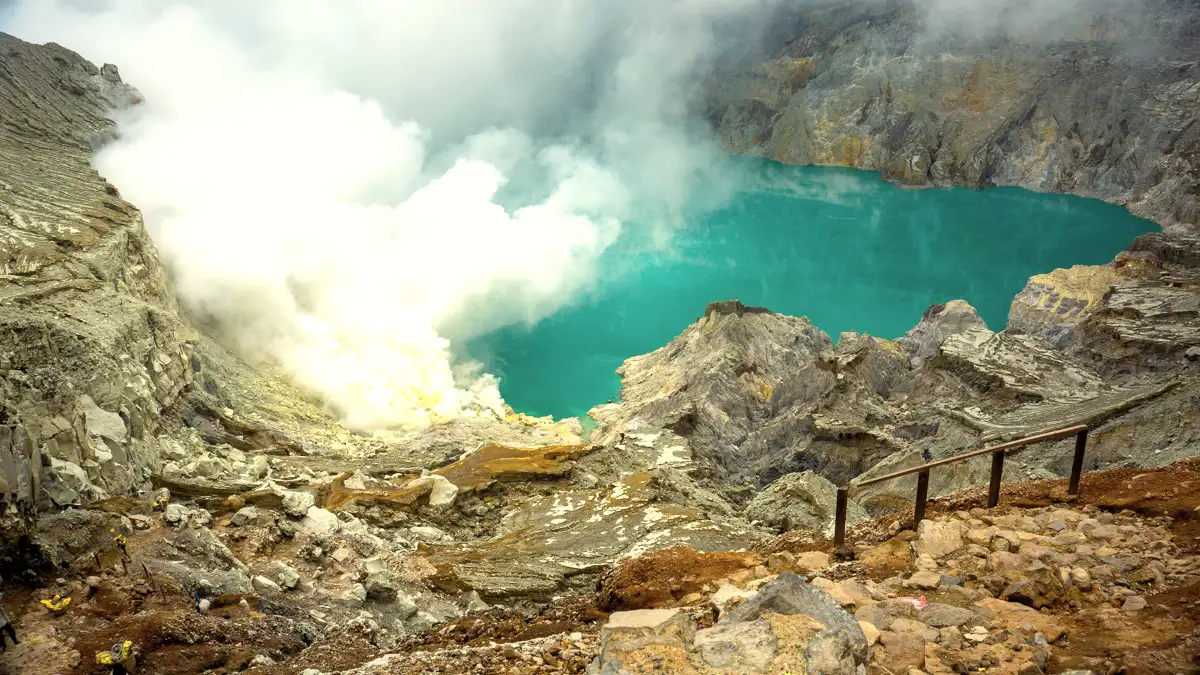
The Kawah Ijen crater is an active geological site. The Ijen complex is monitored constantly by Indonesian authorities. If the gas concentration is too high, the descent into the crater is prohibited for safety. Always listen to your Mount Ijen guide. They are trained to read the wind and the gas clouds to keep you out of harm’s way.
Capturing the Moment
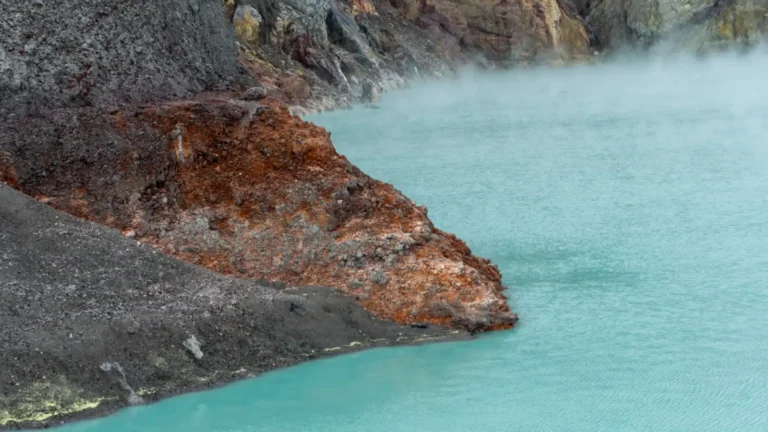
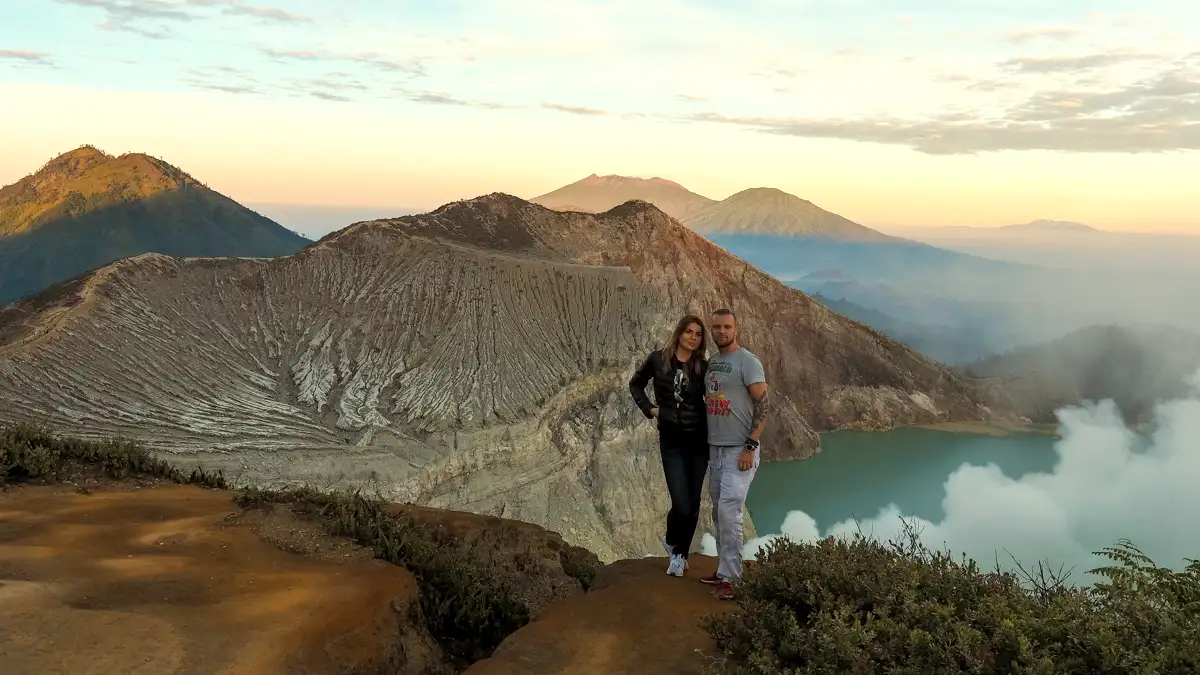
Photography enthusiasts need to prepare for low-light conditions. A tripod is essential, but remember that the wind at the crater rim is fierce. Protecting your camera from sulfur dust is also a priority. If the blue flame is elusive, the sulfur lake at sunrise is an equally breathtaking alternative. The turquoise water against the white crater walls is a sight you won’t forget.
Logistics: The Bali to Java Crossing
Leaving Bali at midnight sounds daunting, but it is the standard for a 1-day volcano tour Bali. The drive from Southern Bali to Gilimanuk harbor takes roughly 3.5 to 4 hours. The roads are mostly quiet at this hour, but you will share the path with large logistics trucks. It is a gritty, real look at Indonesian infrastructure.
The ferry ride is a brief 30-minute crossing. You can sit on the upper deck and watch the lights of Java grow closer. Once you land in Ketapang, it is another hour-long drive through coffee plantations and jungle to reach the Paltuding basecamp. This is where your midnight hike officially begins. The air turns sharp and cold almost instantly.
If you are looking for the most efficient way to see Java, consider our specialized Ijen Crater Tour. Many travelers also choose to combine this with a Mount Bromo tour for a complete volcanic experience. For those with more time, the Bromo Ijen Tour is our most popular multi-day route. Explore the full beauty of the region with an East Java Tour package today.
Ferry Operations
The ferries run 24 hours a day. However, they don’t operate on a strict minute-by-minute schedule. They leave when full or at specific intervals. Our Best price Ijen crater tour from Bali includes pre-arranged tickets to minimize waiting time. If you travel independently, be prepared for some chaotic queuing at the harbor. Having a driver who knows the shortcuts can save you an hour of standing in the dark.
The Climb: What the Trail is Really Like
The trail is roughly 3 kilometers (1.8 miles) long. The first two-thirds are quite steep, with loose volcanic sand that makes your feet slip slightly with every step. You will hear the rhythmic squeak of the ijen trolley taxi carts as they pass you. These carts are used by locals to transport tourists who find the climb too difficult. It is a unique local industry that provides jobs for the miners during the trekking hours.
As you reach the top, the path levels out. The wind here is the main challenge. It picks up the sulfur gas and sweeps it across the path. This is where your gas mask becomes your most valuable piece of equipment. We ensure all our guests receive a sanitized, high-quality mask. Breathing through these filters isn’t easy, but it is much better than the alternatives.
The Descent Into the Crater
To see the blue flame up close, you must climb down 800 meters into the crater itself. This part of the trail is rocky and uneven. You will be sharing the narrow path with ijen sulfur miners carrying 70kg–90kg of yellow crystals on their shoulders. Always give them the right of way. Their strength is superhuman, and their resilience is the heart of Ijen’s story.
Cost Breakdown: Budget vs Luxury
When searching for the Best price Ijen crater tour from Bali, you will see a wide range of prices. A budget backpacker tour usually involves a shared van and basic amenities. This is great for solo travelers who want to meet people. However, these tours often have fixed schedules that might not align with the best viewing times for the blue flame.
Luxury options focus on privacy and comfort. You get a private SUV with plenty of legroom, which is crucial for the long drive back to Bali when you are exhausted. These tours often include a sit-down breakfast at a local warung or resort rather than a simple boxed lunch. The Ijen entrance fee is higher for foreigners than locals, so ensure your quote includes all taxes and permits.
What is Included?
A “best price” should ideally include: private or shared transport, ferry tickets, Mount Ijen guide, gas mask, headlamp, and drinking water. Some cheap tours omit the gas mask or the ferry fee to make the headline price look lower. Always read the fine print. We pride ourselves on all-inclusive pricing so there are no surprises at 2 AM.
Common Mistakes to Avoid
The most common mistake is underestimating the cold. Bali is tropical; Ijen is alpine. We see tourists arriving in flip-flops and tank tops every single night. They end up shivering and miserable before they even reach the halfway point. Wear proper hiking shoes and bring a warm jacket. If you don’t have one, you can usually rent a jacket at the basecamp for a few dollars.
Another error is forgetting to check the Kawah Ijen crater status. The mountain closes periodically for volcanic activity or during holidays. Booking a tour without a cancellation policy or a “backup plan” can result in a wasted trip. We always have real-time updates and will communicate any changes to your Java volcano adventure immediately.
Ignoring the Miners
The sulfur miners are the backbone of this mountain. Many tourists treat them like photo props without acknowledging the difficulty of their work. If you take a photo, it is polite to offer a small tip or buy a small sulfur carving from them. It goes a long way in supporting the local economy. Also, stay out of their path—they cannot stop easily with 80kg of weight on their backs.
Continue Your Adventure
- Book Your Trip Now – Secure your departure with the most trusted local team in East Java.
- Ijen Tour from Pemuteran – The shortest route from Bali, perfect for those staying in the northwest.
- Ijen Tour from Canggu – Convenient door-to-door service from Bali’s most popular hub.
- Ijen Tour from Ubud – Escape the jungle for a night and witness the volcanic sunrise.
- Ijen Tour from Seminyak – Premium transport options for a comfortable midnight departure.
- 3-Day Bromo & Ijen Tour – The ultimate East Java bucket list journey starting from Bali.
Ready for the Ultimate Java Trek?
Our team is waiting to show you the magic of Ijen Crater. Don’t leave your adventure to chance.
Frequently Asked Questions
A: Most people stop at the first viewpoint on the crater rim. If you continue walking for another 15 minutes toward the ‘sunken’ side of the rim, the crowds thin out significantly and the perspective of the sulfur lake is much better.Q: How bad is the dust?
A: During the dry season, the dust is very fine and can get into your eyes and lungs. Wearing a buff or a face mask even when the sulfur gas isn’t present is a good idea. Contact lens wearers should consider switching to glasses for the hike.
Q: Can elderly travelers handle the stairs?
A: There aren’t many “stairs” in the traditional sense, but the steep incline is challenging. For elderly travelers or those with knee issues, we highly recommend the ‘trolley taxi’ service. It is a safe and reliable way to reach the rim without physical strain.
Q: Is the water in the crater lake safe to touch?
A: Absolutely not. The lake is one of the most acidic in the world (pH near 0). It will dissolve metal and cause severe chemical burns on skin. Stay behind the safety barriers at all times.
Q: What happens if the weather is bad?
A: If the fog is too thick or the wind is blowing the gas directly onto the trail, the rangers may close the descent. In these cases, we focus on the rim walk and the forest views. Safety always comes before the photo.