Tumpak Sewu Waterfall Tour: The Ultimate Guide
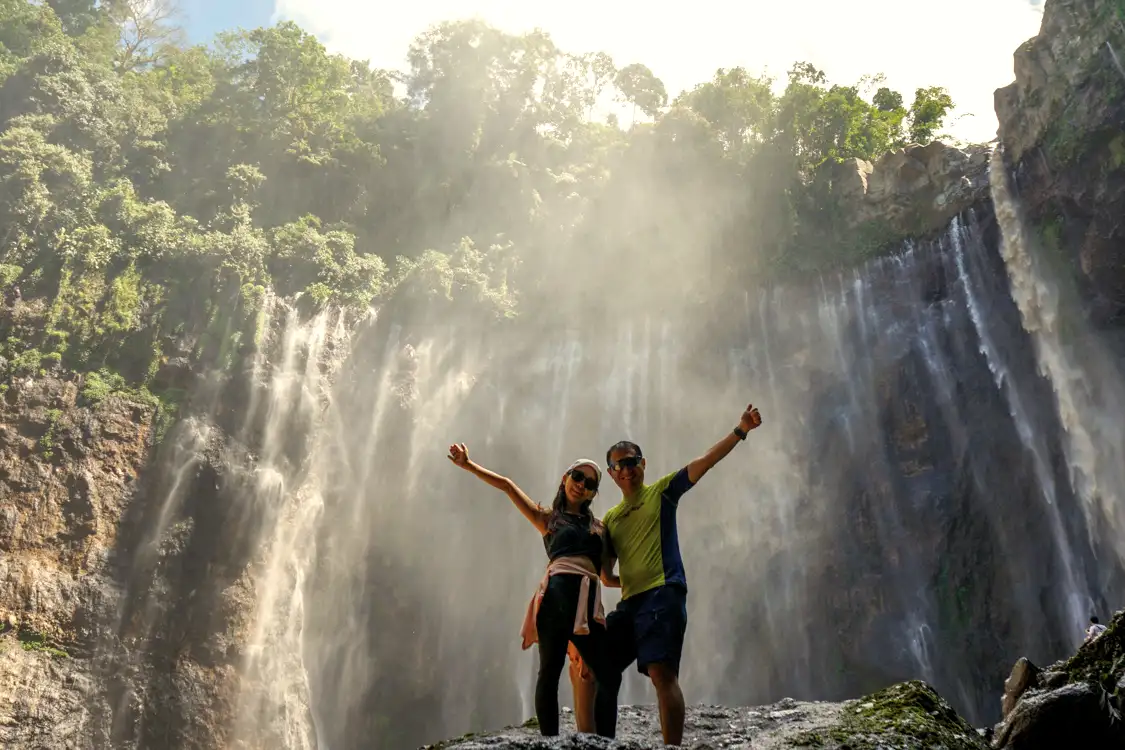
The roar of a thousand falls hits you before the mist does. Standing on the edge of the Pronojiwo cliff, you realize photos lied. They couldn’t capture the scale of this prehistoric curtain of water.
Planning a East Java tour usually starts with volcanoes. Most travelers focus on Bromo or Ijen. Yet, skipping this cathedral of water is a massive mistake.
Getting here isn’t a walk in the park. You face long drives and shaky bamboo ladders. Ready to see the real Indonesia? Book your adventure now and let’s dive into the mist.
What You Need to Know
Location: Sidomulyo Village, Pronojiwo, East Java. The trek to the bottom takes 30-45 minutes. Expect slippery rocks and vertical ladders.
Entry fees are minimal, usually around 20,000 IDR. You need sturdy water shoes, not flip-flops. Local rangers monitor the water flow daily for safety.
Flash floods are a real risk during the rainy season. Always check with a local guide before descending. The panoramic viewpoint is open even when the canyon floor is restricted.
Why Trust This Guide
We don’t just write about East Java. We live it. Our teams are on the ground in Lumajang and Malang every single week.
We’ve seen the ladders change from wood to bamboo to metal. We know which warung serves the best coffee at 5 AM. Our safety protocols are updated based on actual river levels.
Local knowledge isn’t a buzzword for us. It’s the difference between a great trip and a dangerous one. We prioritize your experience over generic tourist traps.
Real-Time Field Expertise
Weather in the Pronojiwo district changes fast. A sunny morning in Malang doesn’t guarantee a clear sky at the falls. We track the volcanic activity of Mount Semeru constantly.
Rangers communicate with us directly about trail conditions. If the path is too muddy, we know first. This ensures you never waste a 4-hour drive for a closed gate.
The Journey to Lumajang
Most travelers start their trip in Malang. It’s a winding, three-hour drive through lush highlands. The roads are narrow and filled with colorful vegetable trucks.
Luxury travelers often opt for a private driver. Backpackers might try the local buses, but they are slow. Expect a bit of motion sickness if you aren’t used to mountain bends.
The scenery is a distraction from the bumpy ride. You pass through small hamlets where cloves dry on the roadside. The scent is intoxicating and uniquely Indonesian.
Malang vs. Surabaya Departures
Surabaya is the major hub, but it’s further away. Starting from Surabaya adds about two hours to your journey. We recommend staying in Malang for a smoother morning.
Arriving at the village of Sidomulyo is like entering another world. The air is cooler here. You can see the peak of Semeru smoking in the distance on clear days.
Parking is simple, and the walk to the entrance is short. Local kids will offer to be your “guide.” While the path is marked, having a local helps with the tricky steps.
Best Time to Beat the Crowds
Sunrise is the gold standard for a reason. By 9 AM, the tour buses from Malang arrive. The viewpoint gets cramped with people fighting for the perfect “Instagram” angle.
Aim to be at the gate by 6:30 AM. The light hitting the mist creates rainbows you won’t see later. Plus, the temperature is much more manageable for the climb back up.
The Panoramic Viewpoint
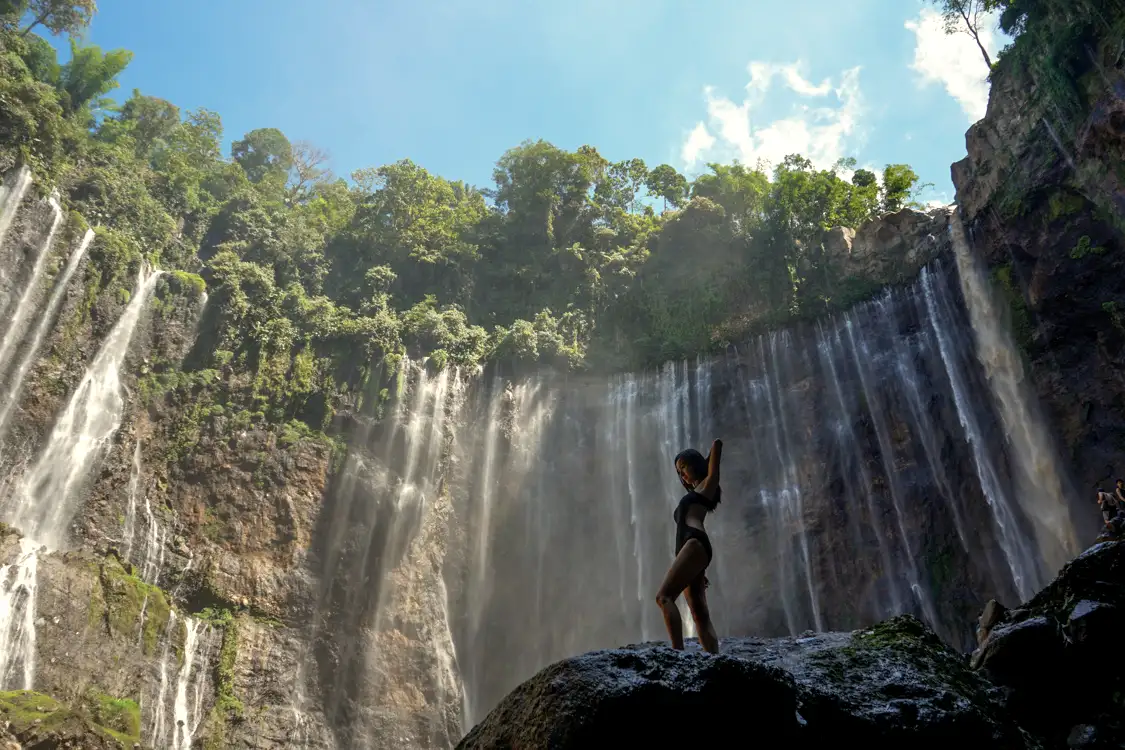
The first view of Tumpak Sewu is the one you see on postcards. A semi-circle of dozens of waterfalls plunging into a deep green canyon. It looks like a scene from Jurassic Park.
A man-made balcony offers a safe spot to view this spectacle. On a clear day, the towering Mount Semeru volcano sits perfectly behind the falls. It’s an overwhelming sight.
Don’t just snap a photo and leave. Take ten minutes to just listen. The sound is a constant, low-frequency hum that vibrates in your chest.
Visual Dynamics of the Falls
The water doesn’t just fall; it dances. Different streams have different velocities. Some are powerful jets, while others are delicate bridal veils clinging to the mossy rocks.
Vegetation clings to every inch of the cliff face. It’s a vertical jungle. The contrast between the white water and the deep emerald moss is a dream for any photographer.
Clouds often roll into the canyon, temporarily hiding the base. This creates a sense of mystery. You realize you aren’t just looking at a waterfall; you’re looking at a living ecosystem.
Descending the Abyss
Viewing from the top is easy. Going to the bottom is a different story entirely. You descend via a series of bamboo and metal ladders built into the side of the cliff.
Water flows over these paths constantly. It’s slippery, muddy, and requires total focus. Your hands will get dirty, and your shoes will get soaked.
This isn’t for the faint of heart or those with bad knees. You’ll be sharing the narrow path with others coming up. Patience is key when navigating the “one-way” sections.
Safety on the Ladders
Test each step before committing your weight. The bamboo is sturdy, but moss makes it ice-slick. Use both hands on the railings at all times.
We see many people trying this in flip-flops. Please, don’t be that person. You need grip and protection for your toes against the sharp volcanic rocks.
Local porters and guides move through here with ease. Watching them carry heavy gear while wearing simple sandals is humbling. They know every foothold by heart.
Entering the Canyon Floor
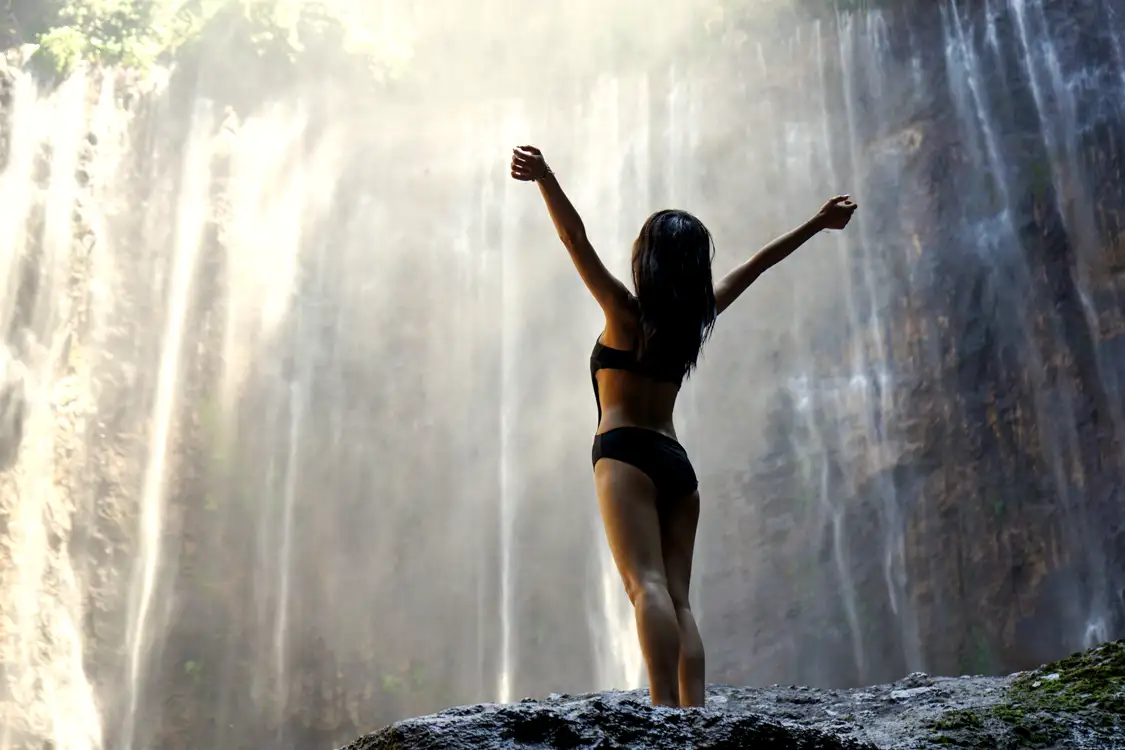
Once you reach the bottom, the perspective shifts. You are now looking up at 120 meters of falling water. The wind generated by the falls creates a localized rainstorm.
The canyon is cool and damp. Giant ferns tower over your head. You have to cross several small streams to get to the best vantage points near the base.
The ground is a mix of sand and river stones. Be careful where you step, as some pools are deeper than they look. The power of the water is palpable here.
Photography Secrets
Water and electronics don’t mix well at Tumpak Sewu. The spray is constant and aggressive. You need a waterproof bag for your camera and plenty of lens wipes.
If you use a drone, be extremely careful. The wind currents inside the canyon are unpredictable. Many drones have met their end in these mist clouds.
For the best shots, use a wide-angle lens. You need to capture the scale from the viewpoint. A tripod is essential for those silky water effects, but keep it light.
Mastering the Mist
Standing too close to the main fall will soak your lens in seconds. Position yourself slightly further back near the “Goa Tetes” junction. This gives you a clear shot with less spray.
Golden hour doesn’t really exist inside the canyon. The deep walls block the low sun. Instead, aim for overcast days for even lighting across the falls.
Don’t forget the small details. The way the water droplets hang on the ferns is beautiful. Macro shots of the volcanic textures can be just as compelling as the wide views.
Continue Your Adventure
Your journey doesn’t have to end at the waterfall. Most of our guests find that booking a customized tour is the best way to link these sights. You could easily transition into a 4-day East Java trek that includes volcanoes and more falls. If you’re short on time, a Mount Bromo tour from Malang is the perfect next step. For the truly adventurous, head east for a Ijen Crater tour to see the legendary blue flames.
Experience the Magic Today
Tumpak Sewu is more than a destination; it’s a physical challenge that rewards you with nature’s raw power. Whether you are a backpacker or looking for a luxury escape, this place leaves a mark.
Don’t leave your logistics to chance. Let our local experts handle the driving, the safety, and the timing. We ensure you see the falls at their absolute best.
Frequently Asked Questions (FAQ)
Q: Is the trek to the bottom safe for children?
A: It is generally not recommended for children under 10. The ladders are steep and can be slippery even for adults with good balance.
Q: How bad is the spray at the bottom?
A: It’s essentially a constant rainstorm. Your clothes will be completely soaked within minutes of arriving at the canyon floor.
Q: Which viewpoint is the least crowded?
A: The main panoramic viewpoint is the most popular. However, the smaller viewing platforms near the Goa Tetes entrance offer a quieter experience.
Q: Do I really need a guide for Tumpak Sewu?
A: While the path is marked, a guide is highly recommended for safety on the ladders and for crossing the river at the bottom.
Q: Can I fly a drone at Tumpak Sewu?
A: Yes, but be cautious. The wind currents in the canyon are strong and the mist can interfere with the drone’s sensors.