Ijen Crater Lake Acidity: Why Is the Water So Acidic?
Key Takeaways:
- The lake pH is roughly equivalent to car battery acid.
- Magmatic gases react with lake water to form strong mineral acids.
- The stunning turquoise color comes from dissolved metals like aluminum and iron.
- Visitors must wear gas masks due to the high concentration of toxic fumes.
About This Guide: Written by our Banyuwangi-based local operational team with first-hand field experience across East Java, including current trail conditions, departure timing, weather shifts, and real visitor logistics.
Table of Contents
What Is Ijen Crater Lake?
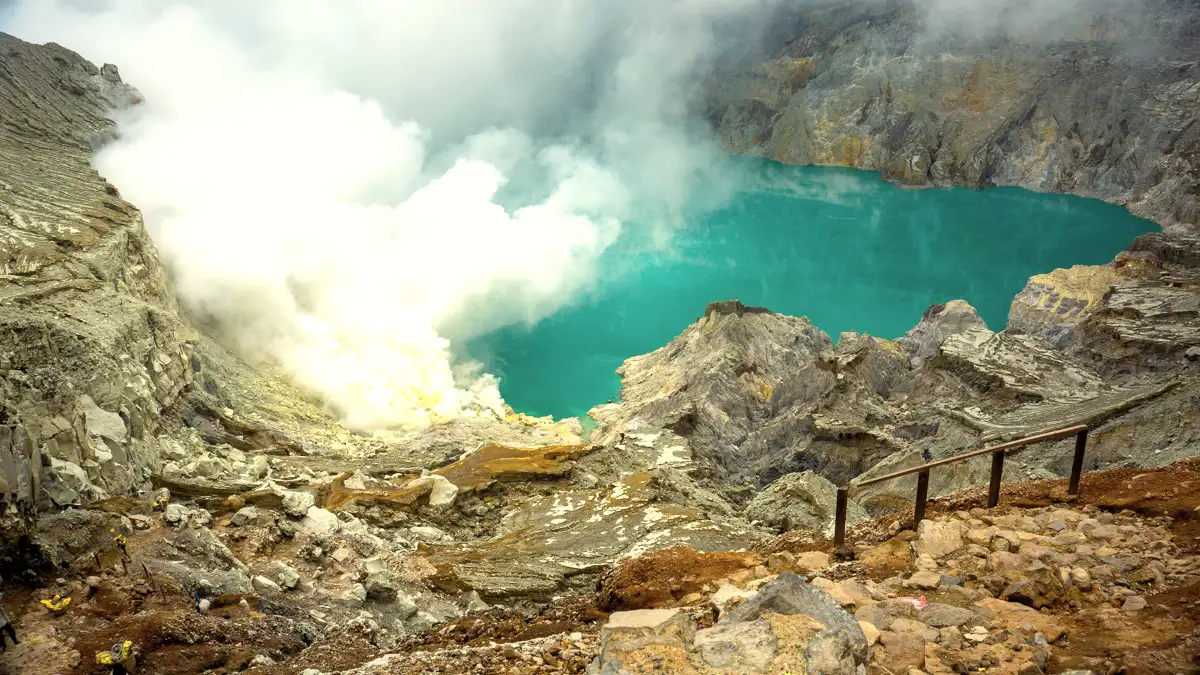
Kawah Ijen is more than just a scenic vista. It’s a massive natural chemical vat. Located at the summit of the Ijen Volcanic Complex in East Java, the lake sits at an elevation of 2,386 meters. It spans approximately 700 meters by 600 meters, making it a gargantuan reservoir of liquid acid.
Truth is, most lakes are fed by rainwater and are relatively neutral. Ijen is different. It is a volcanic lake where the plumbing of the earth’s crust connects directly to the water body. This guide explains why this specific geological setup results in water that can eat through a tin can in minutes. If you are planning a trip, understanding the nature of the Ijen Crater lake is vital for your safety.
The Science of Acidic Water
The acidity of Ijen isn’t a mystery; it’s pure chemistry. The volcano is constantly breathing. Underneath the lake floor, magma releases high-temperature gases. These gases don’t just vanish into the air; they bubble up through the lake water. This process is known as “scrubbing.”
Hydrothermal Plumbing
Think of the lake as a lid on a boiling pot. The “pot” is a hydrothermal system where groundwater meets volcanic heat. As the gases pass through the water, they undergo a chemical transformation. This is the core reason why Ijen has the world’s most acidic crater lake.
The water temperature at the surface stays between 20°C and 40°C, but deeper down, it’s much hotter. This heat accelerates the chemical reactions, ensuring the acidity stays at peak levels regardless of how much it rains. It’s a self-sustaining cycle of corrosion.
The Role of Volcanic Gases
Two primary gases are the culprits here: sulfur dioxide (SO2) and hydrogen chloride (HCl). When these gases dissolve in the lake water, they react with oxygen and water molecules to form sulfuric acid and hydrochloric acid.
Sulfuric Acid Formation
Sulfur is everywhere at Ijen. You’ll see it in the bright yellow deposits where miners work and in the blue fire that glows at night. When sulfur dioxide meets the lake water, it creates H2SO4—sulfuric acid. This is one of the strongest acids known to man and is the same stuff found in heavy-duty drain cleaners.
The presence of sulfur miners at Ijen is a testament to the sheer volume of sulfur moving through this system. The gas doesn’t just form the lake’s acid; it solidifies into the rock they carry every day. It’s a harsh, unforgiving environment.
Visual Clues: Colors and Metals
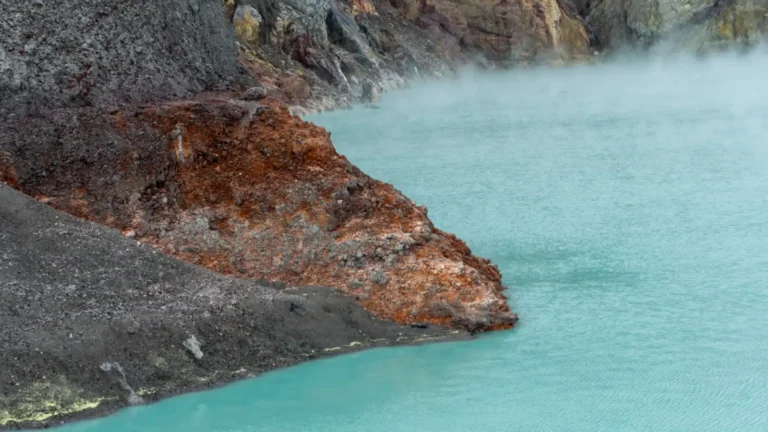
The turquoise color is beautiful, but it’s a warning sign. The acid is so strong that it leaches metals out of the surrounding volcanic rock. Aluminum, iron, and magnesium are dissolved into the water in high concentrations.
Why is it Turquoise?
The specific blue-green hue is primarily due to the high concentration of dissolved aluminum and silica. These particles scatter sunlight in a specific way. If the lake turns grey or dark green, it often indicates a change in volcanic activity or gas composition. You can learn more about the depth and size of Ijen lake to understand how much water is actually holding this chemical mix.
Look, the beauty is deceptive. Standing at the rim, you are looking at nearly 36 million cubic meters of acid. It is an impressive sight, but one that requires respect and proper preparation.
Practical Information
Visiting a site this chemically active isn’t like a walk in the park. You need to be aware of the logistics and the rules set by the BBKSDA (Natural Resources Conservation Agency).
- Location: Banyuwangi / Bondowoso border, East Java.
- Basecamp: Paltuding (1,850m elevation).
- Hike Difficulty: Moderate to Hard (steep incline).
- Mandatory: Health Certificate (Surat Keterangan Sehat) is required for entry.
- Safety Gear: A professional gas mask with twin filters is non-negotiable.
Acidity Comparison Table
| Substance | Typical pH | Comparison to Ijen |
|---|---|---|
| Pure Water | 7.0 | Neutral (Safe) |
| Lemon Juice | 2.0 | Much weaker |
| Battery Acid | 0.5 – 1.0 | Very Similar |
| Ijen Crater Lake | < 0.5 | Stronger/Equal |
Local Tips You Should Know
Here’s the deal: most people focus on the Blue Fire, but the acidity is what dictates your safety. On windy days, the acidic gas clouds can shift suddenly. If the wind blows the “smoke” toward the path, don’t try to be a hero. Put your mask on immediately.
Another thing travelers miss? Your clothes. The microscopic acid droplets in the steam can eventually eat tiny holes in delicate fabrics over time. Don’t wear your most expensive designer jacket to the crater floor. Use practical clothing for Ijen that can handle a bit of rough treatment and the smell of sulfur.
Lastly, get your health certificate in Banyuwangi before heading to Paltuding. There are clinics near the town center that issue these quickly. Without it, you might be denied entry at the gate. This is a strict safety regulation at Ijen that we always emphasize to our guests.
Frequently Asked Questions
Q: Can I swim in Ijen Crater Lake?
A: Absolutely not. The water has a pH below 0.5, which is highly corrosive. It would cause severe chemical burns to your skin, eyes, and respiratory system almost instantly.
Q: Is the smell of the lake dangerous?
A: Yes, the “smell” is actually sulfur dioxide and other gases. In high concentrations, these can cause respiratory distress. That is why a professional gas mask is mandatory for anyone descending into the crater.
Q: Why is the lake so cold if it’s a volcano?
A: The surface is actually cool (20°C-40°C) because of its high altitude and interaction with the air. However, the water just a few meters down is significantly hotter due to the hydrothermal vents.
Q: Does the acidity change during the rainy season?
A: Heavy rain can slightly dilute the surface acidity, but the massive volume of the lake and the constant influx of magmatic gases keep the overall pH extremely low year-round.
Q: Will the acid damage my camera?
A: Prolonged exposure to the acidic steam can corrode metal parts and lens coatings. It is best to keep your camera in a bag when not shooting and wipe it down with a damp cloth after your hike.
Recommended Tour Packages
- Ijen Crater Tour (Standard): The classic midnight hike to see the Blue Fire and the acidic lake.
- Ijen Crater Tour from Bali: A seamless day trip from the Island of Gods including ferry transfers.
- Banyuwangi 1-Day Ijen Tour: The most efficient way to see the crater if you are already in East Java.
- Ijen Tour from Surabaya (2D1N): A comfortable pace for those flying into Surabaya’s Juanda Airport.
- Mount Bromo & Ijen Crater Tour: The ultimate volcano duo for adventurers visiting East Java.
Final Takeaway
The Ijen Crater lake is a geological anomaly that reminds us of the earth’s raw power. Its acidity isn’t just a fun fact; it’s a living chemical process driven by magma and volcanic gas. While it is one of the most beautiful places on the planet, it is also one of the most hostile. Proper gear, a local guide, and a healthy respect for the fumes will ensure your trip is memorable for the right reasons. Honestly, standing on that rim as the sun comes up over the turquoise water is an experience you won’t find anywhere else on Earth.
Planning Your Trip to East Java?
Explore our local tour options and choose a route that matches your travel schedule.