
What Makes Ijen Crater Different From Other Indonesian Volcanoes?
Key Takeaways:
- Exclusive “Blue Fire” visible only in total darkness.
- The world’s most acidic volcanic lake (pH < 0.5).
- Active traditional sulfur mining operations on the crater floor.
- Distinctively different landscape compared to Bromo’s “Sea of Sand.”
About This Guide: Written by our Banyuwangi-based local operational team with first-hand field experience across East Java, including current trail conditions, departure timing, weather shifts, and real visitor logistics.
Table of Contents
What Is Ijen Crater?
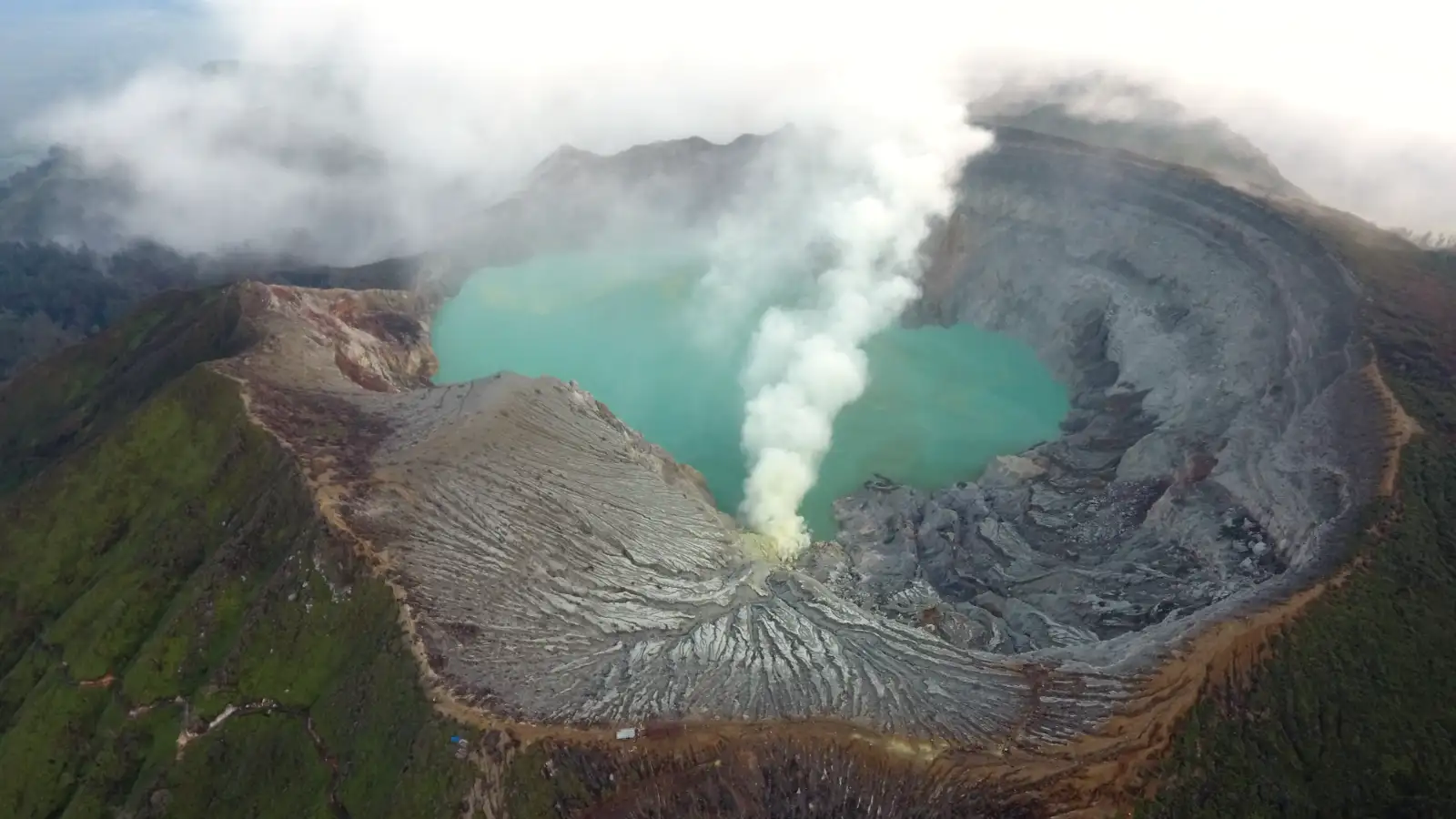
Indonesia sits on the Ring of Fire. We have hundreds of volcanoes, but Ijen is a different beast entirely. Located on the eastern edge of Java, right across from Bali, this Ijen volcanic complex is a massive caldera that looks like another planet. While most people visit volcanoes for the sunrise views, Ijen draws people for what happens inside the crater itself.
The climb starts at Paltuding. It’s a steep, dusty 3-kilometer hike that tests your calves. But once you reach the 2,386-meter summit, the world changes. You aren’t just looking at a mountain; you’re staring into a giant chemical factory run by nature. It’s raw. It’s acrid. It’s beautiful.
The Features That Set Ijen Apart
Why do travelers leave the comfort of Bali resorts to freeze on a mountain at 2:00 AM? Here’s the deal: most Indonesian volcanoes offer “more of the same”—ash, gray rock, and impressive craters. Ijen offers colors that shouldn’t exist in nature. Truth is, you won’t find this specific combination of geological features anywhere else in the archipelago.
The Only “Blue Fire” in Southeast Asia
The headline act is the blue fire. This isn’t lava. It’s high-pressure sulfuric gas escaping from cracks in the volcano. When this gas hits the oxygen-rich air at temperatures above 600°C, it ignites into electric blue flames. You can only see it in the pitch black of night, which is why Ijen Crater tours begin shortly after midnight. Watching these neon flickers dance against the dark rock is a surreal experience that feels like science fiction.
The World’s Most Acidic Turquoise Lake
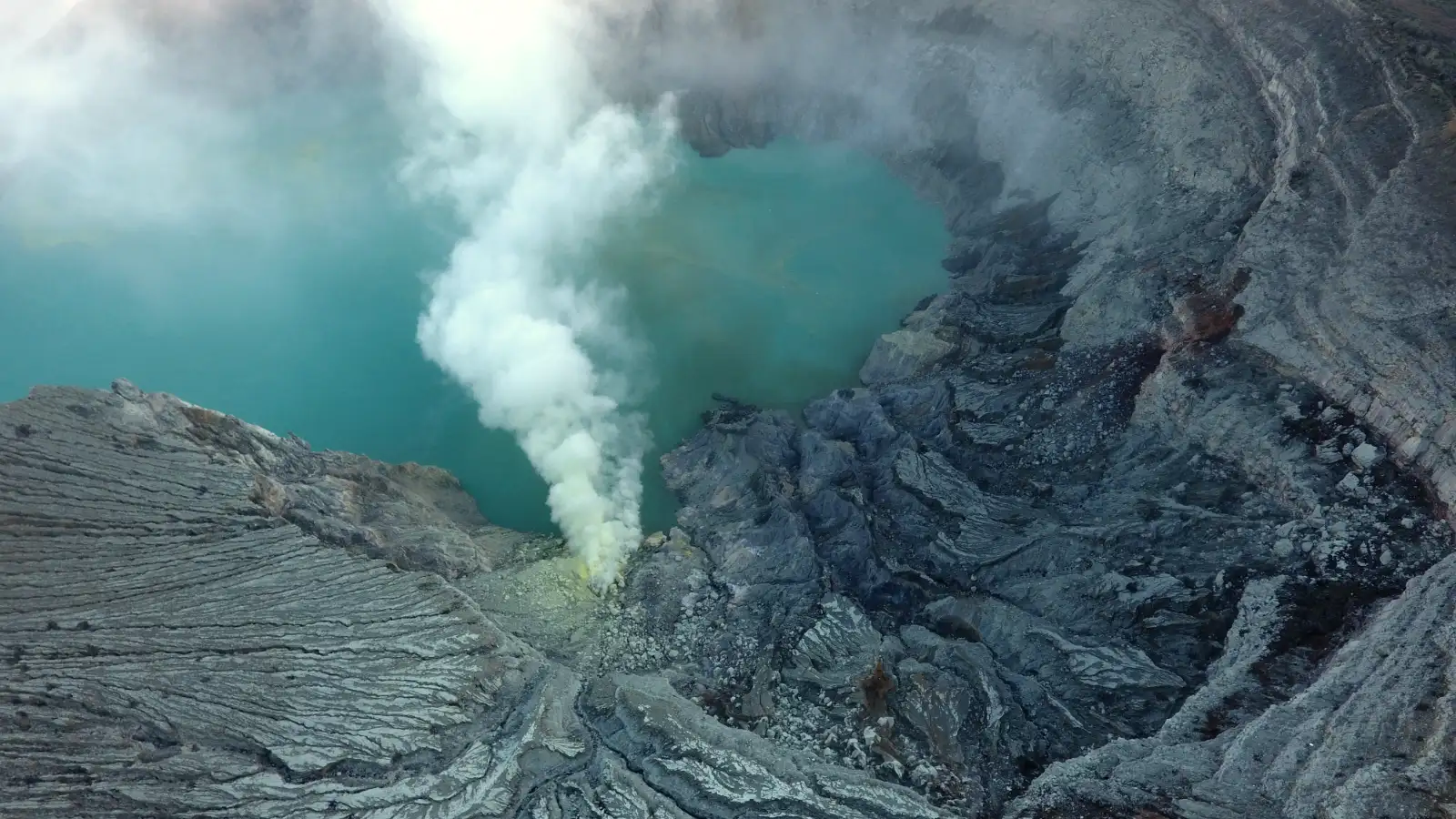
When the sun finally hits the crater, the blue fire fades, and a massive turquoise lake appears. It looks inviting, like a tropical lagoon. Don’t be fooled. This water is more acidic than battery acid. With a pH of less than 0.5, it’s a concentrated mix of sulfuric and hydrochloric acid. This is a geological anomaly that makes Ijen fundamentally different from the freshwater lakes you find in other Indonesian volcanic calderas.
A Chemical Masterpiece
The lake’s striking color comes from the high concentration of dissolved metals. According to official geological data, the interaction between the volcanic gases and the water creates this unique hue. It’s a beautiful, deadly mirror that reflects the rugged crater walls. If you ask me, the contrast between the yellow sulfur vents and the turquoise water is the best photo op in East Java.
The Human Element: Sulfur Mining
Most volcanoes are tourist sites or restricted zones. Ijen is a workplace. Ijen sulfur miners descend into the crater daily. They collect heavy slabs of bright yellow sulfur and carry them in bamboo baskets. We’re talking 70 to 90 kilograms per load. Seeing them navigate the steep, slippery rocks in simple rubber boots while tourists struggle in high-tech hiking gear is humbling.
They are part of the landscape. They breathe in the acrid smoke, often with nothing but a wet cloth for protection. It adds a layer of human grit to the natural wonder that you just don’t get at Mount Bromo or Kelimutu. It’s a reminder of the raw reality of life in this part of Indonesia.
Ijen vs Other Indonesian Volcanoes
To understand the unique features of Ijen Crater, it helps to compare it to the “usual suspects” on the Indonesian travel circuit. Honestly, they are all great, but they offer very different vibes.
| Feature | Ijen Crater | Mount Bromo | Mt. Rinjani (Lombok) |
|---|---|---|---|
| Main Attraction | Blue Fire & Acid Lake | Sunrise & Sea of Sand | Summit Trek & Lake |
| Hike Difficulty | Moderate (2-3 hrs) | Easy (Jeep + 30 min) | Difficult (2-3 days) |
| Landscape | Turquoise & Yellow | Gray Ash & Fog | Green Alpine & Blue |
| Smell | Strong Sulfur (Sharp) | Mild Volcanic Gas | Fresh Mountain Air |
Practical Information
Planning a trip? Here is the logistical reality of visiting Ijen. Hiking Ijen isn’t a casual stroll. You need to be prepared for the elements.
- Location: Banyuwangi, East Java.
- Opening Hours: The trail typically opens at 02:00 AM (WIB).
- Required Docs: You MUST have a health certificate (Surat Keterangan Sehat) from a local clinic.
- Temperature: It can drop to 3°C at the summit. Wear layers.
- Essential Gear: A high-quality gas mask is non-negotiable. The sulfur fumes are no joke.
Keep in mind the time difference. Java is 1 hour behind Bali. If your Bromo Ijen tour starts from Bali, you’ll be crossing the ferry at Gilimanuk and gaining an hour. Don’t let the clock mess up your midnight hike!
Local Tips You Should Know
Look, the “Blue Fire” isn’t always a massive bonfire. Sometimes it’s small flickers depending on the gas pressure. Don’t go in with unrealistic Instagram expectations. Go for the atmosphere. Also, if you’re struggling with the hike, there are “trolley taxis.” These are local miners who will push/pull you up the hill in a cart for a fee. It’s an honest way for them to earn extra, and it saves your knees.
Pro tip: Bring a headlamp. Walking up that gravel path in the dark with just a phone flashlight is a recipe for a twisted ankle. The wind at the top bites through thin hoodies—bring a proper windbreaker. And honestly, try the “Kopi Tubruk” at the basecamp warungs afterward. It’s thick, sweet, and exactly what you need after breathing sulfur for three hours.
Frequently Asked Questions
Q: Can I see the blue fire every day?
A: Usually, yes, but it depends on the weather and volcanic activity. If it’s raining heavily or the volcanic gas is too thick, the authorities may close the crater floor for safety.
Q: Is the sulfur gas dangerous?
A: In small amounts, it’s just annoying. In high concentrations, it’s toxic. This is why a professional gas mask with a proper filter is mandatory for everyone descending into the crater.
Q: How cold does it get at Ijen?
A: At 2:00 AM, the Ijen temperature can hover between 3°C and 10°C. Once the sun comes up, it warms up quickly, so dress in layers you can shed.
Q: Do I really need a guide?
A: While the path is clear, a guide is highly recommended for safety inside the crater and to handle the health certificate logistics and gas mask rentals efficiently.
Q: Can I swim in the turquoise lake?
A: Absolutely not. The water is extremely acidic and will cause severe chemical burns. It is strictly for viewing from a safe distance.
Recommended Tour Packages
-
1. Ijen Crater Tour from Bali (All-Inclusive)
The most popular way to visit Ijen. Includes ferry transfers, midnight transport, and a guide to see the Blue Fire before returning to Bali. -
2. Banyuwangi 1-Day Ijen Midnight Trek
Best for those already staying in East Java. A quick, efficient strike mission starting at midnight from your local hotel. -
3. Bromo Ijen Tumpak Sewu (3D2N)
The “Ultimate Java” route. Compare the landscapes of Bromo and Ijen back-to-back, plus the most famous waterfall in Indonesia. -
4. Ijen Crater Tour from Surabaya (2D1N)
A comfortable overnight option for travelers landing in Surabaya who want a dedicated volcano experience. -
5. Bromo Ijen Tour from Yogyakarta (3D2N)
The perfect transition for travelers moving from Central Java to Bali, hitting the best volcanic peaks along the way.
Final Takeaway
Ijen isn’t just another volcano on your “to-do” list. It’s an experience that hits all your senses. You’ll smell the sulfur before you see the fire. You’ll feel the freezing wind before the warmth of the sun. It is the contrast of the deadly acid lake against the hardworking miners that leaves the biggest impression. If you want a volcanic experience that is raw, colorful, and completely unique, Ijen is the place.
Planning Your Trip to East Java?
Explore our local tour options and choose a route that matches your travel schedule.
Planning to visit Ijen or Mount Bromo?
Explore available tour options and ask our local team about your itinerary.
Explore Tour Packages →