
What Can You See Along the Ijen Crater Hiking Trail?
Key Takeaways:
- Witness the rare Blue Fire inside the crater floor.
- See the world’s most acidic turquoise crater lake.
- Photograph the ghostly “Dead Forest” (Hutan Mati).
- Observe the daily life and work of Ijen sulfur miners.
About This Guide: Written by our Banyuwangi-based local operational team with first-hand field experience across East Java, including current trail conditions, departure timing, weather shifts, and real visitor logistics.
Table of Contents
What Is the Ijen Crater Trail?
The Ijen trail is a 3-kilometer path that winds up the slopes of Mount Ijen in East Java. It starts at Paltuding, the basecamp. Look, the first 1.5 kilometers are a workout. It’s a wide, dirt path, but it’s steep. To be fair, most people feel the burn in their calves within twenty minutes.
This isn’t just a walk in the park. It’s an entry into a highly active volcanic system. You are hiking through a protected conservation area managed by BBKSDA. The environment changes from thick, humid jungle to a cold, wind-swept rim where the ground turns into white volcanic ash and rock. Understanding some Ijen crater facts before you start helps you appreciate the scale of this place.
Visual Highlights of the Hike
The scenery along the Ijen crater trail is a game of two halves. Most people hike in total darkness to catch the sunrise. This means your world is reduced to the small circle of light from your headlamp. But as the sun comes up, the world literally opens up around you.
The Electric Blue Fire
If you start at 2:00 AM, you’re likely aiming for the crater floor. This is where the Blue Fire lives. Truth is, it’s not lava. It’s high-pressure sulfuric gas igniting as it hits the oxygen-rich air. It looks like something out of a sci-fi movie. You’ll see flickering blue flames dancing against the black rocks. It’s raw. It’s powerful. And yes, you definitely need a gas mask down there.
The Acidic Turquoise Lake
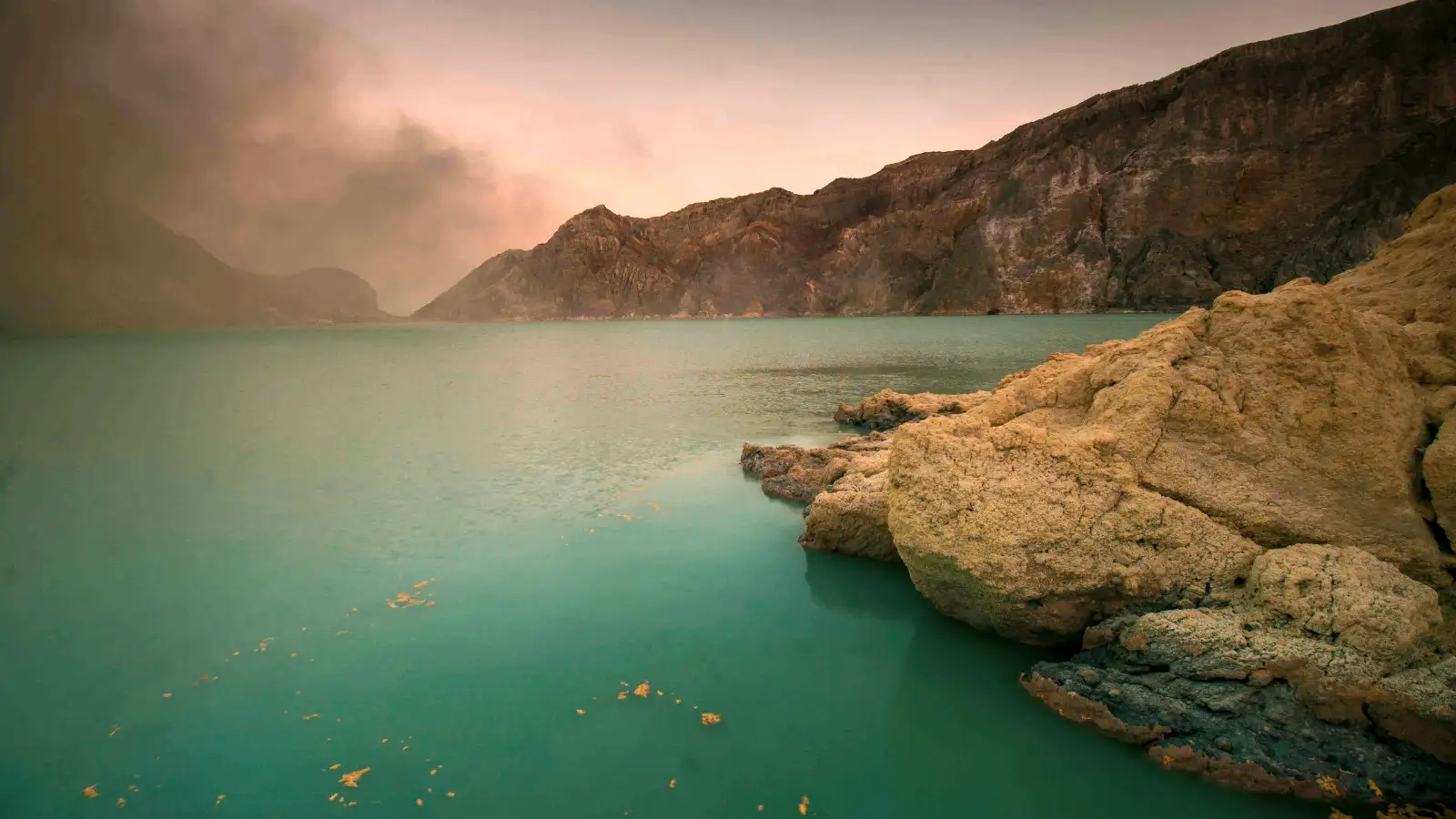
As dawn breaks, the centerpiece reveals itself. The Kawah Ijen lake. It is a stunning, milky turquoise color. Honestly, it looks inviting, but don’t touch it. The pH is below 0.5. That’s more acidic than car battery fluid. According to Wikipedia, this is the largest highly acidic crater lake in the world. The contrast between the teal water and the yellow sulfur deposits is a photographer’s dream.
The Dead Forest (Hutan Mati)
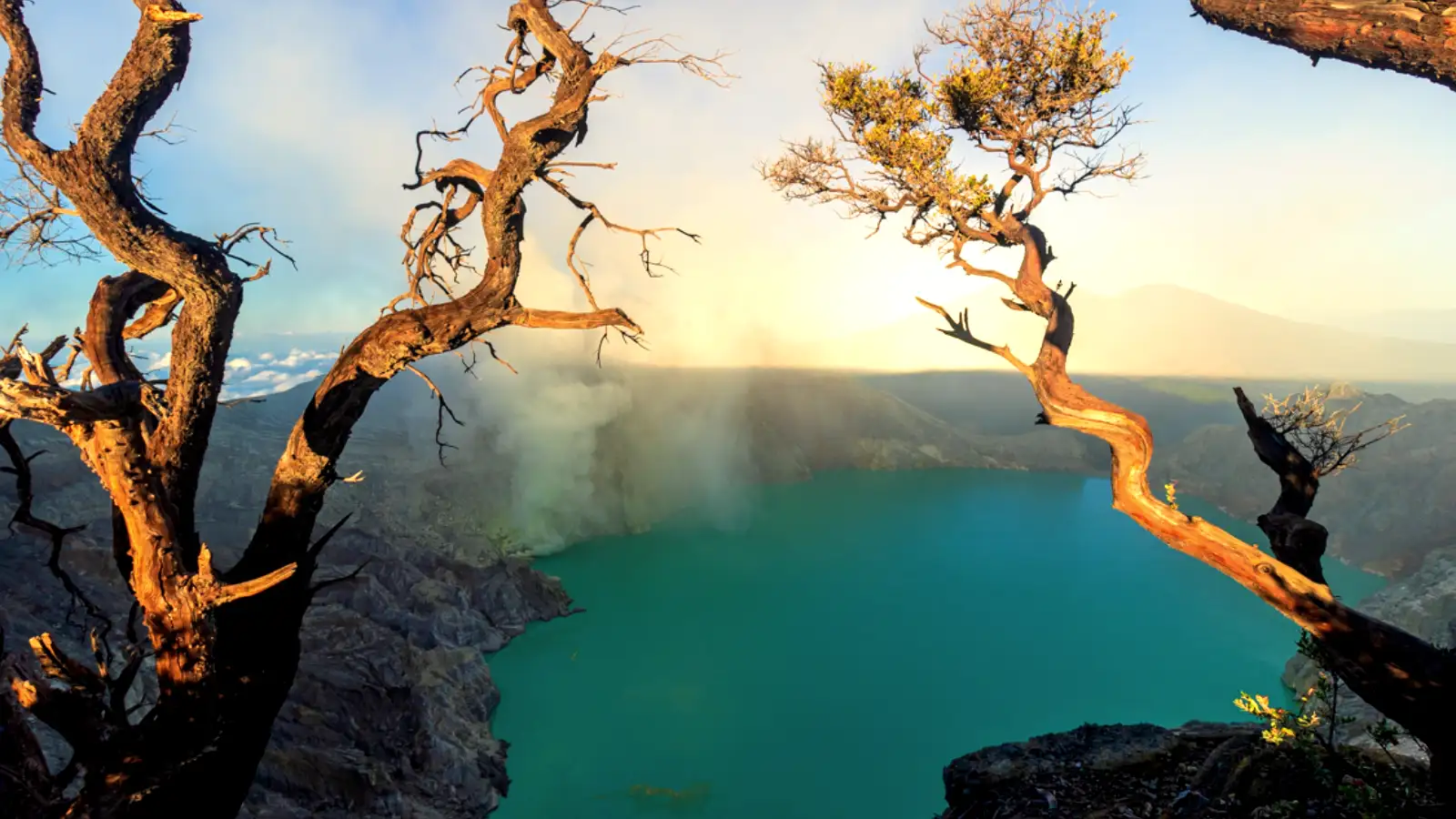
On the rim, you’ll find the Dead Tree Viewpoint. These are bleached, twisted trees killed by volcanic gases years ago. They stand like ghosts against the sunrise. It’s a stark, eerie landscape that provides a perfect foreground for photos of the crater below.
The Human Element: Sulfur Miners
One of the most humbling sights is the miners. You’ll see them balancing bamboo baskets on their shoulders. These baskets are filled with 70 to 90 kilograms of solid sulfur. They walk this trail multiple times a day. You can learn more about their daily lives in our guide to the Ijen sulfur miners. Please remember to give them the right of way on the trail.
Practical Information
Hiking Ijen requires some preparation. It’s not just about the views; it’s about surviving the Ijen crater temperature, which can drop to 3°C or 5°C before sunrise.
- Location: Border of Banyuwangi and Bondowoso, East Java.
- Opening Hours: Usually 02:00 AM (Check daily status).
- Hike Distance: 3 km one way (6 km round trip).
- Elevation: Paltuding (1,850m) to Rim (2,386m).
- Health Requirement: Mandatory medical certificate (Surat Sehat).
Trail Section Comparison
| Trail Section | Visual Highlights | Effort Level |
|---|---|---|
| Paltuding to Warung | Rainforest, dark shadows | High (Steepest) |
| Warung to Rim | Open sky, stars, ash path | Moderate (Flatter) |
| Rim to Lake Floor | Blue Fire, sulfur vents | Technical (Rocky) |
Local Tips You Should Know
Here’s the deal: if you are worried about the steep climb, there is a local “trolley taxi.” These are carts pushed by locals. It’s a bit pricey, but it’s a lifesaver for those who aren’t fit for the incline.
For the best views of the lake without the crowds, walk about 500 meters further along the rim past the main viewing point. Most people stop at the first spot. If you keep going, you’ll find quieter ledges with a better perspective of the turquoise water. If you’re coming from the island next door, an Ijen crater tour from Bali is the most popular way to see this, but be prepared for a long night of travel.
Another tip: the gas mask isn’t just a prop. When the wind shifts, the sulfur clouds are thick. They bite into your throat. Put the mask on before you smell it. Many beginners ask, how difficult is the Ijen crater hike for beginners? It’s manageable, but the sulfur is the real variable.
Safety Considerations
Safety at Ijen is all about volcanic activity and footwork. The path inside the crater is rocky and slippery. Use a headlamp, not a phone flashlight. You need your hands free. Also, check the official status before you go. Sometimes the ijen blue fire area is closed if gas levels are too high.
Common Mistakes Travelers Make
Don’t wear your best clothes. The sulfur smell sticks to everything. It can take three washes to get that “rotten egg” scent out. Also, don’t forget your medical certificate. Since recent regulations, you cannot buy a ticket at Paltuding without one. Most travelers coming on an Ijen crater tour from Banyuwangi will have their guide handle this, but double-check!
Frequently Asked Questions
Q: Can I see the Blue Fire every day?
A: Not always. It depends on volcanic activity and weather. If it rains heavily or the gas is too thick, authorities may block the path to the crater floor for safety.
Q: How cold does it get on the trail?
A: It can drop to 3°C to 8°C at night. Once you start hiking, you’ll warm up, but you’ll need a jacket while waiting for the sunrise at the top.
Q: Is the hike suitable for children?
A: Children over 7 usually handle the hike well if they are active. However, the descent into the crater is not recommended for young kids due to the steep rocks and gas fumes.
Q: Do I really need a gas mask?
A: Yes. Even if you stay on the rim, the wind can blow thick sulfur smoke your way. It is essential for anyone going down to see the Blue Fire.
Q: What time should I start the hike?
A: Most people start at 2:00 AM from Paltuding to reach the crater floor for the Blue Fire and then watch the sunrise from the rim around 5:30 AM.
Recommended Tour Packages
- Standard Ijen Crater Tour – Our classic midnight hike covering the blue fire and sunrise from Banyuwangi.
- Ijen 1-Day Tour from Bali – The best option for travelers in Bali who want a quick, intense volcano adventure.
- Mount Bromo & Ijen Crater Combo – A 3-day epic journey across East Java’s two most famous volcanic landscapes.
- Complete East Java Overland – Explore the full scenery of Java, including volcanoes, waterfalls, and local culture.
- The Big Three: Bromo, Ijen, & Tumpak Sewu – The ultimate photo-heavy itinerary starting from Surabaya.
Final Takeaway
The Ijen trail isn’t just about the destination; it’s about the raw shift in environment. You start in a forest and end up in a place that looks like another planet. Between the blue flames, the acid lake, and the sheer strength of the miners, it’s a sensory overload. Just remember to bring your layers, your mask, and a decent pair of shoes.
Planning Your Trip to East Java?
Explore our local tour options and choose a route that matches your travel schedule.
Planning to visit Ijen or Mount Bromo?
Explore available tour options and ask our local team about your itinerary.
Explore Tour Packages →