
Why Is Ijen Considered a Hydrothermal Volcano? A Local Geological Guide
Key Takeaways:
- Heat from magma interacts directly with a massive water-filled crater.
- The lake acts as a chemical condenser for magmatic gases.
- High concentrations of sulfuric and hydrochloric acids create a pH below 0.5.
- Continuous hydrothermal activity fuels the famous “Blue Fire” phenomenon.
About This Guide: Written by our Banyuwangi-based local operational team with first-hand field experience across East Java, including current trail conditions, departure timing, weather shifts, and real visitor logistics.
Table of Contents
Understanding the Hydrothermal Label
To understand Ijen, you have to look past the typical image of flowing red lava. In the geological world, “hydrothermal” literally translates to “hot water.” Ijen is a perfect example of this. It’s an active volcano where the heat from deep underground doesn’t just reach the surface as molten rock. Instead, it hitches a ride on water and gas.
Look, the entire Kawah Ijen system is like a giant, pressurized chemical kettle. The magmatic heat source sits deep below, but the surface is dominated by water. This interaction creates a unique environment where minerals are dissolved, gases are condensed, and the landscape is shaped by the power of steam and acid rather than just fire.
How the Hydrothermal System Works at Ijen
The core of Ijen’s hydrothermal identity lies in its plumbing. Magma releases gases like sulfur dioxide (SO2) and hydrogen chloride (HCl). In a “dry” volcano, these gases just drift into the atmosphere. But at Ijen, they have to pass through a massive body of water—the crater lake.
Gas-Water Interaction
When these hot magmatic gases hit the water, they don’t just disappear. They dissolve. This process turns the lake into a concentrated vat of acid. The geological history of Ijen shows that this has been happening for centuries, creating a stable but violent equilibrium between the heat below and the water above.
The Solfatara Vents
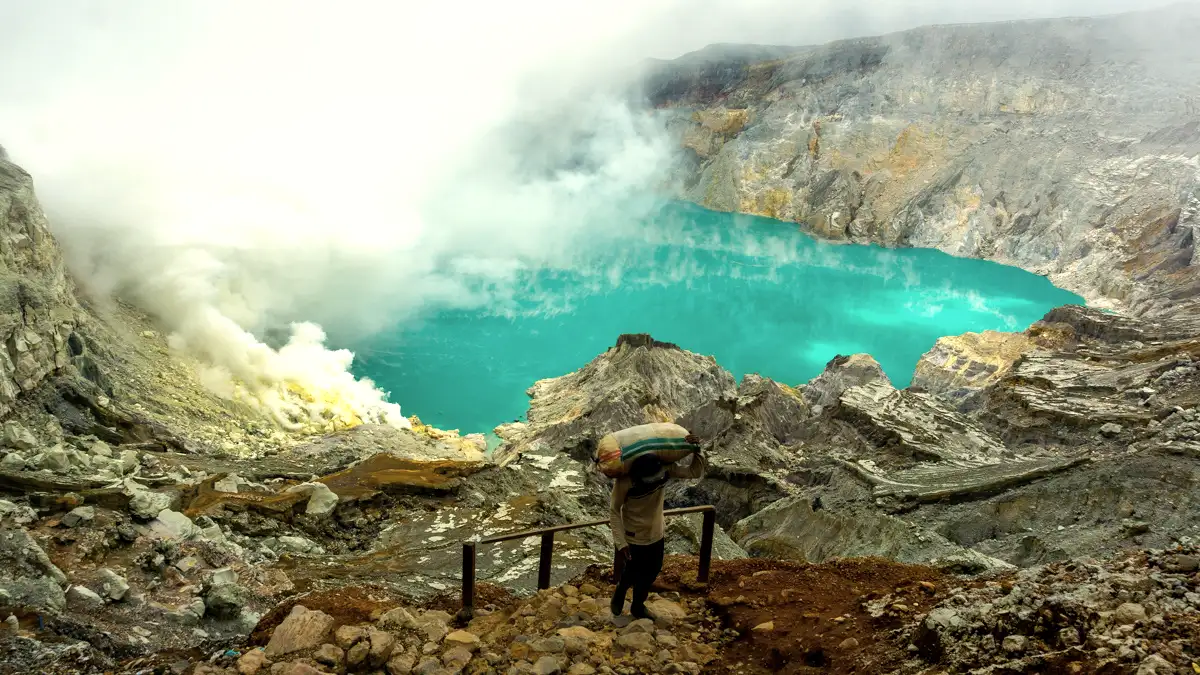
On the edge of the lake, you’ll see the solfataras—vents that hiss with high-pressure steam and gas. These vents are the “exhaust pipes” of the hydrothermal system. The gas is so hot (often over 600°C) that the sulfur ignites upon contact with air, creating the electric Blue Fire. This is a purely hydrothermal signature; you won’t find this in a standard magmatic eruption.
The Role of the Acidic Crater Lake
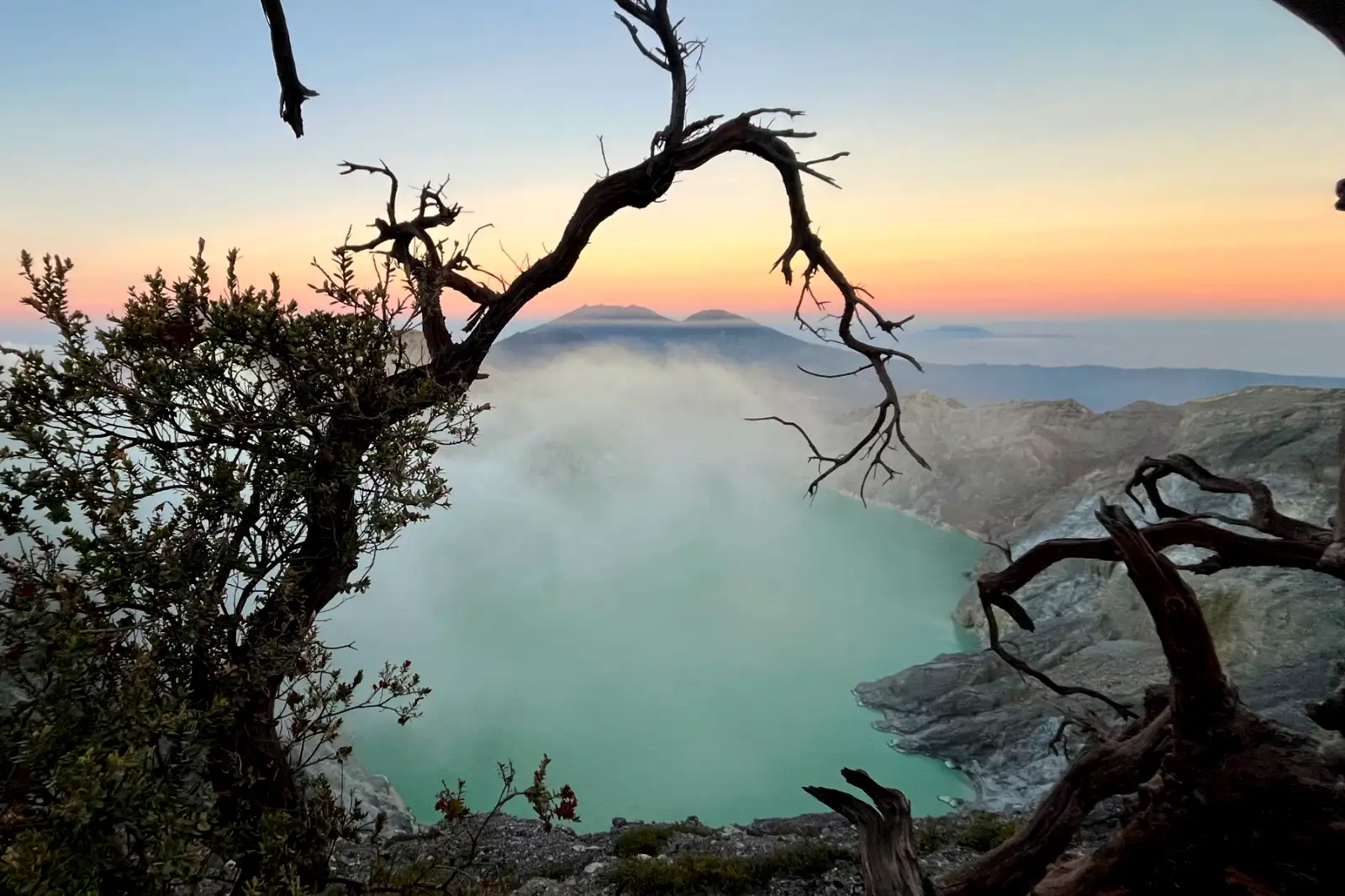
The lake is the heart of the hydrothermal system. It contains roughly 36 million cubic meters of highly acidic water. If you want to know why Ijen has the worlds most acidic crater lake, the answer is the constant injection of magmatic gases. The pH level sits below 0.5, which is more acidic than battery acid.
This body of water regulates the volcano’s temperature. It absorbs heat from the magma and releases it through evaporation. However, if the balance shifts—say, the magma gets too hot or the gas pressure increases—the water can flash into steam. This causes what geologists call a phreatic eruption, a hallmark of hydrothermal volcanoes.
Truth is, the lake is also a trap. It collects heavy metals and minerals, making it a fascinating subject for official Wikipedia geological data and international research. For travelers on an Ijen crater tour, the lake is a visual marvel, but for scientists, it’s a giant pressure gauge for the volcano’s internal health.
Practical Information
Visiting a hydrothermal giant requires more than just a pair of boots. The gases are real, and the terrain is demanding. Here is the operational breakdown for your trip:
| Category | Details |
|---|---|
| Location | Banyuwangi/Bondowoso, East Java |
| Opening Hours | 02:00 AM WIB (Official opening) |
| Elevation | Summit: 2,386m | Basecamp: 1,850m |
| Mandatory Item | Health Certificate (Surat Keterangan Sehat) |
| Safety Gear | Gas Mask (N95/Respirator) |
Hydrothermal vs. Magmatic Systems
It’s easy to confuse the two, but the differences are vital for safety and understanding. A magmatic system is driven by the movement of molten rock (lava). A hydrothermal system is driven by the movement of fluids (water, steam, gas). Ijen sits in a rare category because it has both, but the hydrothermal features are what you interact with on the trail.
If you are planning an Ijen tour from Bali, you’ll notice the difference immediately. Unlike Bromo, which feels like a dusty lunar landscape, Ijen is an active chemical factory. The air smells of rotten eggs (sulfur), and the ground is often damp with acidic condensation.
Local Tips You Should Know
Here’s the deal: hydrothermal volcanoes are temperamental. The gas density changes by the hour. Sometimes the trail into the crater floor is closed because the CO2 or SO2 levels are too high. This isn’t just bureaucracy; it’s a matter of life and breath.
To get the best experience, always check the ijen volcano activity reports before you start the hike at 2:00 AM. Also, don’t forget your health certificate. You can get one easily at local clinics in Banyuwangi or Licin for a small fee. Without it, you aren’t getting past the Paltuding gate.
Safety & Important Considerations
The gases are the main concern. Hydrothermal activity produces high concentrations of sulfur. If you have asthma or heart conditions, the hike to the rim might be okay, but descending into the crater is risky. The crater lake depth and size mean the basin can trap heavy gases on windless nights.
Common Mistakes Travelers Make
Many travelers think a simple cloth mask is enough. It’s not. You need a proper respirator with chemical filters. Another mistake is thinking the “Blue Fire” is always visible. It’s only seen in total darkness, and its intensity depends on the hydrothermal pressure within the solfatara vents that day.
Frequently Asked Questions
Q: Can I touch the water in the crater lake?
A: Absolutely not. The water has a pH below 0.5. It will cause severe chemical burns to your skin and eyes. Even the steam coming off it can irritate your throat and lungs.
Q: Is the Blue Fire lava?
A: No. It is ignited sulfuric gas. The hydrothermal system forces high-temperature gas through cracks in the earth. When this gas hits the oxygen-rich air at the surface, it burns blue.
Q: Why do I need a health certificate?
A: Due to the high-altitude hike and the presence of toxic gases, the BBKSDA (National Park Authority) requires proof that you are physically fit to handle the cardiovascular strain.
Q: Does the hydrothermal activity ever stop?
A: It is continuous, but the intensity varies. The formation of Ijen crater established a system that has been active for thousands of years.
Q: What happens if it rains?
A: Rain can increase the steam production as cold water hits the hot volcanic rocks. It can also make the trail slippery and the sulfur clouds more dense and heavy.
Recommended Tour Packages
- Ijen Crater 1-Day Tour from Banyuwangi – The most efficient way to see the hydrothermal vents and the acid lake with a local guide.
- Mount Bromo and Ijen Crater Tour – A classic East Java route comparing the dry caldera of Bromo with the hydrothermal system of Ijen.
- 3-Day Bromo Ijen Tumpak Sewu Tour – An adventure covering the best geological wonders of Java, starting from Surabaya.
Final Takeaway
Ijen is more than just a photo op; it’s a living, breathing hydrothermal masterpiece. Understanding the Ijen volcanic complex gives you a deeper appreciation for the teal water and the sulfur-dusted trails. It’s a place where the earth’s internal heat and the surface’s water meet in a violent, beautiful collision.
Planning Your Trip to East Java?
Explore our local tour options and choose a route that matches your travel schedule.
Planning to visit Ijen or Mount Bromo?
Explore available tour options and ask our local team about your itinerary.
Explore Tour Packages →