Is an Ijen Crater Tour Worth Booking? The Ultimate Guide
Standing at the edge of a volcanic caldera at 3 AM, gas mask strapped tight, you might wonder why you left your warm bed. The sulfur gas catches in your throat, a sharp reminder that nature here is raw and indifferent. Is the struggle for a glimpse of electric blue flames and a turquoise lake actually worth your time? Many travelers find themselves debating this exact question while planning their East Java journey. Before you Reserve Your Tour Package Now, you need to understand the grit behind the Instagram photos. Knowing the Best Time to Visit Ijen Crater is just the beginning of the story.
What You Need to Know
- The Reality: It is a steep, 3km uphill hike starting at midnight.
- The Reward: The world’s largest acidic lake and rare blue volcanic fire.
- The Cost: Budget roughly $30-$100 depending on transport and private options.
- The Effort: High. Expect freezing temperatures and choking sulfur clouds.
Quick Verdict: For adventure seekers, it’s a non-negotiable bucket list item. For those seeking relaxation, the midnight start may be a dealbreaker.
Table of Contents
Why Trust This Guide?
We aren’t just writers sitting in an office; we are local operators who live and breathe the dust of the Ijen trail. Our guides climb this volcano hundreds of times a year, witnessing the shifting gas patterns and the seasonal changes of the crater lake. We have seen the disappointment of travelers who came unprepared and the awe of those who followed the right advice. This Explore our Master Pillar Guide is built on years of boots-on-the-ground experience. We know when the moon is too bright for the blue fire and which warung serves the best ginger tea at the basecamp.
Local Expertise & Real Insights
Authenticity matters in a world of filtered travel content. We prioritize the safety and honest expectations of our guests over simple bookings. If the trail is closed due to high volcanic activity, we are the first to know. Our relationship with the local sulfur miners provides a unique perspective on the mountain that most generic travel agencies lack. Understanding the Ijen Sulfur Miners and their daily struggle adds a layer of depth to your visit that goes beyond a simple photo op.
Data-Driven Recommendations
Prices change, regulations shift, and weather patterns evolve. We keep our data fresh so you aren’t surprised by a sudden Ijen Crater Entrance Fee hike or a change in opening hours. Our advice is based on current trends and feedback from thousands of international backpackers and luxury travelers alike. We bridge the gap between “roughing it” and “doing it right.”
The Ijen Trekking Experience: What to Expect
The journey begins at Paltuding basecamp under a blanket of stars. Most tours leave Banyuwangi around midnight to reach the summit before dawn. The first two kilometers of the trail are the most challenging. It is a wide, sandy path with a relentless incline that tests your cardio. You will hear the crunch of gravel under hundreds of boots and see the bobbing beams of headlamps snaking up the mountainside. It isn’t a solitary experience; the crowds can be massive, especially on weekends.
Terrain and Difficulty
Don’t be fooled by the “easy” labels online. While it is a non-technical hike, the steepness is significant. For those who find the climb too taxing, there are the “Ijen Taxis”—local miners who push wooden trolleys to carry tourists up the slope for a fee. The air gets thinner as you ascend, and the temperature can drop to near freezing. If you’re wondering How Difficult is the Ijen Crater Hike?, the answer depends entirely on your fitness level and how well you handle the cold.
Navigating the Sulfur Clouds
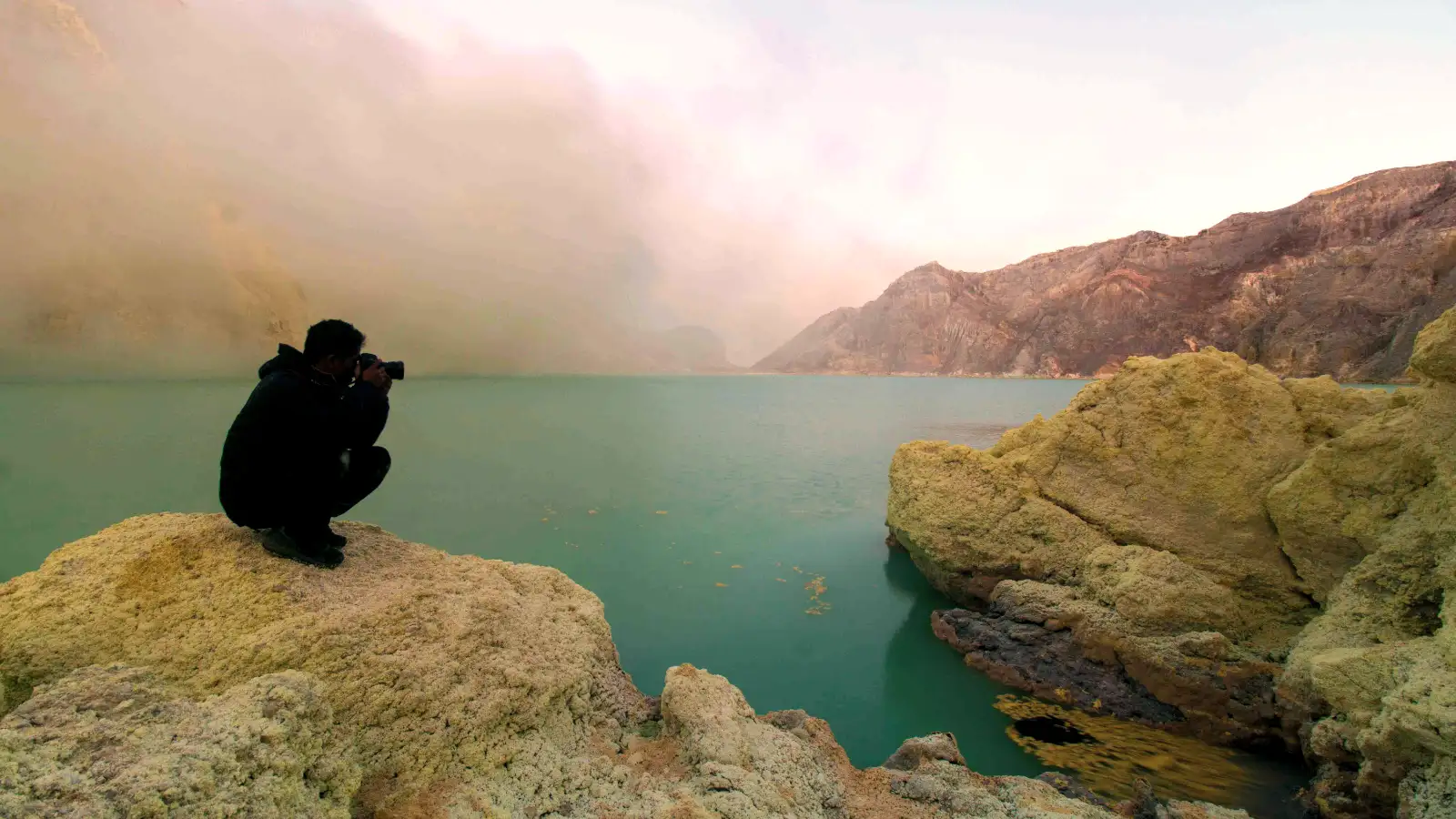
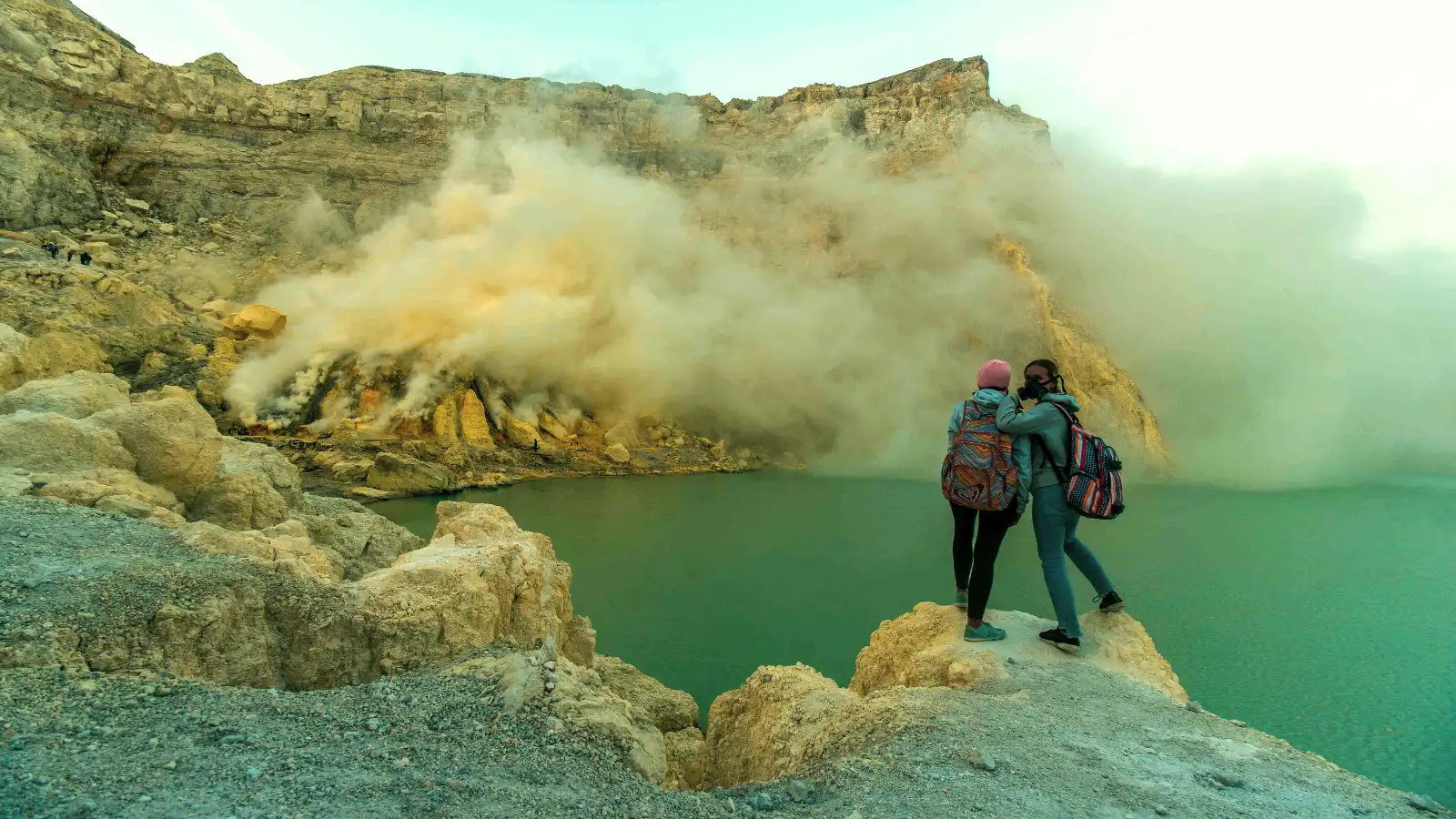
Once you reach the rim, the experience shifts from physical exertion to sensory overload. The smell of rotten eggs—hydrogen sulfide—becomes pervasive. This is where your gas mask becomes your best friend. Descending into the crater to see the blue fire requires careful footing on sharp, loose rocks. The wind often shifts without warning, sending thick white plumes of toxic smoke directly into the path. It can be panicky for some, but your Ijen Crater Tour Guide will ensure you stay safe and move when the air clears.
The Blue Fire: Expectation vs. Reality
Social media portrays the blue fire as a massive, roaring inferno. In reality, it is often a delicate, flickering glow at the base of the sulfur vents. It occurs when sulfuric gases emerge from the volcano at high pressure and temperatures, igniting upon contact with the oxygen-rich air. To see it, you must descend 800 meters into the crater in total darkness. On a good night, it is mesmerizing. On a night with heavy smoke or low activity, it might be barely visible. This unpredictability is part of the adventure.
The World’s Largest Acid Lake
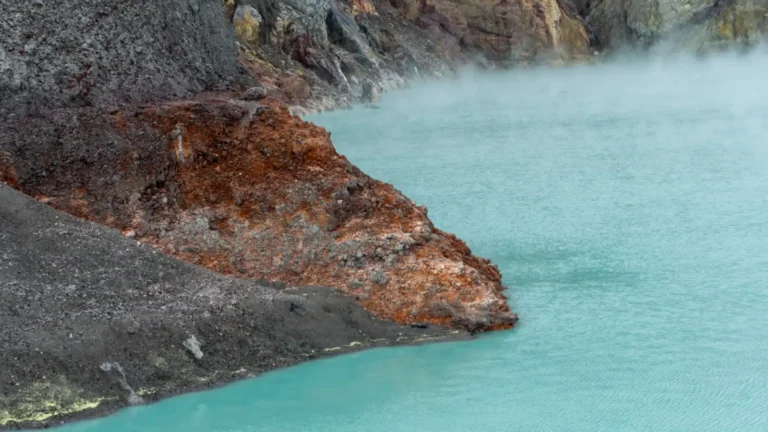
Even if the blue fire is shy, the sunrise over the turquoise lake is a guaranteed winner. As the sun peaks over the horizon, the crater reveals its true colors. The water is a stunning, milky blue-green, but it is incredibly dangerous—a pH of nearly 0.5 makes it one of the most acidic lakes on earth. Watching the light hit the yellow sulfur deposits and the skeletal “Dead Trees” at the rim is a cinematic moment. Check out our guide on The Dead Tree Viewpoint for the best photography angles.
Meeting the Miners
One of the most humbling parts of any Ijen Tour Experience is sharing the trail with the sulfur miners. These men carry 70kg to 90kg of solid sulfur on their shoulders in wicker baskets, climbing out of the crater and down the mountain twice a day. They do this without the high-tech gear hikers wear, often with only a damp cloth over their mouths. A friendly “Permisi” (excuse me) and giving them the right of way is essential etiquette. Many hikers choose to buy small sulfur carvings or offer a tip as a gesture of respect.
Logistics, Costs, and Entrance Fees
Planning the logistics can be a headache if you do it solo. Most visitors choose between staying in Banyuwangi (the closest city) or coming directly from Bali. A Guided Ijen Tour from Banyuwangi is usually the most cost-effective and least stressful option. It includes transport, a guide, a gas mask, and the entrance permit. If you are coming from further away, consider the Ijen Crater Tour from Bali, which involves a ferry crossing and a long night of travel.
| Item | Estimated Cost (IDR) | Notes |
|---|---|---|
| Weekday Entrance (International) | 100,000 | Per person |
| Weekend Entrance (International) | 150,000 | Sundays & Holidays |
| Gas Mask Rental | 50,000 | Mandatory for safety |
| Local Guide | 200,000 – 400,000 | Highly recommended |
Is a Guide Necessary?
While you can technically hike Ijen alone, we strongly advise against it for first-timers. A Private Ijen Tour offers safety that a solo trip cannot. Guides monitor the gas levels, know the shortcuts to avoid the heaviest crowds, and provide first aid if someone slips on the treacherous crater descent. They also share stories about the volcano’s history and the lives of the miners that you won’t find on a Wikipedia page. For those looking for a complete East Java adventure, the Bromo Ijen Tour is the ultimate way to see both iconic volcanoes in one go.
Choosing the Best Ijen Crater Tour
Deciding on the Best Ijen Crater Tour depends on your starting point and comfort preference. Most travelers prefer the Ijen Crater Tour from Surabaya if they are flying into Java. This route usually includes a stop at beautiful waterfalls or coffee plantations along the way. If you are already in Banyuwangi, the 1-Day Banyuwangi Tour is the most straightforward option. It allows you to maximize your sleep before the midnight wake-up call.
What’s Included in a Premium Tour?
A high-quality tour should take care of all the “unfun” parts of travel. This means private 4WD or comfortable AC transport, professional gas masks (not the cheap industrial ones), headlamps, and all entrance permits. Some tours even include a simple breakfast at a local warung after the hike. Choosing a reputable operator ensures you aren’t left waiting for a bus at 1 AM or fighting over a broken gas mask. Quality service is the difference between an exhausting trip and a life-changing adventure.
Essential Packing List
You cannot show up to Ijen in flip-flops and a t-shirt. The wind at the rim is biting. You need layers: a thermal base, a fleece, and a windbreaker. Proper hiking boots with good grip are non-negotiable for the crater descent. Don’t forget a small bottle of water and some high-energy snacks like chocolate or nuts. If you have sensitive eyes, bring eye drops to clear out the sulfur irritation after the hike. For more details, see our Ijen Crater Packing Guide.
Popular Related Tour Packages
Looking for the perfect East Java itinerary? These commercial tour packages are our most popular choices for international travelers seeking a seamless experience:
- 🌟 Full Ijen Crater Sunrise Tour Package – The gold standard for seeing the blue fire and lake.
- 🏝️ Ijen Crater Tour from Bali (All-Inclusive) – Perfect for travelers based in Ubud, Canggu, or Seminyak.
- 🚂 1-Day Ijen Tour from Banyuwangi Train Station – Quick, efficient, and budget-friendly.
- 🌋 2-Day Ijen Exploration with Coffee Plantation – A slower pace for those who want to soak in the local culture.
- ✈️ Surabaya to Ijen 2D1N Private Adventure – Ideal for fly-in travelers looking for a private experience.
Ready for Your Ultimate Mount Bromo & Ijen Adventure?
Don’t leave your trip to chance. Join thousands of happy travelers and experience East Java with our top-rated local tour operators.
Frequently Asked Questions
Q: Is the blue fire visible every night?
A: No. Its visibility depends on the concentration of sulfuric gas and the weather. If there is heavy rain or low volcanic activity, the fire may be small or invisible. Check our daily updates for the best chance to see it.
Q: What time does the Ijen hike start?
A: Most hikers start between 1:30 AM and 2:00 AM. This timing allows you to reach the crater floor for the blue fire and return to the rim for the sunrise.
Q: Can I visit Ijen if I have asthma?
A: It is generally not recommended. The sulfur gas is extremely irritating to the lungs and can trigger severe attacks. Even with a gas mask, the air quality inside the crater is poor.
Q: How cold does it get at Mount Ijen?
A: Temperatures at the basecamp can hover around 10-15°C, but at the rim with wind chill, it can feel like 2-5°C. Layering your clothes is essential.
Q: Is it safe to descend into the crater?
A: It is risky. The path is rocky and steep. However, with a professional guide and a high-quality gas mask, thousands of people do it safely every year. Follow the instructions of the local authorities at all times.
The Final Verdict: Is It Worth It?
Yes, an Ijen Crater tour is absolutely worth booking, but only if you are prepared for a physical and sensory challenge. It is not a leisurely stroll through a park. It is a gritty, sulfur-scented journey into the heart of an active volcano. For many, the sight of the electric blue flames and the turquoise lake bathed in morning light is the highlight of their entire Indonesia trip. The sense of achievement you feel standing on that rim as the world wakes up is something no luxury hotel can replicate. If you want a story to tell for years to come, pack your boots and embrace the midnight start.