
The Ultimate Guide to Ijen Crater Tour 2026
Embark on a journey to the heart of East Java to witness the world’s largest acidic crater lake and the rare electric blue fire. This definitive guide provides everything you need for a safe and spectacular expedition.
The Ijen Crater is located in East Java, Indonesia, famous for its electric blue flames and turquoise acid lake. The best time to visit is during the dry season (May to September), requiring a moderate 3-kilometer uphill hike starting at midnight to witness the blue fire before sunrise.
- Comprehensive Overview & Geology
- How to Get There: Logistics & Routes
- The Best Time to Visit for Blue Fire
- Top Highlights & Photography Viewpoints
- Expert Tips, Packing & Safety Gear
- Frequently Asked Questions
1. Comprehensive Overview of Ijen Crater
The Ijen volcanic complex is a group of composite volcanoes located on the border between Banyuwangi Regency and Bondowoso Regency of East Java, Indonesia. It is part of the Ijen Plateau, a vast highland area that sits within a larger caldera. For travelers and photographers, the primary draw is the Kawah Ijen, a 1-kilometer-wide turquoise acid crater lake that remains one of the most surreal landscapes on Earth.
Historically, Ijen has been a site of intense geological interest. The lake is recognized as the most acidic large volcanic lake in the world, with a pH level of less than 0.5. This extreme acidity is caused by the dissolution of volcanic gases, particularly hydrogen chloride and sulfur dioxide. Understanding the ijen crater facts is essential for anyone wishing to appreciate the raw power of this active volcanic system. Beyond its chemistry, the crater is a vital economic hub for local sulfur miners who descend into the crater daily to harvest “devil’s gold.”
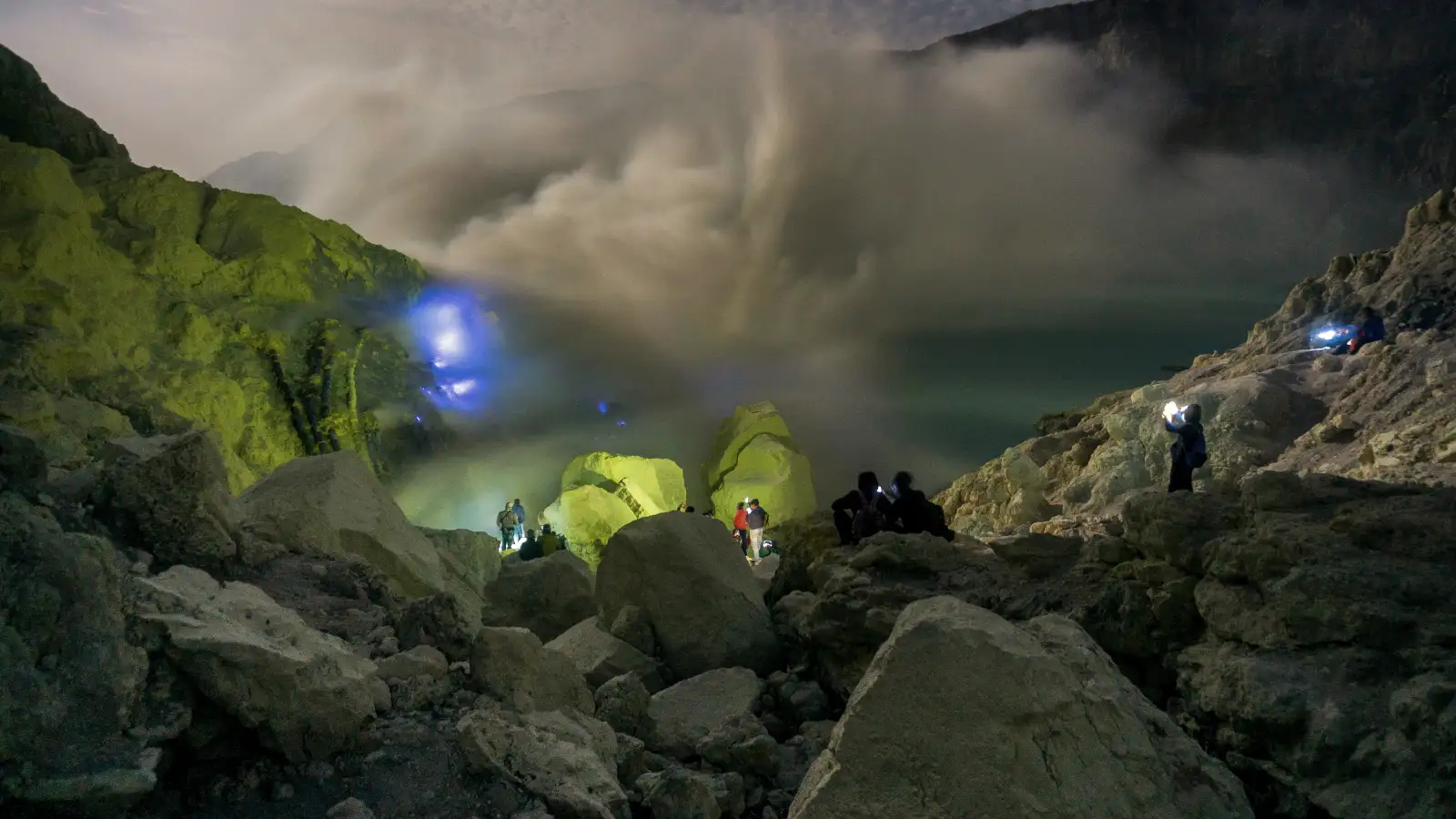
Many travelers assume the “Blue Fire” is lava, but it is actually a chemical reaction. The blue glow comes from the combustion of sulfuric gases that emerge from volcanic cracks at high pressure and temperatures up to 600°C (1,112°F). When these gases contact oxygen-rich air, they ignite into brilliant blue flames. This phenomenon is only visible in the dark, which is why tours must begin between 12:00 AM and 2:00 AM.
The Cultural Heart: Sulfur Miners of Ijen
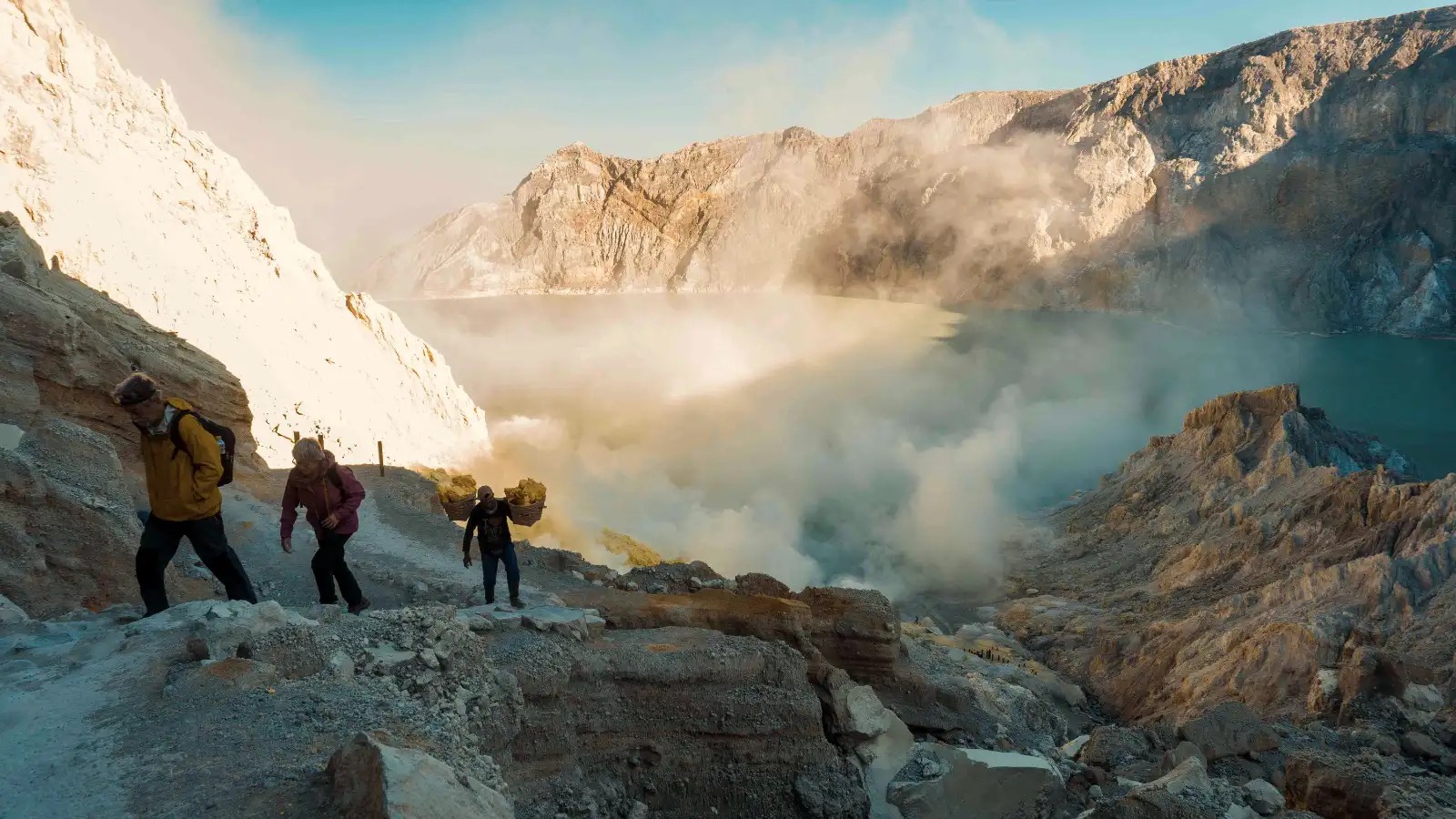
While the scenery is breathtaking, the human story of Ijen is equally compelling. The ijen sulfur miners perform one of the most difficult jobs in the world. Carrying bamboo baskets loaded with 70 to 90 kilograms of solid sulfur, they navigate the steep, slippery walls of the crater multiple times a day. Their resilience is a testament to the local culture and the economic realities of the region. Visitors are encouraged to show respect, yield the path, and perhaps offer a small tip or purchase sulfur carvings as a gesture of support.
2. How to Get There: Logistics & Routes
Reaching Ijen requires careful planning, as the volcano is situated in a relatively remote part of East Java. Depending on your starting point, you have several primary gateways. Most travelers choose to base themselves in Banyuwangi, the closest city, which is well-connected by train, ferry, and air.
From Bali to Ijen
If you are coming from Bali, the journey involves a drive to Gilimanuk port, followed by a 45-minute ferry crossing to Ketapang, Banyuwangi. It is highly recommended to learn how to travel from bali to ijen crater safely, as the late-night logistics can be tricky for independent travelers. Many choose a guided tour to handle the ferry transfers and the midnight drive to the Paltuding base camp.
From Surabaya or Malang
For those arriving in East Java via Surabaya or Malang, the drive to Ijen takes approximately 6 to 7 hours. This route is often combined with a visit to Mount Bromo. You can find specialized packages like the ijen crater tour surabaya 2d1n which streamlines the long-distance travel, allowing you to rest before the midnight hike.
- Banyuwangi Gateway: 1-hour drive to Paltuding. Best for those seeking a quick trip.
- Bondowoso Gateway: A scenic but longer route through coffee plantations.
- Bali Ferry: Operates 24/7, making it easy to cross the strait at any hour.
3. The Best Time to Visit
Timing is everything when planning an Ijen Crater Tour. The weather in East Java is divided into two main seasons: the dry season and the rainy season. To ensure the best visibility for the blue fire and the Milky Way, you must aim for specific months. According to the best time to visit ijen crater guide, the window between May and September is ideal.
During the dry season, the trails are less slippery, and the sky is typically clear, providing a perfect backdrop for sunrise photography. However, be aware that the ijen crater temperature can drop significantly at night. At the Paltuding base camp, temperatures can hover around 10°C, while at the summit rim, wind chill can make it feel much colder. Proper layering is essential.
Operational Hours & Closures
It is vital to check the ijen crater update before your trip. The park occasionally closes for volcanic activity monitoring or “Ijen Rest” days, where the ecosystem is allowed to recover without tourist presence. Usually, the gates at Paltuding open at 2:00 AM, though this can change based on current safety regulations issued by the Ministry of Tourism.
Explore Specific Ijen Crater Tour Packages
Ready to plan your trip? Explore our curated packages departing from various cities to find the perfect fit for your itinerary. Whether you are coming from Bali or seeking a quick day trip from Banyuwangi, we have you covered.
Ijen Crater Tour from Bali
Ijen Tour Surabaya 2D1N
Ijen Tour Banyuwangi 1-Day
Latest Ijen Crater Updates
4. Top Highlights & Viewpoints
An Ijen Crater Tour is more than just a hike; it is a multi-sensory experience. From the darkness of the midnight ascent to the vibrant colors of the morning sun, here are the spots you cannot miss:
- The Electric Blue Fire: Located at the bottom of the crater near the sulfur vents. It is a rare sight found in only two places on Earth. Learn more in our ijen blue fire explained deep-dive.
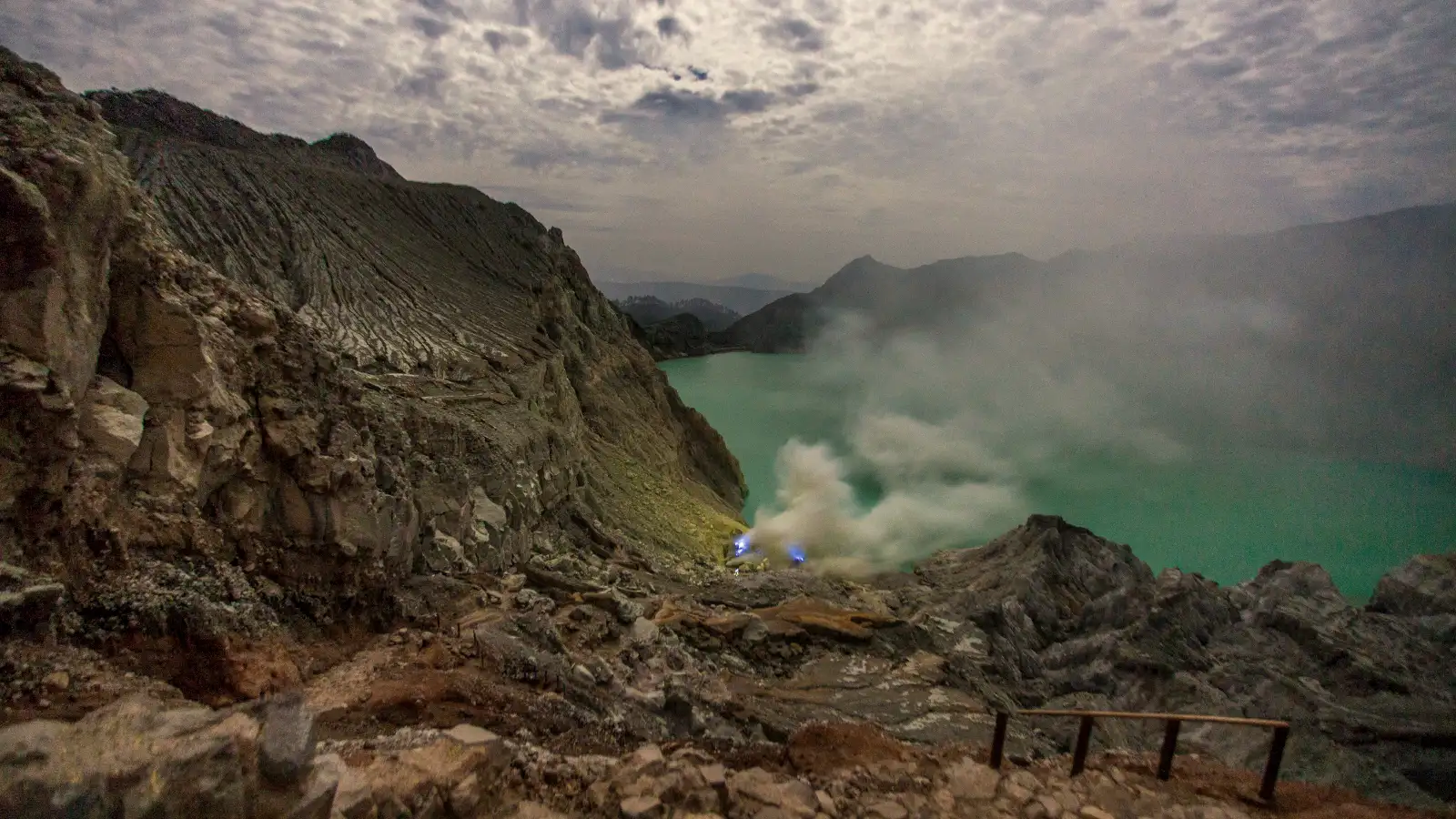
- The Acid Lake: As the sun rises, the lake transforms from a dark void into a brilliant turquoise gem. The contrast against the yellow sulfur rocks is a photographer’s dream.
- The Dead Forest (De Djawatan style): Often referred to as the “Dead Forest,” this area features blackened, skeletal trees killed by volcanic gases. It is a hauntingly beautiful spot for creative photography. Check the dead tree viewpoint for navigation tips.
- Sunrise at the Rim: Most tours aim to reach the highest point of the rim by 5:30 AM to witness the sun rising over the Raung and Baluran mountains in the distance.
Photography Tips for Professionals
For photographers, Ijen presents unique challenges. The sulfur smoke can be corrosive to gear, and the low-light conditions of the blue fire require specific settings. If you are interested in capturing the stars, our guide on astrophotography at ijen covers everything from tripod setup to lens selection. Remember to check ijen drone rules before flying, as high winds and sulfur clouds can be hazardous for your equipment.
5. Expert Tips & Preparation
Success at Ijen depends on preparation. The hike is approximately 3 kilometers one way, with the first 2 kilometers being quite steep. While it is manageable for people with average fitness, those with respiratory issues should consult a doctor due to the sulfur fumes.
Essential Packing List
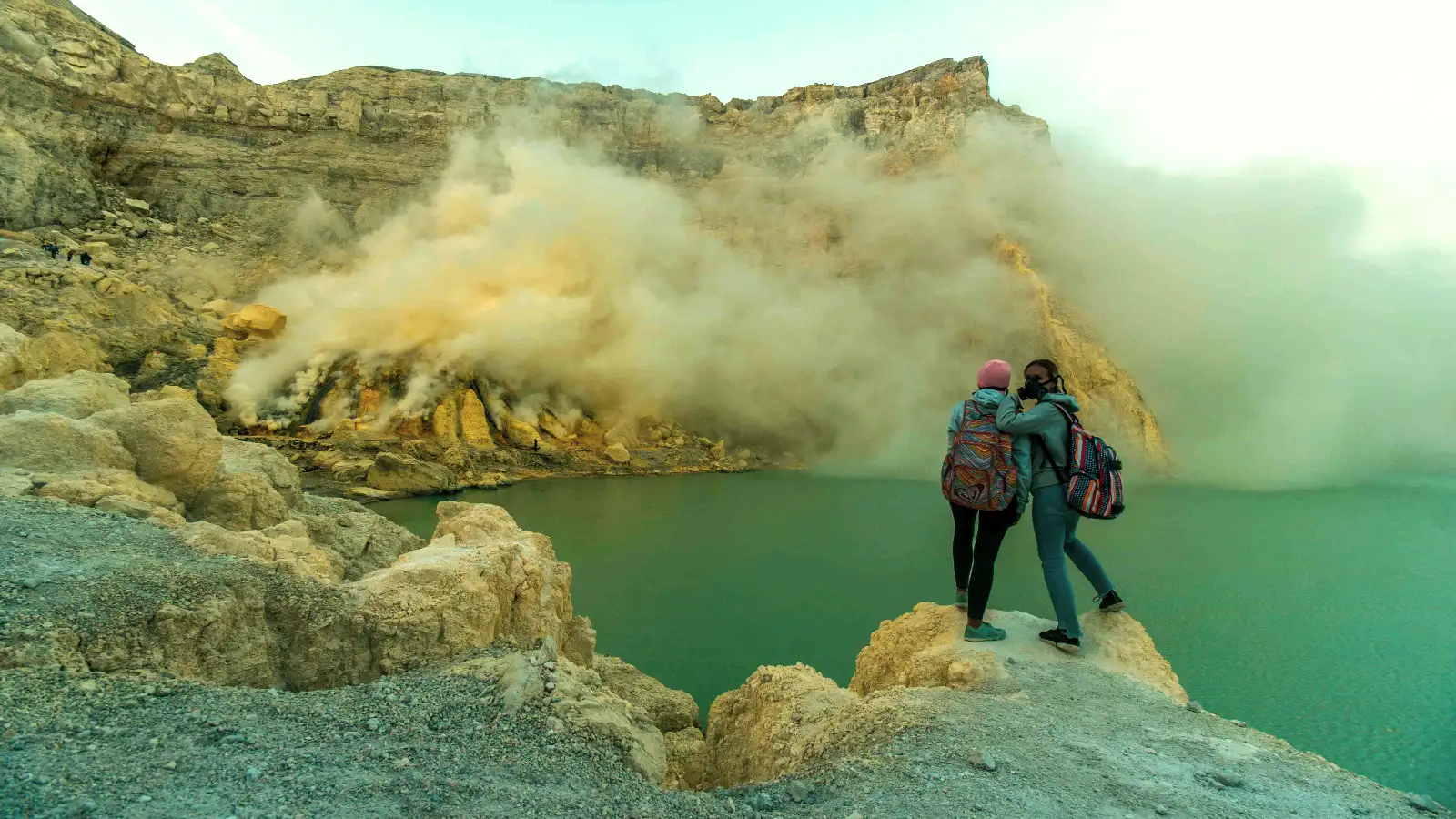
- Gas Mask: Non-negotiable. The sulfur dioxide fumes are toxic and can cause severe irritation. Most tours provide these, but you can also rent them at the base.
- Headlamp: You will be hiking in total darkness. Keeping your hands free is vital for balance.
- Layers: A windbreaker, a fleece, and thermal underwear are recommended. You will sweat on the way up but freeze while waiting for sunrise.
- Sturdy Boots: The trail is dusty and filled with loose gravel.
If the hike sounds too daunting, there is a local solution. The ijen trolley taxi service involves local miners pulling travelers up the mountain in modified carts. It is a unique way to reach the top while providing additional income to the local community.
Need Help Planning Your Trip?
Our local travel experts are ready to customize the perfect itinerary for your adventure.
Frequently Asked Questions
1. Is it safe to visit Ijen Crater?
Yes, it is generally safe as long as you follow the instructions of local guides and stay within designated areas. You must wear a gas mask near the crater floor to protect yourself from sulfur dioxide. Always check the latest volcanic activity status before heading out.
2. What time does the Ijen hike start?
Most tours start at midnight or 1:00 AM from Banyuwangi to arrive at the Paltuding base camp by 2:00 AM. This timing allows you to hike to the rim and descend into the crater to see the blue fire before it disappears at daybreak.
3. Can I see the blue fire every night?
While the blue fire is a natural permanent phenomenon, its visibility depends on weather conditions and volcanic activity. Heavy rain or thick sulfur smoke can sometimes obscure the flames. It is best seen during the dry season.
4. Do I really need a gas mask?
Absolutely. Even if the wind is blowing the smoke away, a sudden shift can engulf you in thick, suffocating sulfur fumes. A professional-grade respirator with chemical filters is essential for safety near the crater.
5. How difficult is the hike to Ijen?
The hike is considered moderate. It is a 3km trek with a significant incline for the first 2km. The path is wide and well-maintained, but the descent into the crater is rocky and steep. Total hiking time is usually 1.5 to 2 hours to the rim.