
What Is the Ijen Volcanic Landscape Like? Natural Features
Key Takeaways:
- Home to the world’s most acidic crater lake (pH below 0.5).
- Features a massive 20-kilometer wide caldera complex.
- Characterized by intense yellow sulfur deposits and gas vents.
- Transition from tropical greenery to stark, rocky volcanic terrain.
About This Guide: Written by our Banyuwangi-based local operational team with first-hand field experience across East Java, including current trail conditions, departure timing, weather shifts, and real visitor logistics.
Table of Contents
What Is the Ijen Volcanic Landscape?
The Ijen volcanic landscape isn’t just one peak. It’s a massive complex of volcanic cones, craters, and ancient ridges. Located at the eastern tip of Java, this area is a masterclass in geological history. It feels heavy. The air changes as you climb, shifting from the smell of damp pine needles to the sharp, biting scent of raw sulfur.
Truth is, most people come for the lake, but the whole terrain is fascinating. You’re walking on layers of ash and old lava flows. To see it properly, many travelers choose an Ijen Crater tour from Banyuwangi to catch the landscape at first light. The contrast between the orange sunrise and the teal water is something you don’t forget easily.
A Unique Volcanic Terrain in Indonesia
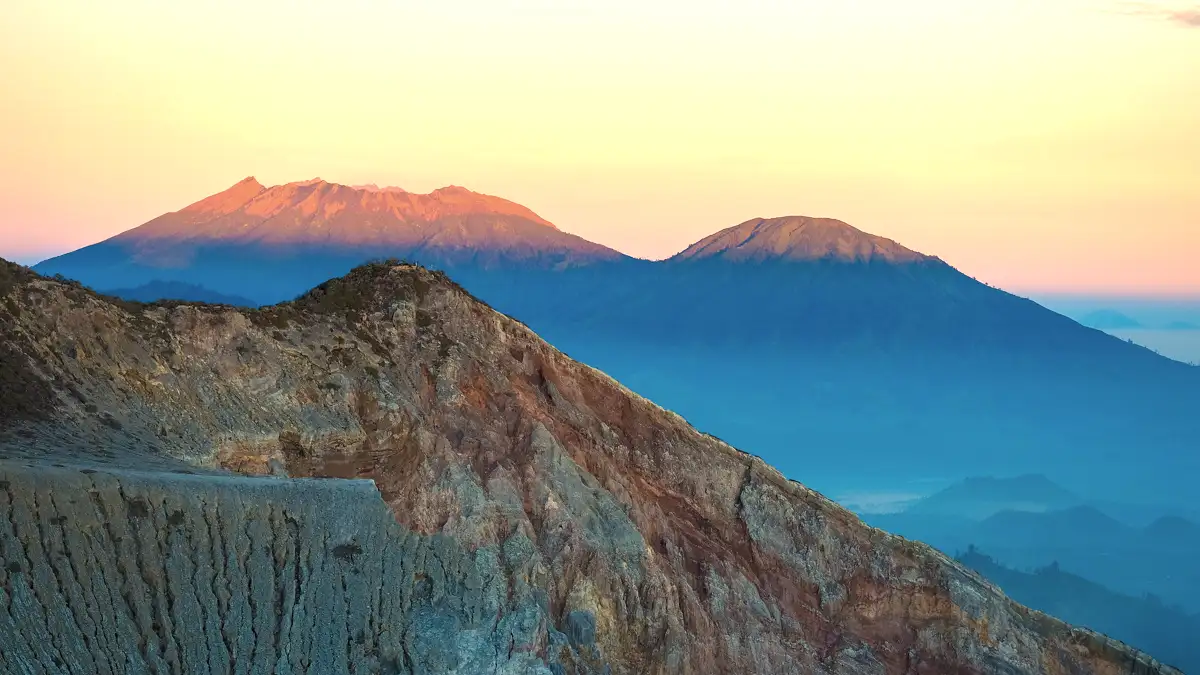
The terrain is rugged. It’s not a smooth walk. The path from Paltuding basecamp starts wide but steep. You’ll feel the dry volcanic gravel slipping under your boots. Around you, the Ijen volcanic complex unfolds in layers of ridges and distant peaks like Mount Merapi (the local one, not the Central Java version) and Mount Raung.
The Giant Ijen Caldera and Surroundings
Look, the scale here is hard to grasp from a photo. The Ijen caldera is about 20 kilometers wide. It’s an ancient collapsed volcanic structure. Inside this giant rim, several newer cones have grown over thousands of years. Kawah Ijen is the most famous child of this massive geological event.
As you hike, the vegetation thins out. You leave the tall ferns behind. Suddenly, you’re looking at “Manigusi” or dead wood forests. These silver-white tree skeletons stand against the dark soil, a result of past volcanic gas emissions. It’s eerie but beautiful. If you’re coming from afar, a 3-day Bromo Ijen tour from Bali gives you the best perspective on how this landscape differs from the lush tropics of the neighboring island.
The Electric Blue Sulfur Flames
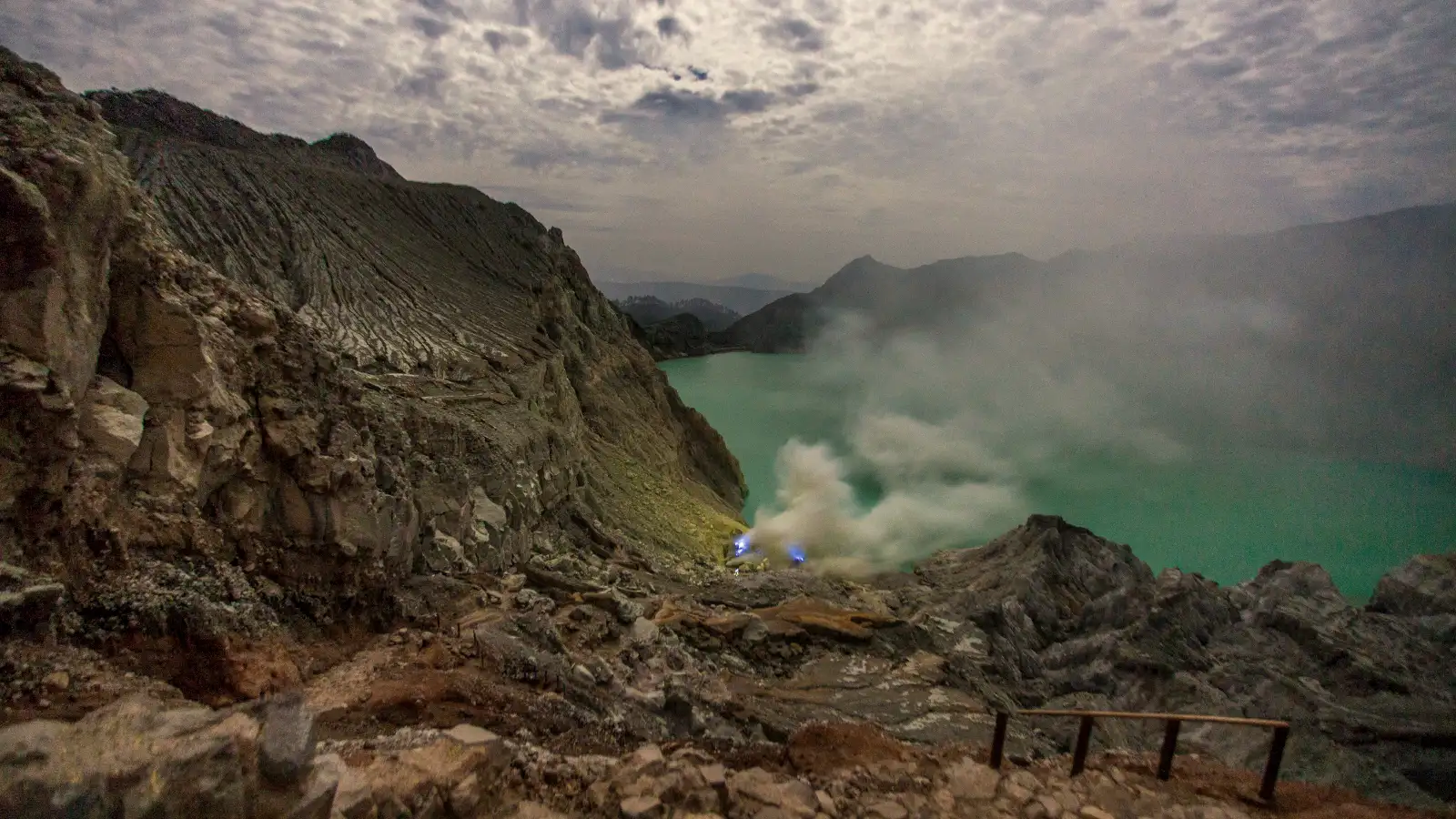
Here’s the deal: deep within the crater, the landscape hides a secret. High-pressure volcanic gases escape at temperatures over 600°C. When they hit the air, they ignite. This creates the Ijen blue fire. It’s not lava; it’s burning gas. It only glows blue in the pitch black of night, making the rocky crater floor look like another planet.
The Famous Turquoise Acidic Crater Lake
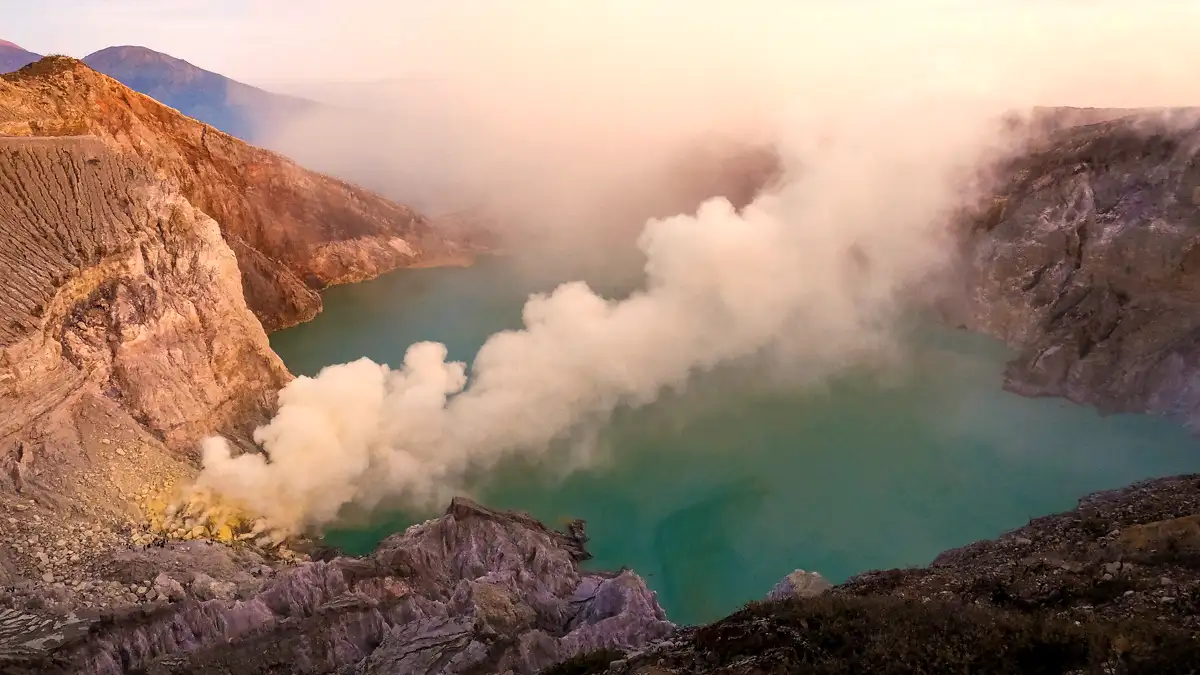
The centerpiece of the Ijen mountain landscape is undoubtedly the lake. It’s roughly 700 meters wide and incredibly deep. But don’t let the inviting teal color fool you. This is a massive vat of sulfuric and hydrochloric acid. The water is so acidic it can dissolve metal. Honestly, just standing near the edge makes your eyes sting if the wind shifts.
The depth and size of the lake are regulated by the volcanic activity below. When things heat up, the water can bubble or change shade. The yellow sulfur deposits on the shore provide a sharp contrast to the blue water. It’s a color palette you won’t find anywhere else in the East Java volcanic landscape.
Sulfur Vents and Volcanic Rock Formations
The geology here is active and raw. Near the lake, ceramic pipes tap into the volcanic vents. Liquid sulfur, blood-red when molten, drips out and hardens into bright yellow rocks. This is where local sulfur miners work, carrying heavy loads up the steep crater walls. Their presence is a sobering part of the landscape’s reality.
The volcanic rocks of Ijen are mostly basaltic andesite. You’ll see jagged cliffs and sharp ridges formed by centuries of eruptions. Understanding how Ijen was formed helps you appreciate the sheer power required to blast this hole into the earth. It’s a place of constant change, shaped by wind, acid, and fire.
Practical Information
If you’re planning to see this landscape for yourself, you need to be prepared. This isn’t a casual park walk. You’ll need to know what to wear for Ijen because the temperature at the summit can drop to 3°C or 5°C before dawn.
- Location: Border of Banyuwangi and Bondowoso, East Java.
- Opening Hours: Usually 02:00 AM (Subject to volcanic status).
- Hike Difficulty: Moderate to steep (3 km one way).
- Mandatory Gear: Gas mask (for sulfur fumes), headlamp, warm jacket.
- Health Certificate: Required (can be obtained locally in Banyuwangi).
Ijen vs Bromo Landscape
| Feature | Ijen Landscape | Bromo Landscape |
|---|---|---|
| Main Attraction | Acid Lake & Blue Fire | Sea of Sand & Active Vent |
| Terrain | Steep, rocky, forested base | Flat sandy caldera, volcanic ash |
| Vibe | Mysterious, alien, intense | Cinematic, vast, desert-like |
Local Tips You Should Know
To be fair, the hike is only half the battle. The wind is the real player here. If the wind blows the sulfur cloud toward the path, you must wear your gas mask immediately. Don’t wait until you’re coughing. Also, the “trolley taxi” guys are a lifesaver if your legs give out, but they aren’t cheap. It’s a local labor economy that’s been around for years.
If you want to see the lake without 2,000 other people, try to stay at the summit after the sunrise crowds leave around 7:30 AM. The light on the water becomes even more vivid as the sun climbs higher. Grab a hot cup of *kopi tubruk* (local mud coffee) at the Paltuding warungs afterward. It’s the best way to warm your bones.
Frequently Asked Questions
Q: Is the Ijen volcanic landscape safe to visit?
A: Yes, as long as you follow the PVMBG alerts. The area is monitored 24/7. Always bring a gas mask for the sulfur vents and check the local status before starting your hike at 2 AM.
Q: What makes the Ijen landscape unique compared to other volcanoes?
A: It’s the only place in the world where you can see a large-scale blue fire phenomenon and the world’s largest highly acidic lake in one geological setting. The color contrast is unmatched.
Q: How long does it take to see the natural features of Ijen?
A: Typically, the hike takes 1.5 to 2 hours to reach the rim. If you descend to the crater floor for the blue fire, add another 45 minutes each way. Plan for a 5-hour total round trip.
Q: Can I see the Ijen volcanic scenery during the day?
A: Absolutely. While the blue fire disappears at dawn, the turquoise lake and the dramatic caldera views are best seen in full daylight between 6 AM and 9 AM.
Q: Are there trees in the Ijen volcanic terrain?
A: The base is lush with pine and fern forests. However, near the summit, the landscape becomes a “dead forest” with bleached trees due to the acidic gas clouds from the crater.
Q: What is the best viewpoint for the Ijen landscape?
A: The “Sunrise Point” on the rim offers a panoramic view of the lake, the sulfur vents, and the distant mountain ranges of East Java. It’s the most iconic photo spot.
Recommended Tour Packages
To fully experience the geological wonders of East Java, consider these curated local packages:
- Ijen Crater Tour from Bali: A seamless overnight trip from Bali to witness the blue fire and turquoise lake with a local guide.
- Mount Bromo Tour from Surabaya: Explore the vast Sea of Sand and the active Bromo crater, a perfect landscape companion to Ijen.
- Bromo Ijen Tumpak Sewu Tour: The ultimate 3-day landscape route covering volcanoes and the most famous canyon waterfall in Java.
- Ijen 1-Day Trek: A quick, focused hike for those already staying in Banyuwangi or Bondowoso.
- East Java Volcano Combo: A deep-dive into the geology of both Bromo and Ijen over four days.
Final Takeaway
The Ijen volcanic landscape is a place of extremes. It’s beautiful and brutal at the same time. From the electric blue fire at night to the teal acid lake at dawn, it offers a visual experience that is hard to find anywhere else on Earth. It requires some effort and a bit of grit, but standing on that rim as the sun breaks over the caldera is a moment that stays with you forever.
Planning Your Trip to East Java?
Explore our local tour options and choose a route that matches your travel schedule.
Planning to visit Ijen or Mount Bromo?
Explore available tour options and ask our local team about your itinerary.
Explore Tour Packages →