
Ijen Crater Lake: Depth, Size, Formation, and Essential Facts
Key Takeaways:
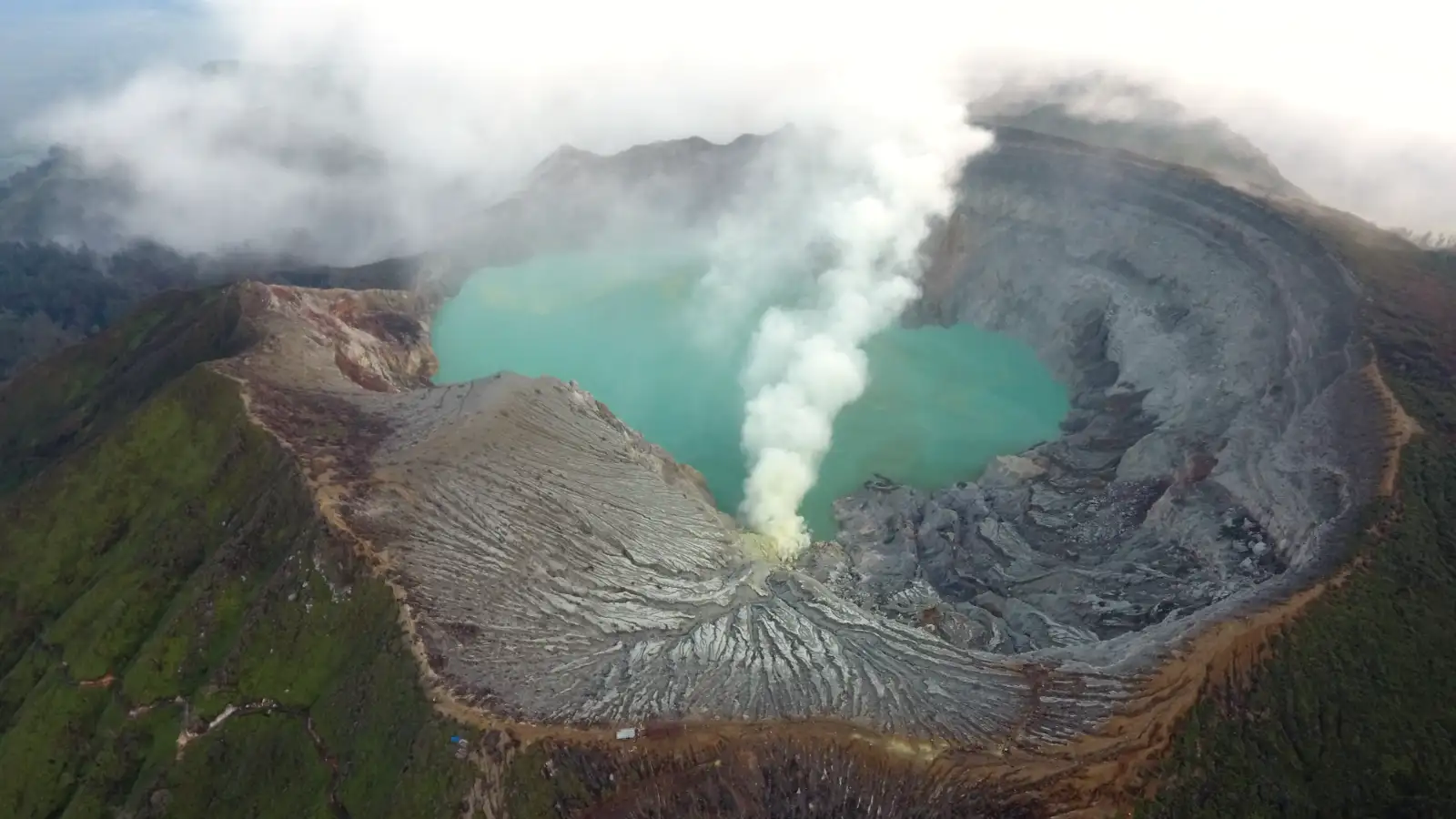
- World’s largest acidic lake (pH < 0.5).
- Approximately 200 meters deep and 700-1000 meters wide.
- Formed within a massive 20km-wide caldera system.
- Known for the rare electric-blue fire phenomenon nearby.
About This Guide: Written by our Banyuwangi-based local operational team with first-hand field experience across East Java, including current trail conditions, departure timing, weather shifts, and real visitor logistics.
Table of Contents
What Is Ijen Crater Lake?
The Ijen Crater Lake is a natural anomaly. It isn’t your typical alpine lake where you can go for a quick dip. Look, this is a massive vat of sulfuric acid. It sits inside the crater of the Ijen volcano in East Java, Indonesia. Locally known as Kawah Ijen, it has gained global fame for its stunning turquoise hue and the eerie blue flames that dance along its edges at night.
The lake is part of the Ijen volcanic complex, a group of stratovolcanoes. While the surrounding landscape is lush and green, the crater itself looks like another planet. The smell of rotten eggs—that’s the sulfur—hits you long before you reach the rim. It is raw, beautiful, and slightly terrifying all at once. Understanding why Ijen has the worlds most acidic crater lake helps you appreciate the extreme geological forces at play here.
Ijen Crater Lake Depth and Size
When you stand on the rim at 2:30 AM, staring down into the dark abyss, the scale is hard to grasp. The lake is roughly oval-shaped. Its surface measures about 700 meters by 1,000 meters. That is roughly the size of 100 football fields. It holds an incredible 36 million cubic meters of acidic water.
The 200-Meter Abyss
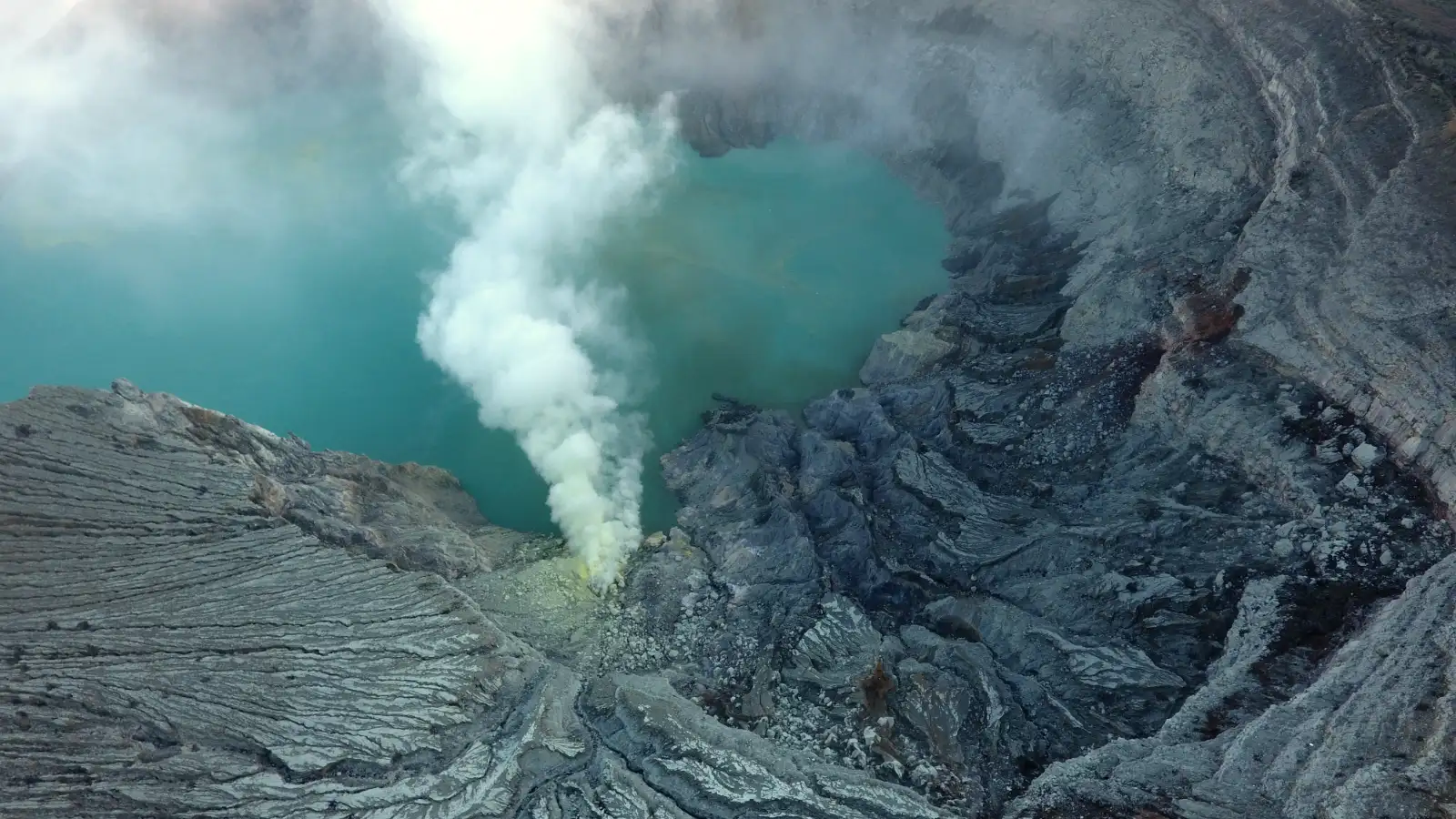
The maximum depth is approximately 200 meters. To put that in perspective, you could stack the Statue of Liberty twice and it still wouldn’t reach the surface. The walls of the crater rise steeply above the water, reaching up to 300 meters high in some areas. Booking an Ijen crater tour is the only way to safely navigate these steep paths and see the scale for yourself.
The size changes slightly depending on the season. During the heavy tropical rains, the water level rises. In the dry season, the edges recede, exposing white, sulfur-crusted rocks. This fluctuation is minor, though, as the sheer volume of the lake remains relatively stable thanks to the massive caldera basin it occupies.
Formation and Geology
The story of Ijen began thousands of years ago. It wasn’t just one “boom.” It was a series of massive eruptions. The lake sits within the Ijen Caldera, a huge 20-kilometer wide depression. This caldera was formed when a much larger “Old Ijen” volcano collapsed after emptying its magma chamber. It is a textbook example of geological history of Ijen and how volcanic complexes evolve over millennia.
A Hydrothermal System
The lake formed as rainwater filled the active crater. But this isn’t just rain. Beneath the lake bed, a powerful hydrothermal system is at work. Magma deep underground releases gases like sulfur dioxide and hydrogen chloride. These gases bubble up through the water, reacting to create sulfuric and hydrochloric acid. This constant “feeding” from the volcano is what makes it so unique compared to other essential Ijen crater facts you might read online.
Water Chemistry and Temperature
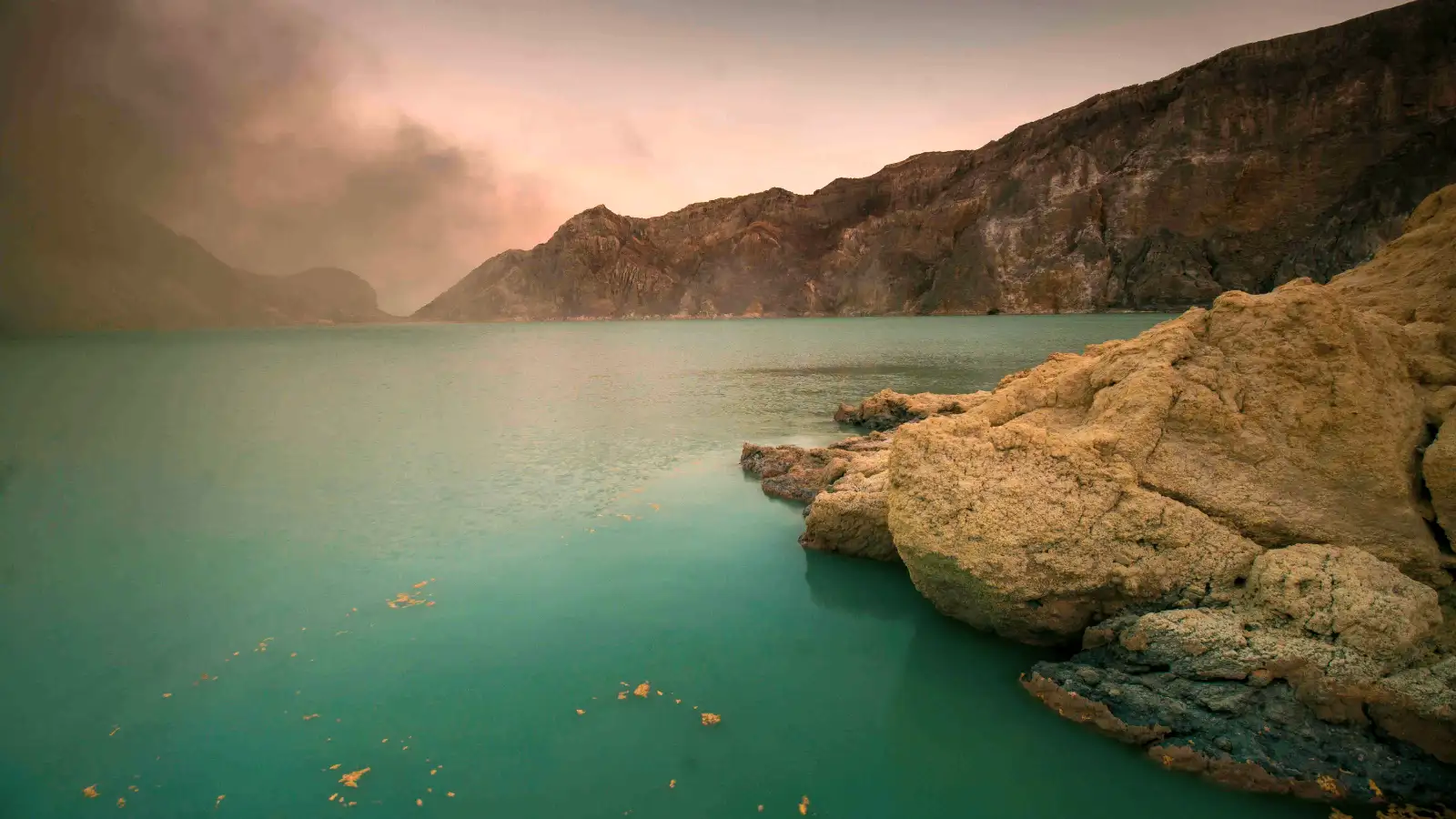
Here is the deal: the pH level of the lake is usually below 0.5. For context, battery acid has a pH of about 1.0. This makes Kawah Ijen significantly more acidic than the fluid in your car battery. The water is a cocktail of dissolved metals—mostly aluminum and iron—which gives it that famous turquoise or “milky teal” color. Don’t let the color tempt you; the water is highly toxic.
Temperature Fluctuations
The water temperature isn’t uniform. Near the surface, it usually sits between 20°C and 40°C. However, near the active vents at the bottom or the shoreline where sulfur is mined, it can be much hotter. The surrounding air is a different story. If you are coming for an Ijen crater tour from Bali, remember that the summit temperature can drop to 3°C or 5°C before sunrise. You’ll need layers.
Practical Information
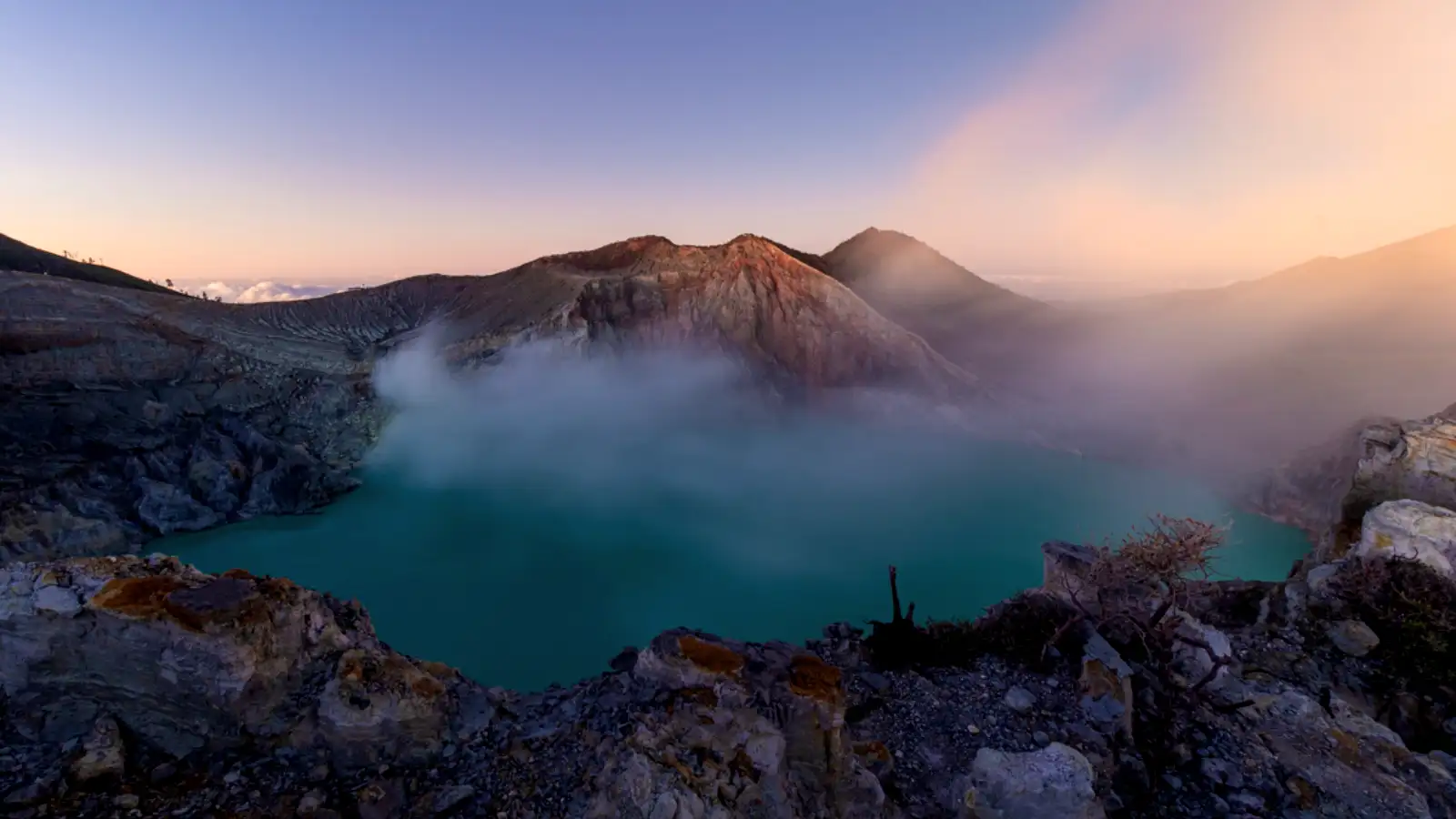
Visiting the lake requires preparation. It isn’t a walk in the park. The trail starts at Paltuding, which is at 1,850m elevation. You’ll hike up to the rim at 2,386m. The path is wide but steep, especially the first two kilometers. You also need to keep an eye on opening hours at Ijen, as the gates typically open at 02:00 AM WIB.
| Feature | Details |
|---|---|
| Elevation | 2,386 meters (Peak) |
| pH Level | Below 0.5 (Highly Acidic) |
| Max Depth | ~200 meters |
| Hiking Time | 1.5 – 2 hours to the rim |
Local Tips You Should Know
Truth is, the wind is your biggest enemy. Not the hike, the wind. If the wind shifts and blows the volcanic gas toward the trail, you’ll need that gas mask tight. The sulfur is acrid and bites into the back of your throat. Make sure you check the Ijen temperature guide so you don’t freeze while waiting for the sun to rise.
Also, the “Health Certificate” rule is real. Local rangers require a medical statement (Surat Keterangan Sehat) to prove you are fit to hike. You can get these at clinics in Banyuwangi for a small fee. Honestly, it’s better to have your guide handle this to save time. Safety is paramount, so always ask is Ijen crater safe before heading down into the crater floor.
Frequently Asked Questions
Q: Can I swim in Ijen Crater Lake?
A: Absolutely not. The water is concentrated acid (pH < 0.5) and can cause severe chemical burns to your skin and eyes instantly. It is extremely dangerous.
Q: Why is the lake turquoise?
A: The color comes from high concentrations of dissolved metals, specifically aluminum and iron, reacting with the high acidity and sulfur content in the volcanic water.
Q: How deep is the Ijen Crater Lake?
A: The lake reaches a maximum depth of approximately 200 meters, making it one of the deepest acidic volcanic lakes on the planet.
Q: Is the water hot?
A: While the surface stays between 20-40°C, the water near hydrothermal vents at the bottom is much hotter. The air around the lake is usually very cold.
Q: Does the lake ever overflow?
A: There is a dam built by the Dutch on the western side of the lake to control water levels and prevent acidic water from flooding local downstream plantations.
Q: What is the blue fire at Ijen?
A: It is not the lake itself. It is sulfuric gas emerging from cracks at high temperatures (600°C), which ignites upon contact with air, creating a blue glow.
Recommended Tour Packages
Choose the best way to see this geological wonder based on your starting location and schedule:
- Ijen Crater Tour from Bali (1 Day) – The most popular choice for travelers in Bali wanting a midnight adventure to Java.
- Mount Bromo and Ijen Crater Tour (3 Days) – The ultimate East Java volcano circuit starting from Surabaya or Bali.
- Ijen Crater Tour from Banyuwangi – A quick and easy 1-day trip for those already staying near the volcano base.
- Bromo Ijen Tumpak Sewu Tour (4 Days) – For those who want to see the best volcanoes and Indonesia’s most famous waterfall.
- Ijen Volcano Private Tour from Bali – A premium private experience with door-to-door transport and local guides.
Final Takeaway
Ijen Crater Lake is a place of extremes. It’s beautiful, but it’s a hostile environment. Between the acid levels, the sulfur fumes, and the 2:00 AM wake-up calls, it’s a test of endurance. But once you stand on that rim and watch the turquoise water glow as the sun rises over the caldera, you’ll realize why it’s one of the most unique places on Earth. Just remember your gas mask, your warm jacket, and your sense of adventure. See you at the summit.
Planning Your Trip to East Java?
Explore our local tour options and choose a route that matches your travel schedule.
Planning to visit Ijen or Mount Bromo?
Explore available tour options and ask our local team about your itinerary.
Explore Tour Packages →