What Is the Mount Bromo Crater?: The Ultimate Insider Guide
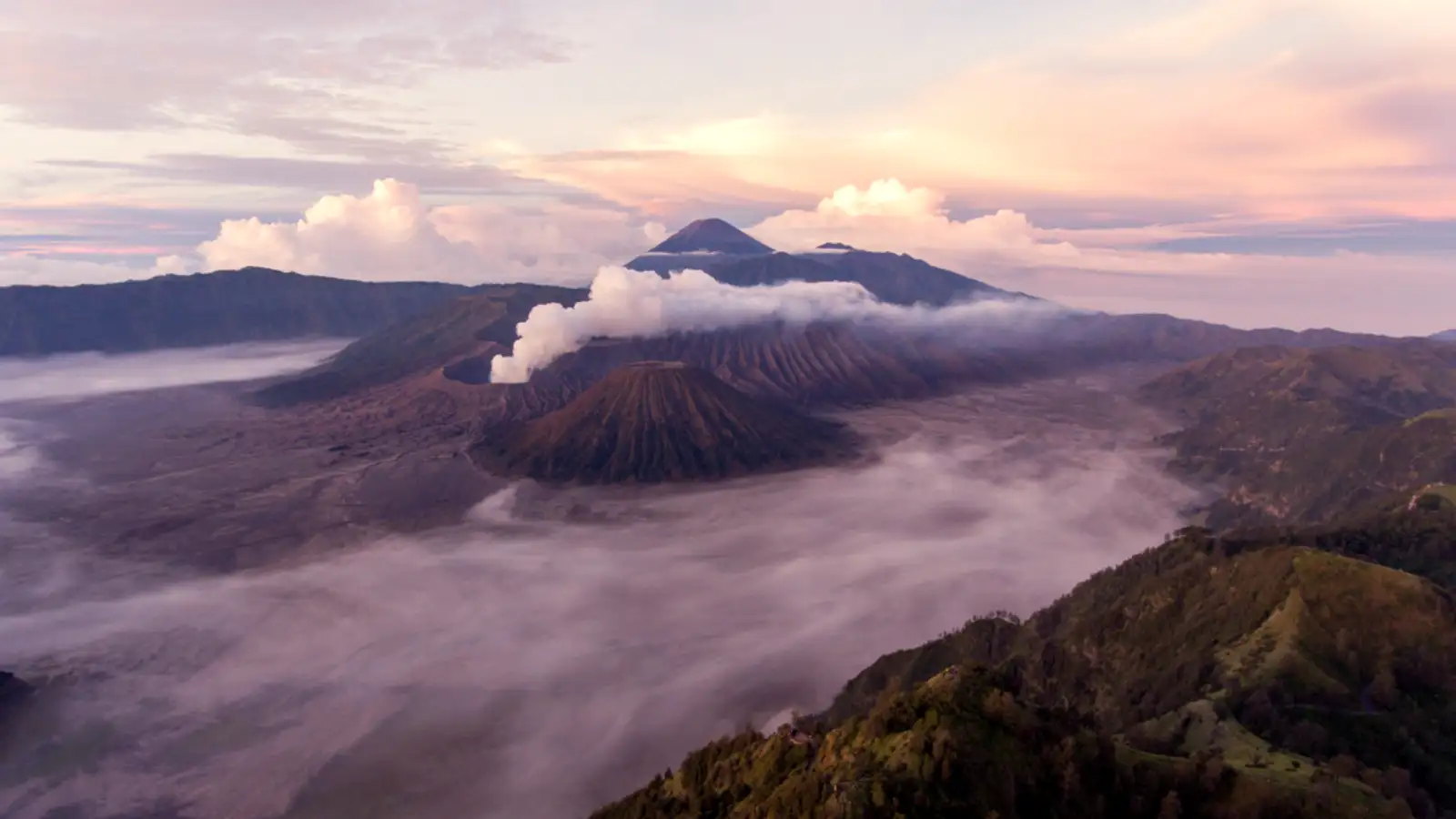
Standing on the edge of the Mount Bromo crater feels like peering into the throat of the earth itself. It is a raw, sulfur-belching maw located within the massive Tengger caldera in East Java, Indonesia. As one of the world’s most active volcanoes, the crater is the centerpiece of a surreal, lunar-like landscape that attracts thousands of adventurers seeking a glimpse of geological power. Before you set off at midnight to catch the sunrise, you should secure your guaranteed departure with a local expert to navigate the complex logistics of the national park.
Planning this trip often brings a mix of excitement and anxiety. Logistics in East Java can be notoriously tricky, with erratic jeep schedules and freezing temperatures that catch most backpackers off guard. Most travelers wonder if the hike is too steep or if the volcanic gases are dangerous. This guide breaks down exactly what the crater is, how to experience it safely, and why this Mount Bromo tour remains a bucket-list staple for anyone visiting Indonesia.
What You Need to Know
Mount Bromo is an active soma volcano sitting at 2,329 meters. Unlike a typical mountain peak, it is a hollowed-out vent constantly emitting thick white sulfurous smoke. Access can be restricted by local rangers at a moment’s notice if seismic activity spikes. The experience involves crossing the “Sea of Sand,” climbing 250 concrete steps, and standing on a narrow rim with no safety railings in many sections. Temperatures at the crater rim can drop to 5°C before dawn, so layers are mandatory.
The Geological Anatomy of the Crater
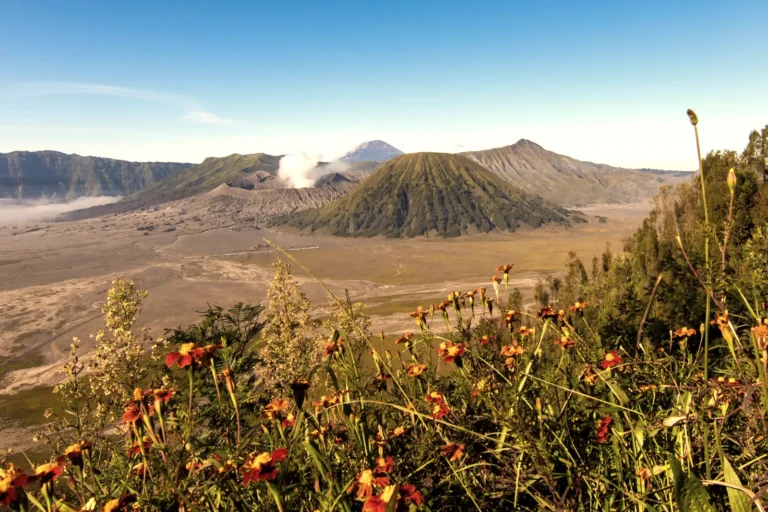
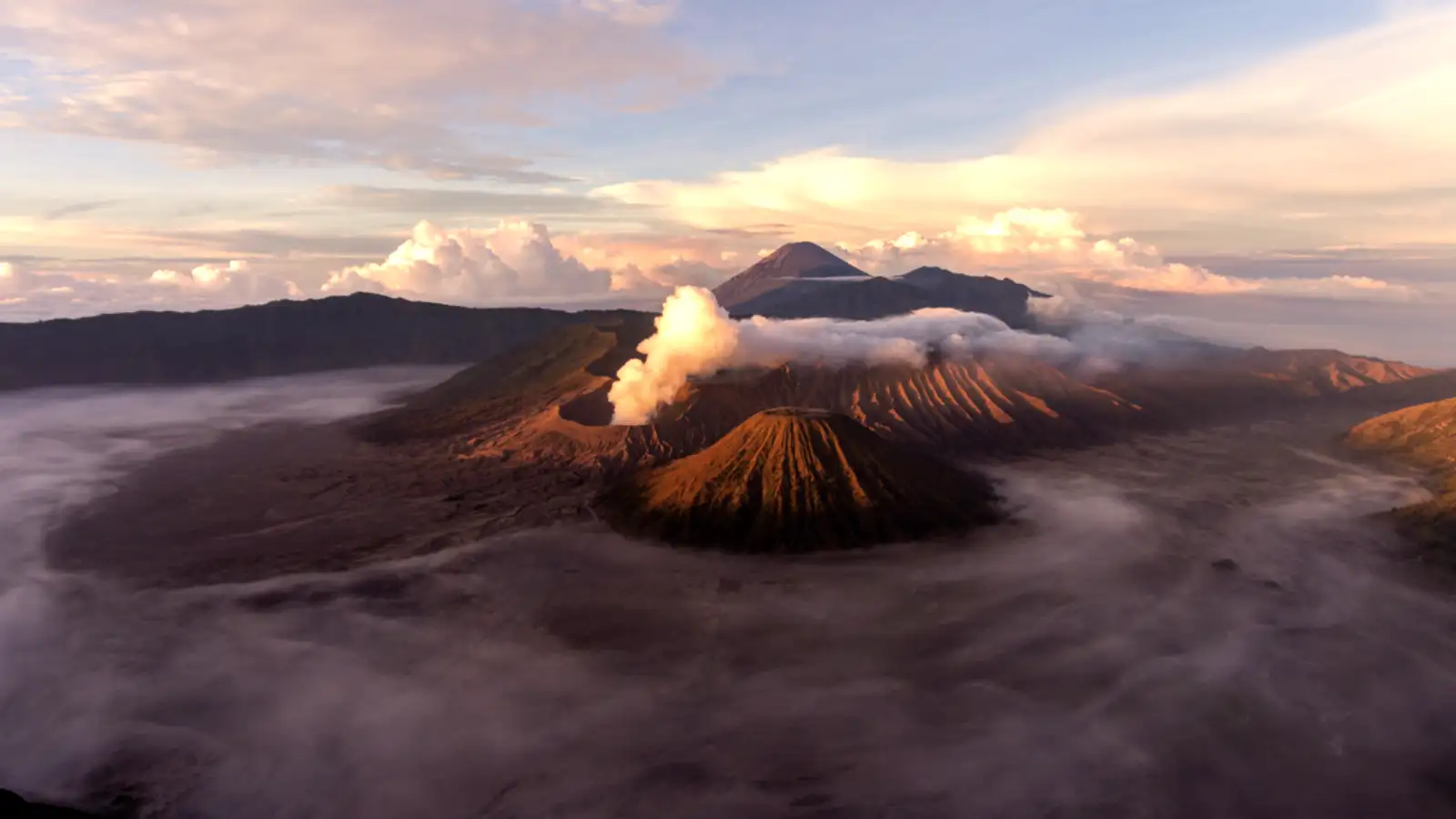
Mount Bromo is not a standalone mountain. It is part of the Bromo Tengger Semeru National Park, a massive volcanic complex that formed after the collapse of an ancient, much larger volcano. This collapse created the Tengger caldera, a 10-kilometer-wide basin filled with fine volcanic ash known as the “Sea of Sand.” Within this wasteland, several peaks have risen, but Bromo is the most famous because it remains aggressively active.
Scientists classify Bromo as a cinder cone volcano. Its crater is approximately 800 meters in diameter and several hundred meters deep. Looking down into the pit, you won’t see liquid lava. Instead, you see a swirling cauldron of white steam and volcanic gases. These gases are a mix of water vapor, carbon dioxide, and sulfur dioxide. This chemical cocktail is what gives the area its distinct “rotten egg” smell that clings to your clothes for days.
The Sea of Sand Context
Imagine a vast, grey desert surrounded by lush green crater walls. This is the stage upon which Bromo sits. The crater itself is the main actor, but the surrounding Sea of Sand provides the eerie atmosphere that makes it feel like another planet. During the dry season, the wind whips this ash into blinding clouds, making a face mask an absolute necessity for anyone attempting to reach the crater base.
How the Crater Changes
Nature never stays still here. Major eruptions in past decades have physically altered the shape of the crater rim. Some sections are wide enough for several people to walk side-by-side, while others have narrowed to just a few feet across. Rangers constantly monitor the rim for cracks or landslides, and they may close specific viewing sections if the ground becomes unstable after heavy rains.
A Sensory Journey: Roars, Sulfur, and Dust
Standing on the rim is an assault on the senses. Most people expect the view to be the main highlight, but the sound is often what stays with you. The volcano produces a deep, low-frequency rumble that you feel in your chest. It sounds like a distant jet engine or a boiling pot the size of a city. This constant roar reminds you that you are standing on a pressurized geological vent.
Smell plays a massive role in the experience. As the wind shifts, thick plumes of sulfur can engulf the viewing area. This gas is heavy and suffocating. It makes your eyes water and triggers a dry cough if you aren’t wearing a proper mask. Local vendors at the base often sell simple surgical masks, but for those with sensitive lungs, a professional respirator or N95 mask is a much better investment for the 45-minute stay at the top.
The Texture of Volcanic Ash
Walking toward the crater is a strange tactile experience. The ash is fine, like powdered sugar, but it is incredibly abrasive. It gets into your shoes, your camera gear, and your hair. Every footstep creates a small puff of grey smoke. If it has recently rained, this ash turns into a thick, slippery mud that makes the crater walk much more physically demanding.
Visual Spectacle from the Rim
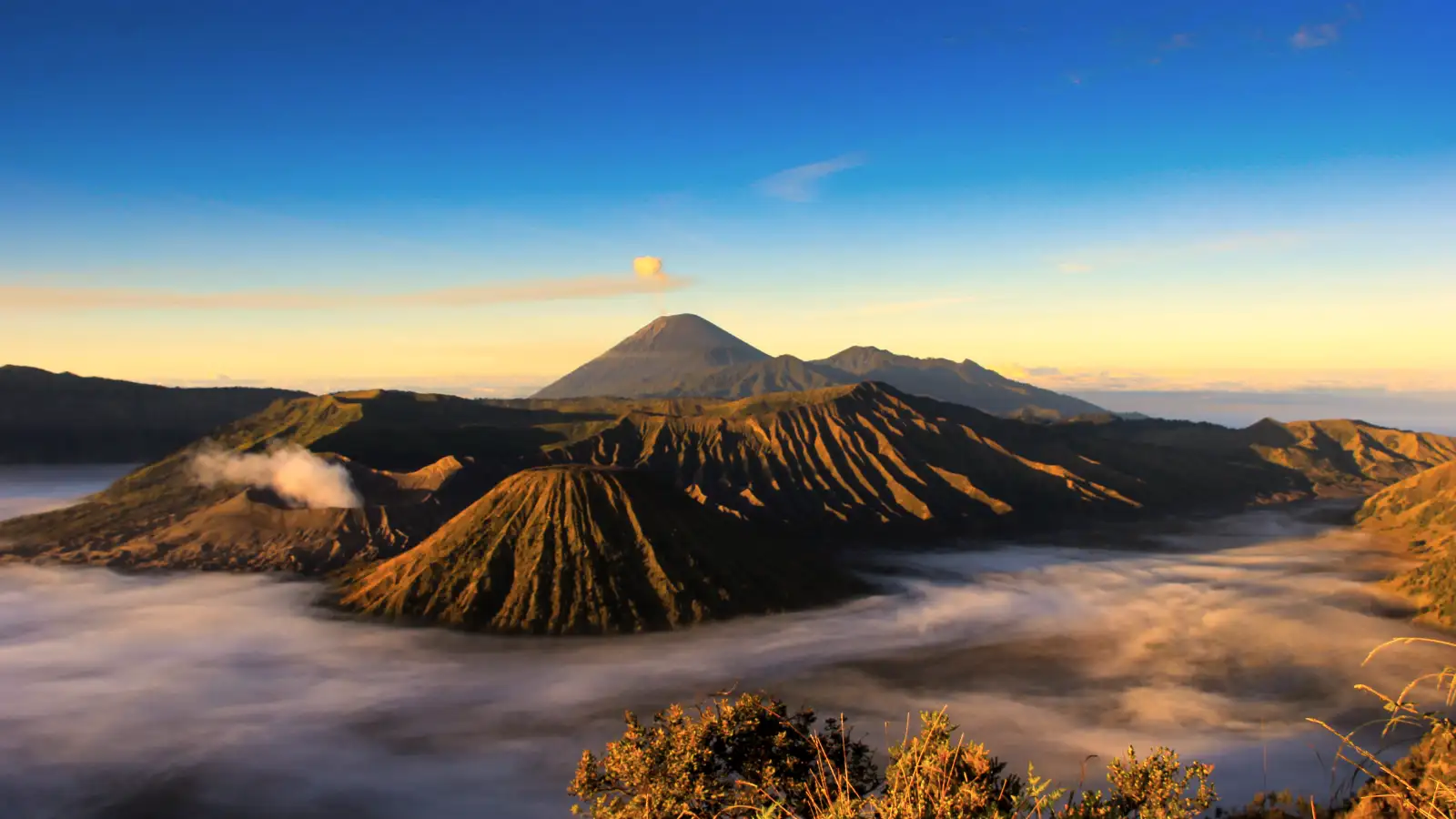
Once you reach the top, the contrast is staggering. To one side, you look down into the dark, smoky abyss of the crater. To the other, you see the perfect cone of Mount Batok and the distant, towering Mount Semeru puffing smoke into the sky. The lighting changes everything. In the early morning, the shadows are long and dramatic, highlighting the ripples in the Sea of Sand far below.
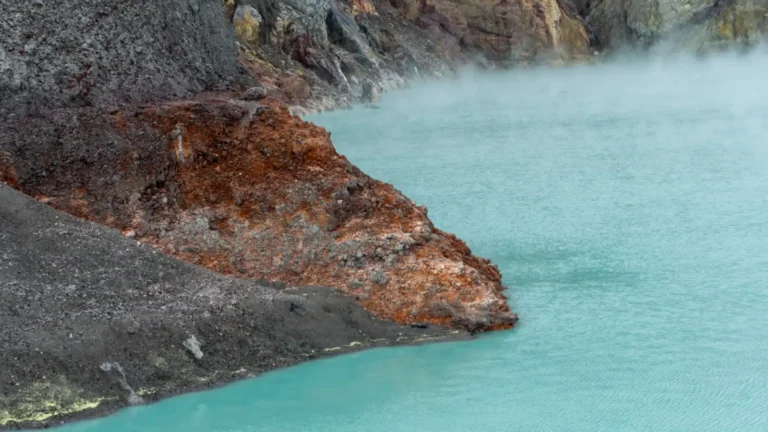
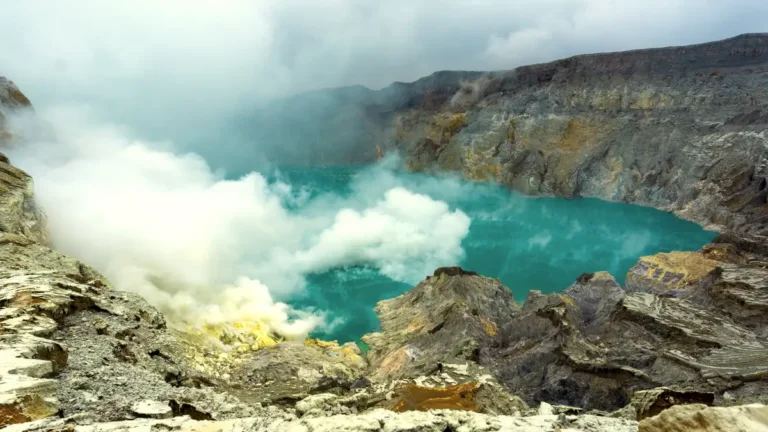
If you are planning an epic journey through Java, you should consider combining your visit with a Mount Bromo tour and the famous blue flames. Many travelers find that a combined Bromo Ijen tour is the most efficient way to see both giants. For those starting further east, the Ijen crater tour offers a completely different volcanic landscape. Alternatively, if you have more time, a full East Java tour will take you through waterfalls and hidden plantations.
The Sacred Heart of the Tenggerese People
Bromo is not just a tourist attraction; it is a sacred deity. For the local Tenggerese people, the crater is the home of the gods. They believe that the volcano’s activity is a direct reflection of the divine will. This cultural connection is most visible during the annual Yadnya Kasada festival, a month-long event where thousands of devotees journey to the rim to throw offerings into the crater.
Devotees toss fruit, vegetables, flowers, and even livestock like goats or chickens into the smoking pit. They do this to give thanks for the harvest and to seek protection for their community. Watching this ceremony is a humbling experience that adds a layer of spiritual depth to the geological wonder. It transforms the crater from a dangerous pit into a living temple where humans and the earth communicate.
The Legend of Roro Anteng
Every local guide will tell you the story of Princess Roro Anteng and her husband Joko Seger. According to legend, they were unable to have children and prayed to the gods of Mount Bromo. The gods granted them 25 children but demanded that the youngest, Kesuma, be sacrificed to the crater. When they tried to hide him, the volcano erupted and pulled the boy into the abyss. This myth is the foundation of the modern-day Kasada festival.
Modern Day Respect
Travelers are welcomed to witness these rituals, but respect is paramount. Standing on the stairs and blocking the path of devotees is highly frowned upon. If you visit during the festival, be prepared for even larger crowds than usual. The atmosphere is electric, filled with incense and prayers, contrasting sharply with the mechanical noise of the jeeps outside the sacred zone.
Navigating the 250 Stairs to the Rim
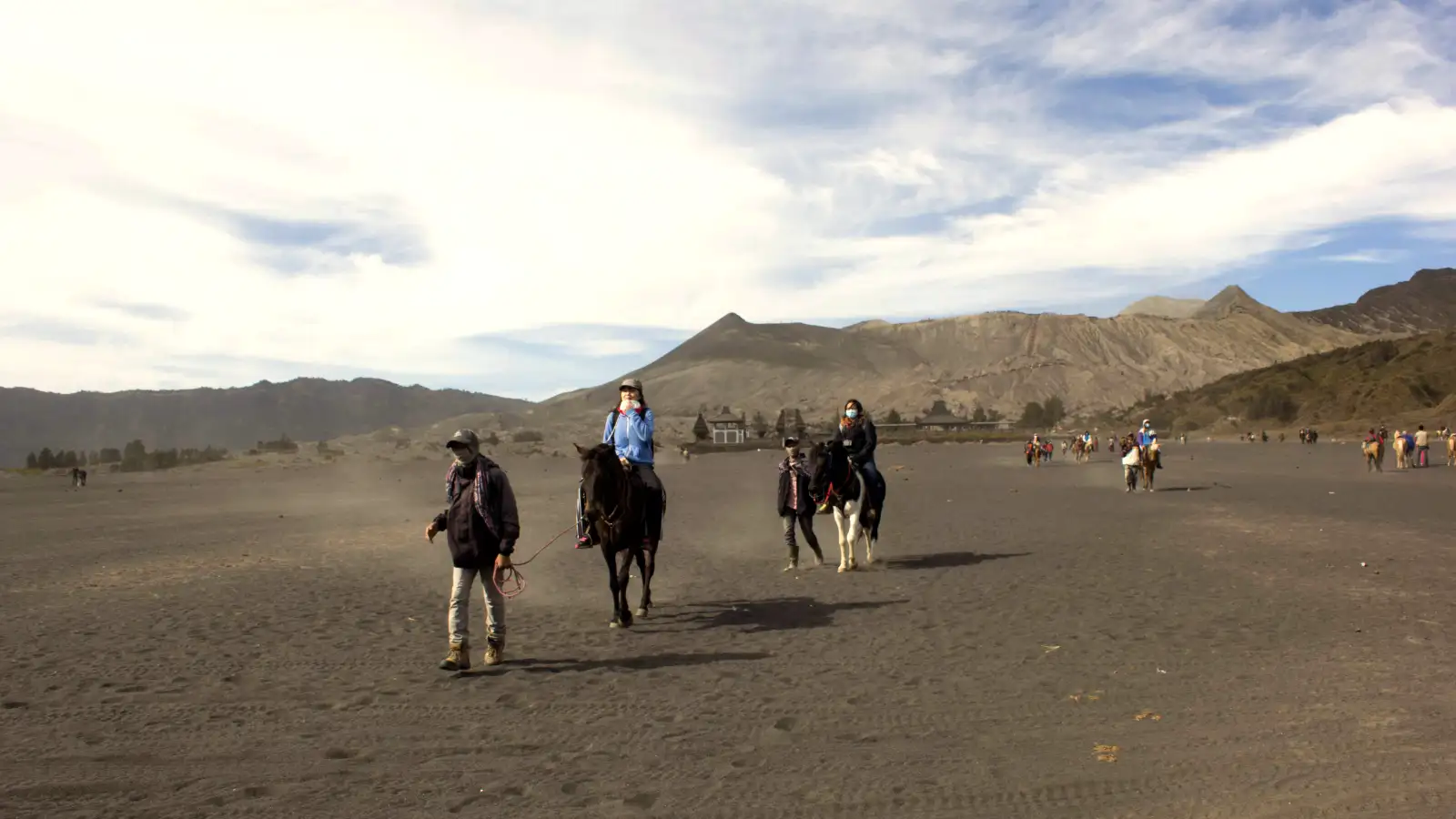
Reaching the rim requires effort. After your jeep drops you off in the Sea of Sand, you have two choices: walk about 1.5 kilometers to the base of the volcano or hire a local pony. The walk is flat but can be exhausting due to the soft ash and the slight incline at the end. Once you reach the base of the mountain itself, the real challenge begins: the stairs.
There are exactly 250 concrete steps leading to the rim. In the thin mountain air, these stairs feel much harder than they look. Many people find themselves stopping every 50 steps to catch their breath. The stairs are often covered in ash, making them slippery. During the peak season, this staircase becomes a bottleneck, with people ascending and descending in a slow, rhythmic crawl under the morning sun.
The Horse Option
Local horsemen offer rides from the jeep parking area to the bottom of the stairs. This is a popular option for families or those who want to save their energy for the climb. The horses are small but sturdy, navigating the ash with surprising ease. However, they cannot climb the stairs. You will still have to tackle the final 250 steps on your own two feet.
Crowd Management at the Stairs
By 7:00 AM, the stairs can be incredibly crowded. If you want a more peaceful experience, try to arrive at the crater rim as early as possible after the sunrise at Penanjakan. Alternatively, some visitors wait until 9:00 AM when the initial wave of tourists begins to leave for breakfast. The heat will be higher, but the physical struggle with the crowds will be significantly less intense.
What Nobody Tells You About the Rim
Social media often shows a peaceful, empty rim, but the reality is much more chaotic. On a busy morning, there might be 500 people jostling for a photo spot on the narrow ledge. There are no guardrails around most of the rim. One slip on the loose volcanic gravel could be disastrous. Most people stay near the top of the stairs where there is a small concrete fence, but the adventurous walk further around the circle where the path narrows.
Another surprise is the “souvenir” industry at the top. Local kids often sell small bouquets of dried Edelweiss flowers (often called “eternal flowers”) for you to throw into the crater as your own offering. While it’s a nice sentiment, be aware that Edelweiss is a protected species in many parts of Indonesia. It’s better to simply enjoy the view and keep the environment as pristine as possible.
The Temperature Shock
Most travelers are prepared for the cold at the sunrise viewpoint, but they forget that the crater rim is also high up. While the sun is out, the wind can be biting. The sulfur smoke can also create a localized “fog” that drops the temperature. Don’t shed your layers too quickly just because you finished the hike. Keep your windbreaker on until you are back in the Jeep.
Protecting Your Gear
Volcanic ash is basically tiny shards of glass and rock. If you are a photographer, do not change your lenses while at the crater. The wind will blow fine dust into your camera sensor, which can be an expensive mistake to fix. Use a UV filter to protect your glass and keep your camera in a sealed bag whenever you aren’t actively taking a shot.
Safety, Gas, and Volcanic Activity
Mount Bromo is an active volcano with a status that can change from “Normal” to “Alert” in a matter of hours. The Indonesian Center for Volcanology and Geological Hazard Mitigation (PVMBG) monitors the mountain 24/7. They establish a “danger zone,” usually a 1-kilometer radius around the crater. If the alert level is raised, access to the stairs and the rim is strictly prohibited. Never ignore the local rangers or the warning signs; they are there for your protection.
Aside from eruptions, the biggest risk is the volcanic gas. Some days the smoke is white (mostly steam), and other days it is grey or yellowish (high sulfur content). If the wind is blowing the smoke directly toward the stairs, the air becomes toxic. You will see people choking and turning back. This is why having a survival guide and proper gear is so important for this specific trek.
Footwear and Stability
Flip-flops are a recipe for a twisted ankle here. The path is uneven, filled with loose rocks, and often slippery. Wear shoes with good grip. If you are planning to walk around the wider part of the rim, hiking boots are highly recommended. The ground is literally shifting under the weight of the crowds, and having stable footing is the difference between a great photo and a dangerous fall.
Knowing When to Leave
Don’t let the “Fear Of Missing Out” cloud your judgment. If the sulfur smell is making you dizzy or you feel a headache coming on, descend immediately. Your health is worth more than a selfie. The gas can be unpredictable, and what starts as a small plume can quickly become an overwhelming cloud. Always keep an eye on the wind direction while you are standing on the rim.
Continue Your Adventure
- Book Your Trip Now: Lock in your reservation for a hassle-free journey.
- Mount Bromo Sunrise Tour from Surabaya: The most popular starting point for a quick getaway.
- Mount Bromo Tour from Bali (2D1N): Cross the strait and experience the volcanic heart of Java.
- Bromo Ijen Tour from Surabaya (3D2N): The ultimate East Java loop covering both major craters.
- Bromo Ijen Tour from Bali (3D2N): Perfect for travelers heading from Ubud or Canggu.
- Bromo Ijen Tumpak Sewu Tour (4D3N): Add the most beautiful waterfall in Java to your itinerary.
Ready to Stand on the Edge?
Our team of local experts handles all the logistics, from midnight jeep departures to safety gear, so you can focus on the adventure.
Frequently Asked Questions
A: Currently, a one-way horse ride from the parking area to the bottom of the stairs costs between 150,000 to 200,000 IDR. Prices are often higher for a return trip, but they are always negotiable depending on the crowd size and time of day.
Q: Is the dust really that bad for photography?
A: Yes, it is extremely fine and gets into everything. If you are using a professional camera, keep it in a dust-proof bag when not in use. Smartphone cameras are generally more resilient, but you should still wipe the lens frequently with a microfiber cloth.
Q: Can elderly travelers or those with low fitness handle the crater rim?
A: The walk across the Sea of Sand is easy if you take a horse. However, the 250 stairs are steep. For those with limited mobility, reaching the bottom of the stairs still offers a magnificent view, even if you don’t climb to the very top rim.
Q: What is the best month to visit to avoid rain and clouds?
A: The dry season from April to October is the best time for clear skies and predictable conditions. During the rainy season (November to March), the crater can be shrouded in thick mist, and the stairs become dangerously slippery from mud and ash.
Q: Are there bathrooms or food stalls at the crater rim?
A: There are no facilities on the rim itself. You will find small warungs (stalls) and basic toilets in the Sea of Sand near the jeep parking area. It is highly recommended to use the facilities and buy water before you start the walk to the volcano base.