Peak Season vs Low Season at Ijen Crater: The Insider Guide
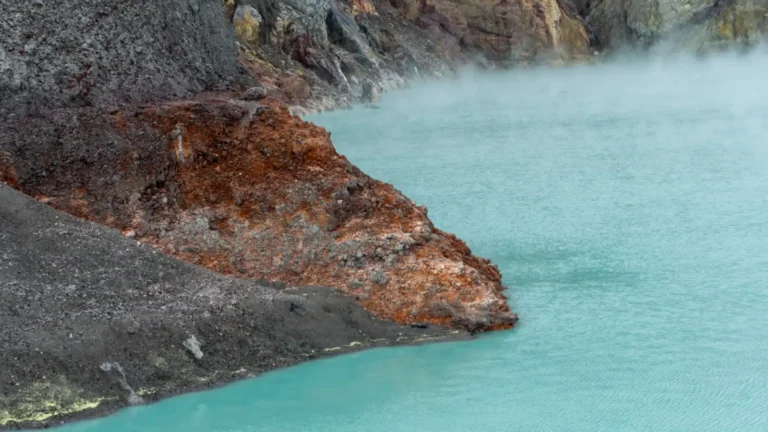
You wake up at midnight. Your breath hitches in the freezing mountain air as you stare at the steep, sandy trail illuminated only by a flickering headlamp. Is it worth it? Choosing between Peak Season vs Low Season at Ijen Crater is the difference between a serene spiritual encounter with nature and a chaotic scramble through a “human traffic jam.” Most travelers just wing it, but the seasoned ones know that timing changes everything from the intensity of the electric Blue Fire to the clarity of the turquoise acidic lake. If you want to avoid the heartbreak of a rain-soaked summit or a three-hour wait for a photo spot, you need to understand the rhythm of East Java’s most famous volcano.
Planning your journey involves more than just booking a flight. You have to navigate the nuances of the dry season in Indonesia and the unpredictable wet season trekking challenges. Whether you are looking for a rugged Ijen Crater tour or a luxury private experience, the calendar is your most powerful tool. This guide breaks down the raw reality of when to go, what to pack, and how to survive the elements of this volcanic giant.
What You Need to Know
Timing your visit involves balancing blue flame visibility and crowd density. Peak season (July–August) offers the clearest skies but features massive crowds that can ruin the “hidden” vibe. Low season (January–March) provides solitude but carries a high risk of heavy rain and fog that might hide the crater entirely. For the best balance, target the shoulder months of May, June, September, and October. Always check locking in your reservation early if you plan to visit during the busy summer months.
Why Trust This Guide
We aren’t just writers sitting in an air-conditioned office in Jakarta. We are on the ground in Banyuwangi every single week. Our team has hiked Ijen in every possible condition—from the bone-chilling 4°C mornings of August to the torrential downpours of February where the trails turn into rivers of mud. We’ve seen the ijen sulfur miners navigate these paths with 80kg baskets in thick fog, and we’ve helped travelers pivot their plans when volcanic activity spikes. Our insights come from real-time data and long-standing relationships with the local rangers at Paltuding.
Operational knowledge is vital here because the mountain doesn’t care about your itinerary. Volcanic gas directions can shift in seconds, and the local rangers make daily safety calls that can close the crater rim without warning. By understanding the Peak Season vs Low Season at Ijen Crater, you are leaning on years of trial and error. We know which warungs serve the best ginger tea at 2 AM and which viewpoints are actually worth the extra 20-minute scramble.
Weather Patterns and Climate: Dry vs Wet
The dry season in Indonesia generally spans from May to September. During these months, the Ijen crater weather is characterized by crystal-clear night skies and biting cold. This is the time for photographers. The lack of moisture in the air means the Milky Way is often visible from the basecamp at Paltuding. However, the ground is incredibly dusty. You will find yourself coughing not just from sulfur, but from the fine volcanic ash kicked up by thousands of boots. Temperatures at the summit can plummet to near freezing, making high-quality layers essential.
When the monsoon arrives between December and March, the mountain transforms. The dust disappears, replaced by lush, dripping ferns and a misty, ethereal atmosphere. Wet season trekking is inherently more dangerous and physically demanding. The trail becomes slippery, and the descent into the crater to see the Blue Fire is frequently closed for safety. If it rains at 2 AM, the gas from the vents gets “trapped” by the humidity, creating a thick, suffocating blanket that can make the hike impossible even with a professional gas mask.
The Magic of the Shoulder Months
If you want the best of both worlds, look at April or October. These transitional months often offer clear mornings with occasional afternoon showers. The crowds haven’t reached their peak, yet the risk of a complete washout is significantly lower than in January. You might get a bit of rain on the way down, but the sunrise is usually spectacular. It’s the “sweet spot” that savvy backpackers aim for to avoid the mid-summer madness.
How Cold Is It Really?
Don’t let the tropical Indonesian heat fool you. At 2,300 meters, the wind chill is a different beast. In peak season, it’s a dry, piercing cold that numbs your fingers. In the low season, the humidity makes the cold feel “heavy,” soaking into your clothes. Regardless of when you go, you need a windbreaker and thermal layers. Many travelers arrive in shorts and T-shirts, only to end up shivering in a local warung, unable to finish the hike.
Blue Fire Visibility and Gas Density
The legendary Blue Fire is the main event for most, but its presence is never guaranteed. This natural phenomenon occurs when sulfuric gases emerge from cracks in the volcano at high pressure and temperature, igniting upon contact with the air. During the peak dry season, the lack of rain means the gas vents are “cleaner,” and visibility is generally higher. The flames appear sharper and more electric against the dark, dry rock. You can see it from further away, even from the crater rim if the wind is in your favor.
In the low season, blue flame visibility is a gamble. Rainwater can cool the vents or cause steam that obscures the flames. However, there is a silver lining. Fewer people mean you can actually get close to the vents without being shoved by a tour group. If you happen to catch a dry window during the wet season, the experience is far more intimate. You can hear the roar of the gas vents and the clinking of the miners’ tools without the background noise of hundreds of tourists chatting.
Volcanic Gas and Safety
The volcanic gas levels are a constant variable. High humidity in the low season often causes the gas to linger at the bottom of the crater, making the descent hazardous. Local authorities monitor this hourly. If the sulfur dioxide concentration is too high, they will block the path down to the lake. This happens more frequently in the wet months. Even in peak season, a sudden shift in wind can send a “cloud of death” toward the hiking path, requiring everyone to don their masks immediately.
Deciding between a Ijen Crater tour or combining it with other giants like a Mount Bromo tour is the ultimate East Java adventure. For those with limited time, the Bromo Ijen tour offers the perfect loop, while the East Java tour dives deeper into the region’s waterfalls and culture. Reach out to our team to plan your logistics perfectly.
Crowd Dynamics: Peak Chaos vs Low Quiet
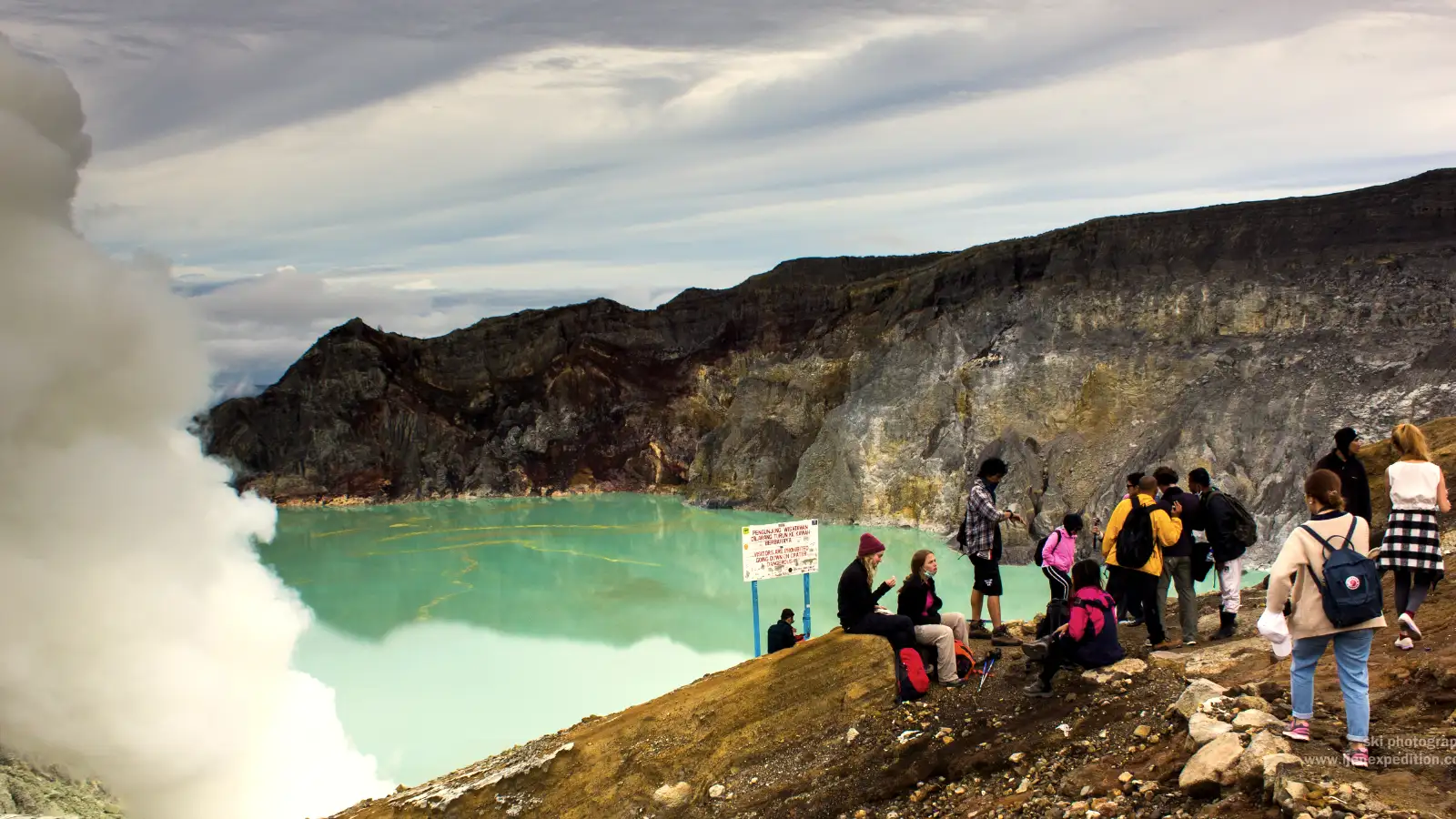
The human element of Peak Season vs Low Season at Ijen Crater is the most shocking part for first-timers. In July and August, the basecamp at Paltuding looks like a music festival at 2 AM. Thousands of people gather around flickering fires, drinking coffee and preparing for the ascent. The trail becomes a long, glowing line of headlamps stretching up the mountainside. Finding a quiet spot for a photo at the summit is nearly impossible, and the “dead tree” viewpoint often has a 30-minute queue. If you value silence and solitude, this will be your biggest challenge.
Compare this to the low season in February. You might share the summit with only a few dozen people. The Banyuwangi travel guide vibe shifts from “mass tourism” to “rugged adventure.” You can sit on the edge of the crater rim and listen to the wind howl without hearing a dozen different languages at once. The downside? You are likely hiking in the mud, and your gear will get soaked. But for many, the trade-off is worth it for the sense of raw, unfiltered connection with the volcano.
The Weekend Factor
Regardless of the season, weekends and public holidays are a different animal. Local tourism from Surabaya and Bali spikes on Saturdays and Sundays. If your schedule allows, always aim for a Tuesday or Wednesday hike. Even in the height of peak season, a midweek trip is significantly calmer than a weekend one. According to official weather reports from BMKG, the early morning hours are consistently the most stable for visibility, so don’t delay your start time just to avoid the crowd.
Common Mistakes First-Time Visitors Make
One of the biggest errors people make is underestimating the steepness. The first 1.5 kilometers of the trail have a gradient of nearly 30 degrees. People often burn out their legs in the first 20 minutes because they are racing the crowds. Whether it is peak or low season, pace yourself. Use the ijen trolley taxi service if you find the climb too punishing. There is no shame in it—it’s a way to support the local miners who have transitioned to tourism.
Another classic mistake is wearing the wrong footwear. In the dry season, sneakers might suffice, but they will be ruined by volcanic dust. In the low season, they are a disaster waiting to happen. The trail is made of loose volcanic sand and clay; when it gets wet, it becomes a slip-and-slide. Wear boots with aggressive tread. If you are slipping, you aren’t looking at the view—you are looking at your feet, and you might miss the moment the sun breaks over the horizon.
The “Blue Fire or Bust” Mentality
Travelers often get so fixated on the Blue Fire that they ignore the sunrise. If the gas is too thick or the path is closed, don’t let it ruin your trip. The sunrise at Ijen is world-class. Seeing the light hit the acidic lake and the sulfur clouds turn golden is a spiritual experience. Some of the best views are actually along the rim toward the “Dead Tree” area, far away from the main fire viewing point. Keep an open mind and let the mountain show you what it wants to show you that day.
Realistic Expectations vs Instagram
Instagram makes Ijen look like a peaceful, neon-blue dream. The reality involves sulfur gas that makes you gag, freezing wind that bites through your jacket, and the sound of hundreds of people coughing in their masks. It is a gritty, industrial, and raw environment. The miners are working hard in a literal hellscape while you are there for a vacation. Acknowledging this reality makes the trip much more meaningful. It isn’t just a “photo op”; it is a glimpse into one of the toughest jobs on the planet.
In the peak season, expect the “Instagram spots” to be crowded. You will need patience. In the low season, expect the “Instagram view” to be hidden by clouds for hours. You will need luck. But if you go in with the mindset of an adventurer rather than a spectator, you will find beauty in the struggle. Whether it’s the 3 AM coffee with a local guide or the shared triumph of reaching the top with a group of strangers, the real memories are rarely the ones that make it to the grid.
Continue Your Adventure
Ready to explore more of Java’s volcanic wonders? Check out these curated experiences to complete your journey:
- Book Your Tailored East Java Adventure
- Full Ijen Crater Day Trip Guide
- Classic Mount Bromo Sunrise Experience
- Ultimate 3-Day Bromo & Ijen Loop
- Comprehensive East Java Multi-Day Tour
- Ijen Crater Tour from Bali: Logistics & Booking
Secure Your Spot on the Rim
Don’t leave your Ijen experience to chance. Our local experts track the weather and volcanic activity daily to ensure you have the safest and most spectacular hike possible, regardless of the season.
Frequently Asked Questions (FAQ)
A: Most people cluster near the main sunrise point and the dead tree. If you continue walking along the crater rim path toward the southern side, the crowds thin out significantly. You’ll get a wider perspective of the lake and the surrounding peaks without the elbow-to-elbow experience.
Q: How bad is the dust in the dry season?
A: It is intense. The trail is made of fine volcanic ash which becomes airborne when thousands of people are hiking. If you have asthma or sensitive eyes, the dust can be as irritating as the sulfur gas. Wear a buff or a mask even when you aren’t near the crater vents to protect your lungs from the silt.
Q: Can elderly travelers handle the stairs and the steepness?
A: It depends on their fitness level, but the first 1.5km is very challenging. However, the local “trolley taxis” are a great option for those who want to experience the crater without the physical strain. Many elderly visitors use the trolley for the uphill section and walk the flatter parts of the rim.
Q: What happens if it rains during my scheduled tour?
A: If it’s a light drizzle, the hike usually proceeds. If there is heavy rain or lightning, the rangers will close the gates for safety. In the low season, we always recommend having a “buffer day” in Banyuwangi so you can try again the following morning if the first attempt is rained out.
Q: Is the Blue Fire visible every single night?
A: No. It depends on the volcanic activity and the amount of gas being released. Sometimes the fire is massive and clearly visible; other times it is just a tiny flicker. If the wind is blowing the wrong way, the sulfur cloud might completely obscure it from the viewing area. It’s best to check with us for the latest daily updates.