Ijen Crater Photography: 15 Pro Tips for Landscape Enthusiasts (2026)
Standing on the edge of the world’s largest acidic lake at 2:00 AM, surrounded by swirling toxic sulfur clouds and the ethereal glow of electric blue flames, you realize that Ijen Crater isn’t just a hike—it’s a high-stakes photography expedition. As the Lead Tour Director at Ijen Crater Tour Official, I have guided thousands of photographers through these volatile terrains. Capturing the perfect shot here requires more than just a good eye; it requires a deep understanding of volcanic chemistry, extreme low-light physics, and the physical endurance to navigate a steep caldera in the dark.
This guide is the culmination of years of field observations. Whether you are chasing the elusive Blue Fire or the sunrise glow hitting the turquoise waters, these Ijen Crater photography tips for landscape enthusiasts will ensure you return with portfolio-grade images rather than just blurry memories.
Quick Answer: How to Photograph Ijen Crater Like a Pro
To capture the best of Ijen, you must arrive at the rim by 2:30 AM for the Blue Fire (requires ISO 3200+, f/2.8, and 5-10s exposure) and stay until 7:00 AM for the golden hour over the acid lake. Essential gear includes a sturdy tripod, a gas mask to protect you and your camera from corrosive sulfur, and a wide-angle lens (14mm-24mm).
- Blue Fire: Best from 02:00 – 04:00 (ISO 3200, f/2.8, 8s).
- Acid Lake: Best from 05:30 – 06:30 (ISO 100, f/11, bracketed).
- Miners: Best from 06:00 – 08:00 (ISO 400, f/4, 1/250s).
Key Facts & Essential Overview
- Location: Banyuwangi, East Java, Indonesia.
- Elevation: 2,386 meters.
- Temperature: 2°C to 12°C.
- Difficulty: Moderate to Hard.
Mastering the Blue Fire: The Ultimate Low-Light Challenge
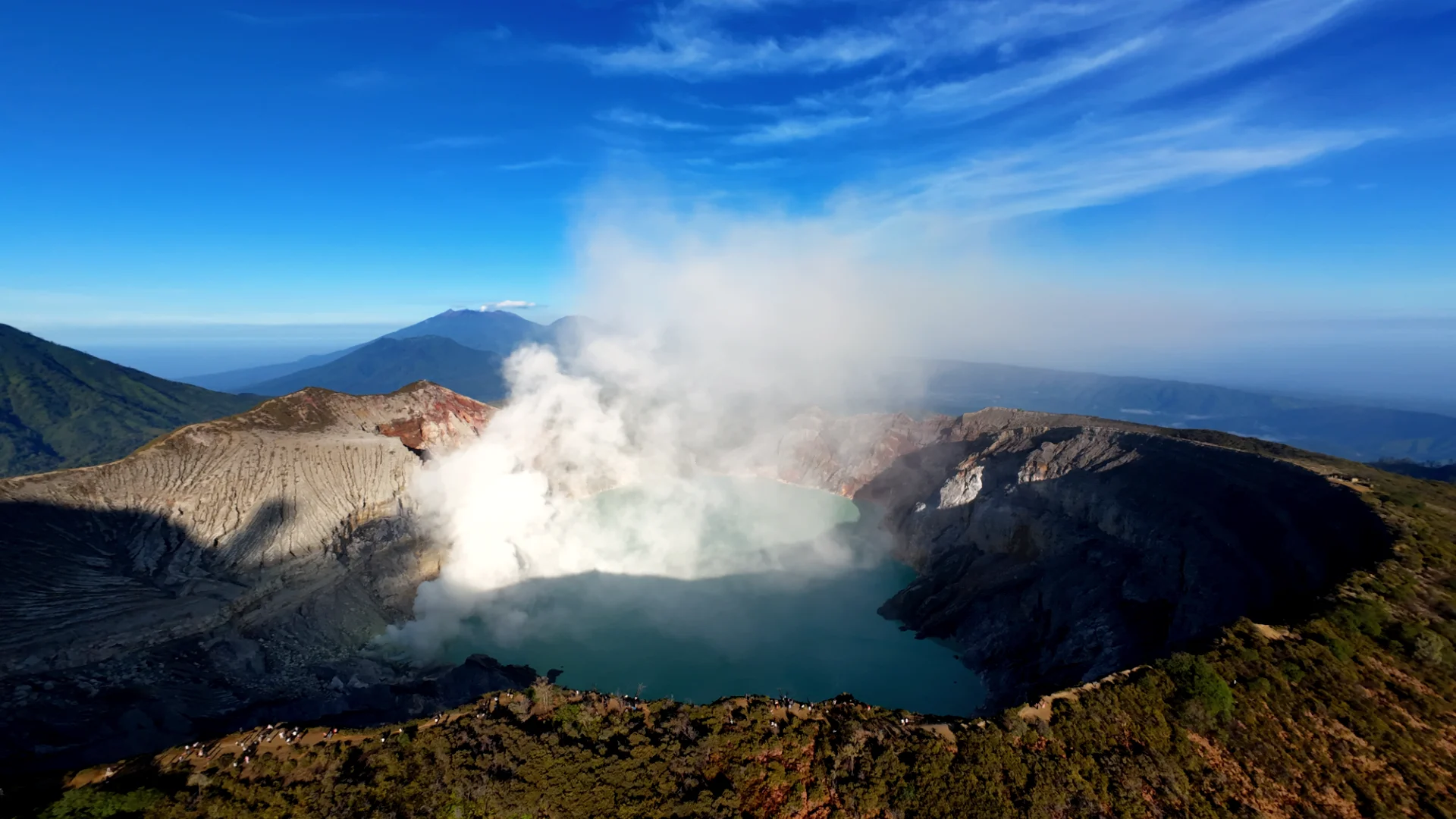
The Blue Fire is the combustion of sulfuric gases emerging from cracks at temperatures up to 600°C. It is incredibly faint and requires specific technical execution.
Technical Execution
- Stability: Use a carbon fiber tripod to combat erratic winds inside the crater.
- Exposure: Start at ISO 3200. Keep shutter speeds under 10s to maintain flame texture.
- Manual Focus: Use Live View to lock focus on a miner’s headlamp.
The Turquoise Acid Lake: Composition and Color
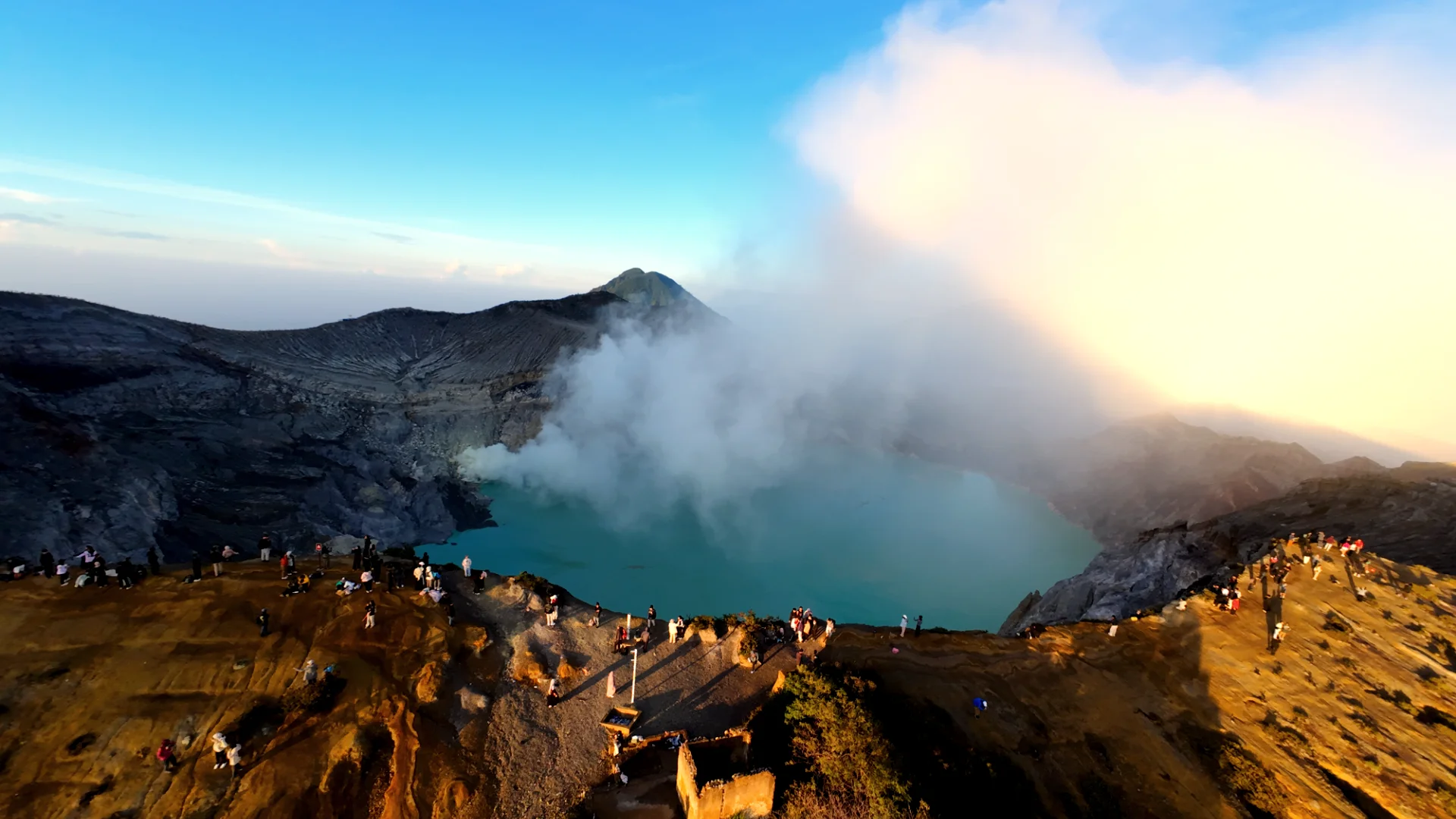
As the sun rises, the Ijen acid lake reveals its stunning teal color. This lake has a pH of nearly 0.
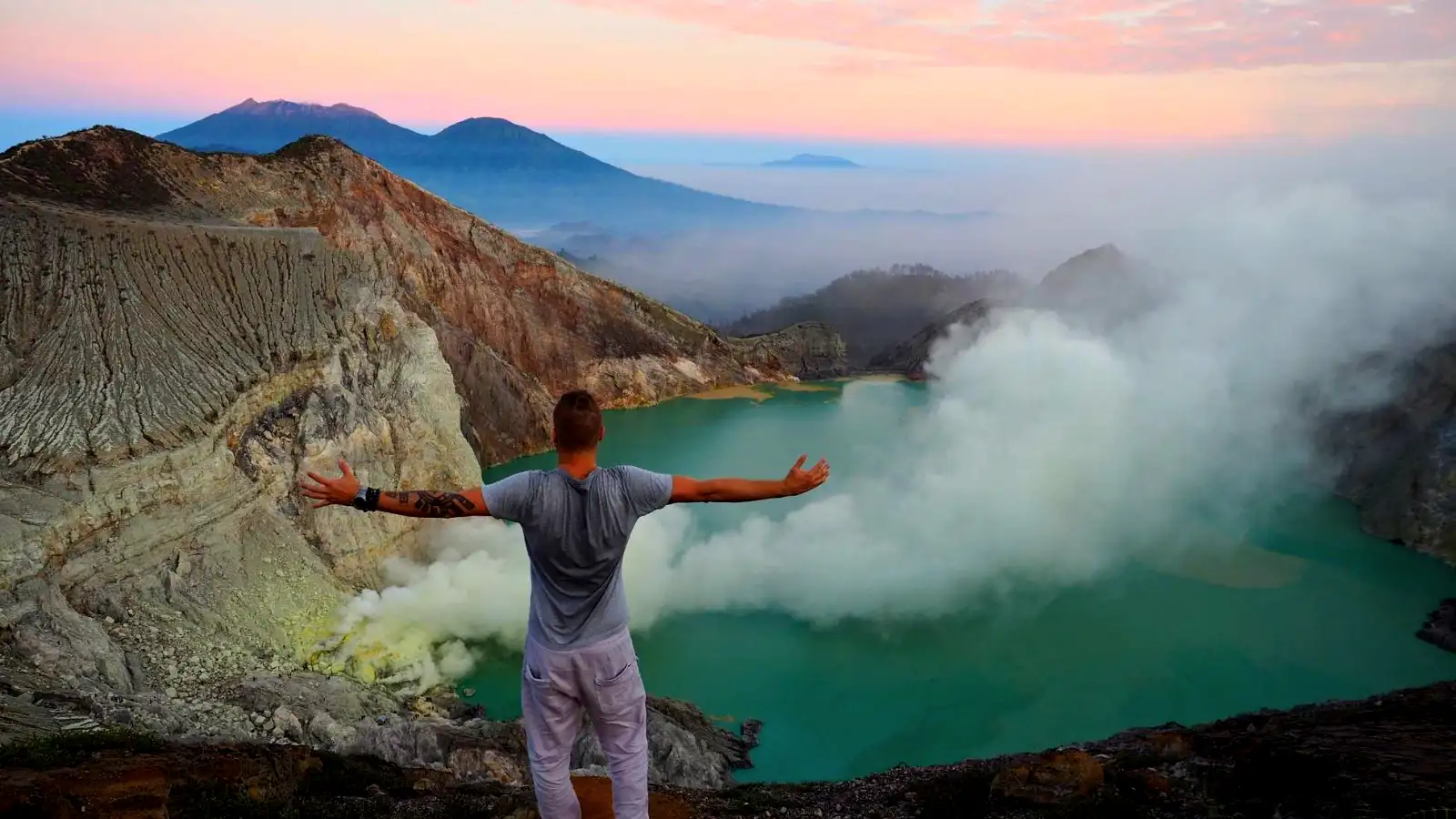
The Teal & Orange Contrast
The best light hits the lake approximately 30 minutes after sunrise, creating a natural Teal and Orange palette. Use a Circular Polarizer (CPL) to manage reflections and deepen saturation.
Human Interest: Photographing the Sulfur Miners
Landscape photography at Ijen is incomplete without the human element. Miners carry up to 90kg of sulfur up the steep walls.
- Respect: Always ask permission or offer a tip for portraits.
- Action: Use 1/250s shutter speed to freeze movement against the steam.
Scenario-Based Insights: Adapting to the Elements
What to do if it’s too foggy?
Don’t leave! The wind shifts every few minutes. Set your camera on a tripod and wait for the 2-second window when the wind clears the steam. These shots are often the most atmospheric.
Common Mistakes: Why Most Ijen Photos Fail
- Corroded Gear: Sulfur gas eats lens coatings. Use a UV filter and wipe gear immediately after the hike.
- Ignoring Histogram: High dynamic range between steam and rock leads to blown highlights. Shoot RAW and bracket.
Pro Tips from the Field (E-E-A-T Boost)
Based on years of guiding, the “Blue Hour” (20 minutes before sunrise) is the secret window. It provides enough ambient light for crater textures while the Blue Fire is still visible. Also, keep spare batteries in your pockets to keep them warm.
Enhance Your Photography Journey
If you want a smoother and safer experience, having a local guide who understands lighting is invaluable. Explore our Ijen Crater Tour from Banyuwangi (1 Day) for a tailored photography experience.
FAQ
Can I fly a drone at Ijen Crater?
Yes, but heat, thermals, and iron content in rocks make it difficult. Fly in ATTI mode if possible.
What is the best month for Ijen photography?
The dry season (May to September) offers the clearest skies and safest paths.
Do I really need a gas mask?
Absolutely. Sulfur dioxide is toxic and will prevent you from focusing on your shots if the wind shifts.
Ready to witness the magic safely? Don’t leave your adventure to chance.
Book directly with the local experts at IjenCraterTour.com.
📱 WhatsApp: +62 851-8531-9904
📧 Email: ijencratertourofficial@gmail.com
⚡ Fast response guaranteed!
Plan your perfect shoot here: Ijen Crater Tour from Banyuwangi 1 Day