King Kong Hill Bromo: Best Photo Spots
Standing on the edge of a volcanic caldera at 3 AM is a brutal wake-up call. The wind howls across the Tengger massif, biting through even the thickest down jackets. Most travelers find the logistics of reaching this remote corner of East Java overwhelming and chaotic.
Between unreliable Jeep drivers and the bone-chilling temperatures, planning the perfect morning can feel like a gamble. You deserve more than just a blurry smartphone shot of the horizon. Finding the right vantage point shouldn’t be a stressful guessing game in the dark.
This is where King Kong Hill changes everything for your photography. By securing a private Bromo tour booking early, you bypass the confusion and head straight to the most dramatic vistas. Let’s break down exactly how to capture the shot of a lifetime.
For a deep dive into the broader region, check out our comprehensive Mount Bromo travel guide to master the terrain. This landscape is a UNESCO-recognized marvel of nature, as noted by UNESCO World Heritage data regarding Indonesian volcanic sites.
What You Need to Know
King Kong Hill, known locally as Bukit Kedaluh, sits at roughly 2,600 meters above sea level. It offers a higher and often wider perspective than the overcrowded Penanjakan 1 viewpoint nearby.
Expect temperatures to dip between 0°C and 5°C before the sun rises. You must wear multiple layers, including gloves and a beanie, to survive the two-hour wait for first light.
The 4×4 Jeep journey from Cemoro Lawang takes about 30-40 minutes on bumpy, winding roads. Access to the actual peak requires a short 10-15 minute uphill walk from the parking area.
Why Trust This Guide
Our team lives and breathes the dust of the Bromo Tengger Semeru National Park. We aren’t just weekend visitors; we are local operators who have navigated these trails thousands of times. We know exactly which fence post offers the cleanest shot without a tourist’s head in the frame.
Volcanic conditions shift with the wind. One day the caldera is filled with a perfect “sea of sand” fog, and the next it’s obscured by thick sulfur. We monitor these changes daily to ensure our guests get the best possible experience.
Your safety and your photos are our primary concerns. We’ve seen the mistakes first-time hikers make and the gear failures that ruin trips. This guide is built on raw, hands-on experience from the front lines of East Java tourism.
The Magic of King Kong Hill
Many travelers default to Penanjakan 1 because it’s the “famous” spot. However, King Kong Hill provides a more rugged, visceral connection to the volcano. The name comes from the rocky protrusion that resembles the profile of a giant ape.
Why King Kong Hill Beats Penanjakan 1
Penanjakan 1 often feels like a stadium concert during peak season. You are fighting for inches of space against hundreds of tripods. King Kong Hill offers multiple levels of viewing areas, allowing for more creative freedom.
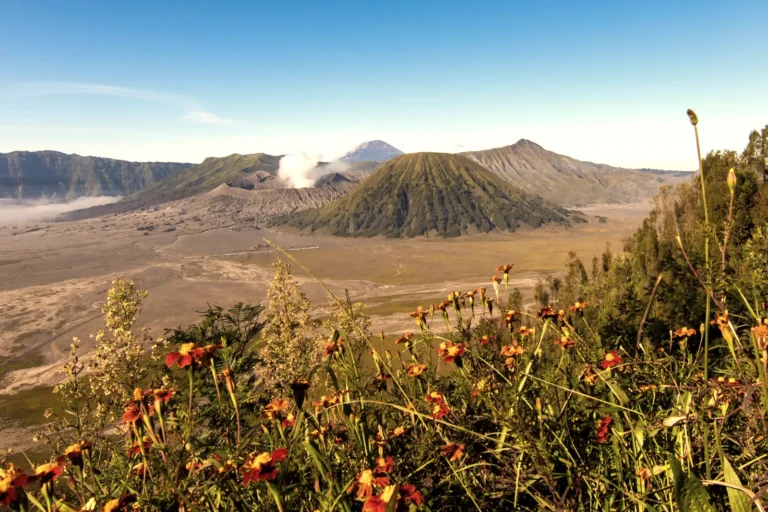
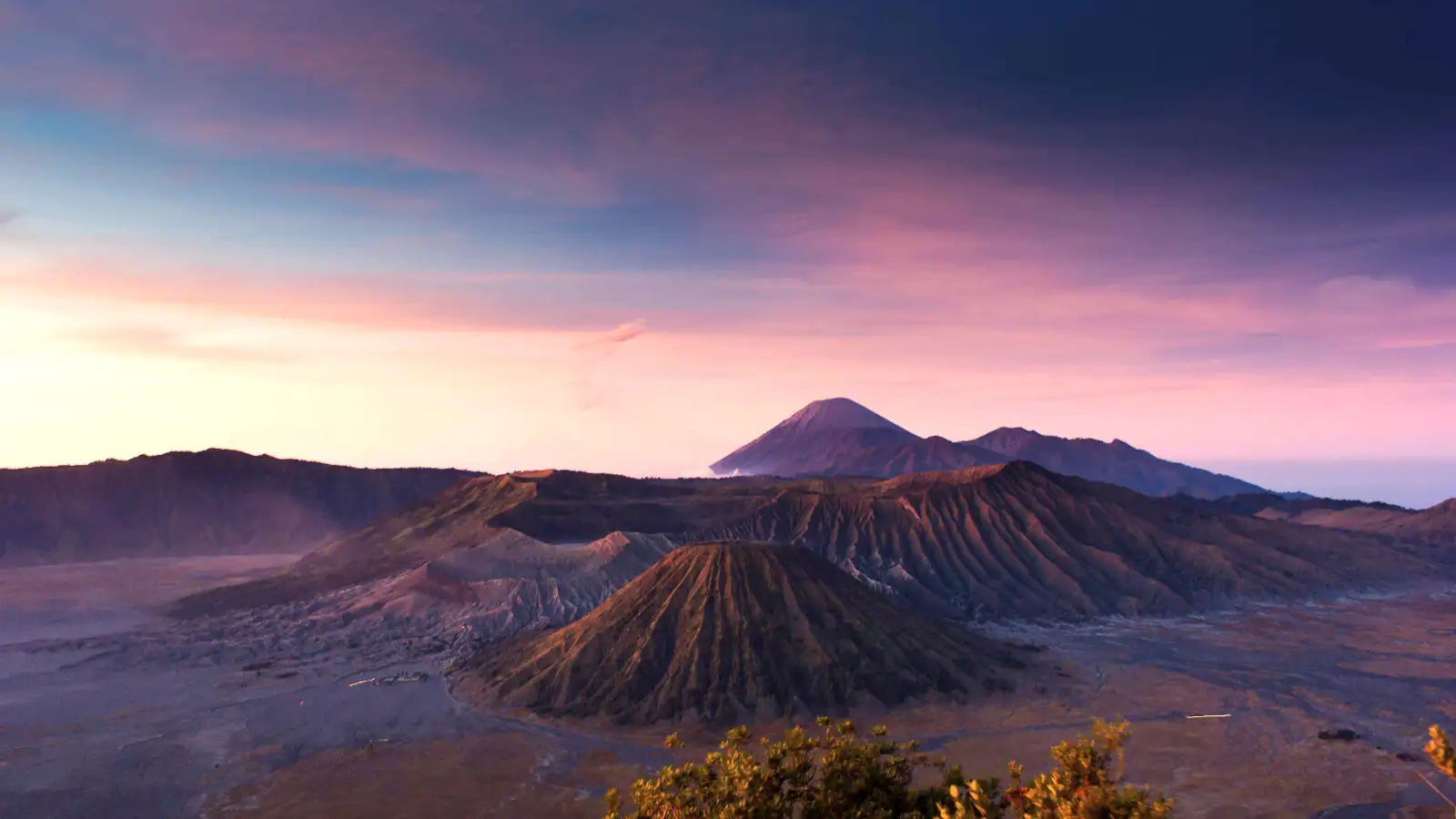
The angle from here frames Mount Batok perfectly in the foreground. This creates a sense of scale that other viewpoints lack. You get a clear line of sight to the smoking Bromo crater and the towering Semeru in the background.
Photographers prefer this spot for the “low-angle” possibilities. You can get closer to the edge, safely, to capture the mist rolling over the caldera floor. It’s about the intimacy of the landscape rather than just the height.
The Pre-Dawn Atmosphere
Arriving at 3:30 AM means waiting in the pitch black. The sky here is exceptionally dark, making it a prime spot for Milky Way photography. You’ll hear the hum of distant Jeeps and the quiet chatter of photographers setting up.
Local vendors sell hot ginger tea and coffee in small stalls called *warungs* nearby. These tiny hubs of warmth are essential for thawing out frozen fingers. The smell of woodsmoke and cloves fills the air as the anticipation builds.
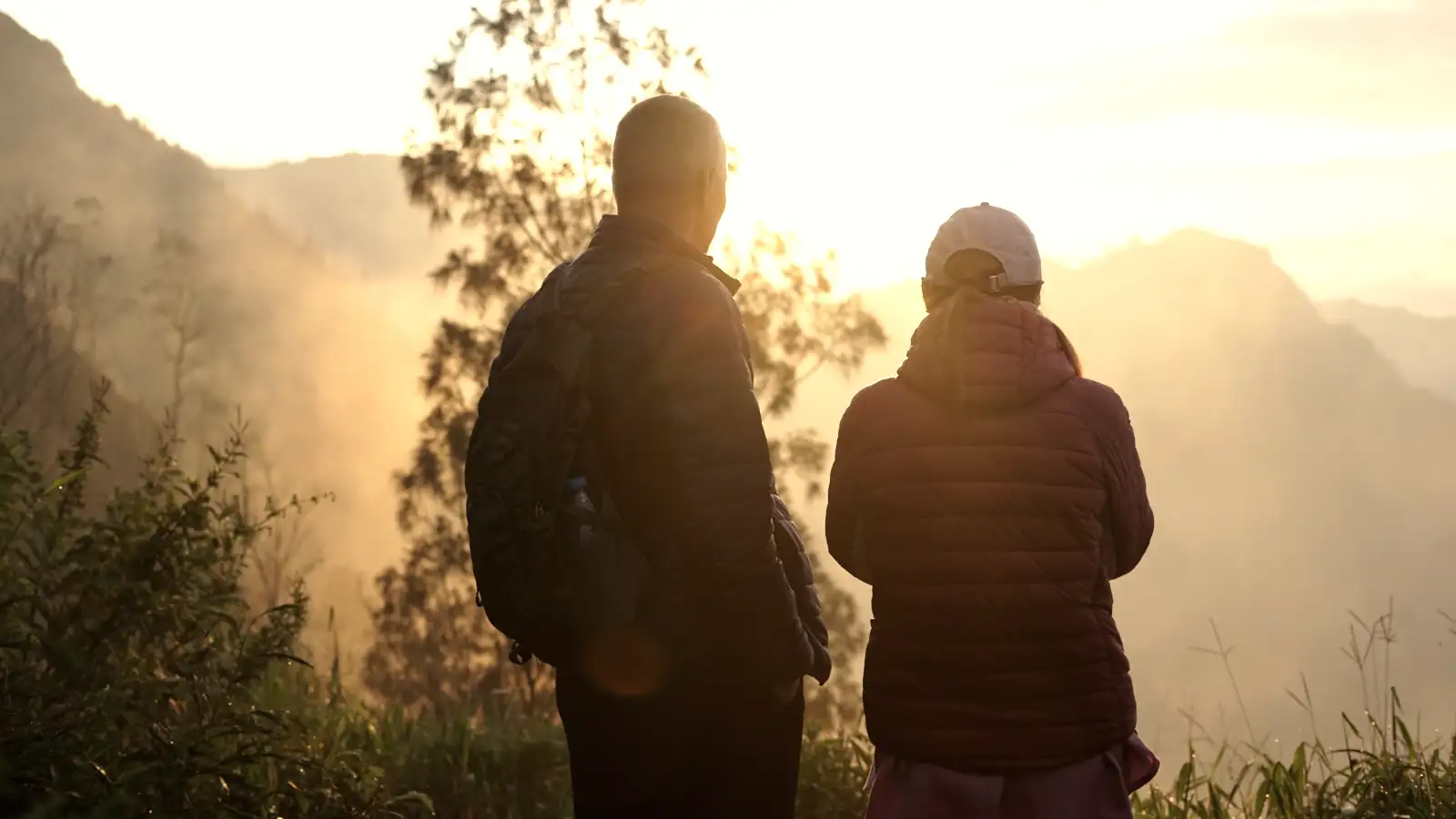
Suddenly, a thin sliver of orange appears on the horizon. The silhouettes of the volcanoes begin to sharpen against a deep purple sky. This “Blue Hour” is often more beautiful than the sunrise itself for long-exposure shots.
Top Photo Spots at the Summit
The summit area isn’t just one single deck. It is a series of ridges and platforms that offer vastly different perspectives. Knowing where to stand before the light hits is the secret to a diverse gallery.
The Main Concrete Platform
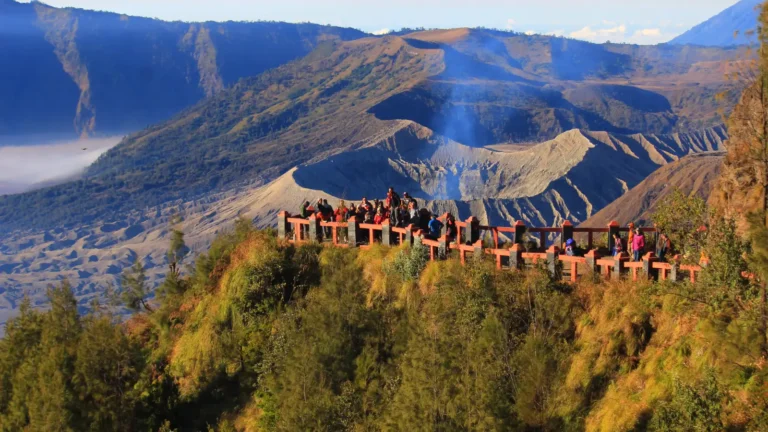
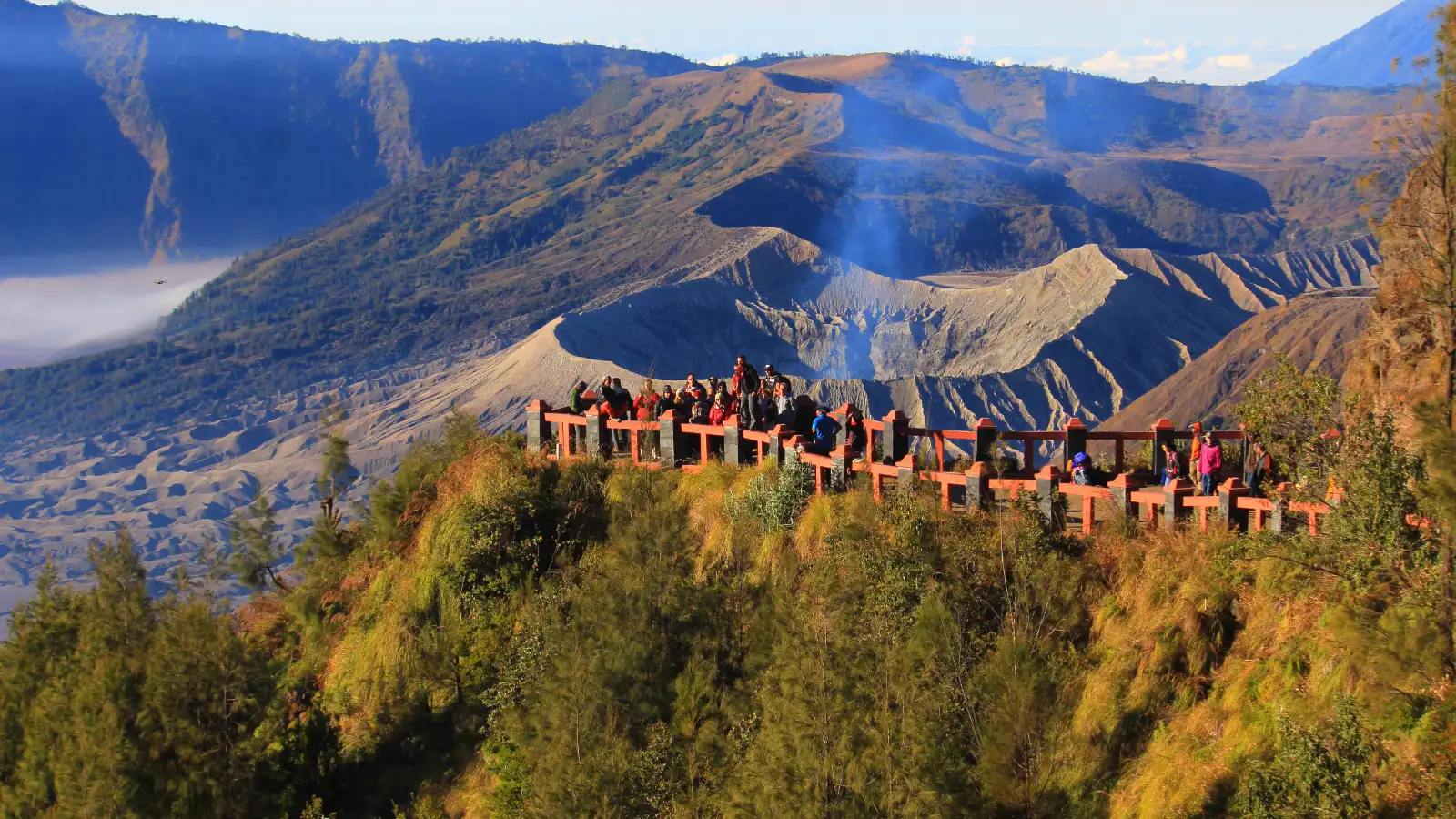
This is the safest and most stable spot for tripods. It’s elevated, giving you a panoramic view of the entire Bromo Tengger Semeru National Park. Most of the iconic “wide shots” you see online are taken from this exact position.
Space fills up by 4:15 AM, so claim your spot early. Use a wide-angle lens here to capture the curve of the caldera. Don’t forget to look behind you; sometimes the light on the hills to the west is just as stunning.
Vary your height if possible. Shooting from a lower tripod position can make the foreground rocks look more imposing. This adds layers and depth to an otherwise flat horizon shot.
The “Secret” Lower Ridge
Just below the main deck, a dirt path leads to a slightly lower ridge. This spot is often less crowded and puts you closer to the “King Kong” rock face. It’s ideal for portrait shots with the volcano in the background.
Be careful here, as the ground can be slippery with volcanic dust and morning dew. The perspective from this ridge makes Mount Batok appear much larger. It’s the best place for that “lonely traveler” aesthetic photo.
Wait for the sun to rise high enough to hit the floor of the caldera. The shadows moving across the Sea of Sand create incredible textures. This is the moment to switch to a zoom lens for detailed crater shots.
Framing Batok and Semeru
One of the best compositions involves lining up the perfectly conical Batok with the active Semeru. When Semeru puffs out a cloud of ash, the photo becomes legendary. This happens every 20-30 minutes on average.
Patience is your best tool for this specific shot. Many people leave as soon as the sun is up, missing the best light. The “Golden Hour” usually hits about 20 minutes after the initial sunrise.
Look for framing opportunities through the sparse trees and shrubs on the hillside. These natural elements can break up the vastness of the sky. They add a sense of place and local texture to your work.
🔥 Recommended Tour Packages:
To truly experience the magic of East Java without the logistical headaches, we recommend choosing a professional itinerary. Whether you are looking for a focused Mount Bromo tour or a combined Bromo Ijen tour, our local experts handle everything. For those starting from the west, an Ijen crater tour is the perfect companion. Experience the full beauty of the East Java tour region with our top-rated guides.
Photography Gear and Settings
Bromo is a harsh environment for electronics. The fine volcanic ash is like sandpaper, and the moisture from the clouds can seep into lenses. You need to be prepared both technically and physically.
Dealing with Volcanic Dust
Never change your lenses in the open air at King Kong Hill. The wind will blow microscopic grit directly onto your sensor. If you must swap glass, do it inside a bag or back at the Jeep.
Keep a clean microfiber cloth and a blower handy at all times. Wipe your front element frequently to avoid “ghosting” from the sun’s rays. A UV filter is a cheap way to protect expensive lenses from scratches.
Use a weather-sealed camera body if you have one. If not, even a simple plastic cover or a shower cap can save your gear. The dust gets everywhere—your pockets, your hair, and definitely your camera gear.
Capturing the Milky Way
If you arrive early enough, the stars are mind-blowing. Set your camera to a wide aperture (f/2.8 or lower) and a high ISO (around 3200). Aim for a shutter speed of 15-20 seconds to avoid star trailing.
Focus manually on a bright star or a distant light. Digital cameras often struggle to autofocus in the pitch black of the Bromo caldera. Check your “Infinity” focus point before you leave your hotel.
Use a sturdy tripod that can withstand the wind. Many lightweight travel tripods vibrate too much on the exposed ridge. Hang your camera bag from the center hook of the tripod to add stability.
Logistics: Reaching the Summit
The journey starts at midnight or 1 AM for most travelers. If you are coming on a Bromo tour from Surabaya, the timing is tight. Coordination with your driver is the most critical part of the night.
The 4×4 Jeep Experience
Only authorized Jeeps are allowed into the national park for sunrise. These vehicles are rugged and built for the steep, narrow tracks leading to King Kong Hill. Expect a bumpy, loud, and dusty ride that will definitely wake you up.
Jeeps park in a designated area along the road. From there, it’s a walk uphill through a corridor of local food stalls. Keep your headlamp on, as the path can be uneven and crowded with other hikers.
Drivers usually wait for you in the same spot until 8 or 9 AM. Make sure you remember your Jeep’s license plate or take a photo of it. Thousands of identical green and red Toyotas look the same in the dark.
The Short But Steep Hike
The hike from the parking area to the King Kong Hill viewpoint isn’t long, but the altitude makes it tiring. You’ll be walking for about 10 to 15 minutes on a paved but steep incline. Take it slow to avoid getting winded.
Wear shoes with decent grip. While the path is mostly solid, there are patches of loose sand that can be slippery. Avoid flip-flops; your feet will freeze, and you’ll likely trip in the dark.
As you climb, the air gets thinner and the wind picks up. It’s common to see people stopping every few meters to catch their breath. This is normal, so don’t feel pressured to sprint to the top.
Realistic Expectations vs Instagram
Instagram makes Bromo look like a peaceful, private sanctuary. The reality is much louder and more crowded. You need to manage your expectations to truly enjoy the experience without frustration.
Handling the Crowds
During weekends and holidays, thousands of people descend on these hills. The noise of engines and chatter can be overwhelming. Don’t expect a silent, spiritual moment alone with nature unless you visit mid-week.
People will inadvertently walk into your shot. Instead of getting angry, use them to add a sense of scale to the photo. Sometimes a human silhouette against the vast caldera creates a much stronger story.
Moving just 50 meters away from the main platform can significantly reduce the crowd size. Most people are “lazy” and stay where the Jeep drops them. A little extra walking goes a long way for your composition.
The Weather Gamble
You could do everything right and still see nothing but white mist. Bromo is notorious for sudden weather shifts. If it’s raining or heavily clouded, the view can be completely blocked for hours.
Check the weather forecast, but don’t treat it as gospel. Local conditions are highly localized. Sometimes it’s cloudy in the village but clear at the higher elevation of King Kong Hill.
If you have the time, stay for two nights. This doubles your chances of seeing the iconic sunrise. If the first morning is a washout, the second might be the clearest sky of the year.
Continue Your Adventure
Your journey shouldn’t end at the King Kong Hill sunrise. The region offers so much more for those willing to explore further. After the sun is high, consider booking your next adventure to the surrounding wonders.
Many travelers choose to head east for a Bromo Ijen tour from Bali, connecting the volcanic peaks with the famous blue fire. Alternatively, you can explore the Madakaripura Waterfall, hidden deep in a nearby canyon. The diversity of East Java’s landscapes is truly staggering and requires multiple days to fully appreciate.
Ready for the Perfect Shot?
Don’t leave your Bromo experience to chance. Secure a local guide who knows the secret spots.
Frequently Asked Questions
A: King Kong Hill is generally less crowded than Penanjakan 1, but “Bukit Cinta” (Love Hill) is even quieter, though it sits at a lower elevation with a more limited view.
Q: How bad is the volcanic dust for my camera?
A: It can be severe. The dust is highly abrasive and can scratch lenses or ruin internal sensors if you swap lenses in the wind. Always use a protective filter and a camera cover.
Q: Can elderly travelers handle the walk to King Kong Hill?
A: The path is paved but steep. While many elderly travelers complete it by taking frequent breaks, those with severe heart or lung conditions should be cautious due to the 2,600m altitude.
Q: Is there a bathroom at the top of King Kong Hill?
A: There are basic “squat” toilets located near the parking area where the warungs are. Don’t expect luxury; carry your own tissue and hand sanitizer.
Q: What time does the sun actually rise?
A: Sunrise usually occurs between 5:15 AM and 5:45 AM depending on the time of year. However, the best light for photography starts around 4:45 AM during the astronomical twilight.