
How Large Is the Ijen Caldera? Understanding the Scale of Ijen
Key Takeaways:
- Total caldera diameter spans roughly 20 kilometers.
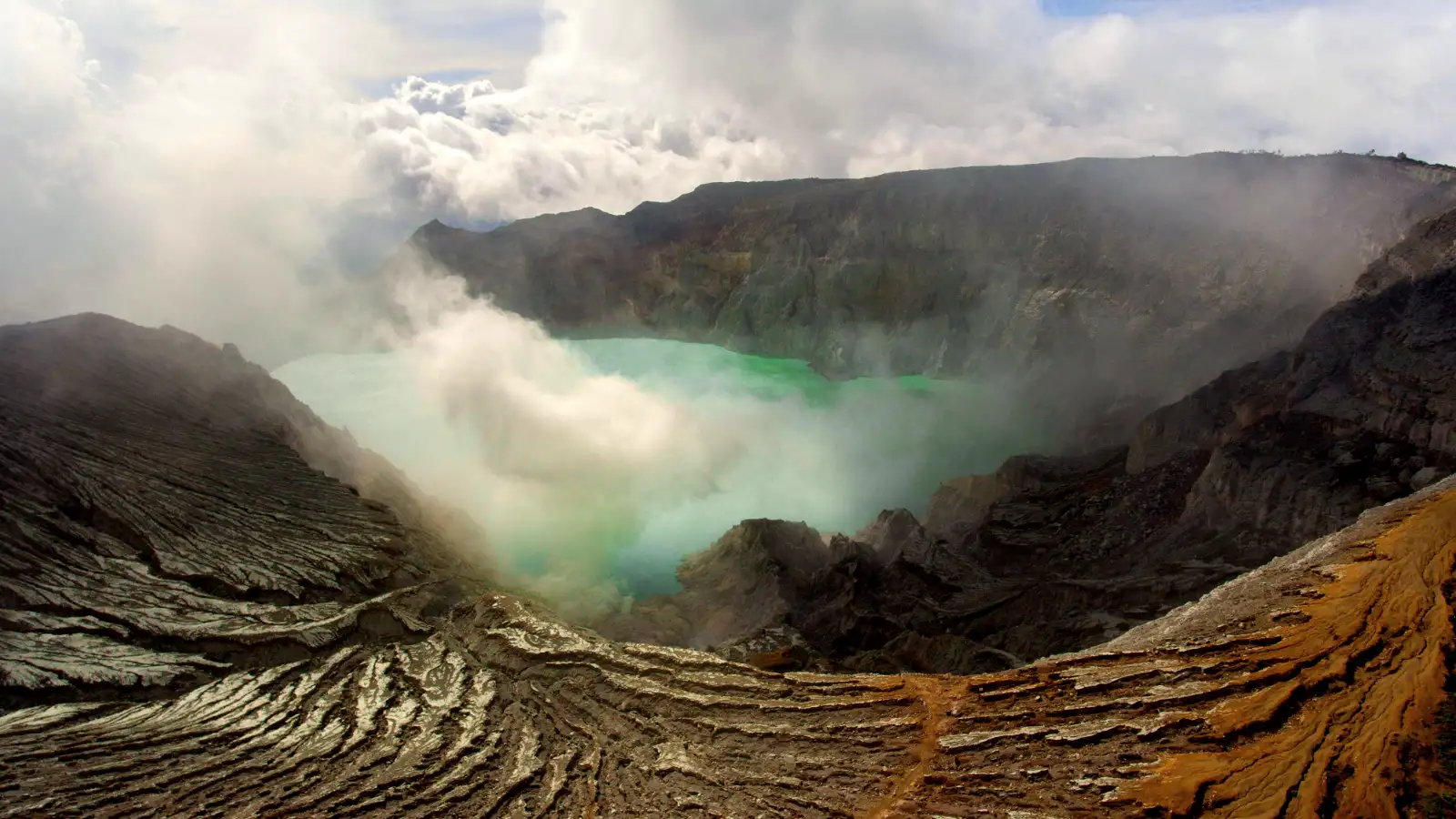
- The inner Ijen Crater lake is about 700 to 1,000 meters wide.
- Mount Ijen’s highest point reaches 2,386 meters above sea level.
- The caldera walls vary in height from 850 to 1,500 meters.
About This Guide: Written by our Banyuwangi-based local operational team with first-hand field experience across East Java, including current trail conditions, departure timing, weather shifts, and real visitor logistics.
Table of Contents
What Is the Ijen Caldera?
When people talk about Ijen, they’re usually thinking of the electric-blue fire and the toxic lake. But geologically, that’s just one small part of the story. The Ijen volcanic complex is actually a massive field of volcanic activity. The “caldera” refers to the giant bowl-shaped depression formed when a huge ancient volcano collapsed thousands of years ago.
Look, it’s easy to get confused between Mount Ijen and the caldera itself. The caldera is the “mother” structure. Within its 20-kilometer rim, you’ll find several smaller volcanic peaks like Gunung Merapi (not the one in Yogyakarta), Gunung Raung, and of course, the famous Kawah Ijen. Understanding the Ijen volcanic complex helps you realize why this landscape looks so rugged and alien compared to the flat coastal plains of Banyuwangi.
The Foundation of the Complex
Truth is, the Ijen caldera area is a geological powerhouse. It was formed by the collapse of a massive “Old Ijen” volcano. Today, the floor of this caldera is used for coffee plantations, especially the famous Arabica beans that grow in the mineral-rich soil. If you’re booking an Ijen Crater Tour, you’ll likely drive right through the heart of this ancient basin before starting your hike.
How Large Is the Ijen Caldera?
To put it simply: it’s gigantic. The Ijen caldera dimensions are roughly 20 kilometers (12.4 miles) across. If you were to walk from one side of the rim to the other across the floor, it would take you all day. The rim itself isn’t a perfect circle, but more of an elliptical shape that dominates the eastern tip of Java.
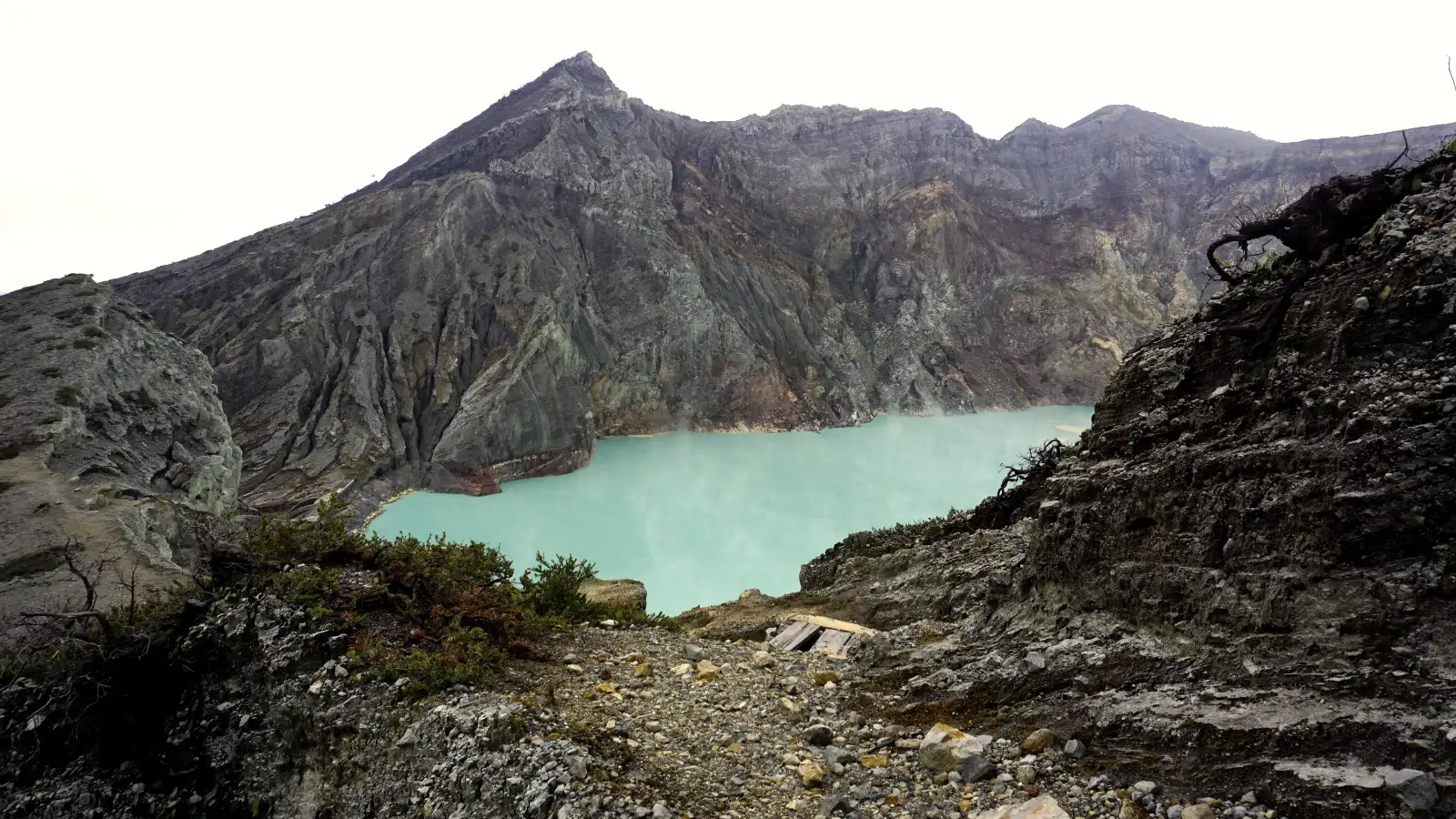
The scale is hard to grasp until you’re standing on the edge. The walls of the caldera rise up to 1,500 meters from the surrounding plains, creating a natural fortress. This massive Ijen caldera formation is what traps the morning mist, creating those eerie, foggy sunrise scenes you see in photos. The total area covered by the complex is hundreds of square kilometers.
Height and Elevation
The basecamp for most hikers, Paltuding, sits at 1,850 meters. From there, you hike up to the rim of the active crater, which peaks at 2,386 meters. That’s a significant climb. The physical Ijen volcano size is often underestimated by tourists who think it’s just a quick walk. It’s a 3-kilometer hike with a 500-meter elevation gain, just to see the inner crater, which is only a fraction of the total caldera size.
Ijen Crater Lake Dimensions
While the caldera is 20km wide, the active Ijen Crater (Kawah Ijen) is much smaller but far more intense. This is where you’ll find the world’s most acidic lake. If you’re looking for specific Ijen crater lake dimensions, the turquoise pool is about 700 meters by 1,000 meters wide. It’s essentially a kilometer-wide vat of sulfuric acid.
The depth of the lake is equally impressive, reaching about 200 meters at its deepest point. Because the pH level is below 0.5, no life can survive here. The sheer volume of this acidic water is enough to make any geologist sweat. When you stand on the rim, the people walking down to the sulfur mines look like tiny ants against the massive crater walls.
Volcanic Landscape and Area
The entire Ijen volcanic landscape is shaped by centuries of eruptions. The caldera floor isn’t just flat ground; it’s a rugged mix of old lava flows, ash deposits, and lush forest. It’s also worth noting that the Ijen crater geography is constantly shifting. Minor landslides and volcanic activity can change the shape of the inner rim over time, making it a living, breathing giant.
Practical Information
Planning to see this massive scale for yourself? Here are the ground realities of visiting the Ijen volcano caldera in East Java.
- Location: Border of Banyuwangi and Bondowoso regencies, East Java.
- Opening Hours: Usually starts at 02:00 AM (local time).
- Hike Duration: 1.5 to 2 hours to reach the rim; 30-45 minutes more to descend into the crater.
- Distance: 3 km one way (6 km round trip).
- Mandatory: Health certificate (Surat Keterangan Sehat) and a gas mask.
Scale Comparison: Ijen Dimensions
How does Ijen stack up? Here is a quick look at the measurements of this volcanic giant.
| Feature | Measurement | Scale Significance |
|---|---|---|
| Caldera Diameter | ~20 Kilometers | One of Java’s largest ancient rims |
| Crater Lake Width | ~1,000 Meters | World’s largest highly acidic lake |
| Peak Elevation | 2,386 Meters | Dominant peak in the Ijen Highlands |
| Lake Depth | ~200 Meters | Deep enough to submerge a 60-story building |
Local Tips You Should Know
Here’s the deal: most people focus so much on the “blue fire” that they forget to look around. If you want to really see the Ijen caldera area, wait until the sun is fully up. When the fog clears, you can see the secondary peaks like Gunung Merapi and the jagged edges of the 20km rim in the distance.
If you’re coming from the west, the drive from Bondowoso takes you right through the old caldera floor. It’s a surreal experience driving through kilometers of coffee plantations surrounded by high volcanic walls. If you are starting a Mount Bromo tour after Ijen, you’ll see a massive difference in scale; while Bromo is iconic, the Ijen caldera feels much more vast and ancient.
Safety & Important Considerations
The scale of Ijen isn’t just a beauty factor—it’s a safety factor. Because the crater is so large, it can trap toxic sulfur gases. The air quality changes fast. If the wind shifts, that massive crater can fill with thick smoke in minutes. Always keep your gas mask ready, even if the air looks clear when you first arrive at the rim. Also, remember that the descent into the crater is steep and rocky; it’s a 300-meter drop from the rim to the lake shore.
Common Mistakes Travelers Make
Honestly, the biggest mistake is underestimating the hike. People see “3km” and think it’s a stroll. It’s not. The first 2 kilometers are a steep, unrelenting incline. Another mistake is ignoring the geological history of Ijen. Knowing that you’re standing inside a collapsed super-volcano makes the experience ten times more powerful than just looking at a turquoise lake.
Frequently Asked Questions
Q: How long does it take to walk around the entire Ijen caldera?
A: Walking the entire 20km rim isn’t feasible for most because there are no established trails for the full circumference. Most people only hike the 3km path to the active crater rim.
Q: Can you see the Ijen caldera from space?
A: Yes! Satellite images clearly show the circular “Old Ijen” caldera rim and the turquoise eye of the active crater lake sitting within it.
Q: Is Ijen larger than Mount Bromo?
A: In terms of total caldera area, Ijen is significantly larger. However, Bromo’s “Sea of Sand” is more open and easier to traverse by Jeep, making it feel different in scale.
Q: How deep is the acidic lake at Ijen?
A: The lake is approximately 200 meters deep. It’s a massive reservoir of sulfuric and hydrochloric acid, making it the largest of its kind on Earth.
Q: What is the highest point of the Ijen caldera?
A: The highest point is the peak of Mount Merapi (the eastern one) which reaches about 2,800 meters, though the standard Ijen Crater rim sits at 2,386 meters.
Recommended Tour Packages
Ready to experience the massive scale of East Java’s volcanoes? Here are the best ways to do it:
- Ijen Crater Tour from Bali: The most popular way to see Ijen if you’re staying in Ubud, Canggu, or Seminyak.
- Bromo Ijen Tour: Combine the two biggest volcanic icons of East Java in one massive multi-day trip.
- Ijen Crater Tour from Banyuwangi (1 Day): A quick, intense midnight departure for those already on the ground in East Java.
- Bromo Ijen Tumpak Sewu Tour: Experience the caldera scale plus the most massive waterfall in Java.
- Ijen Crater Tour from Surabaya: Perfect for those flying into East Java’s capital and heading straight to the volcano.
Final Takeaway
The Ijen caldera is a place where numbers don’t do justice to the feeling of standing on the edge. A 20-kilometer rim and a 1-kilometer acidic lake are impressive on paper, but when you’re there at 4:00 AM, smelling the sulfur and seeing the blue glow, the scale feels infinite. Whether you are a geology nerd or just someone looking for a great photo, Ijen’s massive dimensions will stay with you long after you’ve hiked back down.
Planning Your Trip to East Java?
Explore our local tour options and choose a route that matches your travel schedule.
Planning to visit Ijen or Mount Bromo?
Explore available tour options and ask our local team about your itinerary.
Explore Tour Packages →