
What Is a Bromo Ijen Tour?: The Ultimate Insider Guide 2026
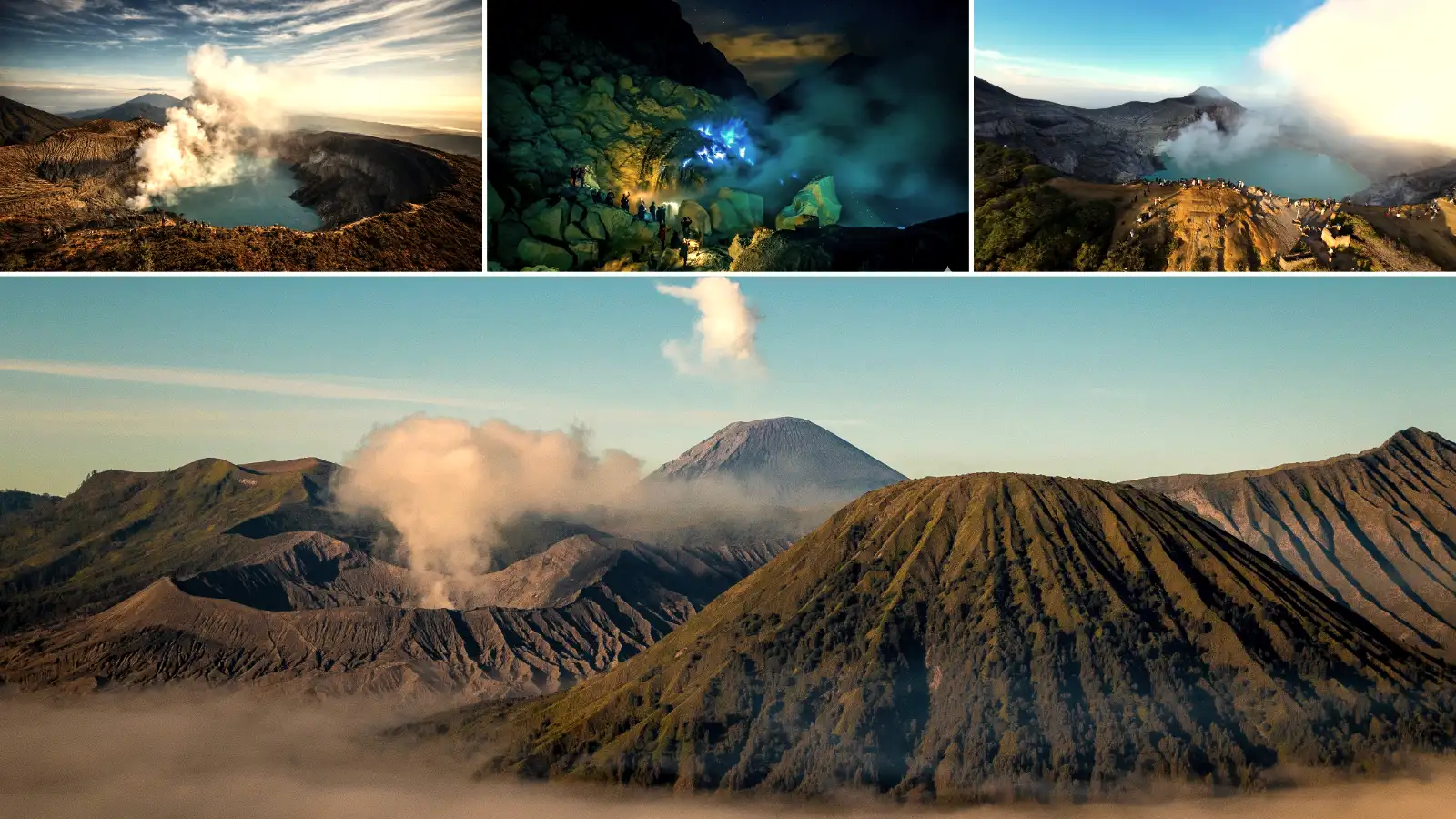
A Bromo Ijen tour is a multi-day adventure through East Java that combines two of Indonesia’s most surreal volcanic landscapes: the lunar-like caldera of Mount Bromo and the acidic, electric-blue flames of Ijen Crater. Most travelers book this journey to experience world-class sunrises, trek across sea-of-sand deserts, and witness the grueling work of local sulfur miners in one of the most intense environments on Earth.
Planning this trip often feels like a logistical puzzle. You might be staring at a map of Java, wondering how to connect Surabaya to the remote trails of Banyuwangi without losing your mind in traffic. Securing a reliable Bromo Ijen tour package solves the transport, permits, and timing issues that leave solo backpackers stranded at 2 AM. This guide peels back the curtain on what these tours actually entail, stripping away the Instagram filters to show you the grit and glory of the Indonesian Ring of Fire.
What You Need to Know
Expect long drives, midnight wake-up calls, and extreme temperature swings. A standard tour usually lasts 3 days and 2 nights, starting in Surabaya or Malang and ending with a ferry ride to Bali. You will encounter freezing winds at Bromo’s viewpoints and potentially suffocating sulfur gas inside Ijen’s crater. Physical fitness is required for the steep Ijen climb, though Bromo is generally accessible for most. Always carry layers, a headlamp, and an open mind for the unpredictable nature of East Java volcanoes.
Why Trust This Guide
We live and breathe the dust of Cemoro Lawang and the sulfur of Paltuding. As local operators, we monitor volcanic activity reports daily, often knowing about trail closures or gas shifts before they hit the news. Our team spends hundreds of hours every year navigating these roads, ensuring that the Mount Bromo tour routes we suggest are safe and optimized for the best light. We don’t just sell seats; we manage the complex choreography of 4×4 jeeps, local permits, and mountain weather.
Deep Local Roots
Our guides are more than just drivers; they are part of the mountain communities. They know the warung owners who brew the strongest ginger tea at 3 AM and the rangers who decide when it’s safe to descend into the crater. This connection allows us to offer real-time updates that automated booking sites simply cannot match. When you read our advice, you are getting the raw, unfiltered truth from people who physically stand on these rims every week.
The Anatomy of a Bromo Ijen Tour
A typical Java adventure itinerary follows a west-to-east trajectory. Most travelers arrive at Juanda International Airport in Surabaya or the train station in Malang. From there, a private car or van whisks you toward the highlands. The first major stop is usually the village of Cemoro Lawang, the gateway to the Bromo Tengger Semeru National Park. This phase of the trip is focused on the sunrise viewpoint over the massive ancient caldera.
Connecting the Dots
After the morning dust settles at Bromo, the long haul begins. Driving from Bromo to the Ijen area takes roughly 5 to 7 hours, depending on the notorious Java traffic. You will pass through lush coffee plantations and rural townships that look unchanged by time. Most tours spend the second night in Bondowoso or Banyuwangi to prepare for the midnight departure required for the Ijen hike. It is a grueling pace, but it maximizes your chances of seeing both peaks under the best conditions.
🔥 More Info & Adventures:
If you are looking for the most efficient way to see these icons, our Bromo Ijen tour packages are designed to handle every detail. You can also dive deeper into specific regions with a Mount Bromo tour or focus entirely on the turquoise waters of the Ijen Crater tour. For those with more time, the broader East Java tour adds waterfalls like Tumpak Sewu to the mix.
The 4×4 Jeep Logistics
You cannot simply drive a standard sedan into the Bromo caldera. The terrain is a mix of deep volcanic ash and steep, narrow ridges. Tours provide a rugged 4WD Jeep rental to navigate the Sea of Sand. This part of the journey is exhilarating; bouncing through the pre-dawn darkness while hundreds of other jeep headlights twinkle across the plain is a sight in itself. It is chaotic, loud, and dusty, yet essentially Javanese.
The Mount Bromo Experience
Mount Bromo isn’t the highest peak in the range, but it is the most active. The tour centers around King Kong Hill or Seruni Point for the iconic sunrise. As the sun creeps over the horizon, the silhouettes of Bromo, Batok, and the towering Semeru emerge from a blanket of morning mist. It looks like a painting from another world. Most people stand in awe for an hour, shivering in the 5°C temperatures, before descending to the volcanic crater lake area.
Hiking the Rim
Once the sun is up, your jeep will drop you at the base of the Bromo crater. You have a choice: walk the flat 1.5km stretch or hire a local pony. Be warned, the walk is dusty. You will eventually face a concrete staircase of 250 steps leading to the rim. Looking down into the smoking vent while the roar of the volcano echoes like a jet engine is a sensory overload. The smell of sulfur starts here, but it is nothing compared to what awaits at Ijen.
The Sea of Sand and Luhur Poten
Below the peaks lies the Segara Wedi, a vast plain of grey volcanic sand. In the middle of this emptiness sits the Pura Luhur Poten, a Hindu temple that serves the local Tenggerese people. Seeing this stone structure against the backdrop of an active volcano is a reminder of the deep spiritual connection the locals have with these peaks. Most Mount Bromo sunrise tours allow time for photos here before heading back for breakfast.
The Ijen Crater Climb
If Bromo is about the view, Ijen is about the atmosphere. The hike usually begins at 2 AM from Paltuding. The trail is wide but consistently steep for the first two kilometers. You will find yourself hiking through ancient forests under a canopy of stars, often passing sulfur miners who are just beginning their workday. These men carry up to 90kg of sulfur on their shoulders in wicker baskets, a sobering sight that provides perspective on the “difficulty” of your own trek.
The Blue Flame Phenomenon
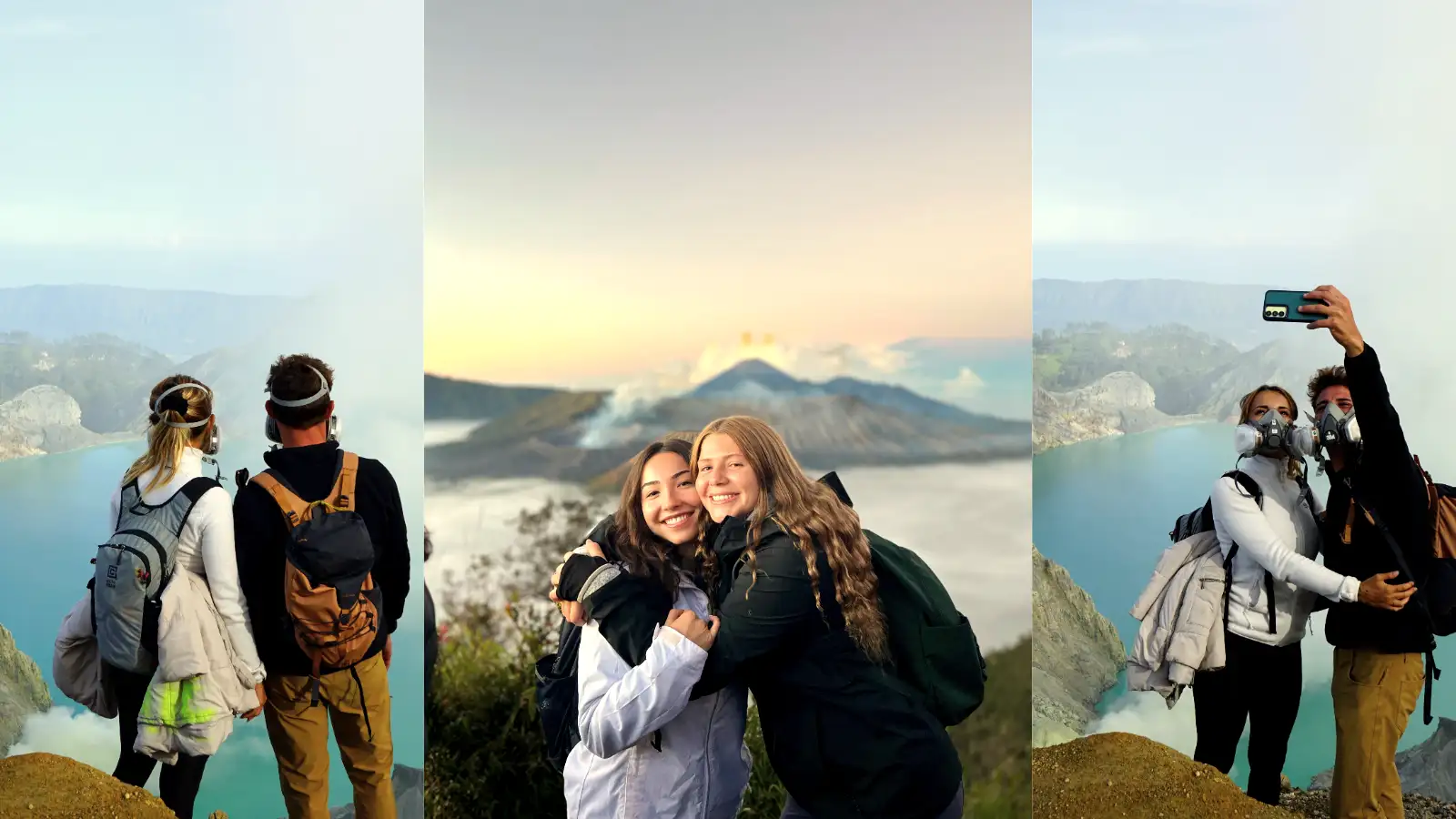
At the rim of Ijen, you have the option to descend into the crater to see the blue flame phenomenon. This is not lava; it is sulfuric gas igniting as it hits the oxygen-rich air at temperatures over 600°C. To see it, you must wear a professional gas mask. The descent is rocky and precarious. When the wind shifts, the thick, white smoke can engulf you instantly. It’s an experience that feels both prehistoric and apocalyptic.
The Acidic Turquoise Lake
As dawn breaks, the blue fire fades, and the world’s most acidic lake is revealed. The water is a stunning, milky turquoise, but with a pH near zero, it’s literally a giant vat of battery acid. For more technical details on the chemistry of this site, you can visit the official Ijen geological overview. Standing on the rim as the sun hits the yellow sulfur vents and the green water is the ultimate reward for the midnight trek.
Common Mistakes Travelers Make
Underestimating the cold is the most frequent error. Many travelers come straight from the beaches of Bali wearing only t-shirts. At 2,300 meters, the wind chill can drop the felt temperature to near freezing. You need a proper jacket, gloves, and a beanie. Another mistake is skipping the gas mask. Even if the gas looks “thin,” the microscopic sulfur particles will leave you coughing for days if you aren’t protected. Check our gas mask rental guide for specifics.
The Timing Trap
Many solo travelers try to squeeze both volcanoes into 48 hours without a driver. This is a recipe for exhaustion and missed sunrises. The distance between sites is deceptively long due to winding mountain roads. By the time you reach Ijen, you’ll be too tired to enjoy the hike. Professional multi-day trekking tours pace the travel so you actually get a few hours of sleep in a real bed between the climbs. Don’t sacrifice your safety just to save a few dollars on a bus.
Ignoring the Body’s Signals
Altitude sickness isn’t common here since the peaks are under 3,000 meters, but the physical exertion is real. If your knees are weak, consider the “trolley taxi” at Ijen—a local service where miners pull you up the mountain in a converted cart. It supports the local economy and saves your joints. Also, stay hydrated. The dry volcanic air and sulfur gas dehydrate you faster than you realize. Carry at least 1.5 liters of water for the Ijen hike.
What Nobody Tells You About the Journey
Instagram makes these spots look peaceful. In reality, they are loud. Between the roaring volcanic vents and the thousands of other tourists at the Bromo viewpoint, it can feel more like a festival than a wilderness retreat. To find peace, you have to walk a few hundred meters away from the main jeep parking areas. Our guides know the “quiet spots” where you can actually hear the wind instead of camera shutters.
The Reality of Sulfur
The smell stays with you. Your clothes, your hair, and even your camera gear will smell like rotten eggs for days after visiting Ijen. Pro tip: don’t wear your favorite expensive designer jacket into the crater. The sulfuric acid in the air can occasionally damage delicate fabrics or leave tiny holes. Bring “adventure clothes” that you don’t mind getting a bit of volcanic character on. Your Java travel logistics should include a plastic bag for your sulfur-scented laundry.
Unpredictable Closures
Nature doesn’t care about your itinerary. If the volcanic activity levels rise, the government will close the trails instantly. This is why we emphasize checking for daily updates. Sometimes the blue fire is closed but the rim is open. Sometimes the entire park is shut down for a week. A good tour operator will have a “Plan B” ready, such as visiting the Madakaripura Waterfall or the Jagir Springs if the volcanoes are acting up.
Continue Your Adventure
Your journey through East Java doesn’t have to end at the Ijen ferry terminal. There are dozens of hidden corners waiting to be explored. Consider these popular extensions to your trip:
- Book Your Trip Now: Secure your spot for the ultimate volcano circuit.
- Mount Bromo Sunrise Tour from Surabaya: The quickest way to see the King of Java.
- Mount Bromo Tour from Bali 2D1N: A seamless hop from the Island of Gods to the volcanoes.
- Bromo Ijen Tour from Surabaya 3D2N: Our most popular comprehensive package.
- Bromo Ijen Tour from Bali 3D2N: The perfect loop for travelers heading back to Bali.
- Bromo Ijen Tumpak Sewu Tour: Add Indonesia’s most dramatic waterfall to your trek.
Ready to Witness the Fire and Dust?
Don’t leave your Java adventure to chance. Let our local experts handle the logistics while you focus on the views.
Frequently Asked Questions
Q: Which viewpoint at Bromo is the least crowded?
A: King Kong Hill is the most famous and therefore the most packed. For a quieter experience, try Perahu Hill (Bukit Perahu) or the Seruni Point Upper Deck. While they are slightly lower, you still get the full caldera view without five people elbowing you for a photo spot.
Q: How bad is the dust during the tour?
A: It can be intense. At Bromo, the Sea of Sand is essentially a giant bowl of fine volcanic ash. When the wind picks up or jeeps drive by, visibility drops. Wear a buff or a face mask and keep your camera gear inside a sealed bag when you aren’t shooting.
Q: Can elderly travelers handle the stairs and hiking?
A: Bromo is very accessible; you can take a horse to the bottom of the stairs and then decide if you want to climb. Ijen is much tougher. The first 2km are very steep. If mobility is an issue, we highly recommend hiring the “trolley taxi” (human-powered carts) to reach the rim safely.
Q: What is the best month to visit to avoid rain?
A: The dry season from May to September is the best window. During these months, the trails are stable and the skies are clear for sunrise. Visiting during the wet season (December to March) can result in fog obscuring the views and slippery, muddy trails at Ijen.
Q: Do I really need a guide for Ijen Crater?
A: While it’s possible to hike alone, a guide is critical for the crater descent. They know how to read the gas clouds and will ensure you are wearing your mask correctly. They also provide the light and safety coaching needed to navigate the steep, rocky path in total darkness.
Planning to visit Ijen or Mount Bromo?
Explore available tour options and ask our local team about your itinerary.
Explore Tour Packages →