Ijen Crater Entrance Fee 2026: The Ultimate Insider Guide
Your alarm screams at midnight. The air in Banyuwangi feels heavy with anticipation and the faint scent of sulfur. Most travelers worry about the steep 3-kilometer climb, but the real confusion starts with the logistics.
Navigating the permit system and the Ijen Crater entrance fee shouldn’t be the hardest part of your journey. Many hikers arrive at the Paltuding basecamp only to find the ticketing booth closed or the daily quota already reached.
Secure your spot and avoid the morning chaos by choosing to book your trip now with local experts who handle every permit detail for you. We ensure your Kawah Ijen admission is ready before you even step out of your hotel.
What You Need to Know
- ✅ Weekday Price: IDR 100,000 per person (International).
- ✅ Weekend/Holiday Price: IDR 150,000 per person (International).
- ✅ Online Booking: Strongly recommended to guarantee entry.
- ✅ Health Certificate: A medical check-up is strictly required for all hikers.
- ✅ Opening Hours: The trail typically opens at 2:00 AM for the blue fire view.
Official Entrance Fee Breakdown
Kawah Ijen operates under the jurisdiction of the BKSDA (Natural Resources Conservation Agency). Prices are categorized by nationality and the day of your visit. This tiered system helps manage the massive influx of visitors during peak periods.
International travelers should expect to pay significantly more than domestic tourists. This is a standard practice across Indonesian national parks and protected volcanic areas. The funds contribute to trail maintenance and the local ranger salaries.
Keep in mind that prices are subject to change based on government regulations. Always carry extra cash in Indonesian Rupiah, as the remote location of Paltuding makes credit card transactions unreliable or impossible.
International Visitor Rates
Weekdays currently cost IDR 100,000 per person. This covers your basic permit to enter the nature reserve and the hiking trail. It does not include gear or guide services.
Weekends and public holidays see the price jump to IDR 150,000. These days are notoriously crowded with local groups and school trips. If you want a quieter experience, aim for a Tuesday or Wednesday.
Domestic Visitor Rates
Indonesian citizens pay a fraction of the cost, usually around IDR 5,000 to IDR 7,500. You must present an original KTP (National ID card) to qualify for this rate. Digital copies are often rejected by strict rangers.
Foreigners holding a KITAS or KITAP (residency permits) can sometimes access domestic rates. However, this is at the discretion of the gate staff. Bring your physical permit card to increase your chances.
| Category | Weekday Price | Weekend Price |
|---|---|---|
| International Tourist | IDR 100,000 | IDR 150,000 |
| Domestic Tourist | IDR 5,000 | IDR 7,500 |
| Vehicle Parking (Bike) | IDR 5,000 | IDR 5,000 |
The Mandatory Health Certificate Rule
Recent safety regulations have introduced a mandatory medical certificate for all visitors. This rule followed several health-related incidents on the steep trail. You cannot buy a ticket without proving you are fit to hike.
Most travelers obtain this certificate at local clinics in Banyuwangi or Bondowoso. The process is quick, usually involving a blood pressure check and a few basic questions. The fee for this certificate is typically around IDR 30,000 to IDR 50,000.
If you arrive at the gate without one, you might find a makeshift medical station on-site. However, these are often overwhelmed and can cause significant delays. Get your paperwork sorted the day before your hike.
Where to Get Your Certificate
Puskesmas (community health centers) in Banyuwangi are the most reliable spots. Most are familiar with the “Ijen requirement” and will process you in fifteen minutes. Make sure the document has an official stamp.
Luxury travelers often have their tour operators handle this. Some private clinics offer a more streamlined experience for a slightly higher fee. Regardless of where you get it, this piece of paper is your literal ticket to the crater.
What Happens if You Forget?
Rangers at the Paltuding entrance are strict. They check every individual’s document against their ID. If you forget it, you will be sent back to the nearest clinic, effectively ending your chance of seeing the sunrise.
Don’t risk the three-hour round trip back to town. Digital versions on your phone are sometimes accepted, but a physical printout is much safer. The mountain air is unpredictable, and phone batteries often die in the cold.
🔥 More Info & Adventures:
Exploring East Java requires careful planning and local insight to truly appreciate the landscape. Whether you are looking for a comprehensive Ijen crater tour or want to combine it with a Mount Bromo tour, we have you covered. For the ultimate volcanic experience, our Bromo Ijen tour remains a top favorite. Discover the full scope of what this region offers by browsing our East Java tour packages.
Why Trust This Guide?
We are not just writers; we are local operators based in East Java. Our teams climb the Ijen crater rim weekly to check trail conditions and gas levels. We see the price changes and bureaucratic shifts first-hand.
Every piece of advice here comes from real-world experience, including the 3 AM cold and the grit of the sulfur trail. We know the local rangers by name and understand the nuances of the ticketing office at Paltuding.
Our commitment is to provide honest, unfiltered information to help you navigate this active volcano safely. Trusting a local expert ensures you don’t fall for common tourist traps or outdated internet advice.
Hidden Costs: Beyond the Ticket
The entrance fee is just the starting point of your volcanic budget. Gas mask rentals are non-negotiable if you plan to descend into the crater. Most local shops near the basecamp rent them for IDR 50,000.
Headlamps are another essential item that travelers often overlook. While you can use your phone, a dedicated light source keeps your hands free for the steep sections. Expect to pay IDR 30,000 for a basic rental.
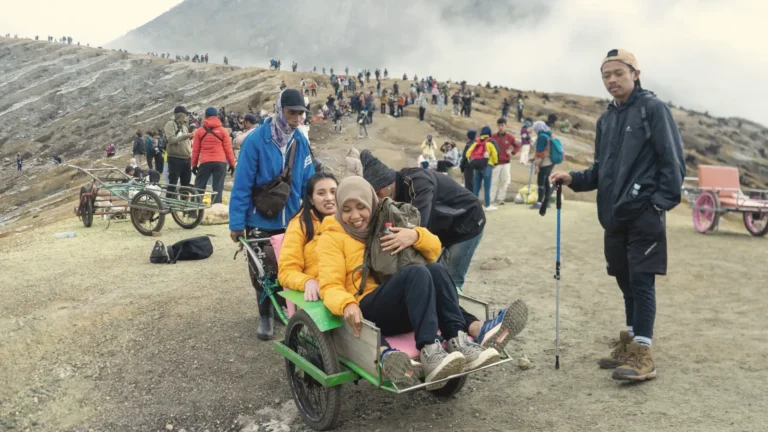
For those struggling with the incline, the famous “human taxis” or sulfur trolleys are available. These miners-turned-porters will push you up the mountain for a steep fee, usually ranging from IDR 800,000 to 1,000,000 for a round trip.
Local Guide Fees
While not strictly mandatory for the main trail, hiring a local guide is highly recommended for safety. They understand the wind patterns and when the sulfur gas becomes dangerous. A private guide usually costs between IDR 250,000 and 400,000.
Guides also know the best photo spots that aren’t swamped by crowds. They share stories of the sulfur miners, adding a deep human layer to your trek. Their expertise is invaluable when the fog rolls in and the trail vanishes.
Transportation to Paltuding
Getting to the trailhead from Banyuwangi is an adventure in itself. A private jeep or car rental is the most comfortable way to navigate the winding, pitch-black roads. Prices typically hover around IDR 600,000 for a return trip.
Motorbike rentals are cheaper, roughly IDR 75,000 per day, but the ride is freezing and dangerous at night. If you choose this, wear multiple layers and be prepared for steep, slippery descents on your way back.
Blue Fire: Reality vs Instagram
Social media often portrays the Blue Fire as a massive, roaring inferno. In reality, it is a delicate chemical reaction of sulfuric gases igniting upon contact with air. Depending on the day, it might be small or completely hidden by smoke.
The gas is intensely suffocating, even with a mask. When the wind shifts, the “white-out” of sulfur clouds can cause immediate coughing and panic. Always follow your guide’s instructions when the gas moves toward the trail.
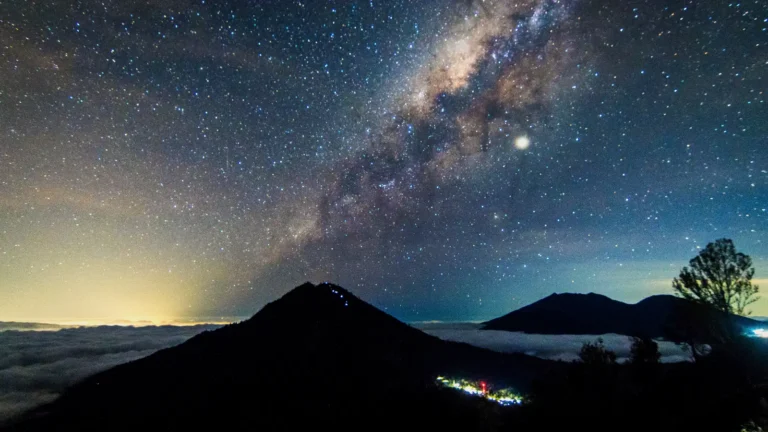
Crowds are another reality check. By 3:30 AM, the descent into the crater looks like a slow-moving line of glow-sticks. If you want a peaceful experience, focus on the sunrise from the rim rather than the crowded fire pits.
Sulfur Miners: The Hardest Job
As you hike, you will pass men carrying bamboo baskets filled with 70-90kg of yellow sulfur. This is their daily reality, performed in flip-flops and without gas masks. It is a sobering sight that puts your “hard” hike into perspective.
Many miners sell small sulfur carvings for a few thousand Rupiah. Buying these is a great way to support the local community directly. Be respectful with your camera; these are people at work, not museum exhibits.
The Acid Lake at Sunrise
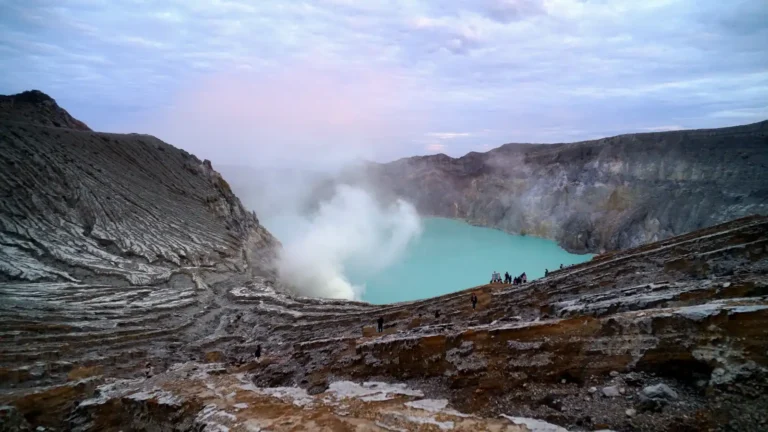
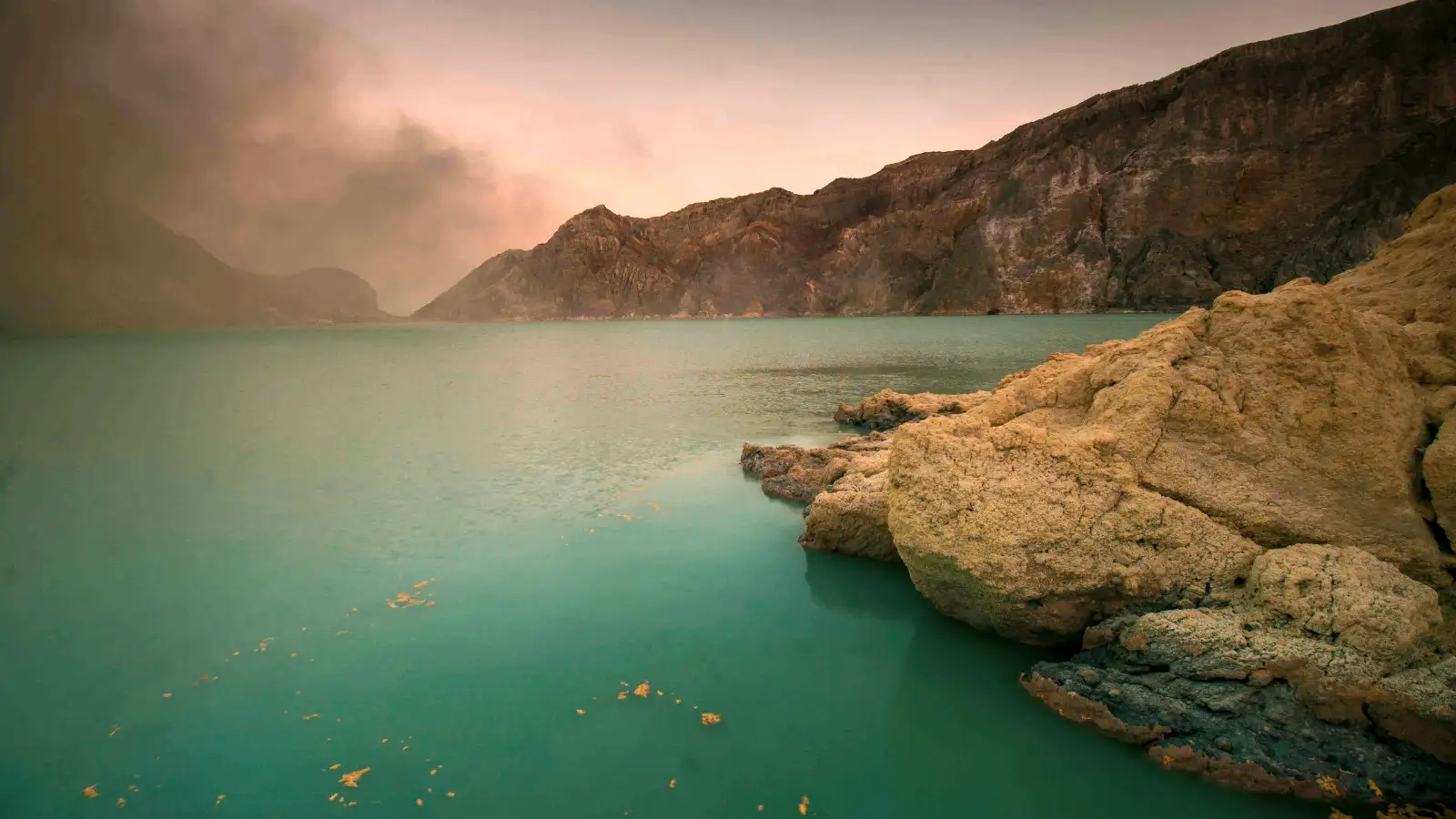
The turquoise acidic lake is often more beautiful than the blue fire itself. As the sun rises, the colors shift from deep teal to a milky emerald. It is one of the most acidic places on Earth, with a pH near zero.
Watching the steam rise off the water while the sky turns pink is a cinematic experience. This is when the true scale of the caldera becomes apparent. The rim offers several viewpoints that are much less crowded than the “Instagram spots.”
Expert Logistics and Preparation
Preparation is the difference between a life-changing adventure and a miserable morning. Start by layering your clothing. It can be 5°C at the basecamp and 20°C once you start sweating on the incline.
Avoid the “Paltuding rush” by arriving early. If the gates open at 2:00 AM, try to be in line by 1:30 AM. This ensures you are among the first on the trail, giving you cleaner air before the dust kicked up by hundreds of boots takes over.
For more details on global volcanic safety standards, you can check the official geological records of Ijen. Knowledge of the terrain is your best asset.
What to Pack
Water is essential, but don’t overpack. One liter is usually enough for the three-hour trek. High-energy snacks like dates or chocolate bars help when your blood sugar drops during the final ascent.
Sturdy shoes with good grip are mandatory. The trail is made of loose volcanic sand and gravel, making it very slippery on the way down. Many travelers twist their ankles by wearing flimsy sneakers or flat-soled shoes.
Avoiding the Crowds
If you don’t care about the Blue Fire, start your hike at 5:00 AM. You will miss the midnight rush and have the trail almost to yourself. The morning light on the forest surrounding the volcano is stunning.
Another option is to stay until 8:00 AM. Most tour groups rush back to their hotels for breakfast, leaving the crater rim quiet and peaceful. This is the best time for drone photography or quiet reflection.
Continue Your Adventure
- Book Your Trip Now: Secure your 2026 permits and transport with our local experts.
- Ijen Crater Tour: The most comprehensive guide to the blue flame and acidic lake.
- Ijen Tour from Bali: Perfect for those looking to cross the strait for a quick volcanic escape.
- Ijen Day Trip from Banyuwangi: The most efficient way to see the crater if you’re already in town.
- Latest Ijen Updates: Stay informed about volcanic activity and trail closures.
- All Tour Packages: Explore our full range of East Java adventures.
Ready for the Midnight Trek?
Don’t let logistics ruin your sunrise. Let our local team handle the permits, medical certificates, and transportation while you focus on the climb.
Frequently Asked Questions (FAQ)
Q: Which viewpoint is the least crowded?
A: Most people stop at the first rim point after climbing. If you walk another 15-20 minutes further along the rim toward the weather station, the crowds thin out significantly and the view of the lake is better.
Q: How bad is the dust on the trail?
A: During the dry season, the dust is relentless. Between the volcanic ash and the hundreds of people hiking, your lungs will feel it. Wear a buff or a mask even when you aren’t near the sulfur gas.
Q: Can elderly travelers handle the stairs?
A: There are no actual stairs, just a steep, dirt path. While physically fit seniors do it often, those with knee issues will struggle. The “human taxi” trolleys are the best option for those who want to see the crater without the physical strain.
Q: Is the trail open during the rainy season?
A: Generally yes, but it becomes very slippery and dangerous. If the volcanic activity increases or there are landslide risks, the BKSDA will close the trail immediately. Always check the status on the day of your trek.
Q: Do I really need a gas mask for the sunrise?
A: If you stay on the rim and the wind is favorable, you might not need it. However, if you descend into the crater or if the wind shifts, the gas is physically impossible to breathe. Always have one hanging around your neck just in case.