
How Long Is the Mount Bromo Hike?: The Ultimate Guide 2026
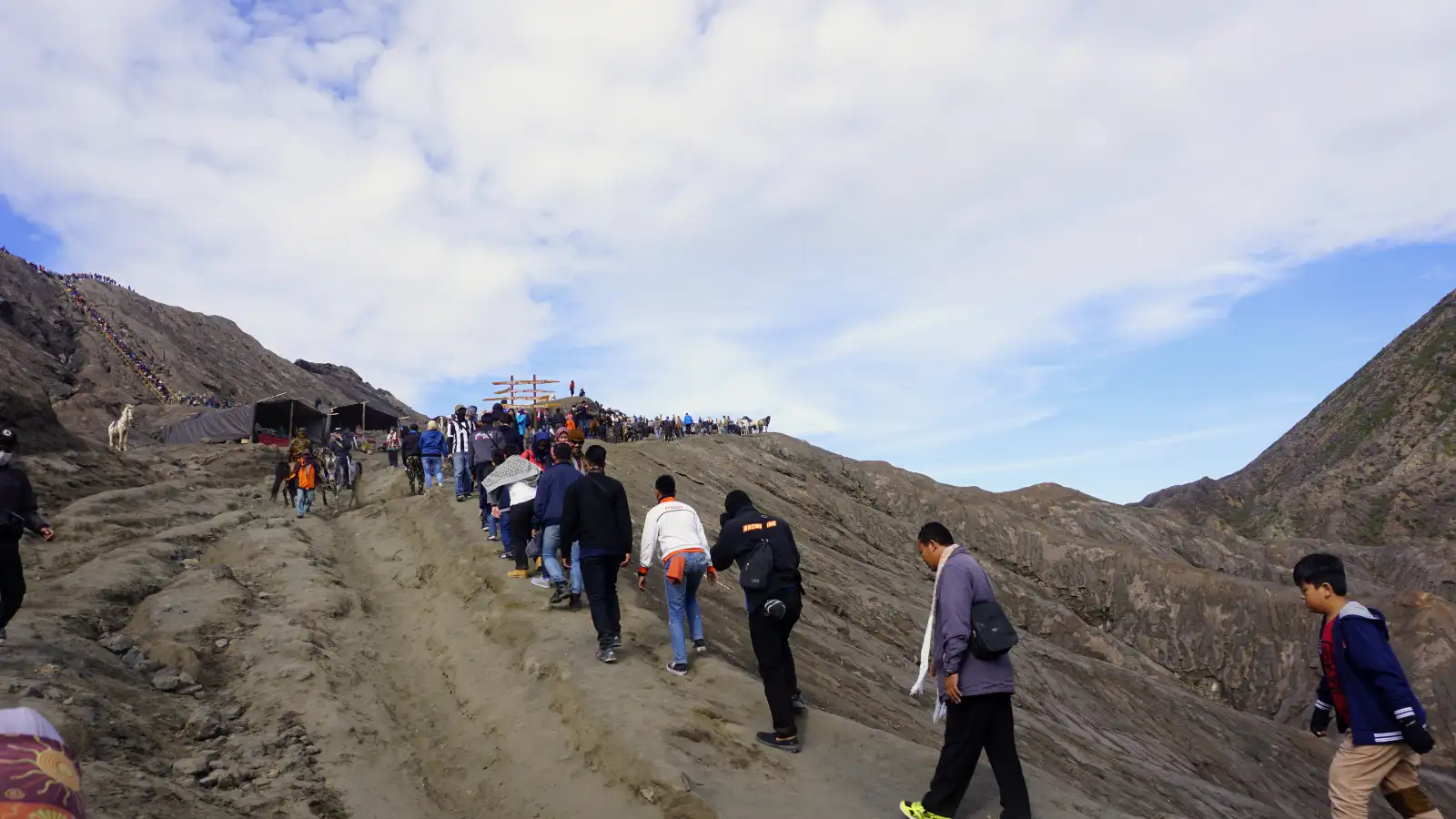
How long is the Mount Bromo hike? Most travelers find the trek to the Bromo crater rim takes between 45 and 60 minutes of active walking. If you factor in the sunrise viewpoints like King Kong Hill, the total journey involves approximately 3 to 4 hours of exploring the volcanic landscape. If you’re ready to start your adventure, you can lock in your reservation with local experts today.
Standing at the edge of an active volcano at 3 AM is a visceral experience. The air is thin, freezing, and carries the faint scent of sulfur. Many visitors arrive in East Java expecting a quick stroll, only to find themselves navigating the vast Sea of Sand and steep concrete stairs. Understanding the timing is crucial for catching that perfect light hitting the Mount Bromo tour highlights.
What You Need to Know
- Crater Hike Duration: 45–60 minutes (one way).
- Viewpoint Hike: 15–30 minutes from the jeep drop-off.
- Total Time: Plan for 4–5 hours from hotel departure to return.
- Difficulty: Moderate, primarily due to sandy terrain and stairs.
- Essential Gear: Headlamp, warm layers, and a dust mask.
Why Trust This Guide
We live and breathe the Javanese highlands. Our team spends more time in the Bromo Tengger Semeru National Park than anywhere else. We’ve seen the crater change through rainy seasons, eruptions, and the busiest holiday weekends. This guide isn’t based on a one-time visit; it’s built on years of coordinating daily departures and listening to thousands of travelers.
Local knowledge matters because Bromo is unpredictable. Rangers might close the rim due to toxic gas levels, or a sudden landslide might shift the jeep path. We stay connected to the local Tenggerese community to ensure you get the most accurate, ground-level information available right now. Your safety and experience depend on knowing these nuances before you even pack your bag.
Breaking Down the Bromo Hike Timeline
The journey isn’t just one single path. It is a series of movements that begin long before the sun peeks over the horizon. Most people start their day in the village of Cemoro Lawang. From here, a 4×4 jeep becomes your lifeline, traversing the bumpy terrain toward the viewpoints. This initial drive takes about 30 to 40 minutes, depending on the traffic of hundreds of other jeeps.
Once the jeep parks, your legs take over. The walk to the main sunrise spots like King Kong Hill or Seruni Point is relatively short but steep. You will spend about 20 minutes climbing stairs or dirt paths. The real clock starts ticking after the sun is up, when you head back down into the caldera to face the volcano itself.
Crossing the Sea of Sand
After the sunrise show, your jeep will drop you in the middle of a massive volcanic desert. This is the “Lautan Pasir” or Sea of Sand. Walking from the parking area to the base of the Bromo stairs covers about 1.5 to 2 kilometers. On foot, this takes roughly 20 to 30 minutes. The sand is soft and fine, which can make your calves burn faster than expected.
Horses are a popular alternative here. Local Tenggerese riders will offer to take you across for a fee. While it saves your legs for the climb, the time saved is minimal—about 10 minutes. Most backpackers prefer the walk to soak in the eerie, cinematic scale of the crater sitting in the distance, surrounded by nothing but grey volcanic ash.
The Final Ascent to the Rim
The final hurdle is the staircase. There are approximately 250 concrete steps leading directly to the smoking edge of the crater. This section is short but can be physically demanding because of the altitude. Most travelers take about 10 to 15 minutes to reach the top, often pausing halfway to catch their breath and look back at the tiny jeeps in the distance.
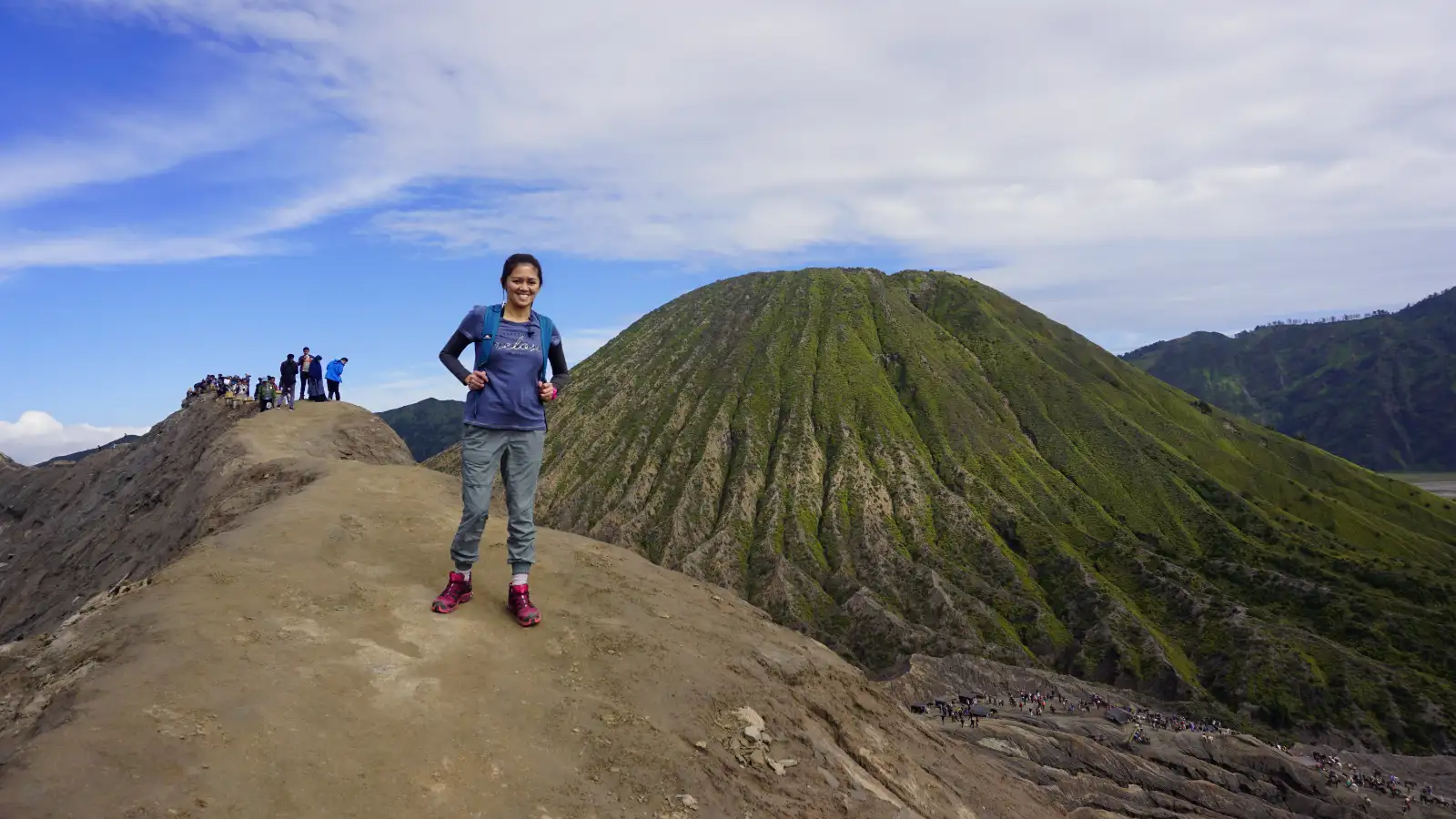
The rim itself is narrow. You can walk along a portion of it, but the path becomes very thin and lacks safety railings further out. Total time spent at the top usually ranges from 20 to 40 minutes. You’ll want that time to listen to the volcano’s “roar”—a deep, bass-heavy rumble that sounds like a jet engine muffled by the earth.
Hiking Difficulty and Fitness Levels
Is the Mount Bromo hike hard? For most people with a basic level of fitness, the answer is no. It is far more accessible than the nearby Mount Semeru or the grueling climb of Ijen Crater. However, the environment presents its own challenges that can surprise the unprepared. Dust is the biggest enemy here, especially during the dry season.
The incline at the sunrise viewpoints is the most cardiovascular part of the morning. If you have knee issues, the uneven stairs can be a bit much. Altitude also plays a role. While Bromo isn’t high enough to cause severe altitude sickness for most, the 2,329-meter elevation means you will feel winded much faster than at sea level. Slow and steady is the golden rule here.
Managing the Cold and Wind
Temperatures regularly drop to 5°C (41°F) or lower before dawn. This isn’t just a hike; it’s an exercise in thermal management. If you start sweating during the walk up to the viewpoint and then sit still for an hour waiting for the sun, you will freeze. Wear moisture-wicking base layers and a heavy outer jacket that you can easily peel off once the sun warms the caldera.
Wind can also be fierce. On the crater rim, there is absolutely no protection from the elements. A gusty morning can make the narrow path feel precarious. If the wind is blowing the sulfur smoke directly toward the stairs, the hike becomes significantly more difficult. Having a proper mask or a buff to cover your face makes a massive difference in your comfort level.
Planning a trip through East Java can be complex, but we make it simple. Whether you are looking for a standalone Mount Bromo tour or want to witness the electric blue flames on an Ijen Crater tour, we have you covered. Many travelers find that combining these into a Bromo Ijen tour is the most efficient way to see Java’s volcanic wonders. For those with more time, our comprehensive East Java tour packages reveal the hidden waterfalls and cultural heart of the island.
Realistic Expectations vs. Instagram
Instagram makes Mount Bromo look like a peaceful, solitary encounter with nature. The reality is quite different. By 4 AM, the Penanjakan viewpoints can feel like a packed concert venue. Thousands of people scramble for the same three feet of railing to get “the shot.” If you expect quiet contemplation, you might be disappointed by the chatter of tour guides and the clicking of a thousand shutters.
The dust is another factor that social media filters out. When the wind picks up in the Sea of Sand, it creates a swirling vortex of volcanic ash. Your hair will be gritty, your camera lens will need a cover, and you will likely be coughing if you don’t have a scarf. It is raw, it is messy, and it is chaotic. But that chaos is part of the authentic East Java experience.
The Horse Experience
You will be approached dozens of times by local horsemen. For many luxury travelers, this is a charming way to cross the sand. For others, seeing the horses working in the thin air can be uncomfortable. It’s a personal choice. If you decide to ride, negotiate the price clearly beforehand. The ride only takes you to the base of the stairs; you still have to climb the 250 steps yourself.
Walking across the sand actually allows you to see things the horse riders miss. You can stop to photograph the smaller temples or the way the light hits the ridges of Mount Batok. The sand is soft, so expect your shoes to fill up. High-top hiking boots or gaiters are a smart move if you want to avoid stopping every five minutes to empty your footwear.
Insider Tips for a Smoother Hike
Timing is everything. Most tours follow a rigid schedule: Sunrise viewpoint at 5 AM, crater at 7:30 AM. If you want to avoid the worst of the crowds, talk to your driver about reversing the order or staying at the viewpoint a little longer until the first wave of people leaves. Even a 30-minute shift in your schedule can result in a much quieter crater rim experience.
Don’t just stick to the main viewpoints. Places like Mentigen Hill offer a fantastic alternative view of the volcano without the massive jeep crowds. It’s a lower vantage point, but it feels much more intimate and is within walking distance of many Cemoro Lawang hotels. Sometimes, the best views aren’t the ones everyone else is looking at.
Photography Secrets
Bring a telephoto lens if you have one. While wide shots are great for the whole caldera, zooming in on the textures of the crater rim or the steam rising from the vents creates dramatic, professional-looking images. If you are using a smartphone, use the “Night Mode” for the pre-dawn shots, but keep your hands steady—the cold can make you shiver, resulting in blurry photos.
Protect your gear. Volcanic ash is incredibly abrasive and can ruin a camera sensor or a zoom mechanism in minutes. Keep your equipment in a sealed bag when you aren’t shooting. A simple plastic rain cover for your camera works wonders against the fine dust. After the hike, use a blower brush rather than a cloth to clean your lens to avoid scratching the glass.
Continue Your Adventure
Your journey through Java doesn’t have to end at the Bromo crater. There is so much more to see in this volcanic belt. Explore these hand-picked options to extend your trip:
- Secure Your Custom Java Itinerary
- Bromo Adventure from Yogyakarta
- Short Bromo Getaway from Bali
- Direct Bromo Tour from Surabaya
- Probolinggo to Bromo Day Trip
- Malang to Bromo Sunrise Special
Ready to Stand on the Edge?
The Mount Bromo hike is a rite of passage for any traveler visiting Indonesia. While the physical walk isn’t the longest you’ll ever do, the sensory impact of the landscape is unmatched. Don’t leave your logistics to chance. Our local team ensures you beat the crowds, find the best photo spots, and travel in comfort. Let us handle the details while you focus on the view.
Frequently Asked Questions (FAQ)
Q: Which viewpoint is the least crowded?
A: King Kong Hill and Penanjakan 1 are the busiest. If you want fewer crowds, head to Seruni Point or Mentigen Hill. While the angle is slightly different, the experience is much more peaceful.
Q: How bad is the dust really?
A: During the dry season (May to September), the dust is intense. It’s a fine volcanic ash that gets everywhere. You absolutely need a mask or a buff, and contact lens wearers should consider switching to glasses for the day.
Q: Can elderly travelers handle the stairs?
A: It depends on their mobility. The 250 steps are concrete and have a railing, but they are steep. Many elderly visitors take it slow, stopping every 20 steps, and successfully reach the top. However, those with severe heart or lung conditions should consult a doctor due to the altitude and sulfur fumes.
Q: Do I need a professional guide for the hike?
A: While the path is clear, a guide is highly recommended for logistics. They manage the jeep timings, know the secret paths to avoid crowds, and can provide safety advice if volcanic activity increases suddenly.
Q: Is there a toilet on the hiking trail?
A: There are basic “squat” toilets near the jeep parking areas and at some of the main sunrise viewpoints. They usually cost a few thousand Rupiah to use, so keep some small change handy. Don’t expect luxury; these are very rustic facilities.
Planning to visit Ijen or Mount Bromo?
Explore available tour options and ask our local team about your itinerary.
Explore Tour Packages →