Ijen Blue Fire 2026: Complete Guide & What You Must Know
Standing on the jagged rim of a prehistoric caldera at 2:00 AM, the world feels incredibly small. The air is thin, biting, and carries the faint, sharp scent of sulfur. Below you, a descent into what looks like another planet begins. Most travelers come to East Java for the sunrise, but the truly adventurous arrive hours earlier to witness a phenomenon so rare it only exists in two places on Earth. If you are currently navigating the complexities of planning this expedition—wrestling with midnight logistics, safety concerns, or the search for a reliable guide—you are in the right place. To ensure your journey is seamless and spectacular, you can book your Ijen Blue Fire tour with our expert team who handle every detail from transport to safety gear.
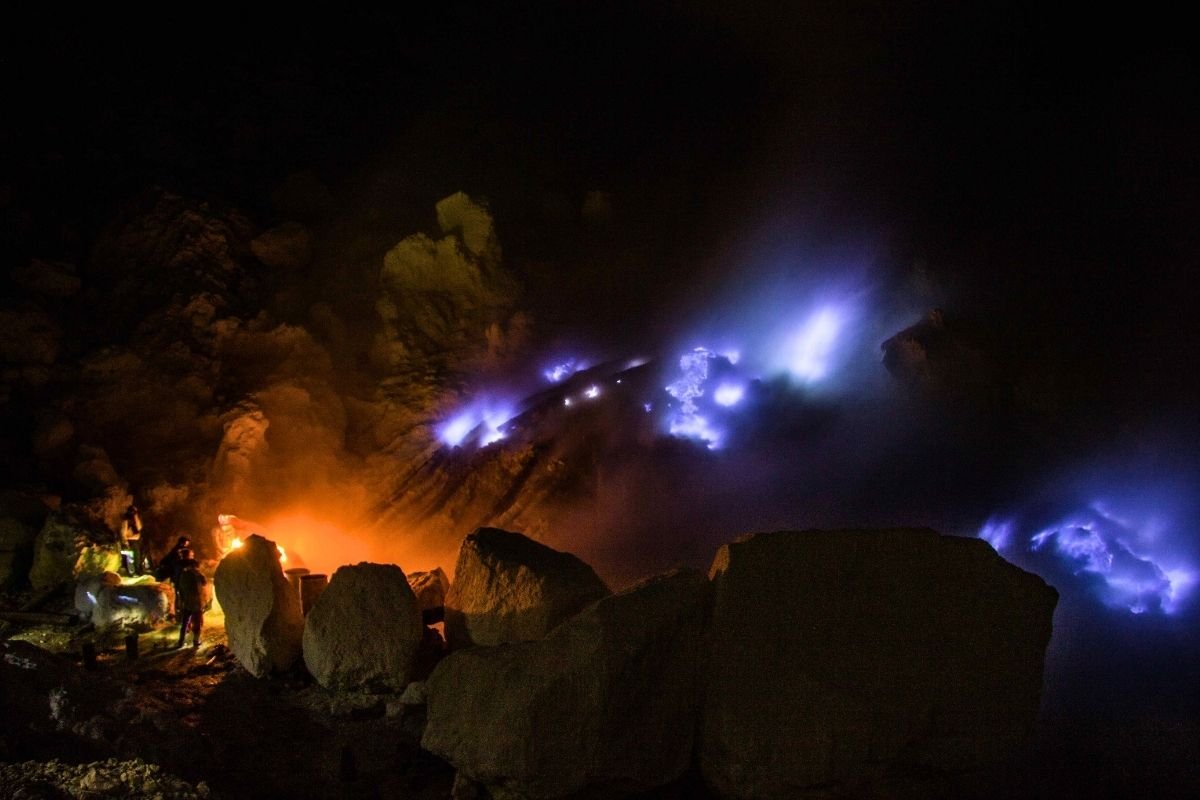
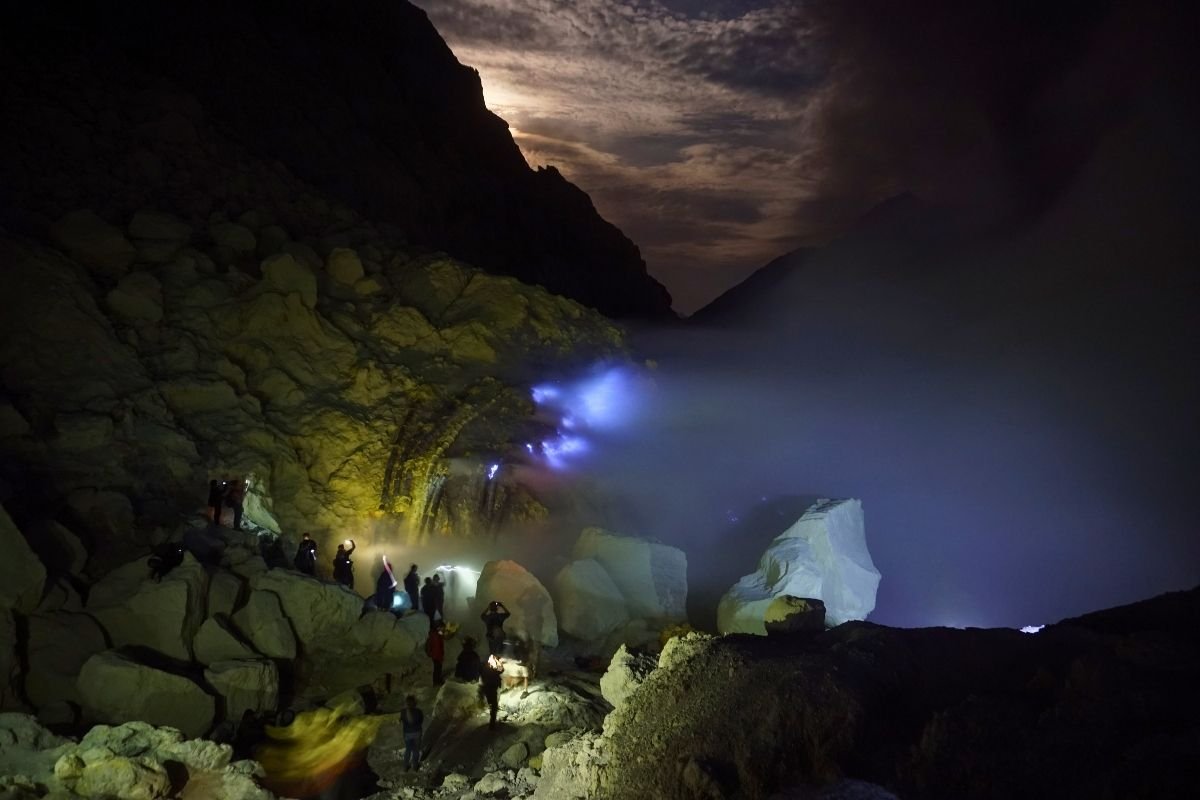
The Ijen Blue Fire is a mesmerizing natural occurrence where high-pressure sulfuric gases emerge from volcanic vents and ignite upon contact with the oxygen-rich air. This creates ethereal, electric-blue flames that can reach heights of up to five meters. To see it, travelers must undertake a challenging night hike, descending into the heart of the Ijen Crater before dawn breaks over the world’s largest highly acidic lake.
What You Need to Know
Witnessing the Blue Fire requires a midnight start, usually departing from Banyuwangi around midnight. The trek involves a steep 3-kilometer uphill climb followed by a rocky descent into the crater. You must wear a professional gas mask and carry a headlamp. The best viewing window is between 2:00 AM and 4:30 AM. Weather and volcanic activity are the primary variables that dictate visibility, so flexibility in your schedule is highly recommended.
Table of Contents
Why Trust This Guide
In an era of generic travel advice, boots-on-the-ground experience is the only currency that matters. Our team has navigated the slopes of Mount Ijen hundreds of times, witnessing the crater in every possible condition—from crystal clear nights to dense volcanic fog. We maintain daily contact with the local vulcanology office and the community of sulfur miners to provide real-time updates that most travel blogs miss.
Our expertise isn’t just about knowing the path; it’s about understanding the nuances of the micro-climate, the shifting patterns of the sulfur gas, and the logistical hurdles that can make or break a trip. Whether you are a backpacker on a budget or a luxury traveler seeking a seamless private experience, this guide is built on data, local wisdom, and a passion for the raw beauty of East Java.
The Science Behind the Electric Blue Flame
The “Blue Fire” is often misrepresented as blue lava. In reality, it is a chemical reaction involving sulfuric gases. Ijen contains some of the highest levels of natural sulfur in the world. Deep within the volcano, these gases are subjected to immense pressure and temperatures exceeding 600 degrees Celsius. When these gases escape through cracks in the crater floor and meet the oxygen-rich atmosphere, they ignite spontaneously.
The result is a ghostly blue glow that illuminates the dark floor of the caldera. The color itself is a result of the sulfur burning; much like how different chemicals produce different colors in fireworks, burning sulfur produces a distinct spectrum that appears as a vibrant, almost neon blue to the human eye. This phenomenon occurs 24/7, but it is only visible in the absolute darkness of night, disappearing as soon as the first rays of sunlight hit the crater floor.
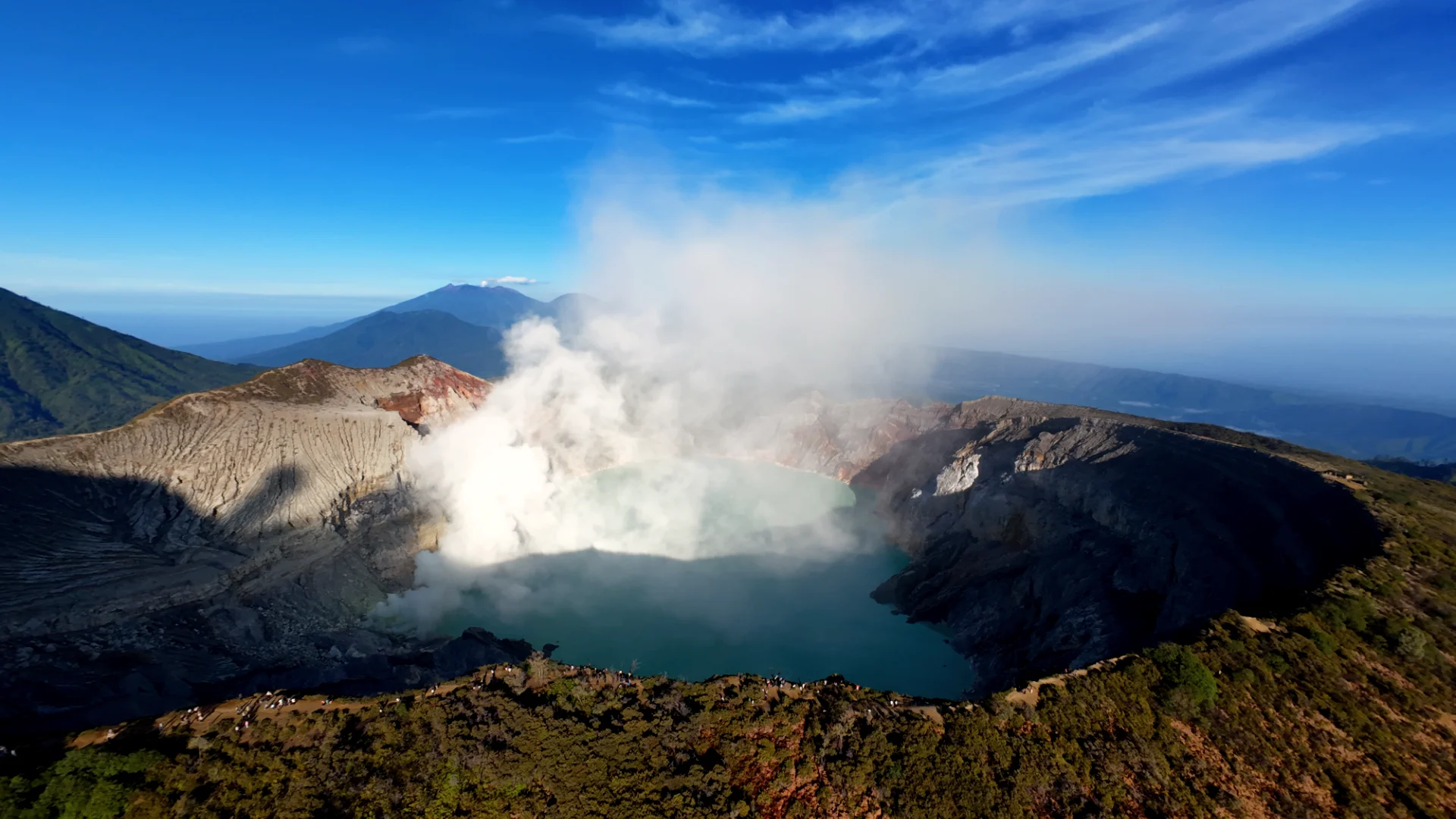
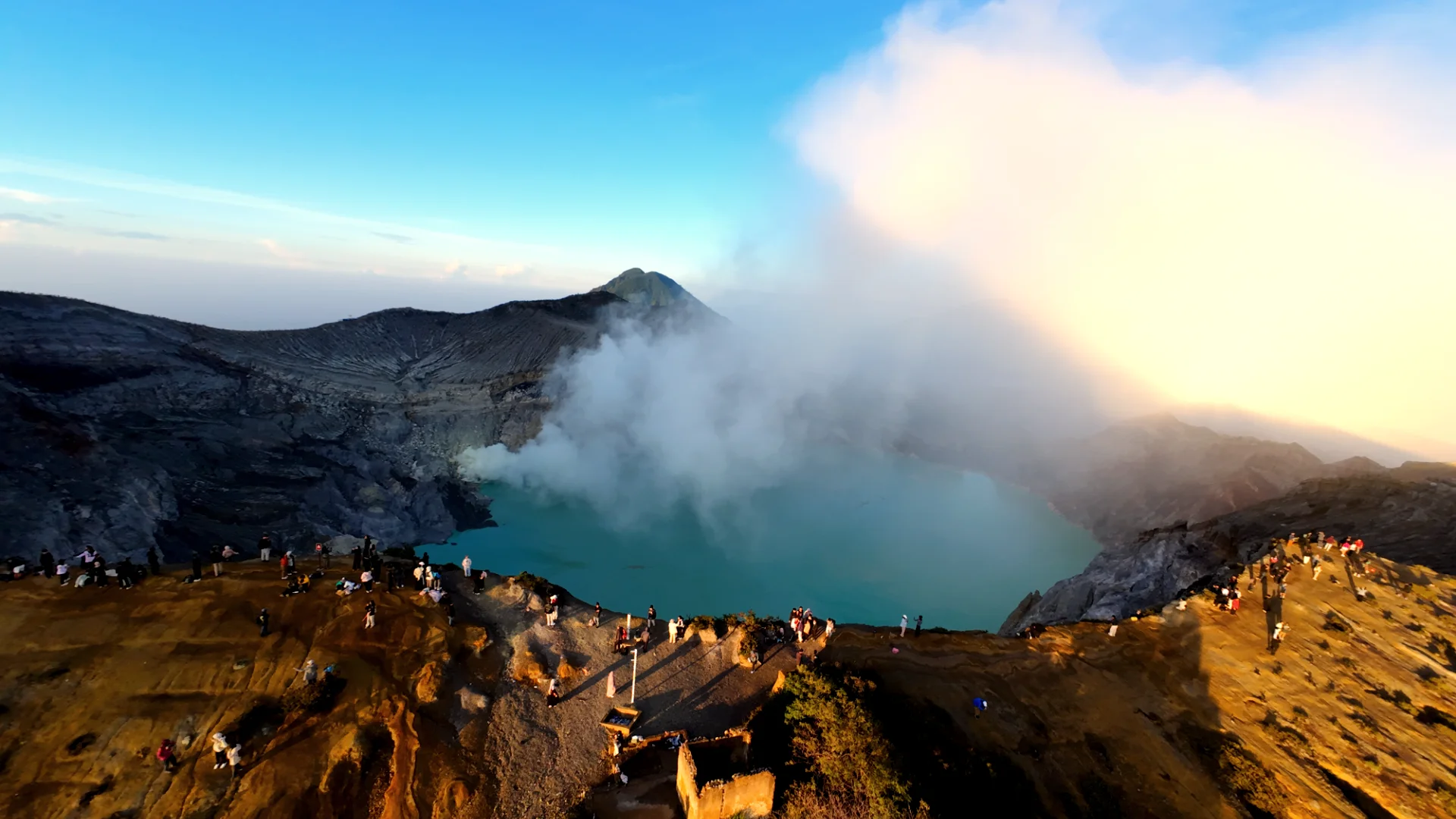
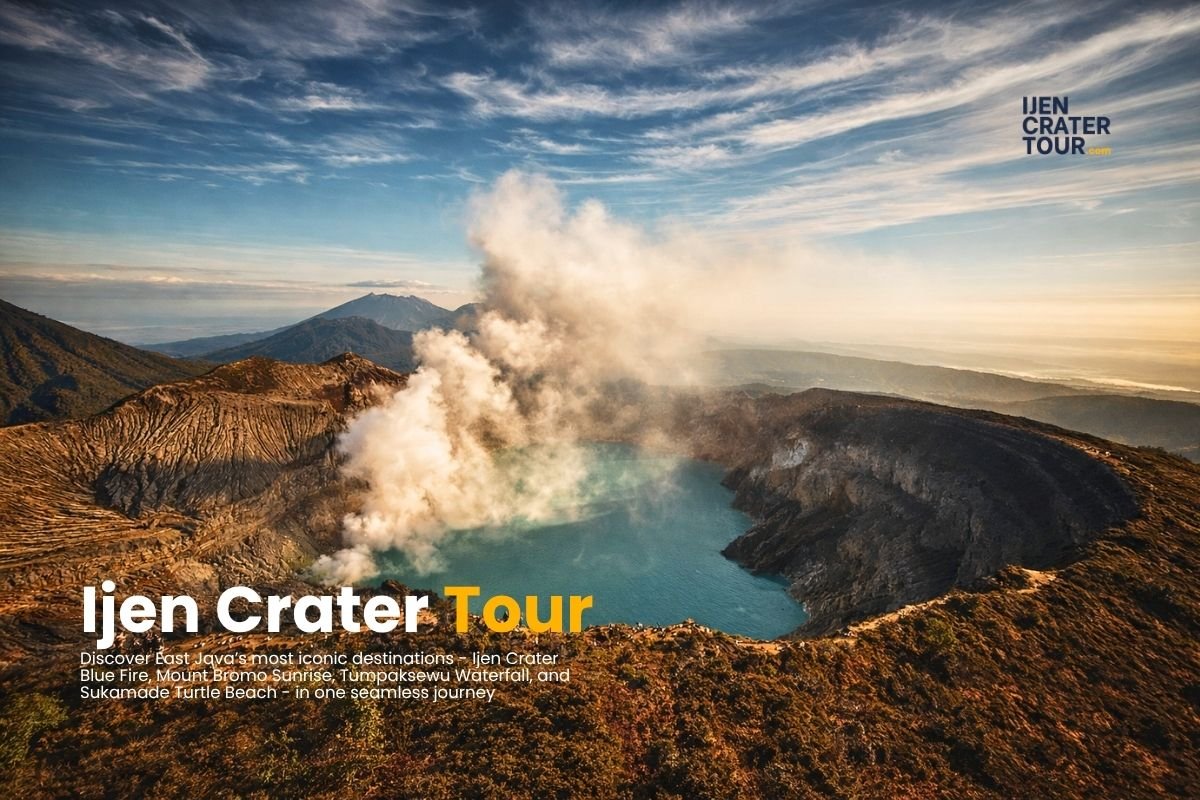
Furthermore, Ijen is part of the UNESCO Global Geopark network, recognized for its unique geological and cultural heritage. The crater also houses a massive turquoise lake, which holds the title of the world’s most acidic large volcanic lake. The combination of the blue flames, the yellow sulfur deposits, and the turquoise water creates a visual palette that is found nowhere else on the planet.
Logistics: How to Get to Ijen Crater
Reaching the Ijen plateau is an adventure in itself. Most travelers use the town of Banyuwangi as their base. This coastal city is well-connected to Bali via a short ferry ride from Gilimanuk and to Surabaya by train or flight. From Banyuwangi, it is a 1-hour to 1.5-hour drive to Paltuding, the base camp where the hike begins. The mountain road is paved but winding, cutting through lush rainforests and coffee plantations.
If you are coming from the west, the town of Bondowoso offers another route. While historically popular, the road from Bondowoso is generally longer and more rugged than the Banyuwangi approach. For most international visitors, the Banyuwangi route is preferred due to the proximity to Bali and the better-developed tourist infrastructure. The current entrance fee for international tourists is 100,000 IDR on weekdays and 150,000 IDR on weekends and public holidays.
To maximize your chances of seeing the blue fire, you need to be at the Paltuding trailhead when it opens, typically at 2:00 AM. However, entrance times can change based on volcanic activity levels (Level I to Level IV). If you want to avoid the logistical headache of arranging midnight transport and navigating local permits, many travelers find it more efficient to join an Ijen crater tour from Banyuwangi, which includes all necessary permits and safety equipment.
The Hiking Experience: What to Expect
The hike from Paltuding to the crater rim is approximately 3 kilometers long. The first 2 kilometers are the most taxing, featuring a steep incline on a wide, dirt path. For those who aren’t accustomed to steep uphill walking, this section can be a significant challenge. However, the path is well-trodden and easy to follow. Local “taxi” drivers—miners who use their sulfur carts to transport tired tourists—are often available if the incline becomes too much to handle.
Once you reach the rim, the journey is only half over. To see the blue fire, you must descend roughly 800 meters into the crater itself. This path is narrow, rocky, and steep. You will be sharing the trail with sulfur miners who are carrying heavy loads of solidified sulfur upward. Courtesy is essential here; always give way to the miners. This is the section where a professional gas mask becomes non-negotiable, as the wind can suddenly shift, blowing thick clouds of sulfur gas directly toward the trail.
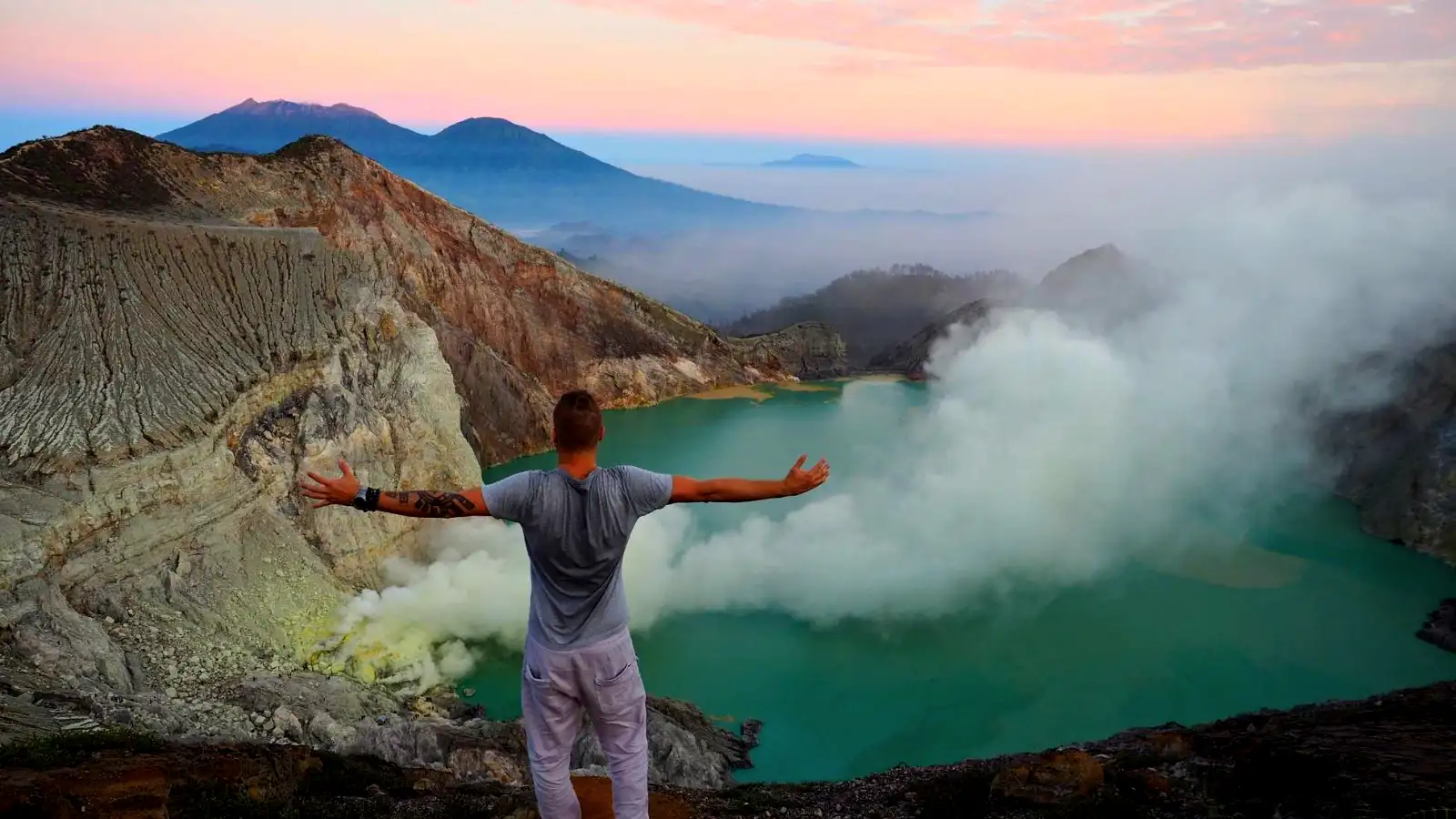
The atmosphere inside the crater is surreal. Surrounded by jagged rock walls and the sound of hissing vents, the sight of the blue fire flickering in the darkness is profoundly moving. Most visitors spend about 30 to 60 minutes in the crater before climbing back to the rim to witness the sunrise. The transition from the deep blues of the fire to the pastel pinks and golds of the morning sun over the acid lake is a moment of pure magic.
Preparation and Timing
Success at Ijen is all about timing. If you arrive too late, you will miss the blue fire. If you arrive too early, you may be standing in the cold for hours. Ideally, you should start your hike from Paltuding at exactly 2:00 AM. This gives you roughly 1.5 hours to reach the rim and another 30 minutes to descend. For those looking for a more comprehensive East Java experience, combining this trip with a 3-day Bromo and Ijen tour is the gold standard for regional travel.
Safety and Essential Gear
Safety at Ijen cannot be overstated. This is an active volcano, and the environment is inherently hazardous. The primary risk is the sulfur gas (sulfur dioxide), which can cause severe respiratory distress if inhaled in large quantities. A standard surgical mask or even an N95 mask is insufficient. You require a half-face or full-face respirator with specialized cartridges designed for acid gases (usually labeled with a yellow stripe).
Temperature management is another critical factor. While Indonesia is tropical, the temperature at the summit of Mount Ijen can drop to 5°C or even lower before sunrise. Layering is key. Start with a moisture-wicking base layer, add a warm fleece or down jacket, and top it with a windproof shell. Once you start hiking, you will warm up quickly, but as soon as you stop to watch the fire or the sunrise, the cold will set in rapidly.
| Item | Requirement | Notes |
|---|---|---|
| Gas Mask | Mandatory | Must have acid gas filters. |
| Headlamp | Mandatory | Hands-free light is essential for the descent. |
| Hiking Shoes | Highly Recommended | Good grip is needed for the rocky crater path. |
| Warm Jacket | Mandatory | Temps can drop below 5°C. |
The Sulfur Miners of East Java
No guide to Ijen is complete without discussing the sulfur miners. These men perform one of the most grueling jobs on Earth. They descend into the crater daily, often without protective gear, to break off chunks of solidified sulfur from the vents. They then carry these loads—averaging 70 to 90 kilograms—in bamboo baskets on their shoulders, climbing out of the crater and 3 kilometers down the mountain.
As a traveler, it is important to be respectful of their workspace. Avoid blocking the trails and always yield to a miner carrying a load. If you wish to take a photo, it is polite to ask and perhaps offer a small tip or purchase a small sulfur carving from them. Many miners also act as local guides and safety officers, using their deep knowledge of the mountain to keep tourists safe. Supporting their local economy is a vital part of sustainable travel in the region.
Continue Your Adventure
The Ijen Blue Fire is just one chapter in the epic story of East Java. Many travelers choose to expand their journey by venturing further into the volcanic heartland. If you have the time, we highly recommend combining Ijen with a Mount Bromo excursion, allowing you to see two of Indonesia’s most iconic landscapes in one seamless trip. For those who want the ultimate adventure, adding a stop at the towering waterfalls of the south is possible with a Bromo Ijen Tumpak Sewu tour package. No matter your choice, the key is to secure your booking in advance to ensure availability and the best local guides.
Experience the Magic of Ijen with Experts
The Ijen Blue Fire is a bucket-list experience that requires precision, safety, and local knowledge. Don’t leave your adventure to chance. Our professional team provides the highest standard of safety gear, experienced local guides who know the crater like the back of their hand, and comfortable transport to ensure your night trek is unforgettable for all the right reasons. From the first spark of the blue flame to the final golden glow of the sunrise, we are here to guide you every step of the way.
WhatsApp: +62 851-8531-9904 | 📧 Email: ijencratertourofficial@gmail.com
Frequently Asked Questions
A: No, it is a natural phenomenon. Its visibility depends on the concentration of sulfuric gas and the weather. If there is heavy rain or high wind, the fire may be obscured. We recommend checking with us via WhatsApp for daily updates.
Q: Do I really need a gas mask?
A: Yes, absolutely. The sulfur dioxide gas is toxic and highly irritating to the lungs and eyes. A professional respirator is the only way to safely descend into the crater.
Q: Can children or elderly people do this hike?
A: The hike is moderately difficult due to the steepness and the gas. We generally recommend it for people with a basic level of fitness. However, “sulfur trolleys” are available to transport those who cannot walk the full distance.
Q: What is the best time of year to visit?
A: The dry season (April to October) is the best time. During the rainy season, the trails can be slippery, and clouds often obscure the views inside the crater.
Q: How cold does it get at the summit?
A: It can drop to between 5°C and 10°C. Once the sun comes up, it warms up quickly, but you will need warm layers for the midnight trek and the wait for sunrise.