
Can You Visit Ijen From Bali in One Day?: Revealed Insider Guide
Planning a trip to the volcanic heart of East Java often feels like solving a complex puzzle. Many travelers wonder if they can witness the legendary blue flame without booking a multi-day hotel stay. The short answer is a resounding yes.
You can definitely conquer Mount Ijen and return to your Bali villa within 24 hours. However, this journey demands a specific level of grit and precise logistics. Most visitors find that securing a guaranteed departure with a local expert is the only way to survive the midnight madness.
Imagine leaving Seminyak at 7 PM and standing on a volcano rim by 4 AM. This guide breaks down the reality of the Ijen crater tour from Bali. We cover everything from the Gilimanuk ferry to the final steep ascent.
What You Need to Know
Visiting Ijen from Bali in a single day is an “overnight mission.” You depart late in the evening and return the next afternoon. Expect 12-14 hours of travel time mixed with a 2-hour uphill trek.
Temperatures drop to 5°C at the summit, so layers are non-negotiable. You will cross the Bali Strait via ferry and drive through the dark forests of East Java. It is physically taxing but visually life-changing.
Why Trust This Guide
Our team lives and breathes the volcanic trails of Indonesia. We manage daily logistics for hundreds of travelers crossing from Bali to Java. We know exactly when the ferry queues get long and which warungs serve the freshest coffee at 2 AM.
Safety is our primary currency in this volatile environment. We monitor volcanic activity reports from the Indonesian archipelago’s geological agencies hourly. If the wind shifts or the sulfur levels rise, our guides are the first to know.
Experience has taught us that “one day” doesn’t mean “rushed.” It means efficiency and knowing the shortcuts that only locals use. We provide honest feedback because we want your sunrise memories to be about beauty, not logistical nightmares.
The Logistics of a 24-Hour Mission
Your journey begins when most people are heading to dinner. Pickup times vary depending on your location in Bali. If you are in Ubud or Canggu, expect a driver to arrive around 7 PM or 8 PM.
The drive to Gilimanuk Port takes approximately four hours. You will pass through quiet villages and the dark stretches of West Bali National Park. This is your best chance to catch some sleep before the hike starts.
Crossing the Bali Strait
Crossing to Java happens on a large commercial ferry. The ride takes about 45 to 60 minutes depending on the current. You can step out on the deck to feel the salty breeze under the stars.
Banyuwangi port greets you with a different energy. Java feels raw and bustling even in the middle of the night. From here, it is a one-hour drive up the winding mountain roads to Paltuding basecamp.
Arrival at Paltuding Basecamp
Paltuding is the gateway to the crater. By 1:30 AM, the parking lot is a hive of activity. Hundreds of headlamps flicker in the dark as hikers prepare their gear.
Local rangers check permits and health certificates at the gate. This is where you grab a hot tea and mentally prepare for the incline. The air is thin, crisp, and smells faintly of burnt matches.
Realistic Expectations vs Instagram
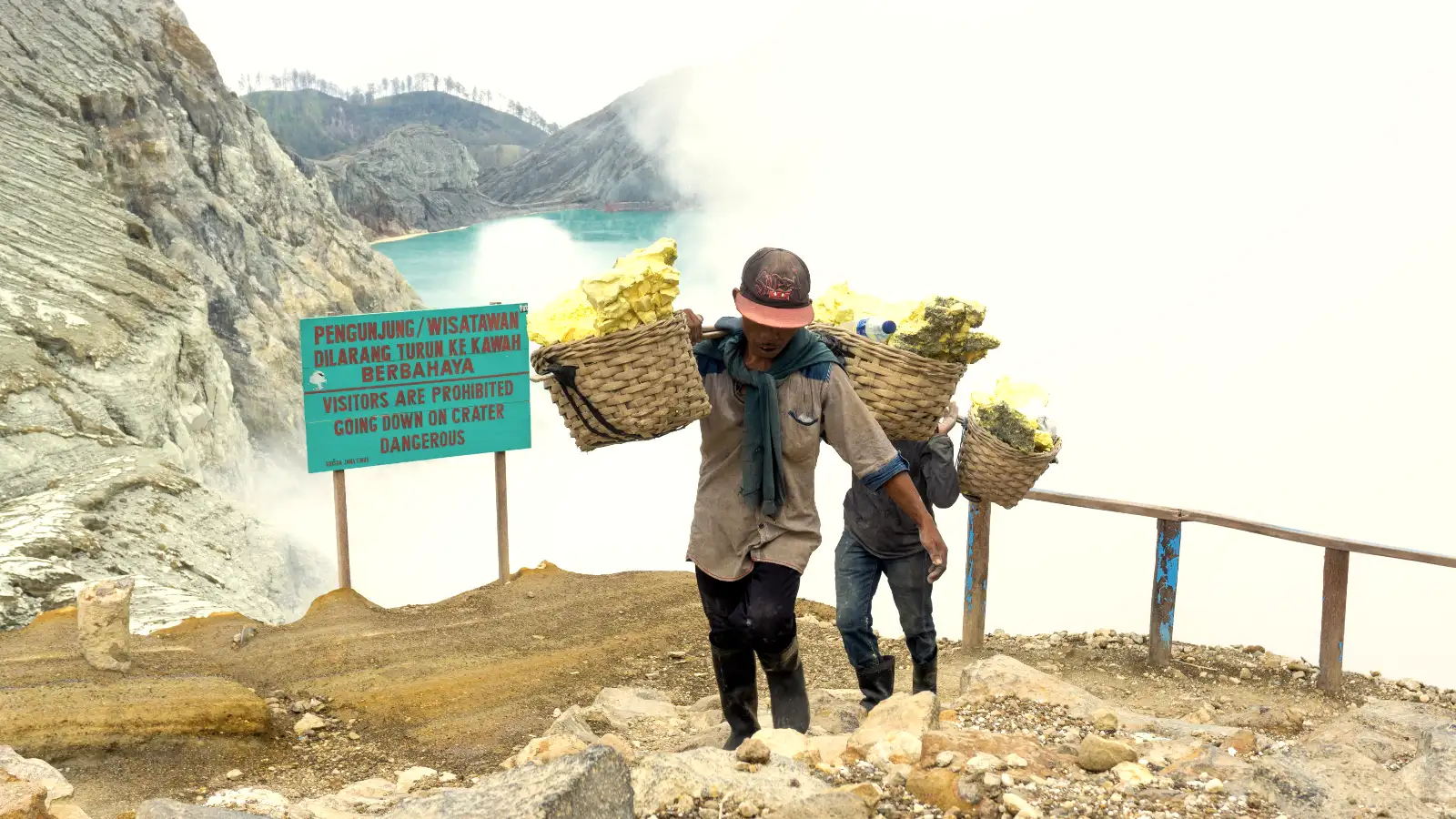
Social media often portrays Ijen as a silent, spiritual sanctuary. In reality, it is a loud and crowded industrial site. Sulfur miners haul 80kg loads of rock past tourists on narrow paths.
The trail is steep and dusty. You will likely be coughing if your gas mask isn’t fitted properly. It is a sensory overload of freezing wind, acrid smoke, and heavy breathing.
The Blue Flame Phenomenon
Witnessing the electric blue flames requires a descent into the crater. The path down is rocky and slippery. It is not a casual stroll, and the gas can become suffocating in seconds.
Sometimes the flames are massive; other times they are mere flickers. Your guide will determine if it is safe to go down. Never ignore their advice, as the volcanic gas directions shift without warning.
The Sunrise Spectacle
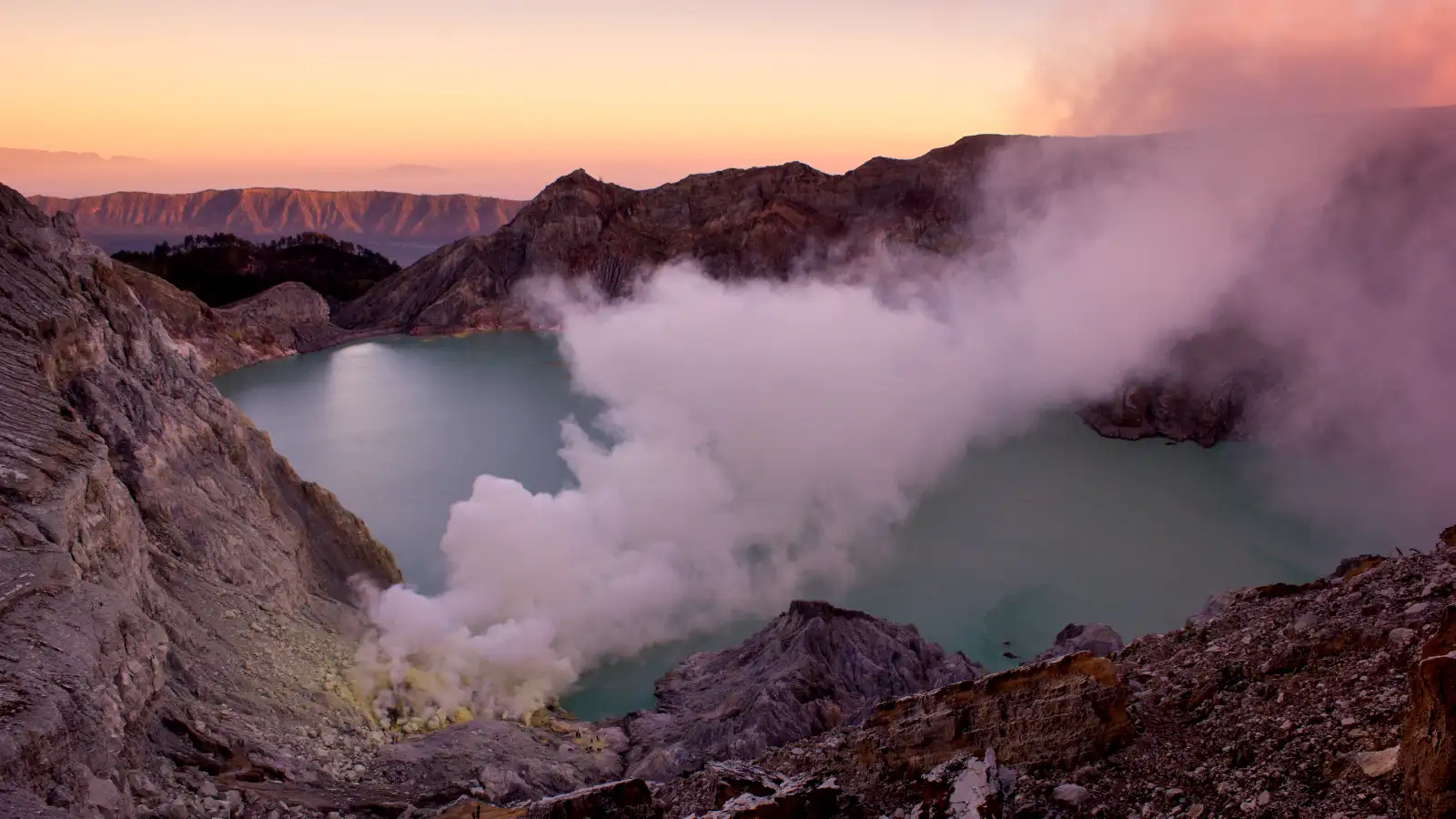
Many travelers find the Kawah Ijen sunrise more impressive than the flames. As the light hits the turquoise lake, the colors are hallucinogenic. The contrast between the yellow sulfur and the blue water is stunning.
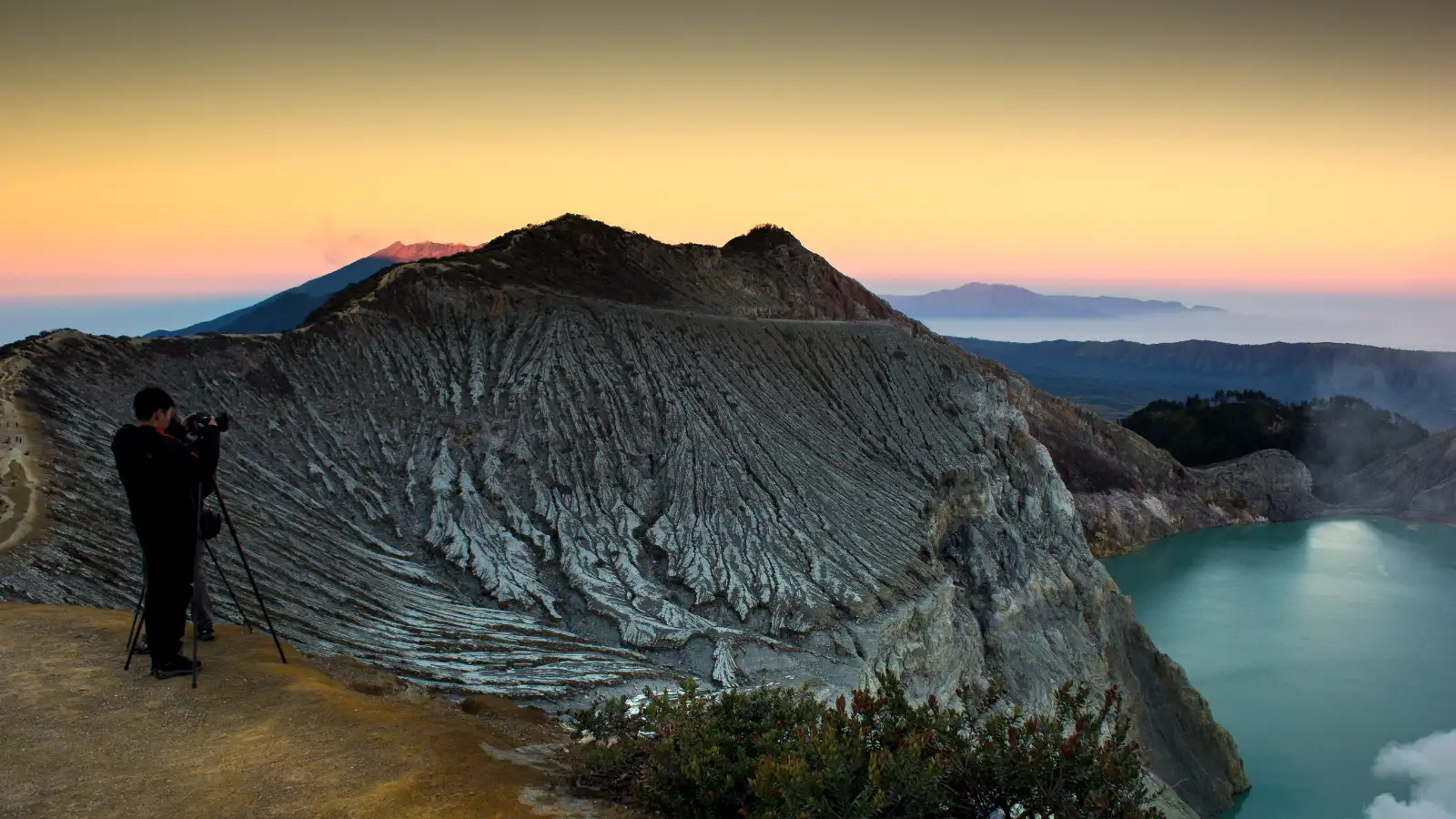
Find a spot on the rim away from the main crowd. Watching the shadow of the volcano stretch across the valley is a quiet triumph. This moment makes the 18 hours of travel worth every second.
If you want to explore more of East Java’s volcanic wonders, consider a comprehensive Ijen crater tour. For those with more time, the legendary Mount Bromo tour offers a completely different landscape. Many travelers choose to combine these experiences by booking a Bromo Ijen tour for the ultimate adventure. This region is the heart of any East Java tour itinerary.
Estimated Costs and Fees
Budgeting for a one-day trip requires looking at the “hidden” costs. If you go solo, you’ll need to pay for a private car, ferry tickets, and entrance permits. Most travelers find that all-inclusive packages save money in the long run.
The current entrance fee for international tourists is roughly 100,000 to 150,000 IDR depending on whether it’s a weekday or weekend. Health certificates, which are now mandatory, usually cost around 25,000 IDR at local clinics in Banyuwangi.
| Item | Estimated Cost (IDR) | Notes |
|---|---|---|
| Entrance Fee | 100k – 150k | Per person |
| Ferry Crossing | 200k – 300k | Per vehicle |
| Gas Mask Rental | 50k | Essential for safety |
| Local Guide | 250k – 400k | Highly recommended |
Essential Gear and Packing List
Do not underestimate the cold. While Bali is sweltering, the rim of Mount Ijen feels like a different planet. You need a windbreaker or a light down jacket at the very least.
Good hiking shoes with decent grip are mandatory. The volcanic ash is slippery, especially on the descent. Many people slip and twist ankles because they wore flip-flops or smooth sneakers.
The Gas Mask Priority
A standard medical mask will not protect you from sulfur dioxide. You need a proper respirator with chemical filters. Most tour operators provide these, but always check the filter condition before starting.
Carry a small backpack with water and high-energy snacks. You will be burning significant calories during the 3-kilometer uphill climb. A headlamp is also better than a handheld flashlight because it keeps your hands free.
Personal Comfort Items
Wet wipes are a lifesaver for cleaning dust off your face after the trek. Eye drops can help if the sulfur smoke irritates your contacts or eyes. Also, bring a small power bank; cold weather drains phone batteries quickly.
Packing light is key for a one-day trip. Since you return to Bali quickly, leave your heavy luggage at your hotel. Just bring what you need for the 24-hour window.
Continue Your Adventure
- Secure Your Ijen Adventure: The fastest way to book your spot and ensure all logistics are handled.
- Ijen Tour from Denpasar: A specialized one-day itinerary starting from Bali’s capital.
- Ubud to Ijen One Day: Perfect for those staying in Bali’s cultural heart who want a quick volcanic escape.
- Seminyak Ijen Day Trip: Escape the beach clubs for a night and witness the blue flames.
- Canggu Ijen Expedition: The ultimate surf-to-summit journey for adventure seekers.
- Nusa Dua to Ijen Crater: High-end private transfers for a comfortable 24-hour mission.
Ready to Conquer the Crater?
Don’t let the logistics stop you from seeing one of the world’s most unique natural wonders. Our local team is ready to drive, guide, and support you every step of the way.
Frequently Asked Questions
Q: Can I visit Ijen from Bali without a tour?
A: Technically yes, but it is extremely difficult. You would need to coordinate private drivers, ferry tickets, and find a clinic for the mandatory health certificate at 1 AM. Most independent travelers end up exhausted and stressed, often missing the sunrise.
Q: How bad is the dust and sulfur gas?
A: It can be quite intense. The dust is very fine and gets everywhere, while the sulfur gas feels like someone is tickling the back of your throat with a match. Always wear a high-quality respirator mask when you are near the crater rim or lake.
Q: Is the trail safe for elderly travelers or children?
A: It is a physically demanding trek with steep sections. However, local “taxi” carts (trolleys pushed by miners) are available for those who cannot walk the full distance. We recommend children be at least 10 years old and comfortable with long car rides.
Q: Which viewpoint is the least crowded for sunrise?
A: The main sunrise point near the summit is usually packed. If you walk about 15-20 minutes further along the rim toward the “dead forest” (Hutan Mati) area, the crowds thin out significantly. You get a much better perspective of the lake from there.
Q: Can I see the blue fire after sunrise?
A: No. The blue fire is only visible in complete darkness. Once the sun starts to rise, the light drowns out the chemical combustion of the sulfur gases. To see them, you must arrive at the crater floor well before 5 AM.
Planning to visit Ijen or Mount Bromo?
Explore available tour options and ask our local team about your itinerary.
Explore Tour Packages →