Ijen Trolley Taxi: Cost, Ethics, and How It Works
Your alarm screams at midnight. The air at Ijen Crater is thin, freezing, and smells heavily of rotten eggs. You start the climb, but your legs feel like lead after only twenty minutes.
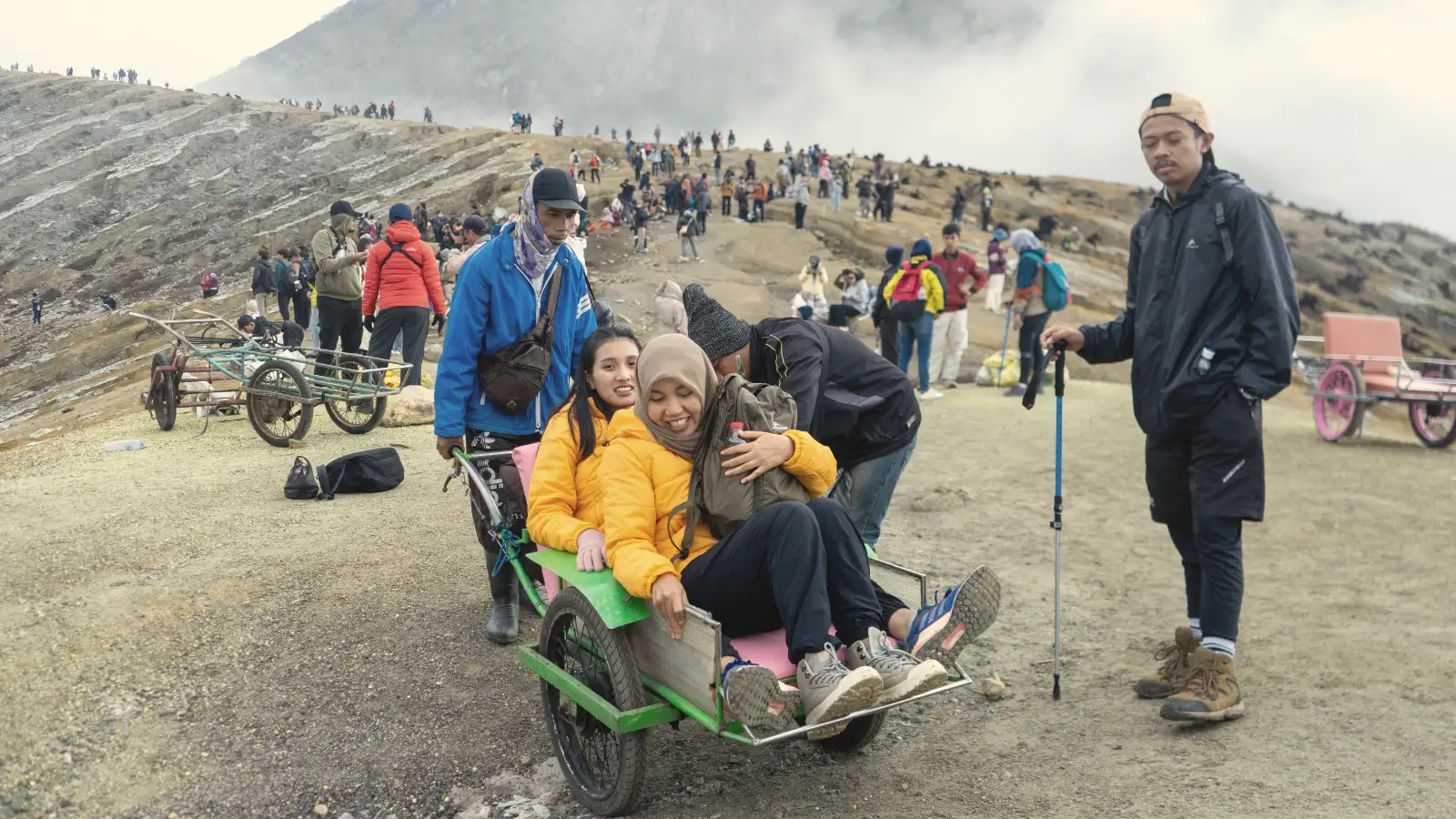
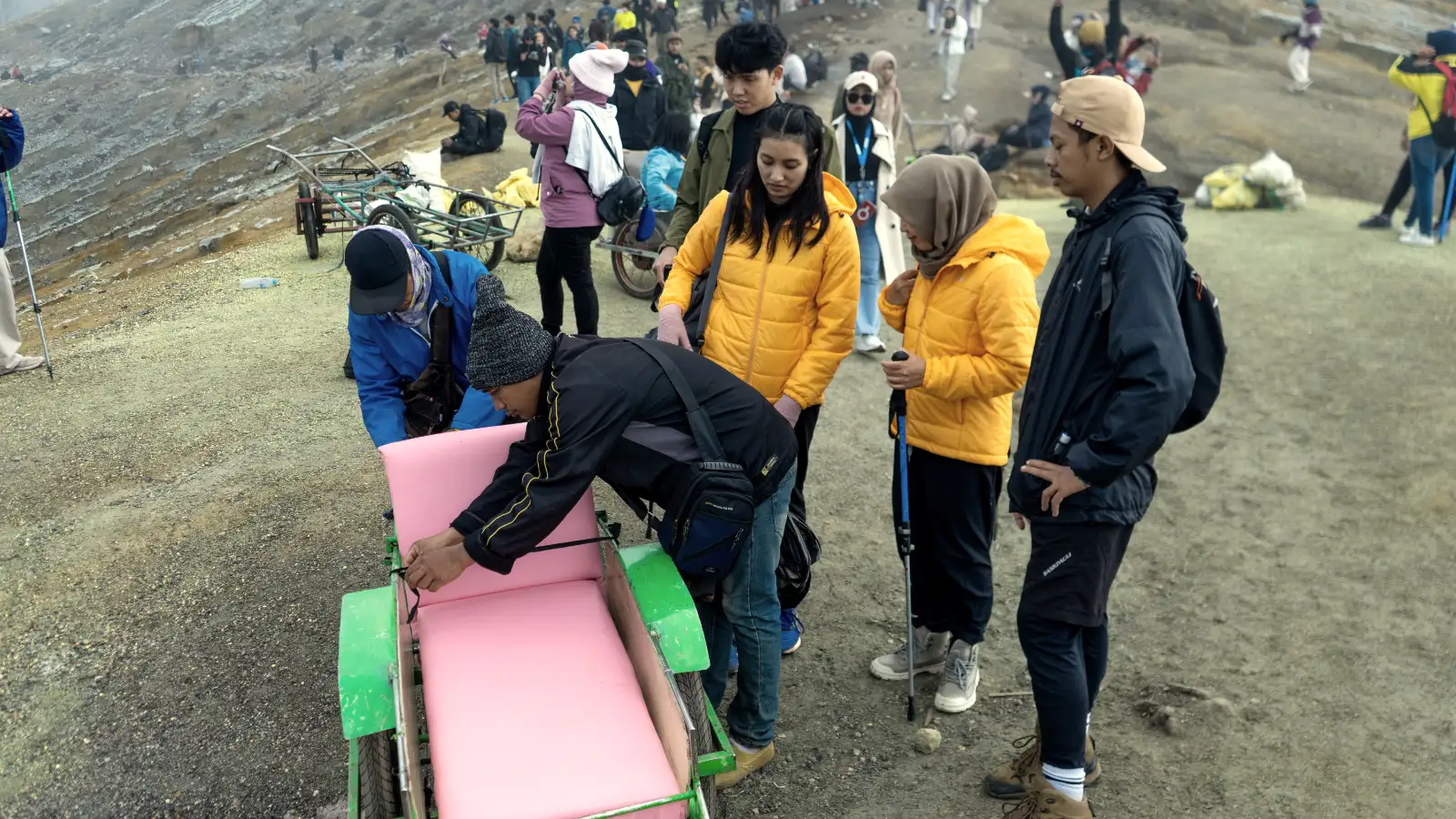
Suddenly, a strange squeaking sound cuts through the darkness. A wooden cart, pushed by three lean men, cruises past you on the vertical incline. You’ve just met the local “Taxi.”
Choosing an Ijen Crater tour involves many decisions, but none are as visually striking as these trolleys. This guide breaks down the reality of using them.
What You Need to Know
The Ijen trolley taxi is a human-powered transport service. Local miners use their sulfur carts to ferry tourists up the steep 3km trail. It costs roughly 800,000 to 1,000,000 IDR for a return trip.
While physically grueling for the workers, it provides a vital secondary income. You can find them at the Paltuding basecamp or along the main trail. It is the only way for non-hikers to see the crater rim.
Always negotiate the price clearly before sitting down. Most travelers use it when they hit “the wall” halfway up. Booking your trip in advance helps clarify these logistics before you arrive at the mountain.
Why Trust This Guide
We aren’t just weekend hikers writing from a desk in Bali. Our team is at the Paltuding basecamp every single night, watching the sulfur miners work. We see the interaction between tourists and trolley pullers daily.
Conditions on the mountain change in an heartbeat. Volcanic gas directions shift, and local rangers make safety calls that we relay to our guests. We know the current fair market rates because we talk to the miners over coffee.
This guide offers the raw, unedited truth about the climb. No fluff, just the logistics you need for a safe journey. You can rely on our expertise as a leading local operator in East Java.
The Reality of the Ijen Hike
Many travelers underestimate this volcano after seeing a few filtered Instagram photos. The path starts with a deceptive, wide dirt road that quickly turns into a brutal incline. Dust kicks up with every step, clogging your throat.
Temperatures often drop to near-freezing before the sun rises. You are fighting the cold, the darkness, and the altitude all at once. By the second kilometer, many hikers are bent over, gasping for air.
The Midnight Madness at Paltuding
Paltuding isn’t a quiet mountain retreat. At 2 AM, it’s a chaotic mix of revving jeep engines and headlamps. Hundreds of people scramble to get their tickets and start the trek.
Miners move through the crowd with their empty trolleys, looking for potential passengers. The smell of woodsmoke and volcanic gas fills the air. It’s an sensory overload that tests your resolve before the hike even begins.
Why the Hike Breaks Most People
The first two kilometers are the hardest. The trail doesn’t switchback; it goes straight up the ridge. Loose volcanic rock makes your feet slip backward with every stride.
This is where the trolley drivers make most of their sales. They wait at the steepest bends, knowing exactly where human willpower starts to fade. Seeing them run up the hill while you struggle is a humbling experience.
What Exactly is the Ijen Trolley Taxi?
These aren’t fancy rickshaws. They are modified sulfur carts made of wood and metal. Traditionally, sulfur miners use them to haul 80kg loads of yellow rock down the mountain.
One driver stays in front to pull and steer. Two others push from behind, leaning their entire body weight into the cart. They navigate the narrow, rocky paths with surprising speed and precision.
From Sulfur Sleds to Human Transport
The “taxi” industry was born from necessity. Miners realized that carrying a tired tourist paid much better than carrying sulfur. It’s a pivot that has changed the local economy significantly.
Most trolleys are fitted with a simple cushioned seat and a backrest. Some even have blankets for the freezing ride up. Despite the humble appearance, they are sturdy enough to handle the Banyuwangi trekking terrain.
The “Taxi” Mechanics
Going up is all about the pushers’ leg power. Going down is a different story entirely. The drivers use their feet as brakes, skidding across the dirt to control the descent.
It looks terrifying to the uninitiated. However, these men have spent years on this mountain. They know every root, rock, and slippery patch on the trail better than anyone else.
Exploring the volcanic landscapes of East Java is a life-changing experience. Whether you are looking for a comprehensive Ijen Crater tour or want to witness the majestic sunrise on a Mount Bromo tour, we have you covered. Most travelers prefer the convenience of our Bromo Ijen tour to see both icons in one trip. This is the ultimate way to discover the beauty of an East Java tour with expert local guidance.
Current Cost of the Ijen Trolley Taxi
The pricing for a trolley ride is not fixed by the government. It operates on a supply-and-demand basis. However, standard rates have stabilized over time.
Expect to pay between 800,000 IDR and 1,000,000 IDR for a full return journey. This usually includes the ride up to the rim and the ride back down to Paltuding basecamp.
The prices may seem high for Indonesia. Remember, however, that you are paying for the labor of three men who are performing extreme physical work in low-oxygen environments.
| Service Type | Estimated Cost (IDR) | Details |
|---|---|---|
| One-Way Up | 600,000 – 800,000 | Starting from basecamp |
| One-Way Down | 200,000 – 300,000 | From crater rim to basecamp |
| Full Return Trip | 800,000 – 1,000,000 | The most common choice |
Round Trip vs. One Way
Many people start walking thinking they can handle it. When they realize the Mount Ijen entrance fee doesn’t include easy trail access, they negotiate a one-way ride from the halfway point.
One-way rides from the halfway point typically cost around 400,000 to 500,000 IDR. It’s always cheaper to commit to a return trip from the bottom if you know your fitness is low.
Tipping and Hidden Costs
Tipping is not mandatory but is deeply appreciated. These men work in harsh conditions with minimal safety gear. A tip of 50,000 to 100,000 IDR is a significant amount for their families.
You might also need to rent a volcanic gas mask. This is separate from the trolley cost. Do not skip the mask, as the gas at the rim can be suffocating even if you aren’t hiking.
The Ethics: Is it Wrong to Use a Human Taxi?
The trolley taxi is a controversial topic among backpackers. Some see it as exploitative “human horse” labor. Others see it as a vital support system for the local community.
To understand the ethics, you must speak to the miners. For many, pulling a tourist is a preferred alternative to the back-breaking labor of the sulfur mines.
Supporting Local Mining Families
Miners who carry sulfur baskets only earn a fraction of what a trolley puller earns. One round trip with a tourist can equal several days of sulfur mining income.
This income pays for children’s education and better healthcare. By using the trolley, you are directly contributing to the local East Java tourism economy in a way that bypasses large corporations.
Health Risks for the Pullers
The work is undeniably hard on the pullers’ bodies. They suffer from joint issues and respiratory problems due to the sulfur gas. However, the sulfur miners face these risks regardless of whether they pull tourists.
Many pullers now wear better trekking poles and boots thanks to the increased income. It is a complex situation where tourism provides a “lesser of two evils” work option.
How It Works: Booking and Riding
You don’t need to book a trolley months in advance. They are readily available at the trailhead. Most guides from an Ijen Crater tour guide service can help you arrange one on the spot.
Once you agree on a price, you hop in. The experience is surprisingly smooth on the flat sections, but it can be a bit bumpy over the rocky parts.
Where to Find a Trolley
The largest concentration of trolleys is at the basecamp entrance. You’ll see the men standing near their carts under the dim streetlights of Paltuding.
If you decide to hike and then change your mind, don’t worry. There is a second “taxi stand” located near the 1.5km mark, just before the steepest section begins.
The Safety Aspect
Is it safe? Generally, yes. These men are professionals who do this multiple times a day.
Keep your hands inside the cart and your weight centered. The most dangerous part is actually the descent, as the carts can pick up significant speed on the gravel slopes.
Who Should Actually Use the Trolley?
While young backpackers often pride themselves on hiking, the trolley is a godsend for others. It opens up the crater to people who would otherwise never see it.
If you have a pre-existing heart condition or severe asthma, the trolley is not just a convenience—it’s a safety necessity. The combination of incline and sulfur gas is a major physical strain.
Senior Travelers and Kids
We often see families using the service. It allows grandparents to share the experience with their grandkids without the risk of a fall or exhaustion.
Children often find the ride exciting. Just ensure they are bundled up, as the wind chill at the rim is significantly harsher than at the basecamp.
Injury Prevention for Athletes
Even fit travelers sometimes use the trolley. If you have a nagging knee injury, the 3km descent on loose rock can be devastating.
Taking the trolley down is a popular choice for those who want to save their joints for a Mount Bromo tour later in the week. It’s about longevity, not just the single hike.
Continue Your Adventure
Ijen is just the beginning of what East Java offers. After witnessing the blue fire and the trolley miners, most travelers head west to see the sand seas. You can experience the best of the region by booking your adventure with us today. Whether you want a Bromo Ijen tour from Bali or a private Tumpak Sewu waterfall journey, we ensure every detail is handled. Let us help you navigate the best time to visit and make your trip unforgettable.
Secure Your Ijen Experience Today
Don’t leave your Ijen journey to chance. The logistics of midnight treks, sulfur gas, and trolley negotiations can be overwhelming for first-timers. Our local experts handle everything so you can focus on the incredible views. From professional gas masks to experienced drivers, we provide the safety net you need for this volcanic terrain.
Frequently Asked Questions (FAQ)
Q: Can the trolley take me down inside the crater to see the Blue Fire?
A: No. The trolleys only go to the crater rim. The path down to the lake is too narrow, steep, and rocky for any wheeled vehicle.
Q: Is there a weight limit for the Ijen trolley taxi?
A: There is no official limit, but the pullers may charge more for heavier passengers. Most trolleys comfortably hold one adult up to 100kg.
Q: Do I need to book the trolley before I arrive at Paltuding?
A: No booking is needed. There are usually 50+ trolleys waiting at the basecamp every night, ready for immediate hire.
Q: How bad is the volcanic dust on the trail?
A: The dust is quite thick, especially during the dry season. Many travelers wear a gaiter or a mask even when sitting in the trolley to avoid breathing it in.
Q: Is it faster to use the trolley than to walk?
A: Much faster. A fit hiker takes 1.5 to 2 hours to reach the rim, while a trolley can get you there in about 45 to 60 minutes.