Chemistry of Ijen Acidic Lake: Why It’s Turquoise (2026)
Your lungs burn before you even see the water. At 2 AM, the trail is a steep, dusty incline that tests your resolve. You wonder why you traded sleep for a mouthful of volcanic ash.
Suddenly, the wind shifts. A thick cloud of sulfur gas envelops the group, triggering a chorus of muffled coughs. This is the reality of reaching the world’s most beautiful chemical anomaly.
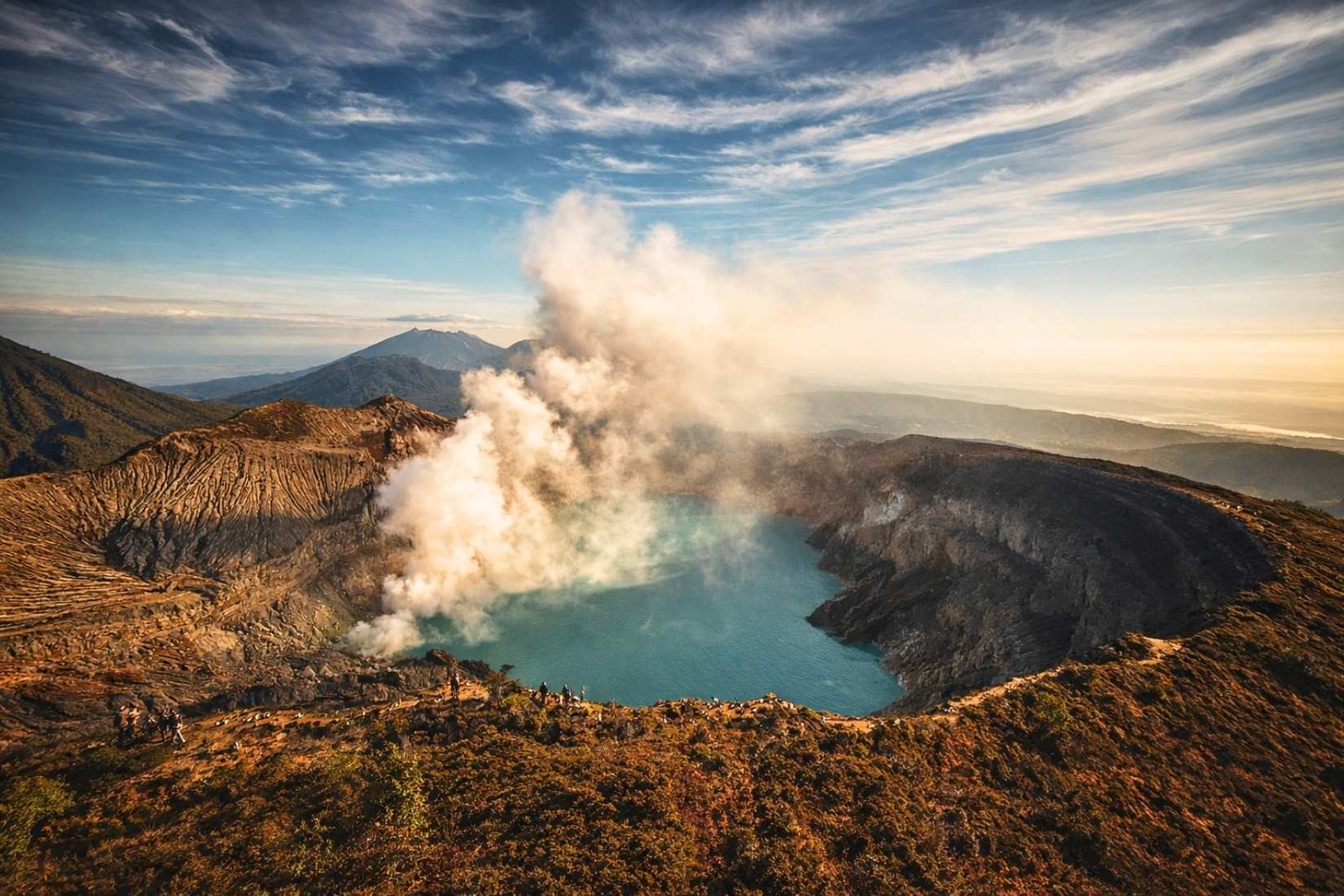
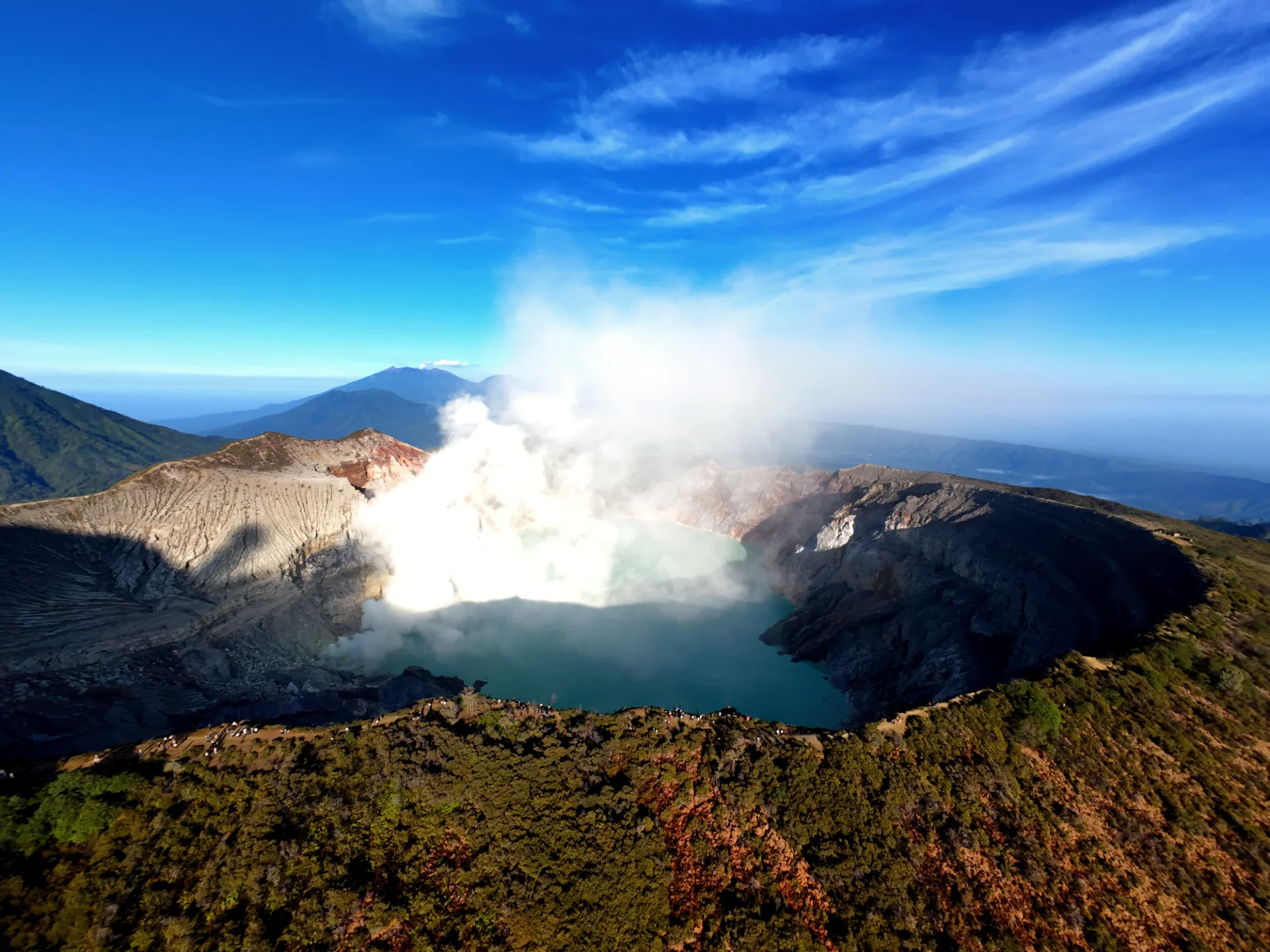
Standing at the rim, the view is staggering. That vibrant, electric turquoise water looks like a paradise, yet it is deadly. Finding the right Ijen tour package is the only way to navigate this landscape safely.
This guide breaks down the science of the lake. We use our local expertise to explain why the water glows. You can also refer to our comprehensive Ijen crater tour guide for logistics.
What You Need to Know
Kawah Ijen is the world’s largest highly acidic lake. It sits at a pH of nearly 0, similar to battery acid. The turquoise color comes from high concentrations of dissolved metals and volcanic minerals.
Gas masks are mandatory for the descent. The weather drops below 10°C, so dress in layers. Local rangers monitor volcanic activity daily and can close the trail without notice.
The World’s Largest Acid Vat
Kawah Ijen is not a standard mountain lake. It is a massive hydrothermal system trapped inside a volcanic caldera. The water body contains approximately 36 million cubic meters of acidic liquid.
Magma sits deep beneath the crater floor. This magma releases heat and volcanic gases into the water. These gases include hydrogen chloride and sulfur dioxide.
Understanding pH Levels
The acidity here is extreme. Most lakes have a pH between 6 and 8. Ijen sits consistently below pH 0.5, making it a natural reservoir of sulfuric and hydrochloric acid.
Metal equipment corrodes in minutes. Even your skin will feel a distinct tingle if the mist hits you. Scientists visit this site specifically to study planetary geology and extreme environments.
The Solfatara Connection
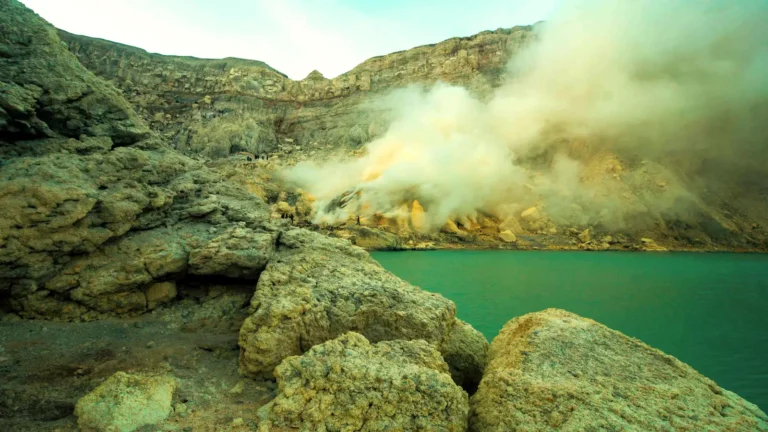
Active vents, known as solfataras, line the edge of the lake. These vents hiss and roar, spitting out hot volcanic gases. The gas reacts with the lake water to maintain its chemical potency.
This interaction creates a unique mineral soup. Dissolved aluminum, iron, and potassium are found in massive quantities. These elements are the building blocks of the lake’s visual identity.
The Role of Sulfur and Fumaroles
Sulfur is the lifeblood of this volcano. It arrives at the surface as a gas at temperatures exceeding 200°C. When it hits the cooler air, it condenses into liquid fire.
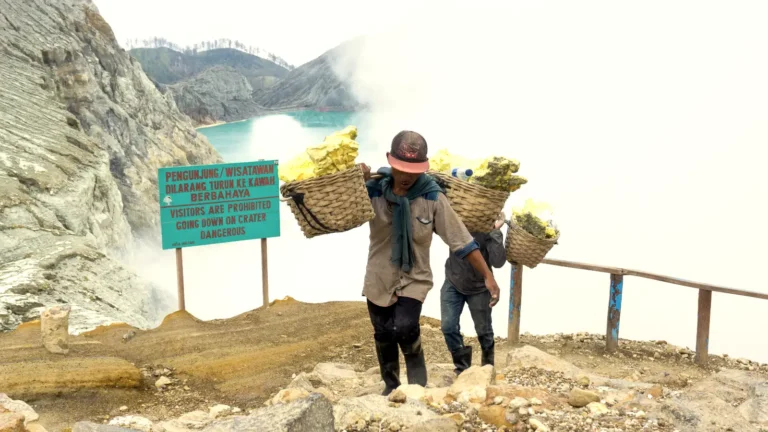
Miners work in these conditions daily. They use ceramic pipes to channel the gas into pools. Once the liquid cools and hardens into bright yellow rock, they break it by hand.
The Danger of Gas Shifts
Wind is your greatest enemy on the crater floor. A sudden gust can push a concentrated plume of sulfur dioxide directly into your path. This gas displaces oxygen instantly.
Even with a high-quality gas mask, the experience is claustrophobic. You must follow your guide’s instructions to move to higher ground immediately. The air can become unbreathable within seconds.
Extreme Heat and Hard Work
The heat near the fumaroles is intense. Miners carry loads up to 80kg on their shoulders. They navigate the slippery, rocky paths with incredible balance and strength.
Seeing them work provides a sobering perspective. Tourists visit for the photos, but for locals, this is a grueling survival ritual. Respect their path and always give way when they are climbing.
To witness the chemistry of Ijen safely, we recommend booking a professional Ijen crater tour with experienced guides. For a complete Java experience, many travelers choose the Bromo Ijen tour to see the sunrise. If you are starting from other regions, consider the Mount Bromo tour or a wider East Java tour.
Optical Physics: Why It Looks Turquoise
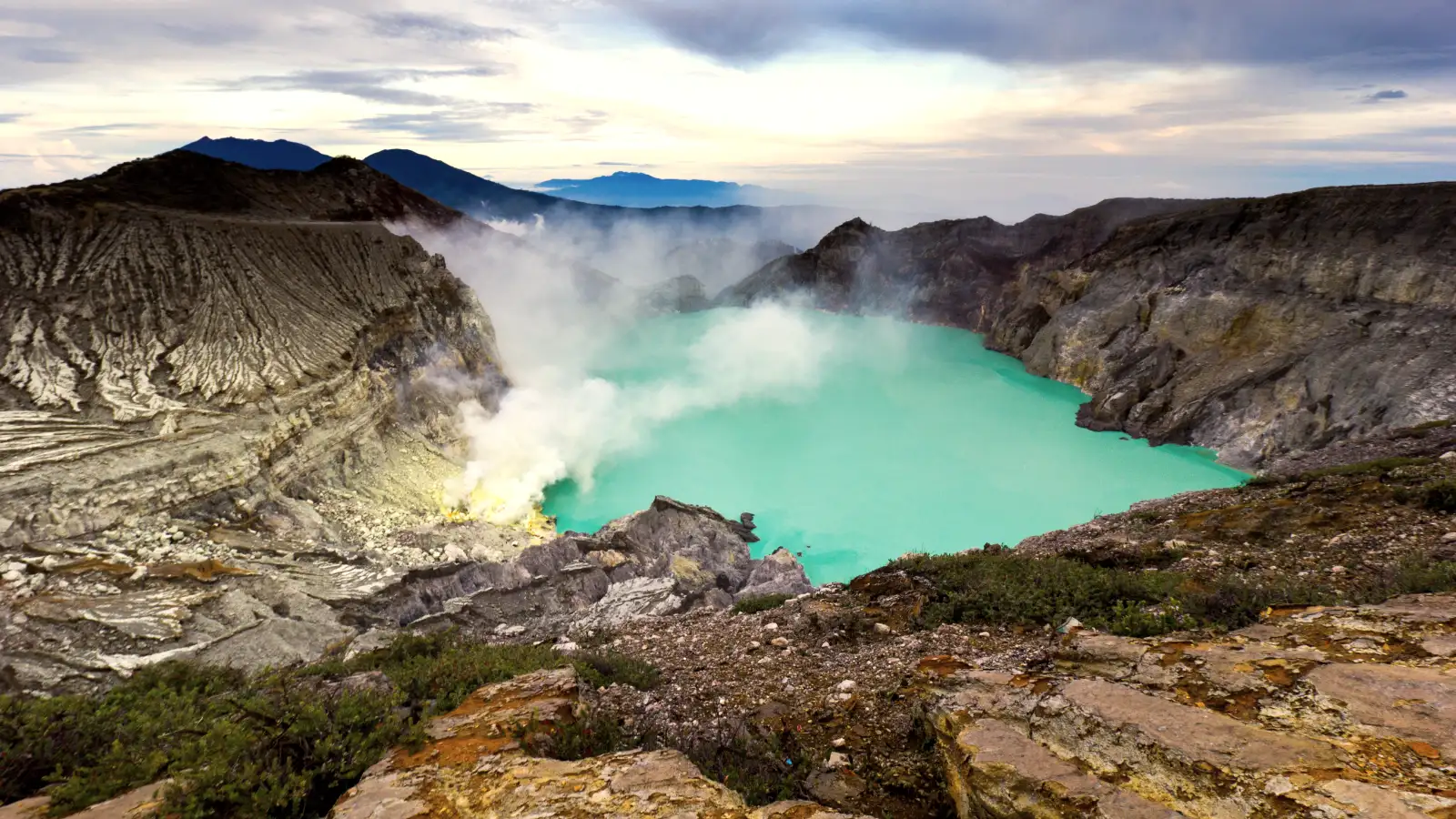
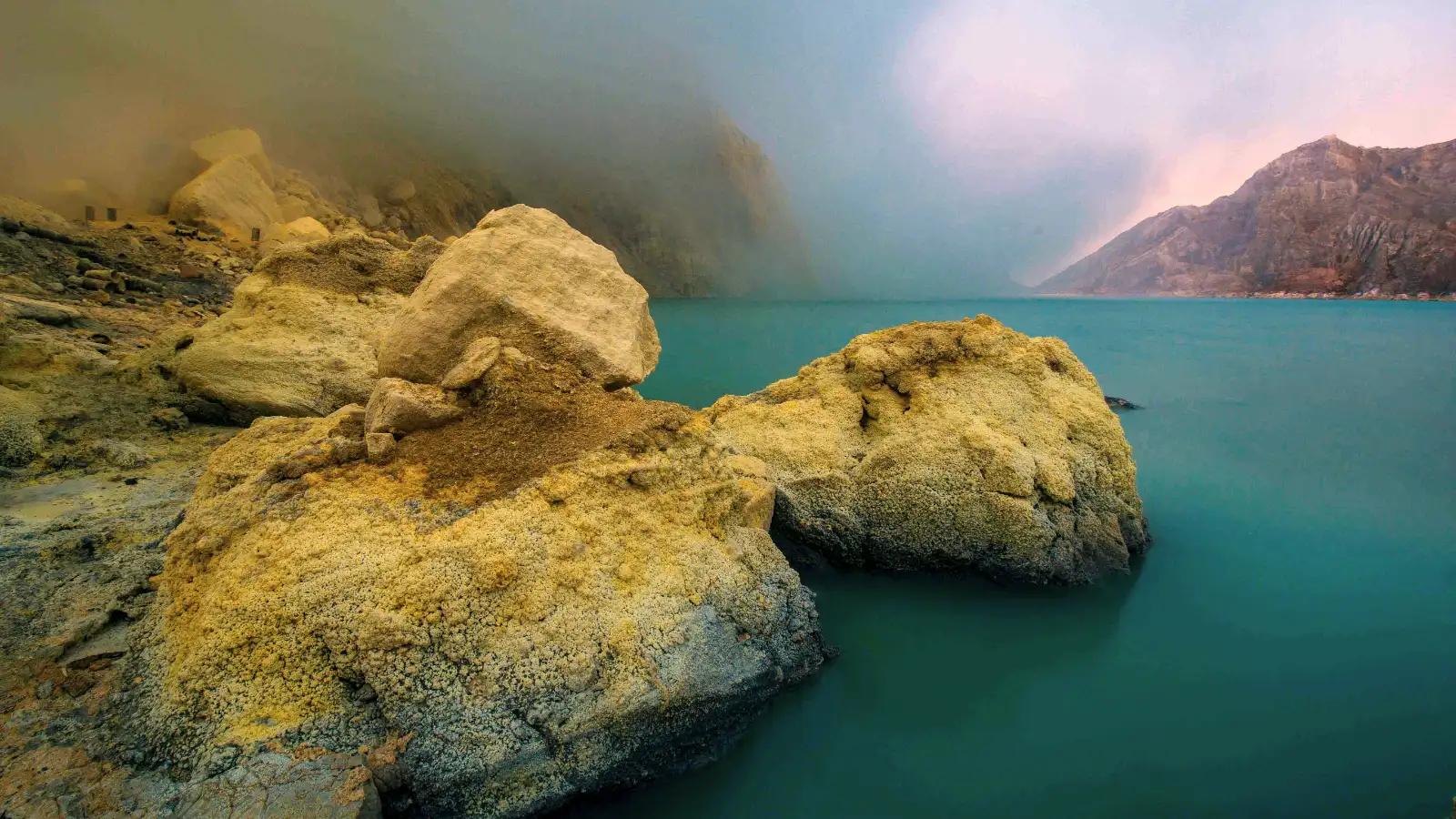
The turquoise color is an optical illusion powered by chemistry. It is not a simple reflection of the blue sky. In fact, the lake looks turquoise even on cloudy days.
Tiny particles of sulfur and aluminum are suspended in the water. These particles are so small they don’t sink. They act like millions of microscopic mirrors.
Rayleigh Scattering Effect
When sunlight hits the water, these particles scatter the light. Shorter wavelengths, like blue and green, are reflected back to your eyes. This is known as Rayleigh scattering.
The high acidity keeps these minerals from settling. If the pH were higher, the minerals would clump together and fall to the bottom. The lake would then appear clear or muddy.
Concentrated Metal Ions
The lake is a chemical soup. It contains massive amounts of dissolved metals. Iron and aluminum sulfate contribute significantly to the specific shade of teal.
Different concentrations create different shades. Sometimes the lake looks milky blue. Other times, it looks like a deep, dark emerald green.
Why the Color Changes Daily
If you visit twice, you might see two different lakes. The color changes based on volcanic activity levels. Increased gas flow from the hydrothermal system alters the mineral balance.
Rainfall also plays a major role. Heavy tropical rains dilute the acid and wash topsoil into the crater. This can make the water look brown or murky for several days.
Seasonal Variations
During the dry season, the water level drops. This increases the concentration of acids and minerals. The turquoise becomes incredibly vibrant and electric during these months.
Many photographers prefer the dry season for this reason. The contrast between the yellow sulfur and the turquoise water is at its peak. You can see more tips in our guide to seeing the blue fire at Ijen.
The Impact of Volcanic Ash
Small eruptions or tremors can stir up sediment from the lake floor. This sediment turns the water grey or black. It usually takes several weeks for the turquoise color to return after such an event.
Local rangers keep a close eye on these shifts. They use the lake’s color as a secondary indicator of volcanic health. A drastic color change often precedes a rise in volcanic alert levels.
Why Trust This Guide
We are local operators based in East Java. Our team climbs the Ijen crater rim hundreds of times every year. We don’t just read about the chemistry; we live it.
We witness the gas shifts and the water changes daily. Our guides are trained in volcanic safety and chemical awareness. We understand the risks of the acidic environment better than anyone else.
Our relationships with the local miners give us unique insights. We hear their stories and understand the volcano’s rhythms. This expertise ensures your trip is both educational and safe.
Continue Your Adventure
The chemistry of Ijen is just the beginning of your East Java journey. Most travelers find that combining this trip with a Mount Bromo sunrise tour provides the ultimate volcanic experience. You can easily book your trip now to secure your spot for the upcoming season. For those with more time, we recommend the 4-day tour from Bali which includes majestic waterfalls and craters.
Essential Gear for the Hike
| Item | Why You Need It |
|---|---|
| Gas Mask | Protects from toxic sulfur dioxide and acidic mist. |
| Headlamp | Crucial for the midnight ascent and crater descent. |
| Warm Jacket | Temperatures can drop to 5°C before sunrise. |
| Hiking Shoes | The trail is steep and covered in loose volcanic sand. |
Check Today’s Crater Conditions
Volcanic activity changes every hour. Don’t leave your trip to chance.
Frequently Asked Questions
Q: Can I swim in the turquoise water?
A: Absolutely not. The water is a concentrated acid that will dissolve clothing and cause severe chemical burns to your skin and eyes instantly.
Q: Is the sulfur gas dangerous for asthma sufferers?
A: Yes, it is extremely dangerous. Even with a gas mask, the thin mountain air and sulfur fumes can trigger severe respiratory distress for those with pre-existing conditions.
Q: How bad is the dust on the trail?
A: In the dry season, the dust is thick and pervasive. It gets into your eyes and throat, making a face buff or mask essential even when you aren’t near the sulfur vents.
Q: Which viewpoint is the least crowded?
A: Most people stop at the first rim entrance. If you hike further along the rim toward the weather station, the crowds thin out significantly for better photography.
Q: Can elderly travelers handle the crater descent?
A: The descent is very rocky, steep, and slippery. We generally advise elderly travelers to stay on the crater rim where the view is spectacular without the physical risk of the climb down.
Ijen is a masterpiece of natural chemistry. It is a place that demands respect and preparation. By understanding the science behind the turquoise glow, you gain a deeper appreciation for this volcanic wonder.