
Ijen Crater Sunrise Update: When to Start the Hike for the Best Views
Key Takeaways:
- Trail opening time is strictly 02:00 AM WIB.
- Sunrise peaks between 5:15 AM and 5:45 AM.
- A mandatory health certificate is required for all hikers.
- The hike is 3km one-way with a steep initial incline.
About This Guide: Written by our Banyuwangi-based local operational team with first-hand field experience across East Java, including current trail conditions, departure timing, weather shifts, and real visitor logistics.
Table of Contents
What Is the Ijen Sunrise Experience?
The sulfur hits you first. It’s thick, acrid, and bites into the back of your throat. You’ll probably choke for a second before pulling that gas mask tight. This is Ijen. It’s not your typical stroll through the woods. It’s a raw, volcanic landscape at the eastern edge of Java.
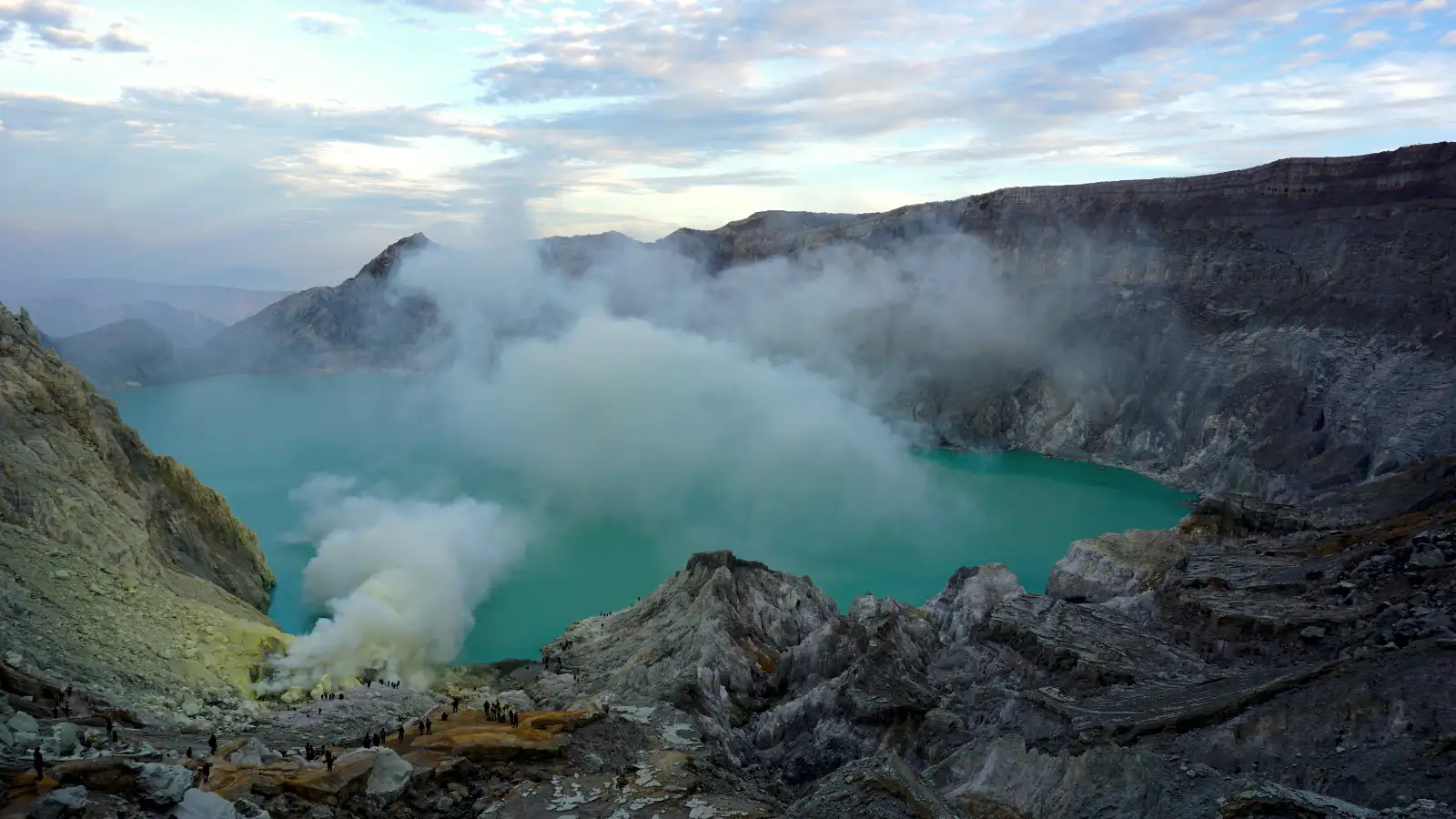
Standing at 2,386 meters, the rim of the crater offers a front-row seat to one of nature’s most dramatic shows. Below you lies the world’s largest highly acidic crater lake, a turquoise gem that looks beautiful but would dissolve metal in minutes. This guide is for those who want to see that turquoise glow under the first light of day.
The Best Time to Start Your Hike
Look, the timing here is everything. If you arrive at Paltuding at 4:00 AM, you’ve already lost. To see the transition from deep blue to vibrant gold, you need to be at the gate when it swings open. Ijen Crater opening hours are fixed at 02:00 AM. Don’t push it. Be there at 1:45 AM.
The 02:00 AM Departure Strategy
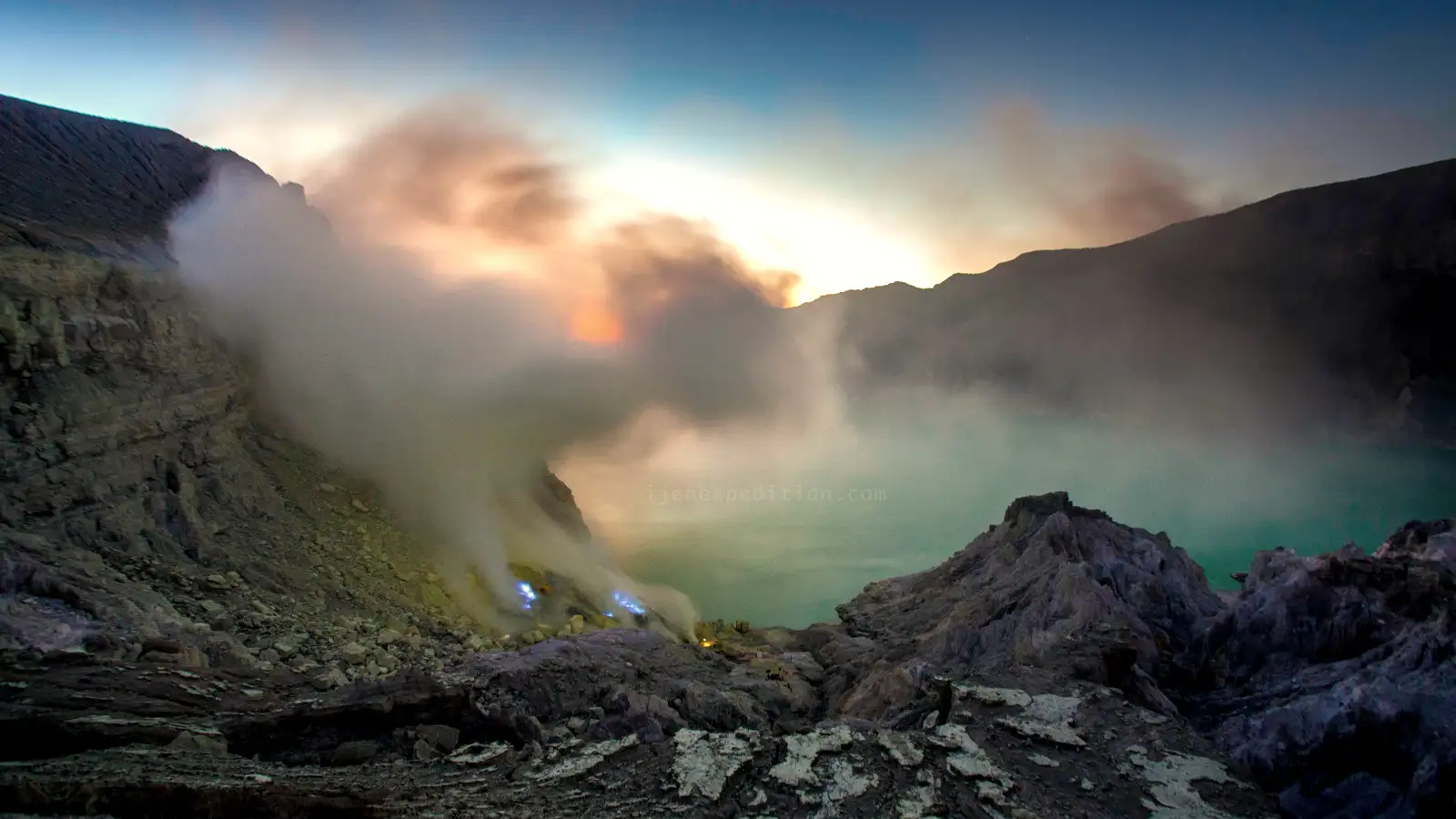
Starting at 2:00 AM gives you a buffer. The first two kilometers of the Ijen Crater trail are steep—about a 20 to 30-degree incline on dusty volcanic soil. It wears you down. Most hikers take 90 minutes to reach the rim. By starting early, you reach the top by 3:30 AM or 4:00 AM. This gives you time to rest, find a spot away from the crowds, and maybe catch the “Blue Fire” if the trail to the crater floor is open.
If you’re coming from the neighboring island, the ijen crater tour from bali requires a midnight departure to make it to the ferry and basecamp in time. It’s a long night, but the moment the sun hits that acidic lake, the lack of sleep becomes irrelevant.
Why Sunrise Matters More Than Blue Fire Right Now
Truth is, the Blue Fire is fickle. It depends on volcanic gas activity and safety regulations by the BBKSDA. However, the sunrise is a guarantee (weather permitting). The “Golden Hour” at Ijen illuminates the yellow sulfur deposits and the white steam clouds in a way that looks like another planet. For the best light, we recommend checking the best time to visit Ijen Crater to avoid the rainy season clouds.
Current Weather and Trail Updates
It’s cold. Really cold. At 2:00 AM, the temperature at Paltuding usually hovers around 8°C to 12°C. Once you reach the rim, the wind chill can drop that feeling down to 3°C. If you aren’t prepared, you’ll spend your sunrise shivering instead of taking photos. Check our Ijen Crater temperature guide before packing.
Currently, the trail is in good condition, but it’s dry and slippery. The dust is fine like flour. When hundreds of hikers are moving, it kicks up into your eyes. Wear proper shoes—not flip-flops. We’ve seen people try it in sandals; they usually end up in the Ijen trolley taxi within twenty minutes.
Practical Information
| Feature | Details |
|---|---|
| Location | Licin, Banyuwangi, East Java |
| Opening Hours | 02:00 AM – 12:00 PM WIB |
| Hike Difficulty | Moderate (Steep climb first 2km) |
| Mandatory Item | Medical Health Certificate & Gas Mask |
| Best Month | Dry Season (May to September) |
Start Time Comparison: Which Strategy Wins?
| Start Time | Best For | Pros | Cons |
|---|---|---|---|
| 02:00 AM | Sunrise Chasers | Perfect light, time for Blue Fire | Maximum crowds at gate |
| 04:00 AM | Casual Hikers | Warmer temp, less crowd rush | Miss the peak sunrise colors |
| 08:00 AM | Solitude Seekers | Empty trails, great lake visibility | Heat and strong sulfur smoke |
Local Tips You Should Know
Here’s the deal: Everyone talks about the hike, but nobody mentions the logistics of the health certificate. You cannot hike Ijen without a medical clearance. You can get these at local clinics in Banyuwangi or the hospital in Licin for a small fee. Don’t show up at 2 AM without one, or you’ll be scrambling.
Also, don’t skimp on the Ijen Crater gas mask rental. Those cheap surgical masks are useless against sulfur dioxide. If the wind shifts, you’ll be coughing uncontrollably. A proper respirator with a chemical filter is non-negotiable for safety.
If you want to support the locals, bring some small change for the sulfur miners. These men carry 70kg to 90kg of rock on their shoulders up and down the crater. They are the backbone of this mountain. Buying a small sulfur carving or just being polite goes a long way. Check our Ijen safety guide for more on how to interact respectfully with the miners.
Safety & Important Considerations
Mount Ijen is an active volcano. It’s monitored 24/7 by the PVMBG. If the gas concentration is too high, the rangers will close the trail to the crater floor. Respect their decision. No photo is worth your lungs.
Make sure you know what to wear for Ijen Crater. Layering is key. You’ll be sweating on the way up and freezing while waiting for the sun at the summit. A windbreaker over a fleece is the standard uniform here.
Common Mistakes Travelers Make
The biggest mistake? Underestimating the incline. The first 1.5 kilometers are relentless. Many people burn out in the first 20 minutes because they start too fast. Walk slow. It’s a marathon, not a sprint.
Second mistake: Bringing expensive camera gear without protection. Sulfur gas is corrosive. It can damage lens coatings and electronics if exposed for long periods. Keep your camera in a bag until you are ready to shoot, and use a lens filter.
Frequently Asked Questions
Q: Is the Blue Fire always visible?
A: No. It depends on gas activity and the safety status of the crater floor. It is only visible in total darkness before 5:00 AM.
Q: Do I need a guide for the Ijen sunrise?
A: While the path is clear, a local guide is highly recommended for safety, gas monitoring, and help with the mandatory health certificate logistics.
Q: What is the best month for sunrise?
A: July and August offer the clearest skies, though any time during the dry season from May to September is generally excellent.
Q: Can I visit Ijen if I have asthma?
A: It is generally discouraged. The sulfur gas is extremely irritating to the respiratory system. Consult a doctor before attempting the hike.
Q: How much is the entrance fee?
A: For international visitors, it is typically around 100,000 IDR on weekdays and 150,000 IDR on weekends, subject to change by national park authorities.
Recommended Tour Packages
- Ijen Crater Tour from Banyuwangi (1 Day) – The most efficient way to see the sunrise if you are already in Java.
- Ijen Crater Tour from Bali – Full transport from your hotel in Bali, including the ferry crossing and sunrise hike.
- Standard Ijen Crater Tour – Our classic package focusing on the summit views and the acidic lake.
- Mount Bromo and Ijen Crater Tour – Combine the two most famous volcanoes in East Java over three days.
- Ijen Crater Tour from Surabaya – Perfect for those flying into East Java’s capital city.
Final Takeaway
Standing on the rim of Ijen as the sun breaks over the horizon is a perspective-shifting experience. It’s a place of extremes—extreme acidity, extreme labor, and extreme beauty. To get the most out of it, respect the 2:00 AM start time, prepare for the cold, and don’t forget your health certificate. For more official geological data, you can check Ijen on Wikipedia.
Planning Your Trip to East Java?
Explore our local tour options and choose a route that matches your travel schedule.